
Connect with us

Headlines

How pirate attacks in Gulf of Guinea threaten region’s security
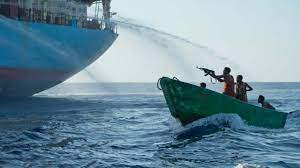
Pirates attack in Gulf of Guinea

There is a lot of activity in the Gulf of Guinea in terms of counter-piracy efforts, as well as trade and attempts to recover from the COVID-19 pandemic.

These factors are about recovery while having to deal with urgent security problems, in this critical area of the African continent.

The maritime security environment in the Gulf of Guinea needs to coalesce around maritime cooperation in terms of logistics and the prevention of threats.

Key ports — including Abidjan and Sassandra in Ivory Coast, the Ports in Nigeria, Kome Kribi 1 Marine Terminal and the Port of Kribi in Cameroon, and Puerto Macias in Equatorial Guinea — are the outlet for hundreds of millions of people along this Atlantic arc of West Africa.

The protection of the Gulf of Guinea and its sea-based economies needs to go beyond current efforts.

The full participation of all states and corporate interests is mandatory for protecting the littoral states, where key ports are operating for the survival of these countries, as well as the landlocked nations behind them.

The piracy problem in the Gulf of Guinea has developed into a curse for seafarers over the past decade.

In 2021, the threat that looms for all seafarers operating in the region is being kidnapped at gunpoint for ransom.
While the overall numbers of pirate attacks are largely unchanged, the violence, scope and sophistication of the attacks on shipping have continued to increase.
Today, they take place across an area that expands more than 200 nautical miles from the pirate bases that are principally located within the Niger Delta.

There are many good reasons to place direct attention on maritime security in the Gulf of Guinea.

One is that the human toll is high both for those directly affected by attacks — through kidnapping, psychological trauma or death — and those indirectly affected by periods of stress because of the constant threat.

BIMCO, the blue-ribbon organization that serves as a major contributor for contending with maritime issues, is pursuing a universal declaration to stop these seaborne acts.

 For BIMCO and the 100-plus country and corporate signatories, these pirate attacks are preventable and are occurring in a small geographical area.
In fact, this maritime threat area is less than one-fifth the size of the area affected by Somali piracy in 2010.
For the signatories, an active naval force with very few assets conducting effective law enforcement could deter and suppress piracy in the Gulf of Guinea.
This type of language is important as to how such a naval mission can be accomplished by local navies or navies from other stronger powers who frequent these waters.
Russia, China and Turkey all have such interests, but capacity is another issue.
The key stakeholders in the region, including individual consumers, governments and businesses, are paying increased costs for shipments due to the increased cost of security for visiting merchant ships, on top of the pandemic-related local health requirements.
Here, the overlap of social discontent, piracy and lack of supplies because of shipping interruptions is a toxic brew for dissent.
 This means that Gulf of Guinea governments are prone to the same threat of coup d’etat attempts as seen in three other African countries in the past year, especially those in Mali and Guinea.

Problems abound with the current on-the-ground security situation in terms of halting the piracy phenomena.

Research shows that the continued reliance on locally sourced commercial protection services, which are under the control of the local governments, undermines incentives to carry out effective law enforcement and therefore is not a model that will repress the actions of the pirates in the region.
 This local legal failure shows how deep the problems with governance are in these coastal cities.
Consequently, the poor security situation obstructs economic growth because it prevents investment in the Gulf of Guinea’s ocean-based economy.

Shipping in the Gulf of Guinea is an interesting and challenging business during the pandemic.

When faced with an ongoing piracy threat — and the piracy issue in the region is not new — there is a requirement to adhere to international treaties, as well as mandates from the UN and the World Health Organization on COVID-19 programs across these states.
No doubt that the UN Convention on the Law of the Sea is an important part of preparing a capable response to help regional anti-piracy law enforcement operations.
Sometimes these security efforts do not work out, so stronger measures are necessary.
It is very important for stakeholders’ desire to improve domain awareness via radars on offshore platforms and the sharing of relevant information between anti-piracy law enforcement forces and agencies.
Most importantly, and probably the most effective action, is providing prison facilities for arrested pirates (ideally in the region) and encouraging coastal states to actively prosecute.
The lack of rule of law in the Gulf of Guinea is a big part of the current problem, which is damaging to human security.

Continue Reading
Click to comment

Leave a Reply

Your email address will not be published. Required fields are marked *

Headlines

NIWA partners ICPC to strengthen internal transparency in its operations  

Gloria Odion, Maritime Reporter 
The National Inland Waterways Authority (NIWA) has announced new strategies aimed at improving its operational system and enhancing collaboration with key stakeholders as part of efforts to boost efficiency and accountability.
Speaking at a post event Press Conference at NIWA Headquarters Lokoja, the Acting Managing Director, Umar Yusuf Girei, while answering questions from journalists stated that, the organization convened a two -day Executive and Anti-Corruption training with the theme “Strengthening Integrity and Revenue System in Inland Waterways Management” organized for Board Members, Management and Area Managers and also 2026 NIWA Management Retreat in Abuja.
The Acting MD noted as part of the Renewed Hope Agenda of President Bola Ahmed Tinubu,with the support  Adegboyega Oyetola, Minister of Marine and Blue Economy, the Authority is focused on aligning institutional goals in ensuring better service delivery to Nigerians.
He further said, as part of its anti-corruption drive, the Management held discussions with the Independent Corrupt Practices and Other Related Offences Commission (ICPC) to explore measures for strengthening transparency within its operations.
Girei therefore, assured staff that the ongoing reforms under his watch would translate into improved service and better working conditions.
“NIWA remains committed to continuous improvement and stakeholder engagement and the reforms are expected to enhance both internal performance and public confidence”. he stated.
Continue Reading

Headlines

Navy appoints new Maritime Guard Commander for NIMASA 

Gloria Odion,  Maritime Reporter 

The Chief of the Naval Staff, Vice Admiral Idi Abbas, has approved the appointment of Commodore Reginald Odeodi Adoki as the Commander of the Maritime Guard Command at the Nigerian Maritime Administration and Safety Agency (NIMASA).
Commodore Adoki takes over from Commodore H.C Oriekeze who has been redeployed.

Commodore Adoki, a principal Warfare Officer specializing in communication and intelligence,  brings onboard 25 years experience in the Nigerian Navy covering training, staff and operations.

 As a seaman, he has commanded NNS Andoni, NNS Kyanwa and NNS Kada.
It was under his command that NNS Kada under took her maiden voyage, sailing from the country of build (the United Arab Emirates) into Nigeria.
He was commissioned into the Nigerian Navy in 2000 with a BSc in Mathematics.
 He has since earned a Masters in International Law and Diplomacy from the University of Lagos and an M.Sc in Terrorism, Security and Policing at University of Leicester, England.
He is currently pursuing a Ph.D in Defence and Security Studies at the National Defence Academy (NDA).
He is a highly decorated officer with several medals for distinguished service.

Welcoming the new MGC Commander to the Agency, the Director General, Dr Dayo Mobereola, expressed confidence in Adoki’s addition to the team, emphasising that it will further strengthen the nation’s maritime security architecture given his vast experience in the industry.

The Maritime Guard Command domiciled in NIMASA was established as part of the resolutions of the Memorandum of Understanding (MoU) with the Nigerian Navy to assist NIMASA strengthen operational efficiency in Nigeria’s territorial waters, especially through enforcement of security, safety and other maritime regulations.

Continue Reading

Customs

Customs collects N1.585 trillion from 51 compliant traders under AEO programme 

Funso OLOJO,  Editor 
The Authorized Economic Operator (AEO), one of the trade facilitation tools introduced by the Nigeria Customs Service in 2025, has begun to yield bountiful harvests with the revenue growth of ₦362.79 billion recorded in 2025.
According to the AEO scorecard released by the Service, the facilitation tool grossed the sum of N1.585 trillion after certification, an increase revenue from N1.222 trillion before certification.
This represents the growth of N362.79 billion(29.68 per cent) for 51 AEO – certified entities as at October, 2025.
The Programme, according to the NCS,  also contributed 21.77% to its total revenue collection of ₦7.281 trillion in 2025, while customs duties paid rose by 85.66% due to enhanced compliance and increased volumes of legitimate trade.
According to AEO Monitoring and Evaluation (M&E) Report, the Programme achieved an average compliance rate of 85.45 per cent with the highest at 100 per cent and the lowest at 60 per cent.
“The evaluation applied rigorous methodologies to ensure objectivity, transparency, and alignment with the World Customs Organisation (WCO) SAFE Framework of Standards and the provisions of the Nigeria Customs Service Act, 2023.
“In the area of trade facilitation, AEO participation reduced average cargo clearance time from 168 hours to 41 hours, representing a 75.60% time saving.
“Company operating costs declined by 57.2 per cent while demurrage payments dropped by 90 per cent, limiting capital flight to foreign-owned port service providers and strengthening foreign exchange retention.
” Overall trade efficiency improved by 77.11 per  through digitalisation, simplified procedures, and targeted risk management” the Customs declared in the AEO scorecard.
However, the Service singled out with Eight companies for commendation due to their integrity and compliance under the programme.
The companies include Coleman Technical Industries Limited, WACOT Rice Limited, ROMSON Oil Field Services Ltd, WACOT Limited, Chi Farms Ltd, CORMART Nigeria Ltd, PZ Cussons Nigeria Plc, Nigerian Bottling Company Limited and MTN Nigeria Communications Plc.
The Service lauded them for a cumulative voluntary remittance of over a billion naira into the Federation Account following their self-initiated transaction review and disclosure.
“These actions reflect the strengthening of post-clearance audit mechanisms and a growing culture of voluntary compliance within the trading community.
Nevertheless, the Service suspended a firm under the programme for its non- compliance and display of lack of integrity.
The suspended firm engaged in false declaration of consignments contrary to programme obligations.
“Consequently, the Comptroller-General of Customs, Bashir Adewale Adeniyi, directed the immediate suspension of the company’s AEO status in accordance with the AEO Guidelines, the WCO SAFE Framework of Standards, and Section 112 of the Nigeria Customs Service Act, 2023.
The NCS reiterated that the AEO Programme is founded on trust, transparency, and continuous compliance.
“While compliant operators will continue to benefit from expedited clearance and reduced inspection, appropriate sanctions will be applied where violations are established.
“The Service remains resolute in safeguarding national revenue, facilitating legitimate trade, and preserving the integrity and global credibility of Nigeria’s AEO framework” the NCS concluded in the report.
Continue Reading

Trending