
Aviation
Customs grounds 62 private jets over tax evasion

The Nigeria Customs Service (NCS), has grounded about 62 aircraft that defaulted in the ongoing verification of import documents exercise.
Speaking at a press briefing, the National Public Relations Officer of the service, Joseph Attah said the grounding won’t be lifted until the jet owners present their import document duly certified by the Service.
He said, “The Federal Aviation Authority of Nigeria has been put on notice to ensure only privately owned aircraft duly verified, and cleared by Customs are authorized to operate within our airspace.”
“Within the stipulated period, 86 private jets/aircraft operators showed up for the exercise and presented the relevant documents for verification.

private jets
“Of this number, 57 were verified as commercial charter operators, and were duly cleared for operations, 29 other private jets/aircraft were found liable for payment of Customs duty. Their values were assessed, and the appropriate demand notices were issued to their owners for the payment of outstanding duties.
“However, 62 other private jet/aircraft whose registration numbers were duly obtained from the appropriate authority were not verified because their owners or designated representatives made no presentations to Customs that could help determine their status.
“To this effect, all 57 commercial charter jet/aircraft operators who presented their documents for verification are requested to come forward to the Tariff and Trade Department of the Nigeria Customs Service Headquarters, Abidjan Street, Wuse Zone 3 Abuja-FCT, Room 312 between 10:00 am and 5:00 pm to collect their Aircraft Clearance Certificates.
“All 29 Private Jet/Aircraft owners and or their representatives who have been issued with demand notices have been given (14) days from the 11th of October 2021 to collect and make payments to the designated Federal Government accounts after which they will be issued with Aircraft Clearance Certificates,” he stated.
He said the owners of the 62 private aircraft for which no presentations were made for their verification, and whose status remains uncertain are requested to immediately furnish the tariff and trade department of the Service with the necessary documents for verification and clearance.
Attah implored all concerned to avail themselves of the opportunity as the NCS it will not hesitate to activate enforcement procedures on identified defaulters.
In line with its statutory functions as provided for in PART III Sections 27, 35, 37, 45, 46, 47, 52, 56, 63 & 64; Part XI Sections 144, 145, 155, 160, 161&164 and Part XII Sections 167, 168, 169 173&174 of the Customs and Excise Management Act (CEMA), All owners of private aircraft in the country were invited to come forward with their relevant importation clearance documents for verification.
The exercise took place between the 7th of June and August 6th, 2021 at the Tariff and Trade Department of the Service.
The documents requested include Aircraft Certificate of Registration; NCAA’s Flight Operations Compliance Certificate (FOCC); NCAA’s Maintenance Compliance Certificate (MCC); NCAA’s Permit for Non-Commercial Flights (PNCF) and Temporary Import Permit (TIP) (where applicable).

Aviation
From 6k to 50k: The economic insensitivity of arbitrary hike in parking rate at MM2

Olutayo Irantiola
Recently, the parking rate at the Multi-storey Car Park at the Murtala Muhammed Airport Terminal 2 (MMA2), operated by Bi-Courtney Aviation Services Limited (BASL) and managed by Balosh, was arbitrarily increased.
In 2021, Balosh, the company managing the toll system within the airport, was engaged by the Lagos State Government and Lagos State University Teaching Hospital (LASUTH), and it almost resorted into a crisis within the hospital premises because one would not be able to explain the rationale for having a patient in the hospital, and one would be charged for car park.Nigerians are unable to commute by road, train, or even the waterways.
Despite the rising cost of all modes of commuting, one is now confronted with an unjustified increase in airport parking rates.
With the rising cost of house rent cum accommodation in Lagos, people have moved to various suburbs of Lagos.
The rising cost of JetA1 has been attributed to the rising cost of air ticket which is almost beyond the reach of an average Nigerian; the rising cost of PMS (Petrol) at this time when Iran and US war is ongoing has made people abandoned their cars while app hailing taxi services are ‘cutting’ people’s heads off while the regular airport taxi call unfriendly rates to the already overtaxed Nigerian that has not gotten an increase in salary despite the galloping inflation.Further rationalising this increase, it seems that the airport authority is now competing with the airlines- if one can afford a N300,000 return ticket, then one can also afford a N150,000 for a three-day parking at the airport.
This is not a fair deal for Nigerian travellers who are working hard to travel by air, given the imminent fear of what could go wrong on the road.
Can one liken the increase to a collaboration between the taxi unions and the airport to rip people off of their hard-earned money?
This is another way of destroying the middle class in Nigeria. If you engage a friend, sibling or acquaintance without a license to drive your car away from the airport, and such a person runs into the VIO or FRSC, the problem becomes complicated.
It is expedient for the airport operators to devise a strategy to identify actual travellers, which should be based solely on their boarding passes and means of identification.
They can deal decisively with other vehicles parked without justification. But making the car park rate unaffordable to the common man should not be allowed to stay.
There is no moral justification for overnight parking, let alone moving from 6,000 to 50,000!
I will want to implore the Honourable Minister of Aviation and Aerospace Development of Nigeria, Mr. Festus Keyamo, SAN; Managing Director of the Federal Airports Authority of Nigeria(FAAN), Mrs Olubunmi Kuku and other government agencies to please look into the matter and reduce the hardship being experienced by Nigerian travellers who need to park at MM2.
Olutayo Irantiola is a PR Consultant and Public Affairs analyst based in Lagos, Nigeria
Aviation
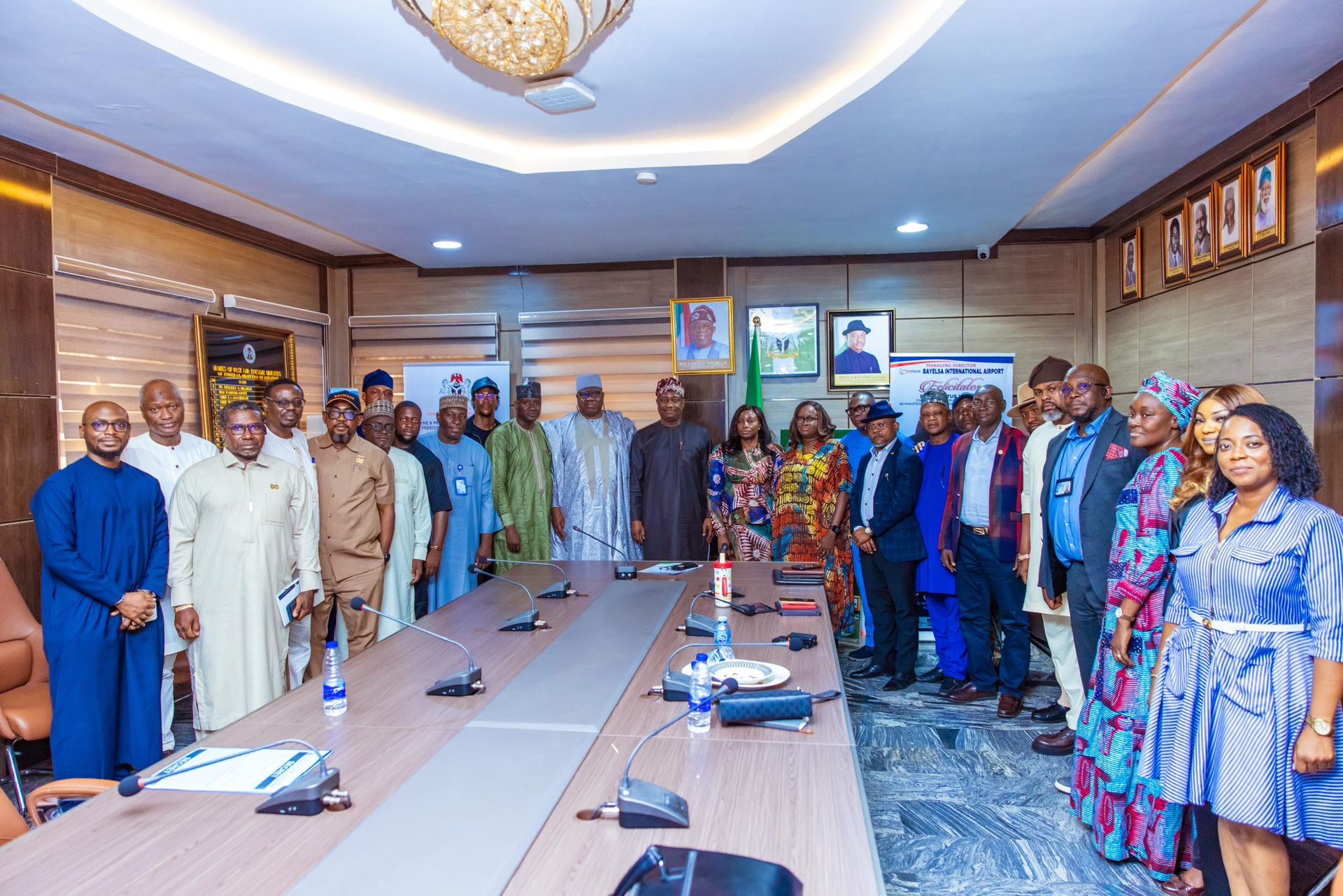
FAAN resumes toll collection at Airports, adopts hybrid payment method
Aviation
Tension de-escalates at Lagos Airport as FAAN, Cargo agents reach truce over new tariff
-

 Headlines3 months ago
FIFA sends Nigeria’s Super Eagles to 2026 World Cup, awards boardroom scoreline of 3 goals to nil against DR Congo
-

 Aviation3 months ago
Why we increased cargo tariff at Airports– FAAN
-
Aviation3 months ago
Tension de-escalates at Lagos Airport as FAAN, Cargo agents reach truce over new tariff
-

 Aviation3 months ago
Freight forwarders warn FAAN’s new charges regime could cripple airport operations
-
Aviation3 months ago
FAAN, freight forwarders in stand- off over new tariff regime at Lagos Airport
-

 Business3 months ago
National Single Window goes live in March, 2026