
Headlines
Audit report exposes Customs, NNPC under- remittance to Federation account.

The 2019 Auditor- General’s Federation Annual Report has shown that the country may have been shortchanged to the tune of N666.15 billion due to the discrepancies observed in the financial books of the Nigerian National Petroleum Corporation (NNPC) and Nigeria Customs Service (NCS).
In compliance with the provisions of the 1999 constitution of the Federal Republic of Nigeria, on August 18, 2021, the Auditor-General for the Federation, Aghughu Adolphus, submitted to the Clerk of the National Assembly the Annual Report on the Federal Government of Nigeria Consolidated Financial Statements (CFS) for the year ended 31st December 2019.
A review of the Audit report revealed that some of the figures, particularly those of the NNPC and NCS did not tally.
On page 50 of its 2019 Annual Reports and Financial Statements, the NNPC-National Petroleum Investment Management Services (NAPIMS) reported that it transferred the sum of N1.27 trillion to the Federation Account
However, in the 2019 Audit report, the Accountant-General of the Federation (AGF) who is the Chief Accounting Officer for the receipts and payments of account of the federation, noted in his records submitted for audit that only N608.71 billion was received as a remittance by NNPC into the Federation Account for 2019.
This shows a difference of N663.90 billion, between the figure NNPC-NAPIMS reported in its audited financial statements and the amount the AGF claimed the NNPC transferred into the Federation Account as remittance for 2019.
Similar discrepancies were noted in the financial books of the Nigeria Customs Service.
As noted in the Auditor’s report, the NCS generated revenue of N841.27 billion in 2019. This exact amount was supposed to be remitted by NCS to the Federation Account.
However, only the sum of N839.02 was remitted to the Federation Account through the Nigerian Integrated Customs Information System II (NICIS II), indicating that the total money remitted fell short by N2.26 billion.
If the NCS’s N2.26 billion variance is added up with the N663.90 billion shortfall observed in the financial statements of NNPC and AGF’s record, it brings the total figure to N666.15 billion.
As the Auditor General noted in the report, these discrepancies mean a loss of revenue to the government and could lead to difficulty in funding the (2019) budget.
True to the worries expressed by the Auditor-General in the 2019 Audit report, it was actually difficult for the government to fund its 2019 budget as the government resorted to borrowing.
In December 2018, President Buhari presented to a joint session of the National Assembly a proposed budget of N8.83 trillion for the 2019 fiscal year.
In his budget presentation, the President noted that the 2019 budget had a projected deficit of N1.86 trillion which was to be financed by borrowing.
The country’s Finance Minister, Zainab Ahmed stated clearly that, “we (the government) intend to fund the 2019 budget through borrowing locally and internationally with a spread of 50:50”, indicating that the government lacked the necessary revenue to fund its budget for that year.
The 2019 budget was not the first the government-financed through borrowed funds.
However, if the N666.15 billion arising from the differences in the financial records provided by the NNPC and AGF, as well as that of the NCS had been fully remitted to the Federation Account as the Audit report showed, it could have potentially reduced the amount the government borrowed to fund the 2019 budget by 35.71%.
This could have also reduced the country’s debt burden which currently stands at N35 trillion and is projected to rise to the tune of at least N41 trillion before the end of 2022.
While the government continues to devise ways to tackle the problem of revenue shortages that have made it difficult to fund its annual budgets, economic experts advised that the Federal Government should follow the recommendations of the Auditor General by ensuring that the management of the NNPC provide reasons for the discrepancy between what it reported in its NNPC-NAPIMS audited financial statements and the figure reported by the AGF as NNPC-NAPIMS remittance into the Federation Account for 2019.




Headlines
May Day: Mobereola salutes maritime workers for passion, dedication to building virile industry
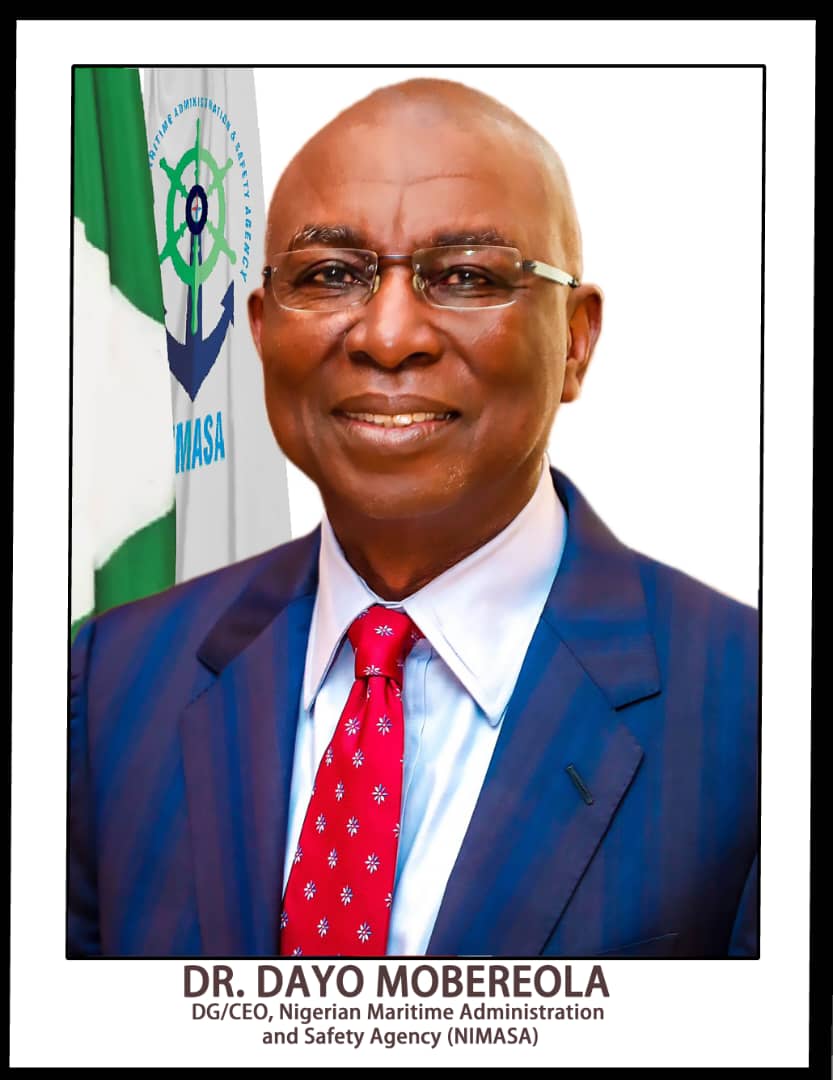
Gloria Odion, Maritime reporter
“Thank you for your dedication and invaluable contributions”.
He emphasized that as a regulator, the Agency remains committed to its oversight function of regulating maritime labour activities in the industry in line with extant instruments and the expectations of the theme of the 2026 Workers’ Day, which focuses on safety, dignity and productivity.
Customs
Kaila, Seme Customs CAC, seeks collaboration with stakeholders to achieve seemless trade along border corridor

Headlines
Opeifa decries encroachment on NRC properties across the country

-

 Headlines3 months ago
FIFA sends Nigeria’s Super Eagles to 2026 World Cup, awards boardroom scoreline of 3 goals to nil against DR Congo
-

 Aviation3 months ago
Why we increased cargo tariff at Airports– FAAN
-
 Aviation3 months ago
Tension de-escalates at Lagos Airport as FAAN, Cargo agents reach truce over new tariff
-

 Aviation3 months ago
Freight forwarders warn FAAN’s new charges regime could cripple airport operations
-
Aviation3 months ago
FAAN, freight forwarders in stand- off over new tariff regime at Lagos Airport
-

 Business3 months ago
National Single Window goes live in March, 2026