
Headlines
Deep Blue Project gets big boost

—as NIMASA takes delivery of another batch of mobile assets
Two unmanned aircraft system, nine interceptor patrol boats and 10 armoured vehicles have been added to the existing assets earlier procured by the Federal Government and commissioned by President Muhammadu Buhari.
Dr Bashir Jamoh, Director General of NIMASA, while thanking President Buhari for his sustained support in the fight against sea piracy and other maritime crimes, said the additional equipment will improve on the gains recorded in securing the Gulf of Guinea and Nigerian maritime domain.
Jamoh, who described the recently held Gulf of Guinea Maritime Collaboration Forum (GOG-MCF/SHADE) in Abuja as a success in rallying international support in the suppression of maritime insecurity, added that Nigeria’s commitment to regional maritime security will always be sustained.
He commended the Suppression of Piracy and other Maritime Offences (SPOMO) Act emplaced by Nigeria as a robust statute that supports maritime law enforcement which other countries are considering replicating.

” Nigeria is improving on her capacity to fight maritime crime by procuring state-of-the-art technology, upgrading human capacity for effective service delivery and deployment of the assets for round-the-clock patrol, interdiction and reconnaissance with the support of Nigerian Navy and other security agencies we signed MoU.
” Indeed we are further encouraged by President Muhammadu Buhari’s support all the time to ensure adequate security of crew members, vessels and cargoes within and around our waters
” These newly procured assets would assist us in building on the gains already recorded in the fight against piracy, sea robbery, oil theft, kidnapping, illegal fishing activities and others,” Dr Jamoh said.
The main objective of the Deep Blue Project is to secure Nigerian waters up to the Gulf of Guinea.
The Project has three categories of platforms to tackle maritime security on land, sea, and air.
The land assets include the Command, Control, Communication, Computer, and Intelligence Centre (C4i) for intelligence gathering and data collection; 16 armoured vehicles for coastal patrol; and 600 specially trained troops for interdiction, known as Maritime Security Unit.
Before the recently procured platforms, the deep blue project had sea assets including two Special Mission Vessels and 17 Fast Interceptor Boats.

Headlines
NIWA partners ICPC to strengthen internal transparency in its operations
Headlines
Navy appoints new Maritime Guard Commander for NIMASA
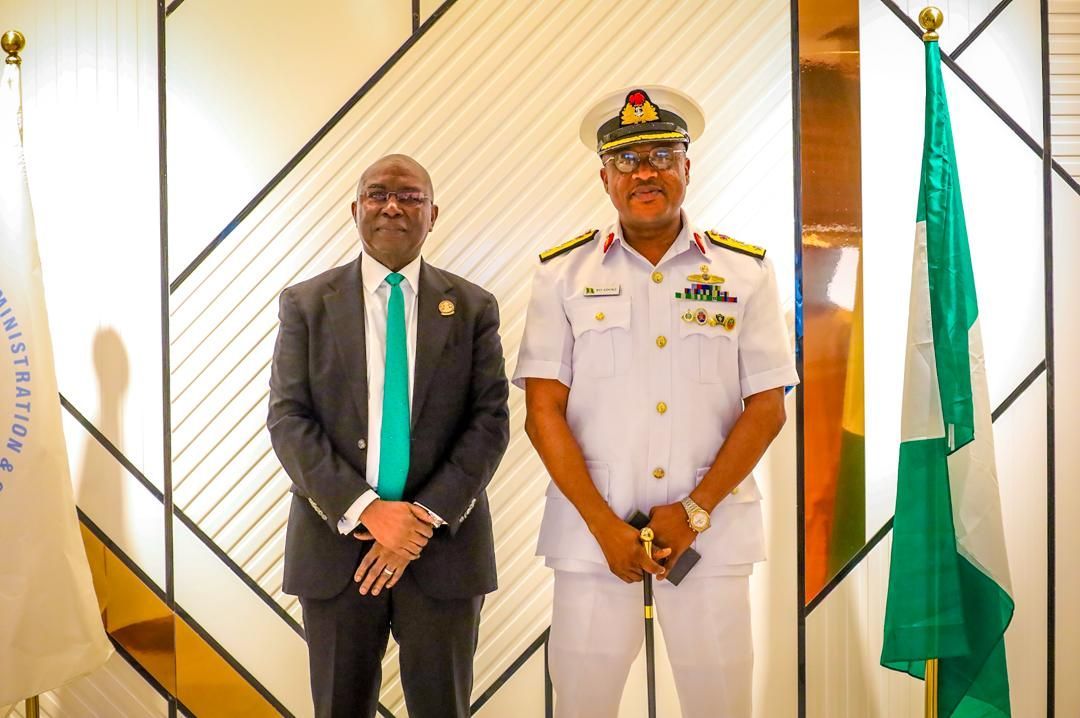
Commodore Adoki, a principal Warfare Officer specializing in communication and intelligence, brings onboard 25 years experience in the Nigerian Navy covering training, staff and operations.
Welcoming the new MGC Commander to the Agency, the Director General, Dr Dayo Mobereola, expressed confidence in Adoki’s addition to the team, emphasising that it will further strengthen the nation’s maritime security architecture given his vast experience in the industry.
The Maritime Guard Command domiciled in NIMASA was established as part of the resolutions of the Memorandum of Understanding (MoU) with the Nigerian Navy to assist NIMASA strengthen operational efficiency in Nigeria’s territorial waters, especially through enforcement of security, safety and other maritime regulations.
Customs
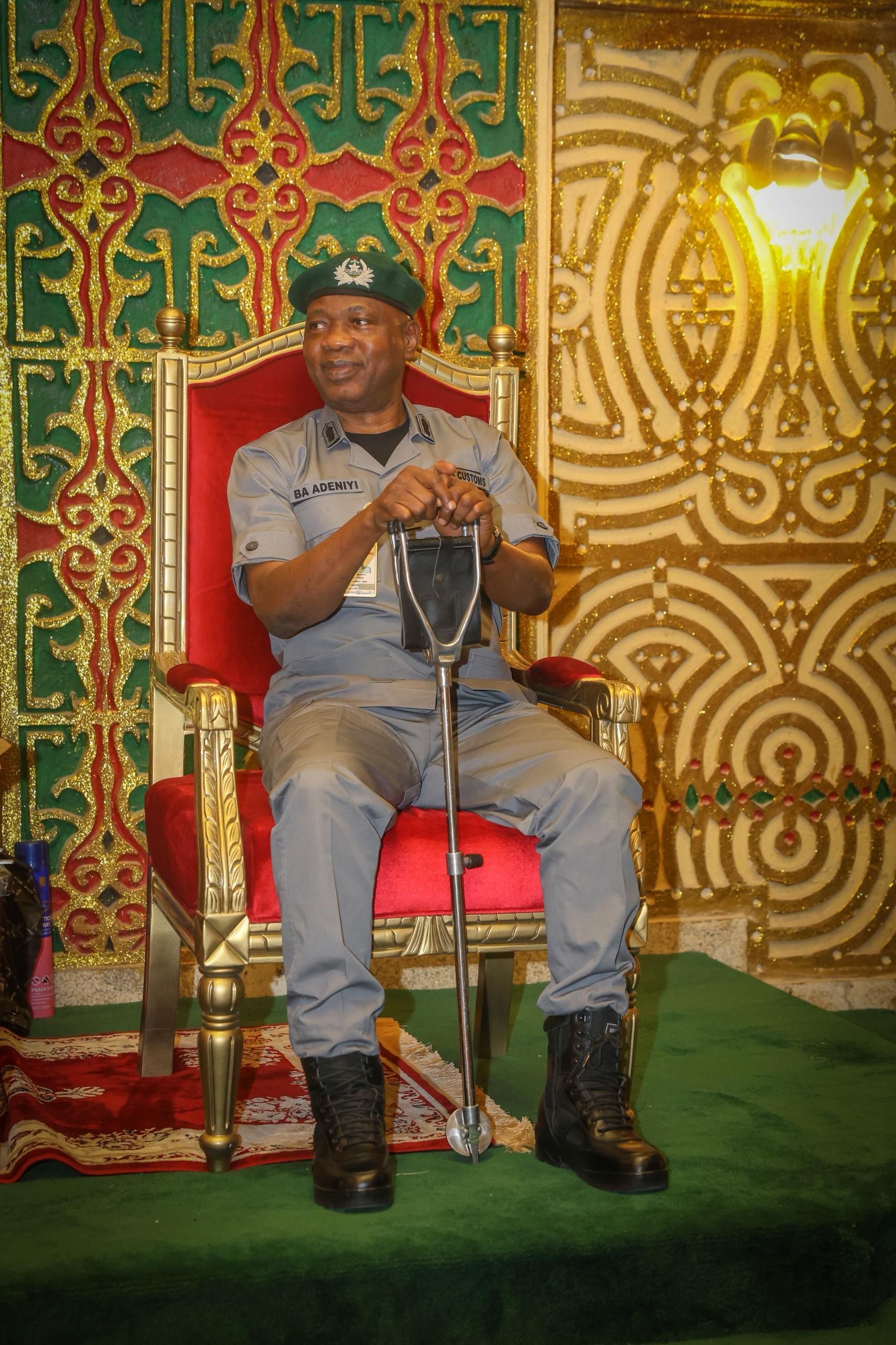
Customs collects N1.585 trillion from 51 compliant traders under AEO programme
-

 Headlines3 months ago
Ex-NIWA boss, Oyebamiji, emerges most media-friendly CEO in maritime industry
-

 Headlines4 days ago
FIFA sends Nigeria’s Super Eagles to 2026 World Cup, awards boardroom scoreline of 3 goals to nil against DR Congo
-

 Headlines3 months ago
MARAN pulls industry’s stakeholders to unveil its iconic book on Maritime industry.
-
 Customs3 months ago
How Comptroller Adenuga is raising revenue profile of Seme command, facilitating regional trade.
-
 Headlines3 months ago
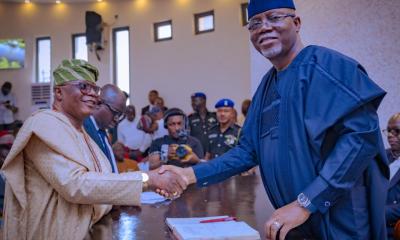
Ondo govt inaugurates former NIMASA Director, Olu Aladenusi, as Special Aide on Marine and Blue Economy
-

 Headlines3 months ago
Nigeria showcases readiness for compliance with IMO decarbonization policy at Brazil conference