

Economy
Finance Minister discredits CBN’s Naira redesigning policy

“However as a Nigerian privileged to be at the top of Nigeria’s fiscal management, the policy as rolled out at this time portends serious consequences on the value of Naira to other foreign currencies.
“I will however appeal to this committee to invite the CBN governor for required explanations as regards merits of the planned policy and rightness or otherwise of its implementation now.”
He had told the Finance Minister that barely two days after the announcement of the policy by CBN, the repercussion of it on the value of the Naira to the US dollar was being felt.
“To me, the policy may be a well-conceived one, but the timing going by realities on the ground, is very wrong as the Naira may fall to as low as N1,000 to a US dollar before January 31, 2023, fixed for full implementation of the policy.”
Emefiele said the action was taken in order to take control of the currency in circulation just as he posited that the bulk of the nation’s currency notes were outside bank vaults and that the CBN would not allow the situation to continue.
According to him, the planned policy was in line with Sections 19, Subsections a and b of the CBN Act 2007, upon which the management of the CBN sought and obtained the approval of President Muhammadu Buhari to redesign, produce, and circulate new series of banknotes at N200, N500, and N1,000 notes.




Economy
News Alert! Tinubu sacks Wale Edun as Finance Minister in cabinet reshuffle, appoints Taiwo Oyedele as replacement
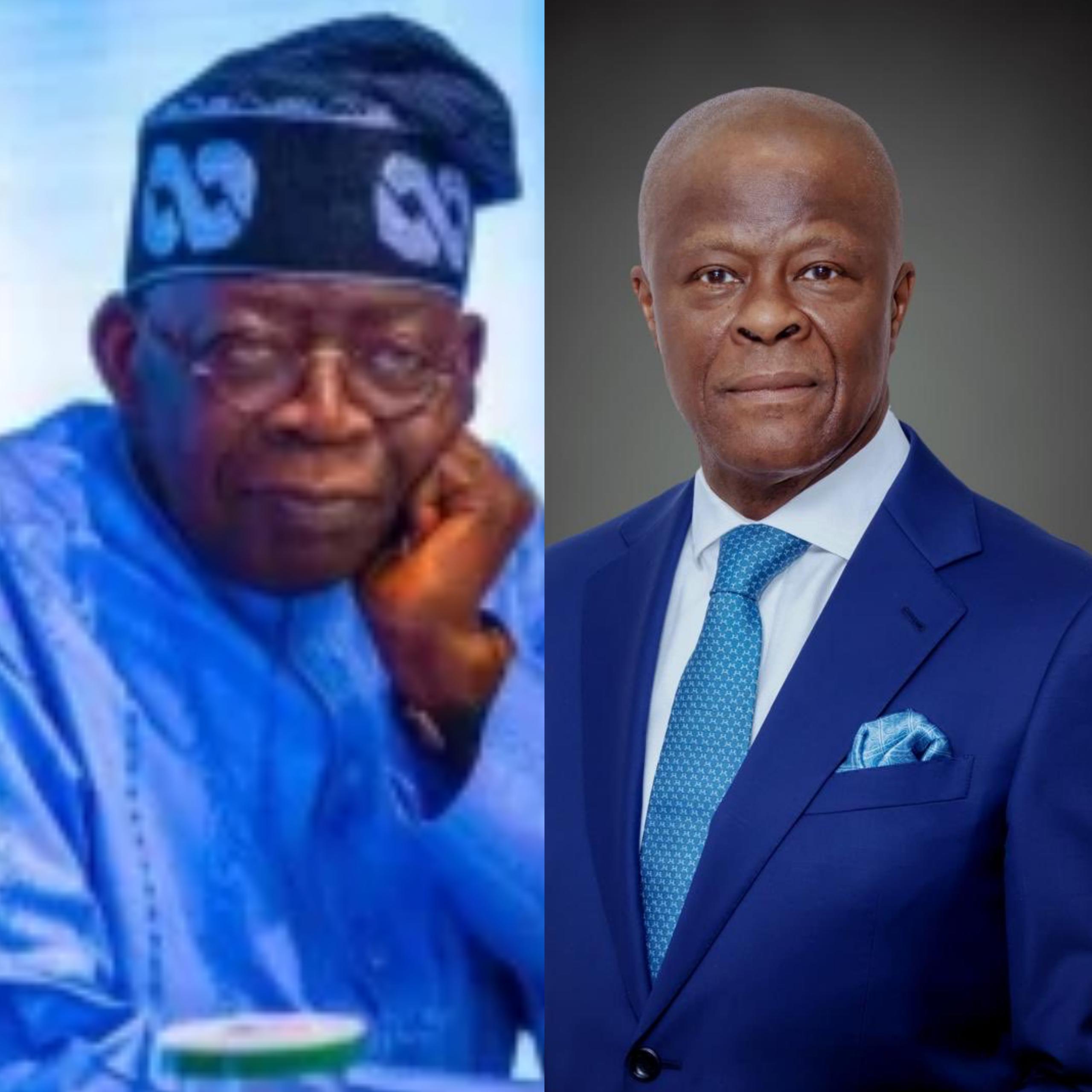
Secretary to the Government of the Federation, George Akume.According to the memo, Taiwo Oyedele has been appointed as the new Minister of Finance and Coordinating Minister of the Economy.
The memo directed the outgoing ministers to complete handover processes to their respective successors or supervising officials.It stated that all handing over and taking over activities must be concluded on or before the close of business on Thursday, 23rd April, 2026.
Explaining the decision, Akume said the changes were aimed at improving coordination and strengthening delivery across key sectors of the economy under the Renewed Hope Agenda.
“These changes are aimed at strengthening cohesion, synergy in governance as well as achieving more impactful delivery on the economy to Nigerians, through the Renewed Hope Agenda,” Akume stated.
He added that President Tinubu acted in line with his constitutional powers as provided under Sections 147 and 148 of the 1999 Constitution (as amended).
The SGF also conveyed the President’s appreciation to the outgoing ministers for their service to the nation and wished them well in their future endeavours, noting that the process of cabinet reinvigoration would remain continuous.
The statement further noted that Taiwo Oyedele was appointed as Minister of State for Finance in March 2026, while Edun was among the ministers appointed on August 16, 2023.
Economy
Tinubu assents to 2026 Appropriation bill , extends 2025 budget implementation

Economy
NNPC attributes increased crude oil production to enhanced security surveillance of pipelines in Niger- Delta
Funso OLOJO, Editor
The Nigerian National Petroleum Company Limited (NNPC) has confirmed that national crude oil production has grown from a historic low of 960,000 barrels per day in 2022 to an average of 1.71 million barrels per day and a peak production of 1.84 million barrels per day in 2025, owing to the establishment of the integrated energy security for pipelines in the Niger Delta.
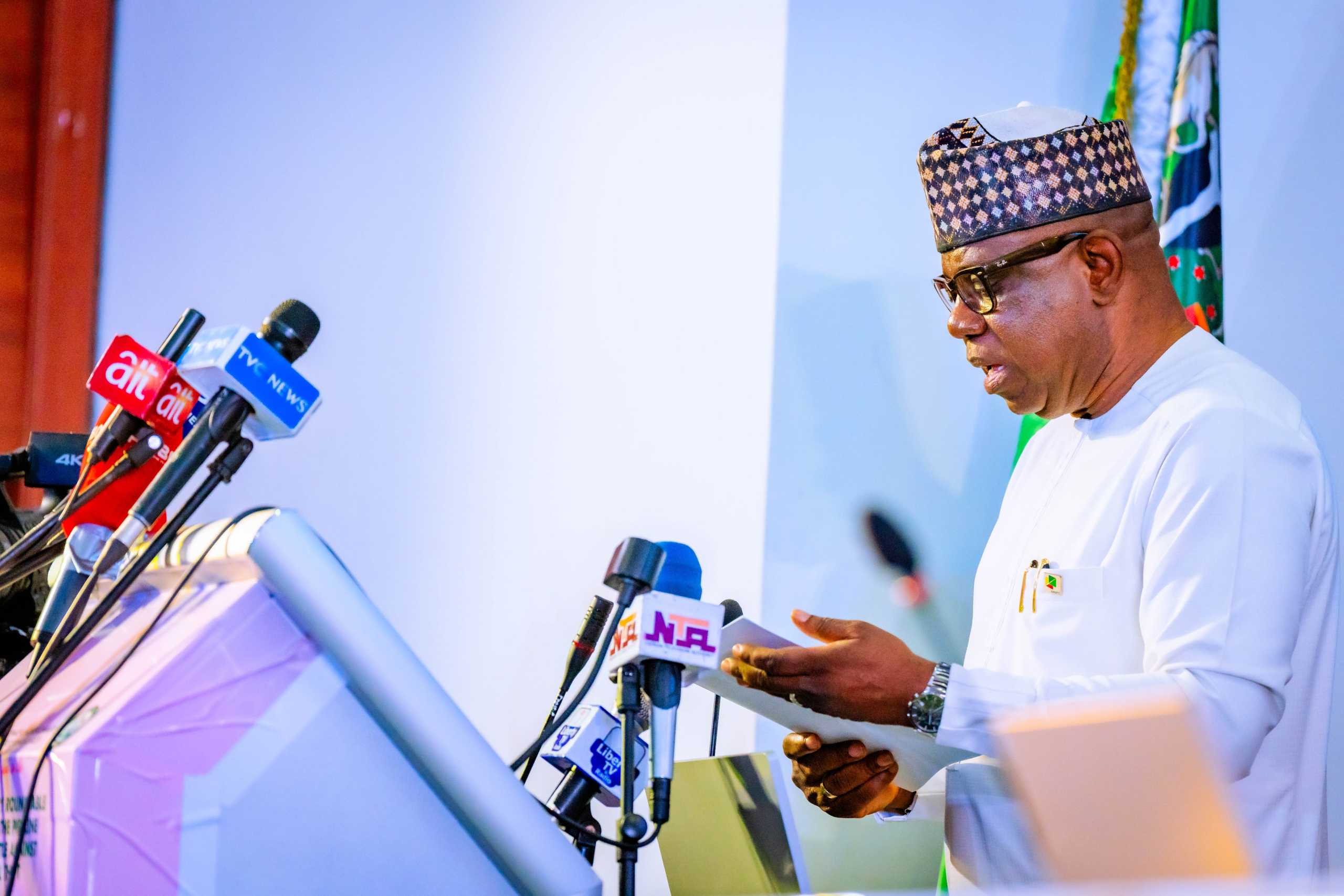
Group Chief Executive Officer of NNPC Ltd, Engr. Bashir Bayo Ojulari, made the disclosure at the Parliamentary Roundtable on the State of Pipelines Security which held at the National Assembly, in Abuja, on Wednesday, April 8th, 2026.
Speaking on the success of the security arrangement, Ojulari explained that it was not accidental, and that it involved an “integrated energy security model that combines legislative and executive policy alignment, actionable intelligence, kinetic deployment capabilities, regulatory oversight, industry cooperation, and community‑embedded surveillance mechanisms”.
He said the resurgence of production due to the effective tackling of the twin menace of oil theft and pervasive pipeline sabotage has led to the restoration of investors’ confidence in the nation’s oil and gas sector.
In his welcome address, the President of the Senate, Sen. Godswill Akpabio, represented by Senator Jimoh Ibrahim, called for collaboration among agencies and stakeholders in resolving all challenges impeding production growth.
On his part, the Speaker of the House of Representatives, who was represented by the Leader of the House, Hon. (Prof.) Julius Ihonvbere, urged the forum to evaluate the progress made so far with a view to ensuring fairness and equity.
The Parliamentary Roundtable on the State of Pipelines Security was convened by the Joint Senate and House of Representatives Committee on Petroleum Resources.
It had in attendance the Senate President, Speaker of the House of Representatives, National Security Adviser, Minister of Defence, and representatives of oil industry regulatory agencies.
The Roundtable also featured presentations by the Chief of Defence Staff, Inspector General of Police, Director General of the Department of State Services, Commandant General of the Nigerian Security and Civil Defense Corps, and private security companies.
-

 Headlines3 months ago
FIFA sends Nigeria’s Super Eagles to 2026 World Cup, awards boardroom scoreline of 3 goals to nil against DR Congo
-

 Aviation3 months ago
Why we increased cargo tariff at Airports– FAAN
-
 Aviation3 months ago
Tension de-escalates at Lagos Airport as FAAN, Cargo agents reach truce over new tariff
-

 Aviation3 months ago
Freight forwarders warn FAAN’s new charges regime could cripple airport operations
-
Aviation3 months ago
FAAN, freight forwarders in stand- off over new tariff regime at Lagos Airport
-

 Business3 months ago
National Single Window goes live in March, 2026