
Economy
CBN reverses itself on cash withdrawal limits as Emefiele succumbs to pressure

—now pegs weekly withdrawal for individual to N500,000, Corporate N5million
The Eyewitness Reporter
The Central Bank of Nigeria(CBN) may have succumbed to pressure from the National Assembly and other rich Nigerians as it has reversed itself on its earlier cash withdrawal limits for individuals and corporate organisations.
In a circular number BSD/DIR/PUB/LAB/015/073 dated December 21st, 2022 and addressed to all Deposit Money Banks(DMBS) and other financial institutions, the apex bank disclosed that the new weekly cash withdrawal limits for both the individuals and corporate organisations have now been reviewed to N500,000 and N5million respectively.
The new weekly cash withdrawal limits now superseded the earlier one released on December 6th, 2022 which were put at N100,000 for individuals and N500,000 for corporate organisations.
In the new revised cash withdrawal limits, the CBN claimed the revision of the policy was in response to feedback from the stakeholders.
The new revised policy also slashed the processing fees for amounts above the approved threshold from an initial 5 percent for individuals to 3 percent and for corporate organisations from 10 percent to 5 percent.
The circular, which was signed by Haruna Mustafa, the Director of Banking supervision, the CBN said the new revised cash withdrawal policy takes effect from January, 9th,2022.
”Following our circular BSD/DIR/PUB/LAB/015/069 dated December 6, 2022, on the above subject and based on feedback received from stakeholders, the Central Bank Of Nigeria(CBN) hereby makes the following reviews;
–the maximum weekly limit for cash withdrawal across all channels by individuals and corporate organisations shall be N500,000 and N5 million respectively.
–In compelling circumstances where cash withdrawal above the limits in (1) above is required for legitimate purposes, such requests shall be subject to a processing fee of 3 percent and 5 percent for individuals and corporate organisations respectively.
–Futrher to (2) above, the financial institution shall obtain the following information from the Customer, at the minimum,and upload same on the CBN portal created for the purpose
a. Valid means of identification of the payee(National ID, International passport, or driver’s license)
b.Bank Verification Number(BVN) of the payee.
c.Tax Identification Number(TIN) of both the payee and the payer.
d. Approval in writing by the MD/CEO of the financial institution authorising the withdrawal.
–Third-party cheques above N100,000 shall not be eligible for payment over the counter, while the extant limit of N10 million on clearing cheques still subsists.
—Monthly returns on cash withdrawal transactions above the specified limits should be rendered to the banking supervision, Other financial institution supervision and Payment System Management Departments as applicable
—Compliance with extant AML/CFT regulations relating to KYC, ongoing customer due diligence, currency and suspicious transaction reporting, etc is mandatory in all circumstances.
—Customers should be encouraged to use alternative channels(internet banking, mobile banking apps, USSD, cards/POS, eNaira,gets) to conduct their banking transactions”, the circular reads.
The CBN however warned all the banks and OFIS that aiding and abetting the circumvention of this policy will attract severe sanctions.
It could be recalled that the policy, which was first announced on December 6th, 2022, generated mixed reactions, especially from the members of the National Assembly who invited the CBN Governor. Godwin Emefiele to come and explain the rationale behind the cash withdrawal limits.
Twice, the National Assembly invited Mr. Emefiele, but twice, he did not appear, citing national assignment engagement as the reason for his non-appearance.
The review may, however, be as a result of the intense pressure that the CBN governor has lately been subjected to as a result of this policy which analysts believed does not favour the elites, the politicians and the rich Nigerians, especially giving the forthcoming elections.




Economy
News Alert! Tinubu sacks Wale Edun as Finance Minister in cabinet reshuffle, appoints Taiwo Oyedele as replacement
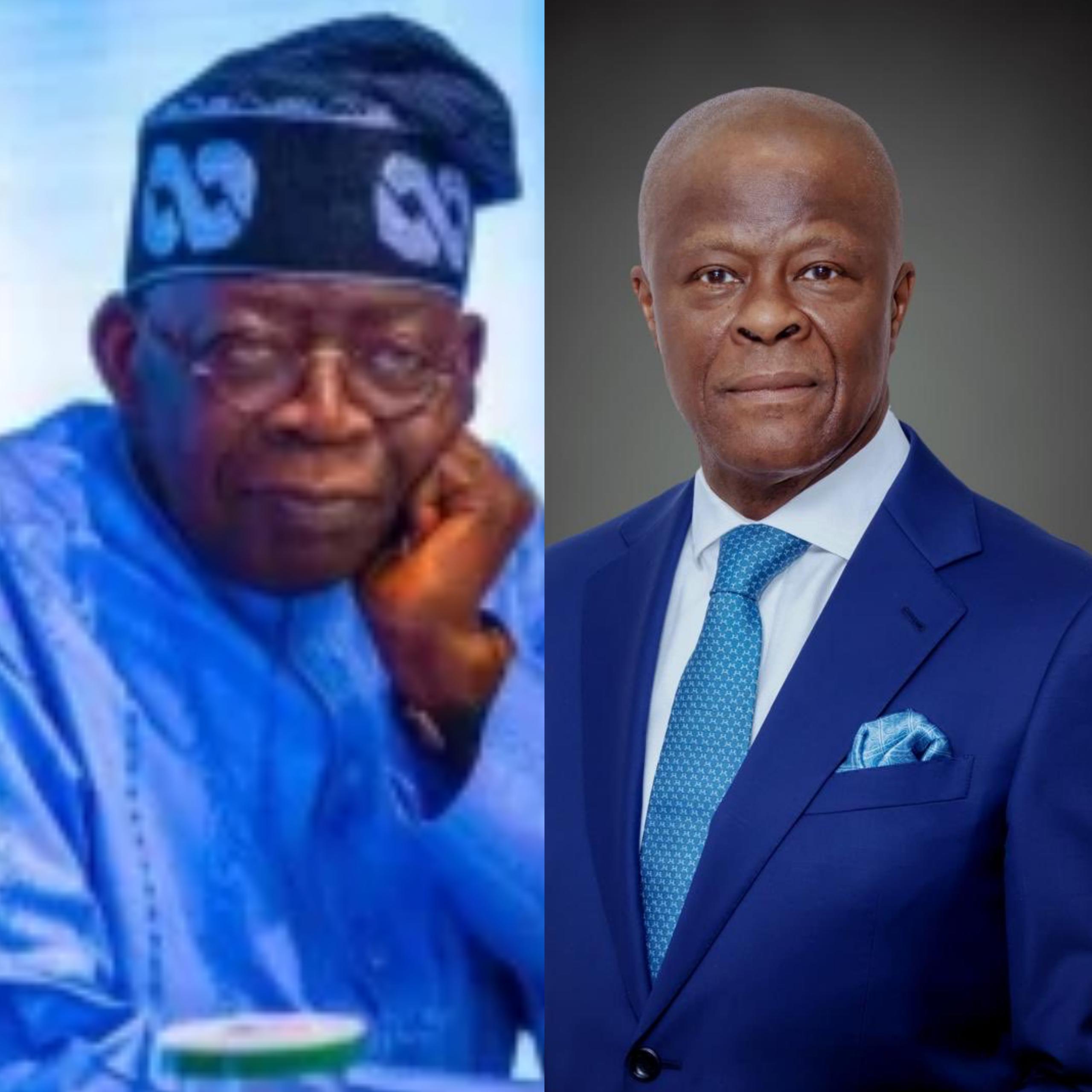
Secretary to the Government of the Federation, George Akume.According to the memo, Taiwo Oyedele has been appointed as the new Minister of Finance and Coordinating Minister of the Economy.
The memo directed the outgoing ministers to complete handover processes to their respective successors or supervising officials.It stated that all handing over and taking over activities must be concluded on or before the close of business on Thursday, 23rd April, 2026.
Explaining the decision, Akume said the changes were aimed at improving coordination and strengthening delivery across key sectors of the economy under the Renewed Hope Agenda.
“These changes are aimed at strengthening cohesion, synergy in governance as well as achieving more impactful delivery on the economy to Nigerians, through the Renewed Hope Agenda,” Akume stated.
He added that President Tinubu acted in line with his constitutional powers as provided under Sections 147 and 148 of the 1999 Constitution (as amended).
The SGF also conveyed the President’s appreciation to the outgoing ministers for their service to the nation and wished them well in their future endeavours, noting that the process of cabinet reinvigoration would remain continuous.
The statement further noted that Taiwo Oyedele was appointed as Minister of State for Finance in March 2026, while Edun was among the ministers appointed on August 16, 2023.
Economy
Tinubu assents to 2026 Appropriation bill , extends 2025 budget implementation

Economy
NNPC attributes increased crude oil production to enhanced security surveillance of pipelines in Niger- Delta
Funso OLOJO, Editor
The Nigerian National Petroleum Company Limited (NNPC) has confirmed that national crude oil production has grown from a historic low of 960,000 barrels per day in 2022 to an average of 1.71 million barrels per day and a peak production of 1.84 million barrels per day in 2025, owing to the establishment of the integrated energy security for pipelines in the Niger Delta.
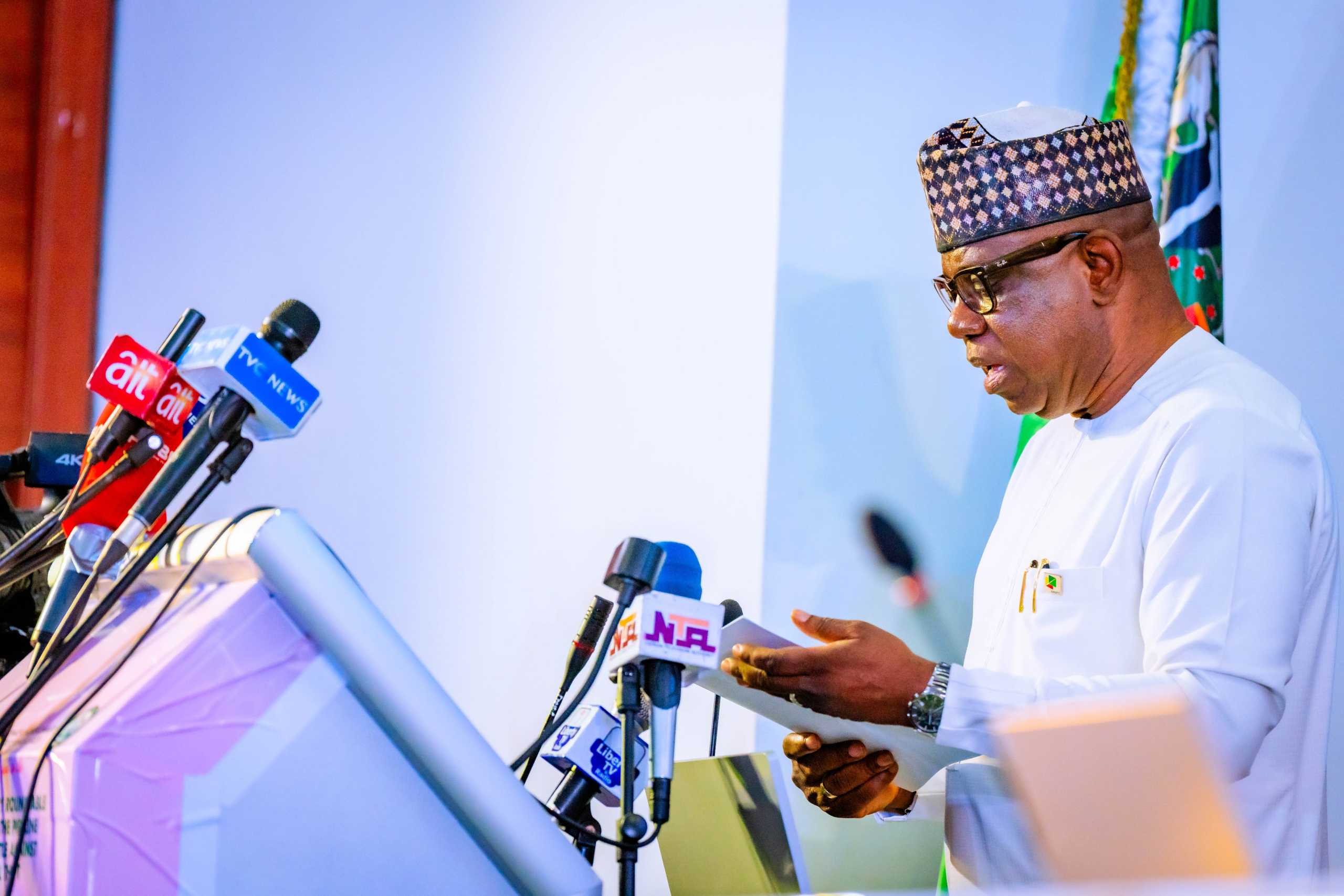
Group Chief Executive Officer of NNPC Ltd, Engr. Bashir Bayo Ojulari, made the disclosure at the Parliamentary Roundtable on the State of Pipelines Security which held at the National Assembly, in Abuja, on Wednesday, April 8th, 2026.
Speaking on the success of the security arrangement, Ojulari explained that it was not accidental, and that it involved an “integrated energy security model that combines legislative and executive policy alignment, actionable intelligence, kinetic deployment capabilities, regulatory oversight, industry cooperation, and community‑embedded surveillance mechanisms”.
He said the resurgence of production due to the effective tackling of the twin menace of oil theft and pervasive pipeline sabotage has led to the restoration of investors’ confidence in the nation’s oil and gas sector.
In his welcome address, the President of the Senate, Sen. Godswill Akpabio, represented by Senator Jimoh Ibrahim, called for collaboration among agencies and stakeholders in resolving all challenges impeding production growth.
On his part, the Speaker of the House of Representatives, who was represented by the Leader of the House, Hon. (Prof.) Julius Ihonvbere, urged the forum to evaluate the progress made so far with a view to ensuring fairness and equity.
The Parliamentary Roundtable on the State of Pipelines Security was convened by the Joint Senate and House of Representatives Committee on Petroleum Resources.
It had in attendance the Senate President, Speaker of the House of Representatives, National Security Adviser, Minister of Defence, and representatives of oil industry regulatory agencies.
The Roundtable also featured presentations by the Chief of Defence Staff, Inspector General of Police, Director General of the Department of State Services, Commandant General of the Nigerian Security and Civil Defense Corps, and private security companies.
-

 Headlines3 months ago
FIFA sends Nigeria’s Super Eagles to 2026 World Cup, awards boardroom scoreline of 3 goals to nil against DR Congo
-

 Aviation3 months ago
Why we increased cargo tariff at Airports– FAAN
-
 Aviation3 months ago
Tension de-escalates at Lagos Airport as FAAN, Cargo agents reach truce over new tariff
-

 Aviation3 months ago
Freight forwarders warn FAAN’s new charges regime could cripple airport operations
-
Aviation3 months ago
FAAN, freight forwarders in stand- off over new tariff regime at Lagos Airport
-

 Business3 months ago
National Single Window goes live in March, 2026