Connect with us

Headlines

Stakeholders caution Nigeria over currency swap deal with China 

as CBN lists gains of trade policy 
Gloria Odion 
The Central Bank of Nigeria (CBN) has described the Nigeria-China currency swap deal as a transformative policy instrument that could significantly reduce shipping costs, enhance trade efficiency, and ease foreign exchange pressure in Nigeria’s maritime industry.
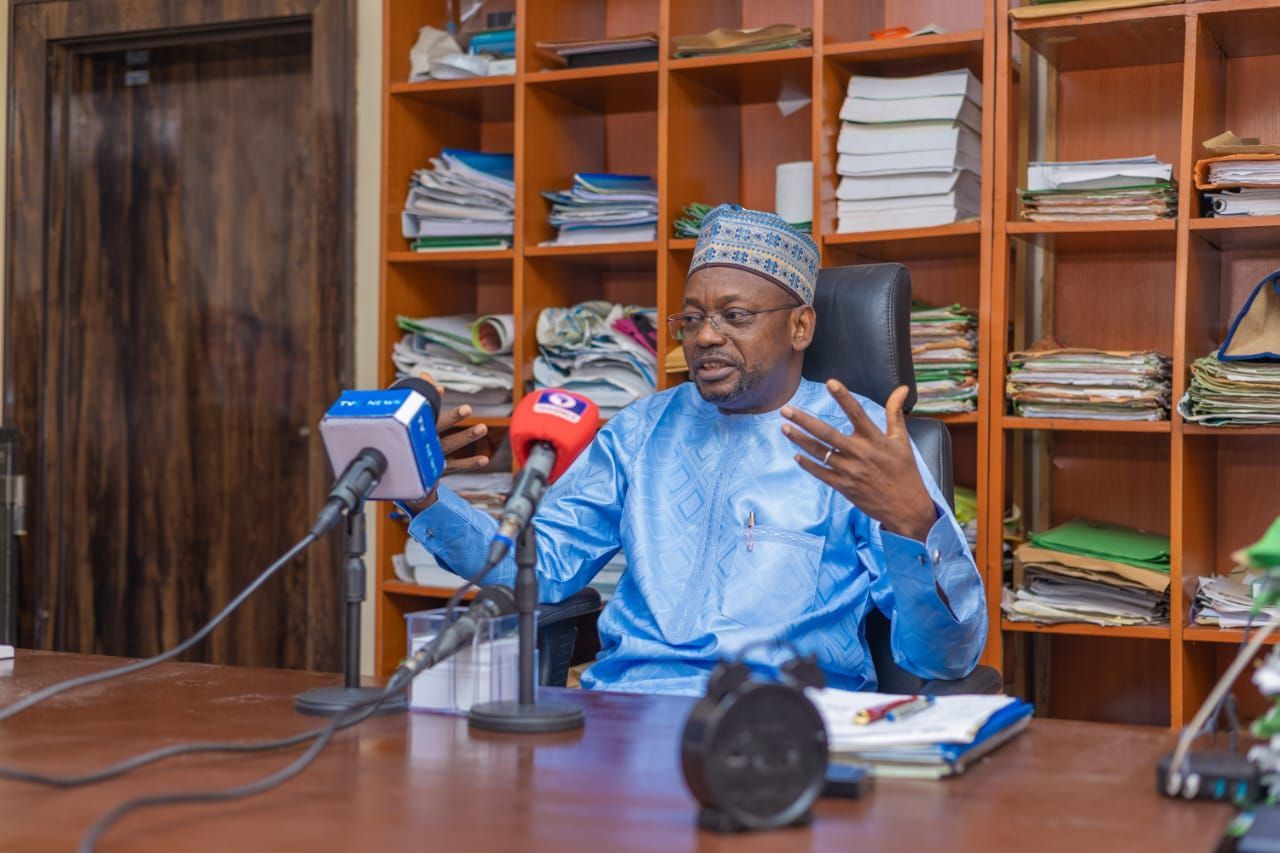
Speaking at a stakeholders’ breakfast meeting organized by the Maritime Reporters’ Association of Nigeria (MARAN) in Lagos on Tuesday, the CBN Governor, Mr. Olayemi Cardoso, stated that the agreement—originally signed in 2018 and recently renewed in December 2024—enables Nigerian and Chinese businesses to conduct trade directly in naira and renminbi, bypassing the U.S. dollar.
“The swap agreement simplifies the settlement of trade transactions in local currencies and reduces the pressure on Nigeria’s dollar reserves.
” This, in turn, lowers the cost of doing business and enhances the competitiveness of Nigerian trade,” Cardoso said.
The CBN Governor, who was represented by Mr Anthony Ogufere, Special Adviser to CBN Governor on Finance and Strategy, noted that China had become Nigeria’s largest trading partner by the end of 2024, accounting for about 35% of total imports and reaching a trade volume of $11.58 billion.
 He added that the maritime sector, which handles the majority of Nigeria’s import and export activities, stands to benefit immensely through faster port clearance, improved trade finance instruments, and direct shipping links such as the Lekki Deep Sea Port—a Chinese-backed infrastructure project under the Belt and Road Initiative.
However, the CBN Governor acknowledged that several challenges still hinder the full potential of the currency swap framework.
Chief among them is Nigeria’s significant trade imbalance with China and the limited adoption of yuan-denominated transactions by Nigerian businesses.
He called for greater sensitization, policy coordination, and efforts to expand non-oil exports to China.
The CBN governor also acknowledged the fact that the currency swap deal is not yet popular among Nigerian business owners due to sparse sensitization and mobilisation of the business community.
Also speaking at the event, Mr. Martins Olajide, a representative of the Nigeria-China Strategic Partnership, presented a paper that offered a more cautious outlook.
He noted that while the swap deal provides short-term relief and smoother trade operations, it is not a sustainable solution to the naira’s persistent depreciation.
Describing the swap arrangement as “swapization,” Olajide warned that Nigeria’s economic vulnerability and dependence on imports—especially from China—undermines the true impact of the agreement.
 He emphasized the need for structural reforms, particularly in industrialization, value addition, and local production.
“Without these changes, the swap deal may only reinforce economic dependence on China without solving the underlying issues,” he said.
In his opening remarks, the Chairman of the event and Chairman of the Customs Consultative Council (CCC), Aare Akeem Olarenwaju, decried the volatility of the naira-dollar exchange rate as a major cause of the skyrocketing cost of goods in Nigeria.
 He called for greater public awareness of alternative currency options like the Chinese yuan.
“You can’t determine the price of goods within a few hours due to constant exchange rate changes.
“Today it’s ₦1,600 to a dollar, and in the next few hours, it could be ₦1,700 or ₦1,500. It’s the common people who suffer the most,” Olarenwaju lamented.
He commended the organizers for opening up conversations around trade, currency, and maritime development, urging media professionals to help educate the public on alternatives that could reduce the nation’s dependence on the U.S. dollar.
Earlier in his welcome address, MARAN President, Mr. Godfrey Bivbere, reaffirmed the association’s commitment to promoting dialogue on key economic issues.
While acknowledging the swap deal’s promise in reducing transaction costs and enhancing trade efficiency, Bivbere stressed the need for a balanced discourse.
“We are not only here to applaud progress but also to interrogate policy.
” We must understand both the positive impact and the underlying risks associated with China’s expanding economic footprint in Nigeria,” he said.
Bivbere urged stakeholders across the maritime, trade, and financial sectors to approach the Nigeria-China currency swap with critical insight, noting that sustainable benefits would only come through policies that protect national economic interests while encouraging growth and competitiveness.

Continue Reading
Click to comment

Leave a Reply

Your email address will not be published. Required fields are marked *

Headlines

NIWA partners ICPC to strengthen internal transparency in its operations  

Gloria Odion, Maritime Reporter 
The National Inland Waterways Authority (NIWA) has announced new strategies aimed at improving its operational system and enhancing collaboration with key stakeholders as part of efforts to boost efficiency and accountability.
Speaking at a post event Press Conference at NIWA Headquarters Lokoja, the Acting Managing Director, Umar Yusuf Girei, while answering questions from journalists stated that, the organization convened a two -day Executive and Anti-Corruption training with the theme “Strengthening Integrity and Revenue System in Inland Waterways Management” organized for Board Members, Management and Area Managers and also 2026 NIWA Management Retreat in Abuja.
The Acting MD noted as part of the Renewed Hope Agenda of President Bola Ahmed Tinubu,with the support  Adegboyega Oyetola, Minister of Marine and Blue Economy, the Authority is focused on aligning institutional goals in ensuring better service delivery to Nigerians.
He further said, as part of its anti-corruption drive, the Management held discussions with the Independent Corrupt Practices and Other Related Offences Commission (ICPC) to explore measures for strengthening transparency within its operations.
Girei therefore, assured staff that the ongoing reforms under his watch would translate into improved service and better working conditions.
“NIWA remains committed to continuous improvement and stakeholder engagement and the reforms are expected to enhance both internal performance and public confidence”. he stated.
Continue Reading

Headlines

Navy appoints new Maritime Guard Commander for NIMASA 

Gloria Odion,  Maritime Reporter 

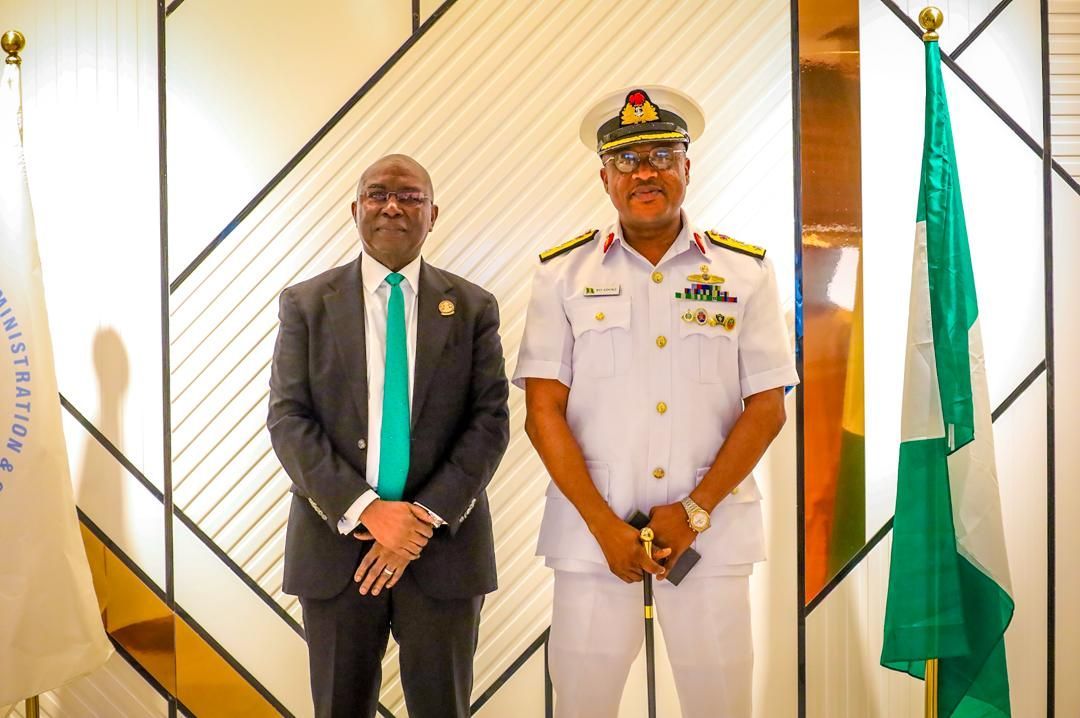
The Chief of the Naval Staff, Vice Admiral Idi Abbas, has approved the appointment of Commodore Reginald Odeodi Adoki as the Commander of the Maritime Guard Command at the Nigerian Maritime Administration and Safety Agency (NIMASA).
Commodore Adoki takes over from Commodore H.C Oriekeze who has been redeployed.

Commodore Adoki, a principal Warfare Officer specializing in communication and intelligence,  brings onboard 25 years experience in the Nigerian Navy covering training, staff and operations.

 As a seaman, he has commanded NNS Andoni, NNS Kyanwa and NNS Kada.
It was under his command that NNS Kada under took her maiden voyage, sailing from the country of build (the United Arab Emirates) into Nigeria.
He was commissioned into the Nigerian Navy in 2000 with a BSc in Mathematics.
 He has since earned a Masters in International Law and Diplomacy from the University of Lagos and an M.Sc in Terrorism, Security and Policing at University of Leicester, England.
He is currently pursuing a Ph.D in Defence and Security Studies at the National Defence Academy (NDA).
He is a highly decorated officer with several medals for distinguished service.

Welcoming the new MGC Commander to the Agency, the Director General, Dr Dayo Mobereola, expressed confidence in Adoki’s addition to the team, emphasising that it will further strengthen the nation’s maritime security architecture given his vast experience in the industry.

The Maritime Guard Command domiciled in NIMASA was established as part of the resolutions of the Memorandum of Understanding (MoU) with the Nigerian Navy to assist NIMASA strengthen operational efficiency in Nigeria’s territorial waters, especially through enforcement of security, safety and other maritime regulations.

Continue Reading

Customs

Customs collects N1.585 trillion from 51 compliant traders under AEO programme 

Funso OLOJO,  Editor 
The Authorized Economic Operator (AEO), one of the trade facilitation tools introduced by the Nigeria Customs Service in 2025, has begun to yield bountiful harvests with the revenue growth of ₦362.79 billion recorded in 2025.
According to the AEO scorecard released by the Service, the facilitation tool grossed the sum of N1.585 trillion after certification, an increase revenue from N1.222 trillion before certification.
This represents the growth of N362.79 billion(29.68 per cent) for 51 AEO – certified entities as at October, 2025.
The Programme, according to the NCS,  also contributed 21.77% to its total revenue collection of ₦7.281 trillion in 2025, while customs duties paid rose by 85.66% due to enhanced compliance and increased volumes of legitimate trade.
According to AEO Monitoring and Evaluation (M&E) Report, the Programme achieved an average compliance rate of 85.45 per cent with the highest at 100 per cent and the lowest at 60 per cent.
“The evaluation applied rigorous methodologies to ensure objectivity, transparency, and alignment with the World Customs Organisation (WCO) SAFE Framework of Standards and the provisions of the Nigeria Customs Service Act, 2023.
“In the area of trade facilitation, AEO participation reduced average cargo clearance time from 168 hours to 41 hours, representing a 75.60% time saving.
“Company operating costs declined by 57.2 per cent while demurrage payments dropped by 90 per cent, limiting capital flight to foreign-owned port service providers and strengthening foreign exchange retention.
” Overall trade efficiency improved by 77.11 per  through digitalisation, simplified procedures, and targeted risk management” the Customs declared in the AEO scorecard.
However, the Service singled out with Eight companies for commendation due to their integrity and compliance under the programme.
The companies include Coleman Technical Industries Limited, WACOT Rice Limited, ROMSON Oil Field Services Ltd, WACOT Limited, Chi Farms Ltd, CORMART Nigeria Ltd, PZ Cussons Nigeria Plc, Nigerian Bottling Company Limited and MTN Nigeria Communications Plc.
The Service lauded them for a cumulative voluntary remittance of over a billion naira into the Federation Account following their self-initiated transaction review and disclosure.
“These actions reflect the strengthening of post-clearance audit mechanisms and a growing culture of voluntary compliance within the trading community.
Nevertheless, the Service suspended a firm under the programme for its non- compliance and display of lack of integrity.
The suspended firm engaged in false declaration of consignments contrary to programme obligations.
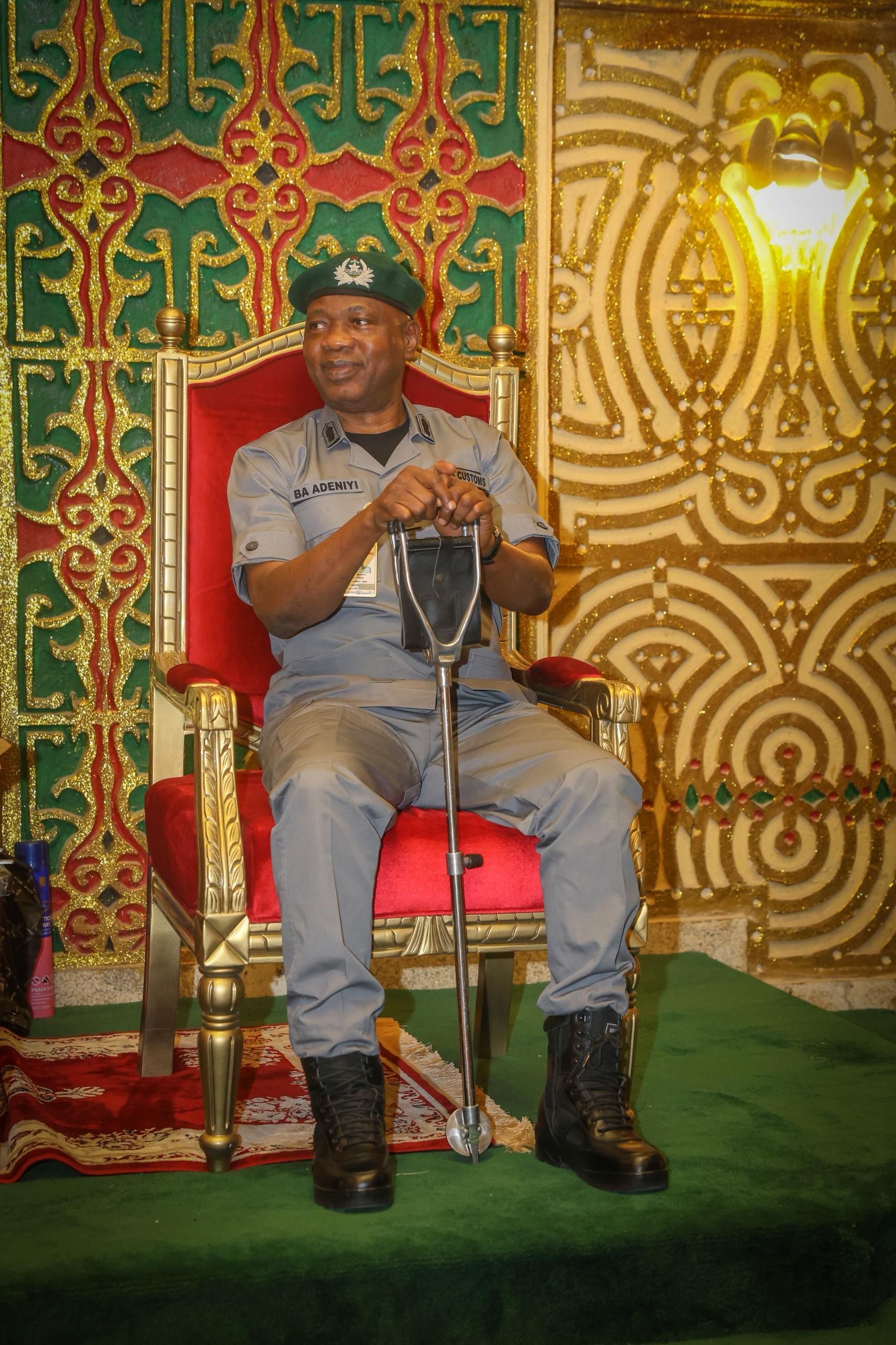
“Consequently, the Comptroller-General of Customs, Bashir Adewale Adeniyi, directed the immediate suspension of the company’s AEO status in accordance with the AEO Guidelines, the WCO SAFE Framework of Standards, and Section 112 of the Nigeria Customs Service Act, 2023.
The NCS reiterated that the AEO Programme is founded on trust, transparency, and continuous compliance.
“While compliant operators will continue to benefit from expedited clearance and reduced inspection, appropriate sanctions will be applied where violations are established.
“The Service remains resolute in safeguarding national revenue, facilitating legitimate trade, and preserving the integrity and global credibility of Nigeria’s AEO framework” the NCS concluded in the report.
Continue Reading

Trending