
Customs
Customs raises alarm over proliferation of sexual enhancement drugs imports, fake, expired pharmaceutical products into the country
Funso OLOJO
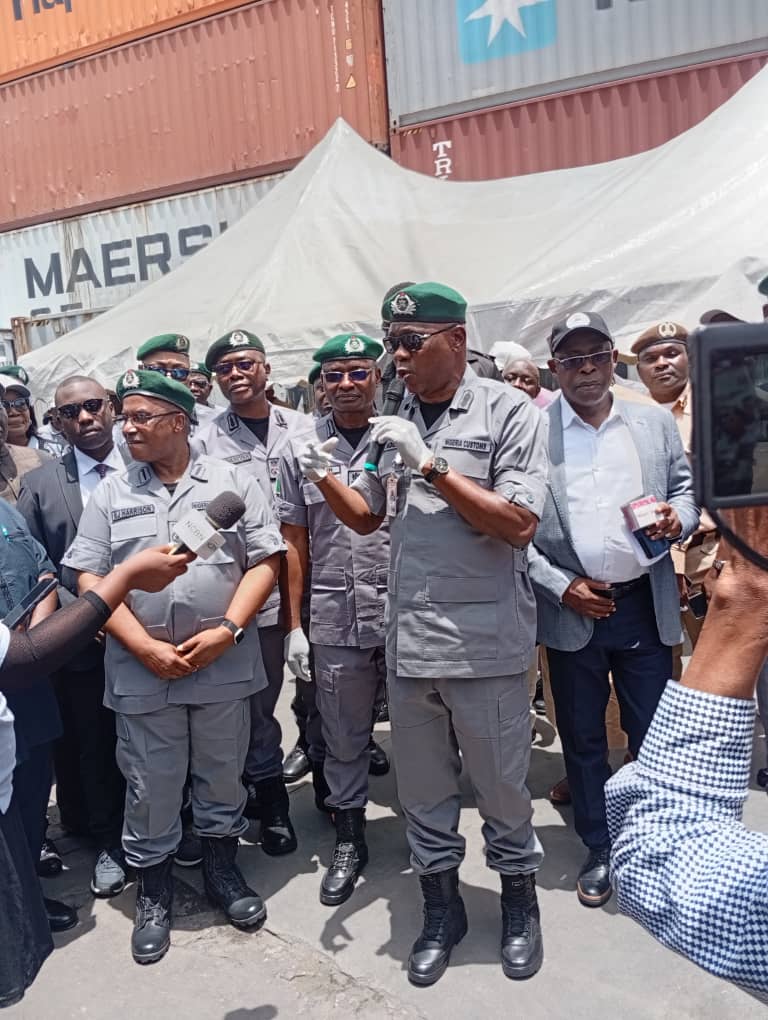
The Nigeria Customs Service has described as alarming the high rate of importation of sexual enhancement drugs and other substandard pharmaceutical products into the country.
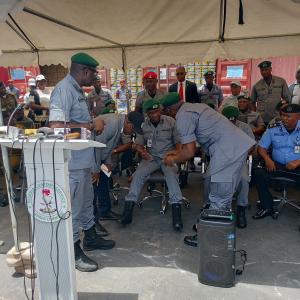
The Comptroller General Customs, Adewale Adeniyi, raised the alarm while showcasing 11 seizures made by the Apapa command of the service between January to April, 2025.
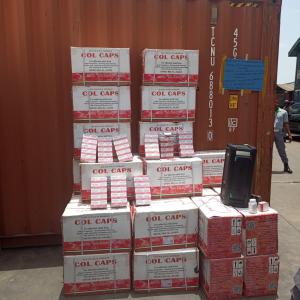
An apparently alarmed CGC said that the prevalence of unregistered pharmaceutical products entering the country’s supply chain without requisite regulatory approvals and quality assurance certifications is a cause for serious concerns.
However, he said the seizure operations yielded a total of eleven (11) seizures comprising: Five (5) units of 40-foot containers ,Two (2) units of 20-foot containers, Four (4) additional seizures of loosely concealed contraband items.
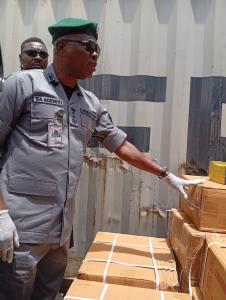
The seizures have an aggregate Duty Paid Value (DPV) of Nine Hundred and Twenty-One Million, Twenty-One Thousand, Two Hundred and Thirteen Naira (₦921,021,213.00) as calculated in accordance with Service valuation protocols.
Adeniyi was particularly concerned with the large volume of sexual enhancement drugs which he said formed a larger chunk of seized items at the Apapa port.
According to him, five out of the 11 containers intercepted contained various forms of sildenafil citrate and related sexual enhancement medications.
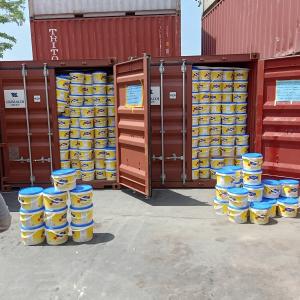
“This is a disturbing trend in the importation of unregulated sexual performance drugs that pose serious health risks, including potential cardiovascular complications and harmful drug interactions when used without proper medical supervision”
The Customs profiled the seized contraband goods into three principal categories
These include Category A. Unregistered pharmaceutical products lacking mandatory NAFDAC registration numbers and certification, a direct contravention of Section 28 of the NAFDAC Act Cap N1 LFN 2004 (as amended). These constitute 63.7% of the total seizure value.
Category B. Expired food items with compromised safety profiles that pose imminent danger to public health if introduced into the consumer market, in violation of the Food Products (Registration) Regulations and the Pre-Shipment Inspection of Exports Act.
Category C. Controlled equipment including drone technology and telecommunications devices imported without requisite
End-User Certificates from the Office of the National Security Adviser (ONSA) as mandated by the National Security Agencies Act
The CGC revealed that the seizure pattern takes different dimensions.
“Upon meticulous analysis of these seizures, the Service has identified several significant patterns that warrant public attention:
“Pattern of Sexual Enhancement Drugs. Five of the eleven seizures involved various forms of sildenafil citrate and related sexual enhancement medications.
“Strategic Misdeclaration Tactics. We have observed a sophisticated pattern of misdeclaration where importers deliberately classify pharmaceuticals as general merchandise or cosmetics.
” Container MRSU 3041714 declared sildenafil products as omeprazole capsules, while TCKU 6930113 concealed skin creams as cosmetic powder. This demonstrates calculated attempts to evade regulatory scrutiny.
“Diversification of Contraband Portfolio. The seizures reveal importers are diversifying their contraband portfolios—combining pharmaceuticals, food items, and controlled technology in systematic shipments.
“This suggests the emergence of organized networks with sophisticated logistics capabilities rather than isolated smuggling attempts.
“Strategic Country of Origin Selection. Analysis reveals a pattern in the selection of countries of origin, with many consignments originating from jurisdictions with less stringent pharmaceutical export controls.
“This indicates deliberate exploitation of regulatory gaps in the international supply chain.
“Escalation of Non-Pharmaceutical Security Threats. The significant number of drone seizures (113 units across two incidents) without proper end-user certificates represents an emerging security concern beyond traditional contraband.
” The inclusion of communication devices suggests potential applications beyond recreational use.
“Financial Scale Analysis. The consistent valuation of pharmaceutical containers between ₦140-145 million per 40ft container indicates a standardized commercial operation with established pricing structures, suggesting these are not opportunistic shipments but rather systematic business operations” Adewale noted.

Continue Reading
Customs
Customs collects N1.585 trillion from 51 compliant traders under AEO programme
Funso OLOJO, Editor
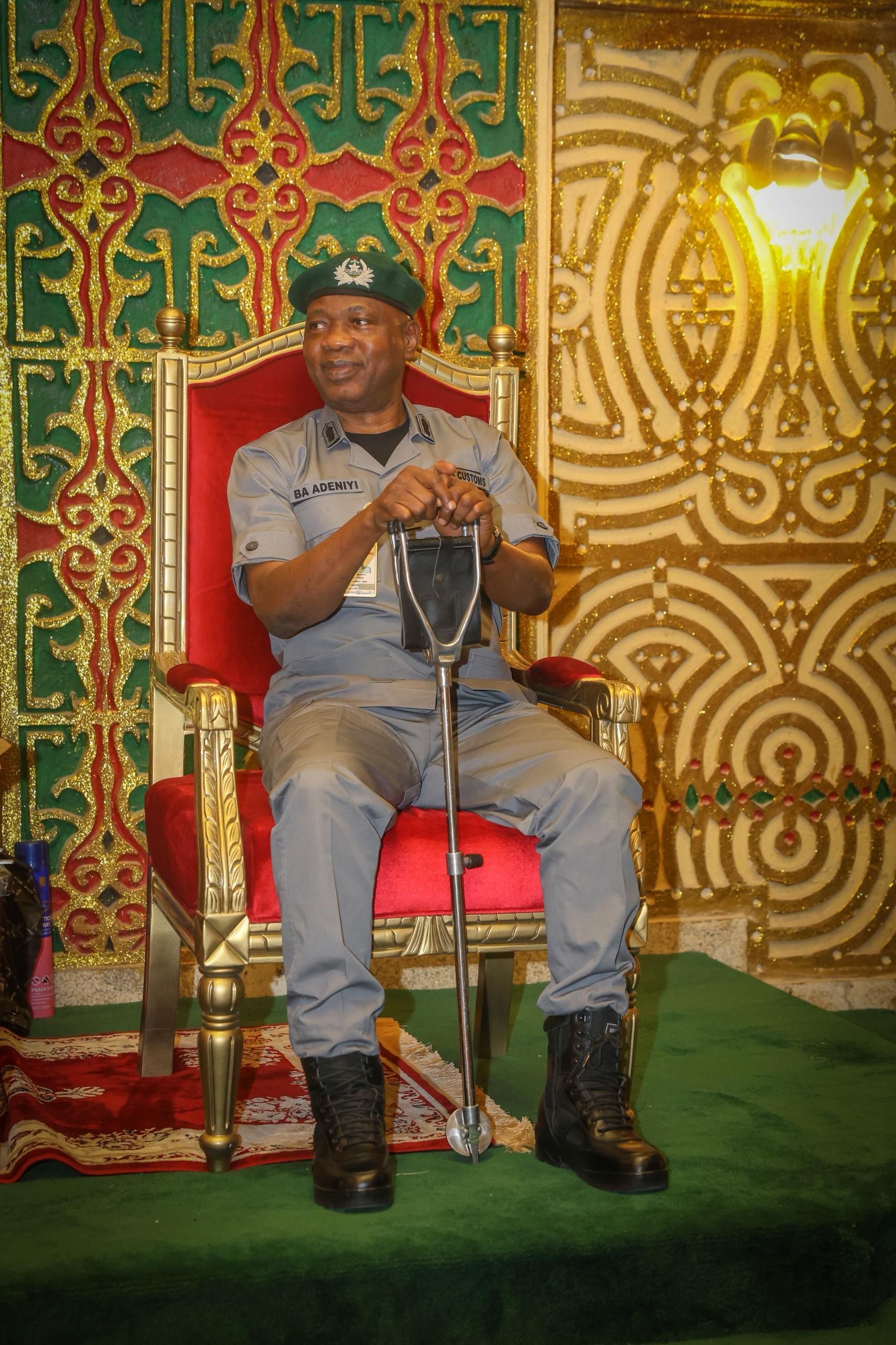
The Authorized Economic Operator (AEO), one of the trade facilitation tools introduced by the Nigeria Customs Service in 2025, has begun to yield bountiful harvests with the revenue growth of ₦362.79 billion recorded in 2025.
According to the AEO scorecard released by the Service, the facilitation tool grossed the sum of N1.585 trillion after certification, an increase revenue from N1.222 trillion before certification.
This represents the growth of N362.79 billion(29.68 per cent) for 51 AEO – certified entities as at October, 2025.
The Programme, according to the NCS, also contributed 21.77% to its total revenue collection of ₦7.281 trillion in 2025, while customs duties paid rose by 85.66% due to enhanced compliance and increased volumes of legitimate trade.
According to AEO Monitoring and Evaluation (M&E) Report, the Programme achieved an average compliance rate of 85.45 per cent with the highest at 100 per cent and the lowest at 60 per cent.
“The evaluation applied rigorous methodologies to ensure objectivity, transparency, and alignment with the World Customs Organisation (WCO) SAFE Framework of Standards and the provisions of the Nigeria Customs Service Act, 2023.
“In the area of trade facilitation, AEO participation reduced average cargo clearance time from 168 hours to 41 hours, representing a 75.60% time saving.
“Company operating costs declined by 57.2 per cent while demurrage payments dropped by 90 per cent, limiting capital flight to foreign-owned port service providers and strengthening foreign exchange retention.
” Overall trade efficiency improved by 77.11 per through digitalisation, simplified procedures, and targeted risk management” the Customs declared in the AEO scorecard.
However, the Service singled out with Eight companies for commendation due to their integrity and compliance under the programme.
The companies include Coleman Technical Industries Limited, WACOT Rice Limited, ROMSON Oil Field Services Ltd, WACOT Limited, Chi Farms Ltd, CORMART Nigeria Ltd, PZ Cussons Nigeria Plc, Nigerian Bottling Company Limited and MTN Nigeria Communications Plc.
The Service lauded them for a cumulative voluntary remittance of over a billion naira into the Federation Account following their self-initiated transaction review and disclosure.
“These actions reflect the strengthening of post-clearance audit mechanisms and a growing culture of voluntary compliance within the trading community.
Nevertheless, the Service suspended a firm under the programme for its non- compliance and display of lack of integrity.
The suspended firm engaged in false declaration of consignments contrary to programme obligations.
“Consequently, the Comptroller-General of Customs, Bashir Adewale Adeniyi, directed the immediate suspension of the company’s AEO status in accordance with the AEO Guidelines, the WCO SAFE Framework of Standards, and Section 112 of the Nigeria Customs Service Act, 2023.
The NCS reiterated that the AEO Programme is founded on trust, transparency, and continuous compliance.
“While compliant operators will continue to benefit from expedited clearance and reduced inspection, appropriate sanctions will be applied where violations are established.
“The Service remains resolute in safeguarding national revenue, facilitating legitimate trade, and preserving the integrity and global credibility of Nigeria’s AEO framework” the NCS concluded in the report.
Customs
Customs takes delivery, commissions 60- bed hospital donated by BUA Group in Bauchi
Gloria Odion, Maritime Reporter
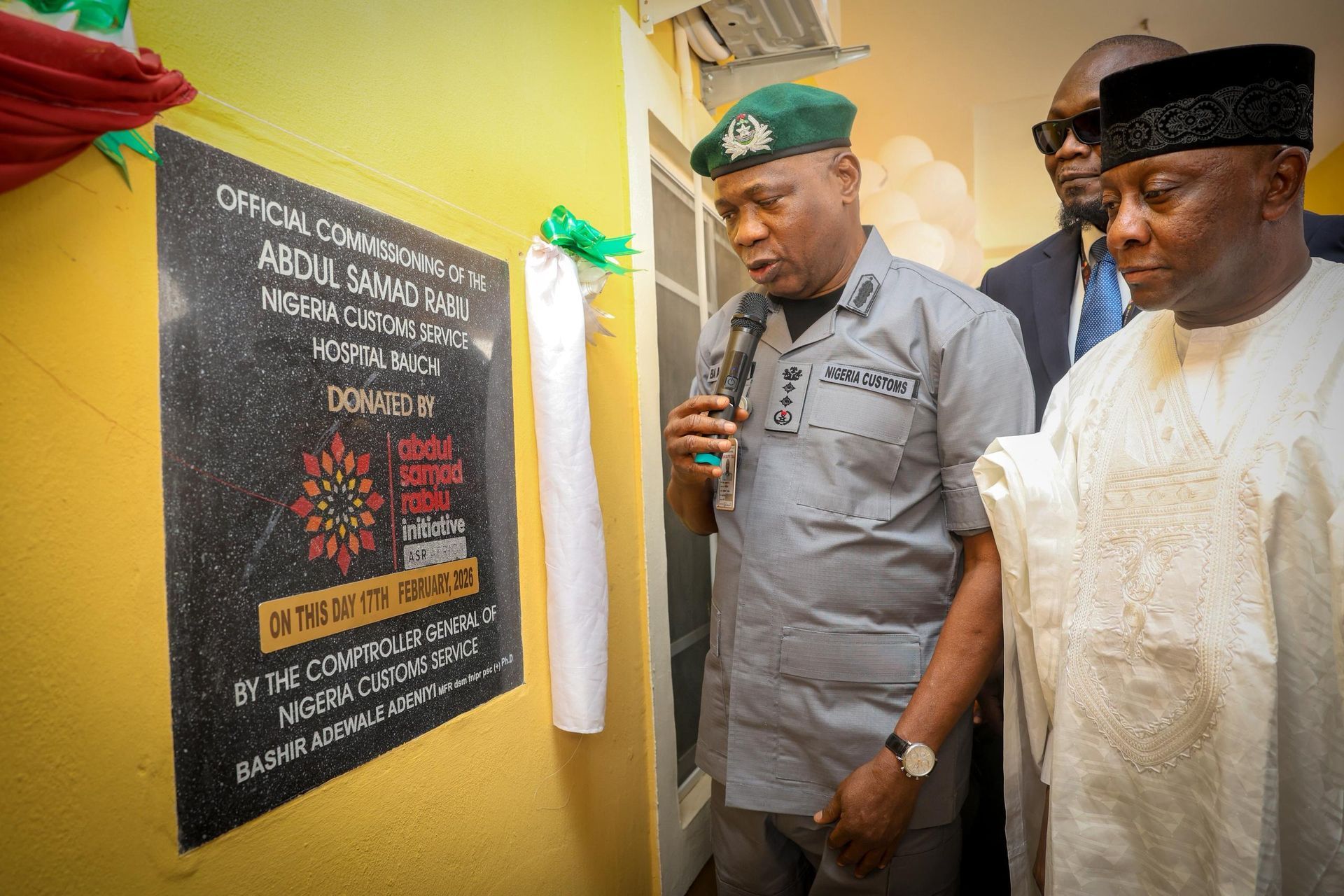
The Comptroller-General of Customs, Adewale Adeniyi, on Tuesday, February 17, 2026, officially commissioned the Abdul Samad Rabiu / Nigeria Customs Service Hospital in Bauchi, a 60-bed healthcare facility constructed and donated by Abdul Samad Rabiu, Chairman of ASR Africa and Founder/Executive Chairman of BUA Group.
The hospital, delivered through the Abdul Samad Rabiu Africa Initiative, is expected to significantly expand healthcare access for Customs officers, their families and host communities across Zone ‘D’ and neighbouring states.
Describing the project as a strategic welfare investment, the CGC said the facility reflects the Service’s commitment to strengthening institutional capacity through improved personnel wellbeing.
“This commissioning is a clear statement that the NCS prioritises the health and welfare of its officers,” he stated.
“A modern Service requires not only technology and operational reforms, but also strong social infrastructure that supports those who serve.”
In his remarks, the Managing Director/CEO of ASR Africa, Dr Ubon Udoh, emphasised the intervention’s sustainability focus.
“ASR Africa is committed to impact-driven philanthropy,” he said. “Our partnership with the NCS demonstrates what can be achieved when private sector commitment aligns with institutional reform and clear developmental goals.”
Also delivering a message on behalf of the Executive Governor of Bauchi State, Senator Bala Mohammed, the Secretary to the State Government, Aminu Hammayo, described the commissioning as a boost to the state’s healthcare ecosystem.
“This facility will complement existing public health institutions and improve access to specialised services,” he said.
“It reflects the value of collaboration between government and responsible corporate entities.”
The hospital’s commissioning marks the culmination of a phased transformation that began in 2008 with the establishment of a basic health post at the Zone ‘D’ Headquarters, Bauchi.
It was subsequently upgraded to a clinic, and later a medical centre, before a 2023 partnership between the NCS and ASR Africa converted it into a 30-bed hospital, completed in April 2025.
Following a needs assessment, the CGC approved the remodelling and expansion of the facility into a 60-bed secondary healthcare facility with selected tertiary services.
Now equipped with seven clinical departments: Nursing Services, Obstetrics and Gynaecology, Pediatrics, Surgery, Internal Medicine, Pharmacy and Medical Laboratory, alongside Administrative and Health Information Management units, as well as Dental, Radiology and Nutrition units.
The hospital is projected to manage up to 300 patients per month during its first operational year.
Long-term expansion plans include advanced diagnostics such as CT scans and MRI, as well as specialised surgical procedures, positioning the facility as a referral centre across the North-East and parts of North-Central Nigeria.
Customs
Ahead of Customs’ paperless operations in June, Comptroller Onyeka declares Tin Can Customs trade enabler

Funso OLOJO, Editor
Barely few days after the Comptroller- General of Customs, Adewale Adeniyi, announced that the Customs will migrate to paperless operations in June, 2026, the Tin Can command of the Service has made an elaborate preparation to key into the digital platform.
Even though, the Customs High Command is yet to release the blue print for the take -off of the digital revolution in goods clearance, the Controller of Tin Can Customs, Comptroller Frank Onyeka, has declared that his command is ready to hit the ground running.
To this end, Comptroller Onyeka has declared Tin Can Island Customs as a trade enabler where seamless operations will be the order of the day.
While speaking with the maritime media on Tuesday, February 17th, 2026, Onyeka stated that as long as an importer or his agent makes an honest declaration and the consignment is not flagged, such goods will leave the customs control within the 48 hours clearance time being envisaged by the Customs under its paperless operations regime.
Comptroller Onyeka further disclosed that his command will aim at collecting collectable revenue instead of maximum revenue which often leaves no room for trader to handle logistics costs and other sundry charges.
“By focusing on collectable revenue, we ensure that the trader makes profit, return to the market and continues to contribute to the society.
“I want to be known as a trade enabler personified” Comptroller Onyeka enthused.
While making projection into the year 2026, the Customs chief said the command recorded a lot of positives in 2025 when it surpassed the revenue target for that year and when a record revenue collection of 26 billion was recorded in a single day, a feat that was unprecedented in the history of the command.
Onyeka said the command started the year 2026 on a good revenue trajectory with the collection of N145. 9bn in January, representing a 25.3 percent increase when compared to the N116.4billon collected in January 2025.
He acknowledged the support of the media for its “constructive reportage” which acted as a catalyst for the good performance of the command in 2025.
While soliciting for the continued support of journalists in 2026, Comptroller Onyeka said his officers have been well primed to confront the challenges ahead.
He dismissed the fears of possible network glitches which stakeholders expressed may hamper the success of the paperless operations, saying such eventuality will be surmounted just as the teething problems which plagued B’ Odogwu platform at take off were conquered.
“Despite the teething problems with B’Odogwu, we have recorded tremendous success, so we are ready for the paperless operations.
“There could be network issues but I want to urge the trading public to build capacity.
“With that, you can complete container clearance entirely online, with no physical contact with customs officers.
“If your declaration is not flagged, the process will be seamless, there will be no reason to come and see anyone.
“We cannot guarantee a perfect system from day one, but those challenges will not stop us.
” The more traders declare correctly and honestly, the smoother this process becomes for everyone,” he declared while advising importers to palletise their consignments.
It could be recalled that while launching the Customs’ One- Stop- Shop(OSS) on Friday, February 13th, 2026, the Comptroller- General of Customs, Adewale Adeniyi, disclosed that the Service is advancing toward a fully paperless customs environment, with the first phase of digital clearance and documentation processes scheduled for rollout by the end of the second quarter of 2026.
“This platform is a deliberate shift from fragmented interventions to coordinated governance, from discretion to data, and from isolated actions to collective responsibility,” Adeniyi had declared.
“Through this reform, we continue to build systems that support lawful trade, protect national interests and serve the economy with professionalism and integrity.” he concluded.
-

 Headlines3 months ago
Ex-NIWA boss, Oyebamiji, emerges most media-friendly CEO in maritime industry
-

 Headlines4 days ago
FIFA sends Nigeria’s Super Eagles to 2026 World Cup, awards boardroom scoreline of 3 goals to nil against DR Congo
-

 Headlines3 months ago
MARAN pulls industry’s stakeholders to unveil its iconic book on Maritime industry.
-

 Customs3 months ago
How Comptroller Adenuga is raising revenue profile of Seme command, facilitating regional trade.
-

 Headlines3 months ago
Nigeria showcases readiness for compliance with IMO decarbonization policy at Brazil conference
-

 Headlines3 months ago
Ondo govt inaugurates former NIMASA Director, Olu Aladenusi, as Special Aide on Marine and Blue Economy