
Headlines
Hassan Bello urges CBN to give maritime industry special status as next cash cow for government

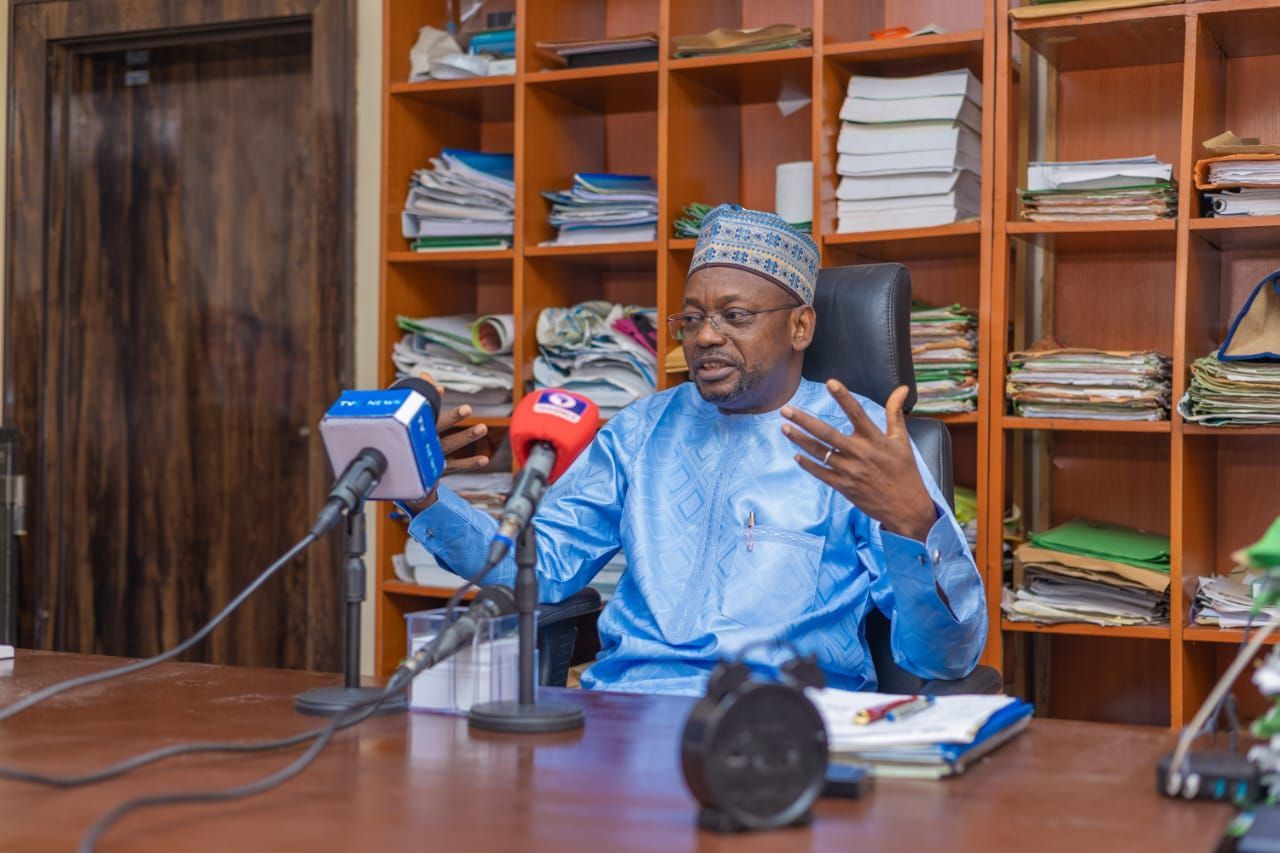
Barr. Hassan Bello, the Executive Secretary of the Nigerian Shippers’ Council (NSC) made the call while on a tour of terminals and shipping companies for assessment to compliance on automation of their services.
Hassan and his management team who visited Ports and Cargo Handling Company, Ports and Terminal Multipurpose Services (PTML), and CMA CGM shipping agency, decried the bad state of the port access roads, thereby calling on the government to treat the road as sacred.
“The Central Bank of Nigeria which has been working and making intercession or intervention should also look at the port system and intervene which is very important.
“The Central Bank should focus on the maritime industry. We are pleading with Central Bank to look at that.
“Our exports, for example, are going on smoothly and now, access to the port is difficult and some of our terminals are not configured for export because we have been importing things for a very long time and we have become the import-dependent economy.
“We cannot be the import-dependent economy, we need to export and the Central Bank has put the basic things; the portal, the processes, they are doing well on that but we need a special focus.
Speaking further, Bello reiterated the need for synchronization of government agencies for efficiency in the port, saying it would minimise the problems in the port.
According to him, the success of the synergy and automation of the port hinges on access to the port.
“That’s why we have the port community system. This is a system that is going to be driven by the Nigerian Ports Authority and all of us being partners. It is important we know what all of us are doing and make it transparent.
“So, if we have that including payment, participation of financial institutions including freight forwarders, the terminals themselves, the shipping companies, government agencies as decreed by the government earlier we will have less problem
“But all these hinge on access to the ports, the government should provide the access roads. Government should treat repairs and the building of new roads to the port as something sacred.
“Unless we do this and there is means through which goods are delivered and evacuated from the ports, we still have the same problems. The government has to provide a conducive atmosphere for port operations”
On the challenges of achieving 24 hours port operations, the NSC boss stated that “On the banking issue, there is also the issue of security and the problem of all the government agencies having staff to be deployed for 24 hours and the shippers and their agents themselves.
“But if we have a digital port, it makes things easier. Nobody needs to come but the port will be operating 24 hours”
Asked about the recent move by a terminal to review terminal charges, he said that the Council was not aversed to any tariff review as long as it is justifiable.
He added that before such review can take place, it has to be communicated to the Council who will, in turn, engage stakeholders before it can be ratified.
“I have said it that Nigerian Shippers’ Council is never aversed to review of terminal or local shipping charges but the only thing is that it has to be justified.
“All charges must be tied to the service that providers are providing to our Shippers and the processes because we have laws that guide tariff and we want the terminals to go through the process and write to us after which we consult with the stakeholders,” he said.
The Managing Director of Ports and Cargo Handling Services (PCHS), John Jenkins stated some of the challenges the terminal is facing that hamper its efficiency
According to Jenkins, lack of scanners leads to the inability to carry out examinations in many containers which leads to block-stacking of containers.
He added that the terminal had not reviewed its charges in the last nine years whereas the cost of things has gone high. He disclosed that the terminal had to increase the tariff to be able to meet up its obligations.
On his part, Ascanio Russo, the Managing Director of Ports and Terminal Multipurpose Services Limited (PTML) and Grimaldi Agencies, Nigeria enthused that the facility has automated almost all its processes, saying the only agencies that still make the terminal do manual processes are Nigerian Ports Authority and Nigeria Customs Service.
“We are very proud of what we have achieved so far and we are also happy that the Nigerian Shippers’ Council has identified that our terminal and shipping agency is the most advanced in terms of digitisation in the industry
“I am happy that he brought up this issue because before, there was no digitisation and this is what we have invested in the last ten years probably, and I am happy he is pushing the issue on the agenda.
Speaking further, Russo stated that insecurity is the bane of achieving 24- hour port operations in Nigeria.
He explained that insecurity makes clearing agents not to come for clearing at night even as he said that the insecurity must be nipped to be able to achieve round-the-clock port operations.
“The clearing agents and Customs officers are not feeling safe and we cannot blame them. The area where we operate can be volatile and no one wants to stay late in the night when they know that when they leave, they may be attacked by armed robbers or any other threat may arise.”

Headlines
NIWA partners ICPC to strengthen internal transparency in its operations
Headlines
Navy appoints new Maritime Guard Commander for NIMASA
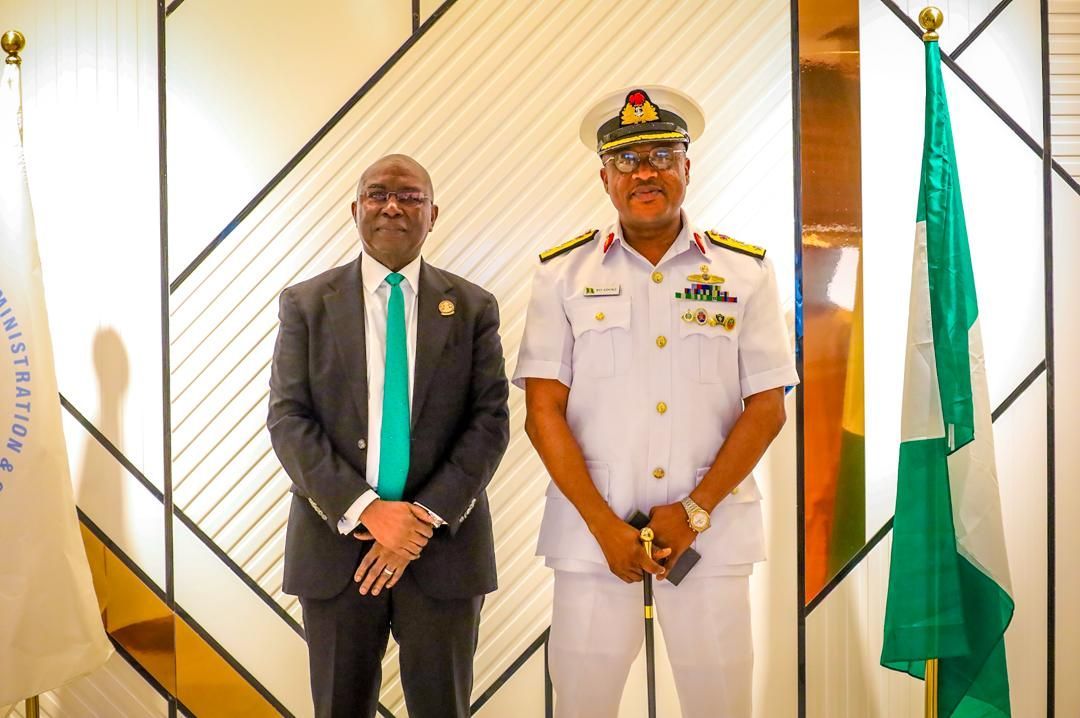
Commodore Adoki, a principal Warfare Officer specializing in communication and intelligence, brings onboard 25 years experience in the Nigerian Navy covering training, staff and operations.
Welcoming the new MGC Commander to the Agency, the Director General, Dr Dayo Mobereola, expressed confidence in Adoki’s addition to the team, emphasising that it will further strengthen the nation’s maritime security architecture given his vast experience in the industry.
The Maritime Guard Command domiciled in NIMASA was established as part of the resolutions of the Memorandum of Understanding (MoU) with the Nigerian Navy to assist NIMASA strengthen operational efficiency in Nigeria’s territorial waters, especially through enforcement of security, safety and other maritime regulations.
Customs
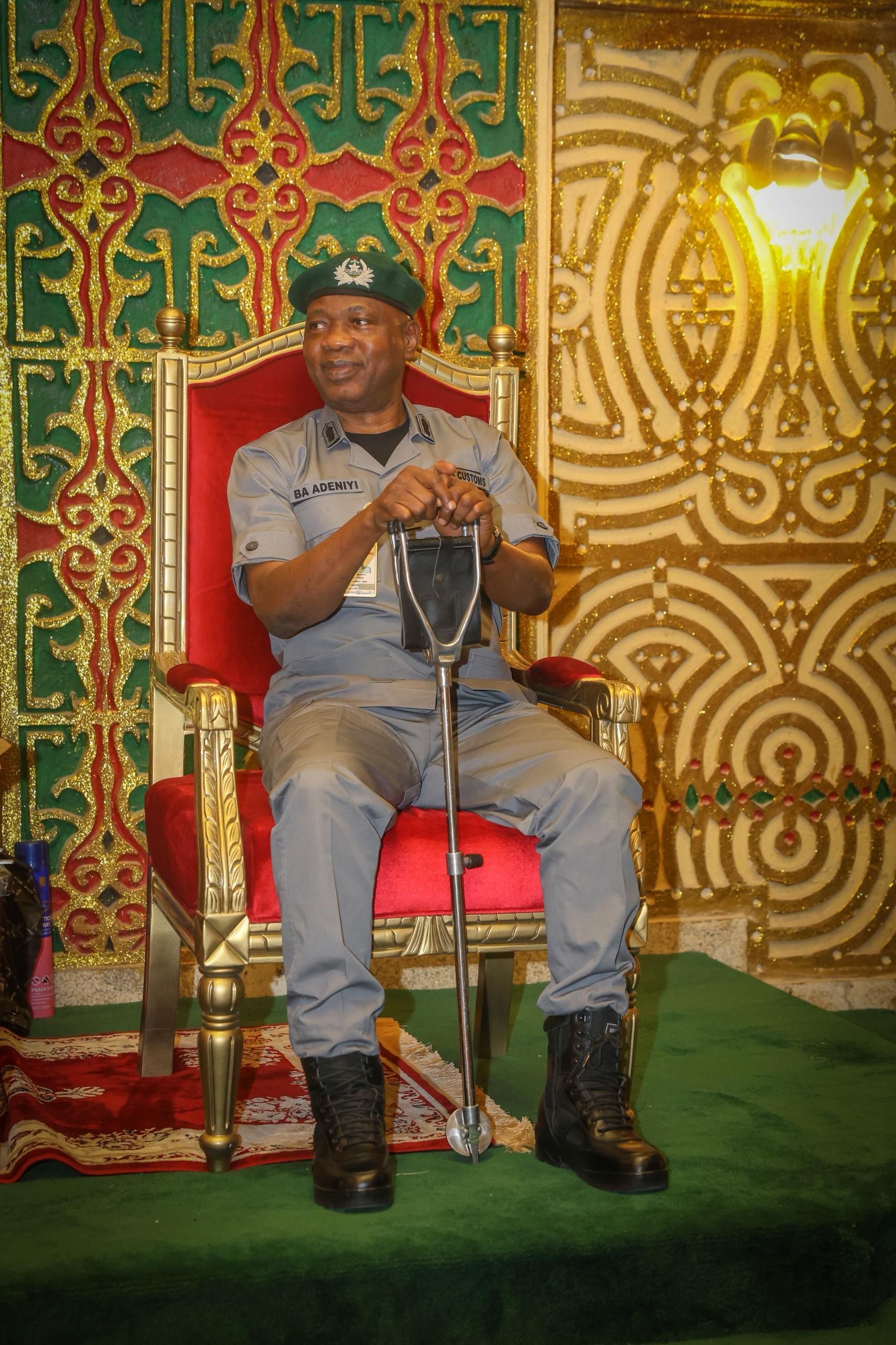
Customs collects N1.585 trillion from 51 compliant traders under AEO programme
-

 Headlines3 months ago
Ex-NIWA boss, Oyebamiji, emerges most media-friendly CEO in maritime industry
-

 Headlines4 days ago
FIFA sends Nigeria’s Super Eagles to 2026 World Cup, awards boardroom scoreline of 3 goals to nil against DR Congo
-

 Headlines3 months ago
MARAN pulls industry’s stakeholders to unveil its iconic book on Maritime industry.
-
 Customs3 months ago
How Comptroller Adenuga is raising revenue profile of Seme command, facilitating regional trade.
-
 Headlines3 months ago
Ondo govt inaugurates former NIMASA Director, Olu Aladenusi, as Special Aide on Marine and Blue Economy
-

 Headlines3 months ago
Nigeria showcases readiness for compliance with IMO decarbonization policy at Brazil conference