
Headlines
Exclusive! Why I turned down request for salary increase for NIMASA staff—Amaechi


Jamoh

Headlines
NIHOTOUR trains over 700 staff in digital skills, advocates institutional reforms
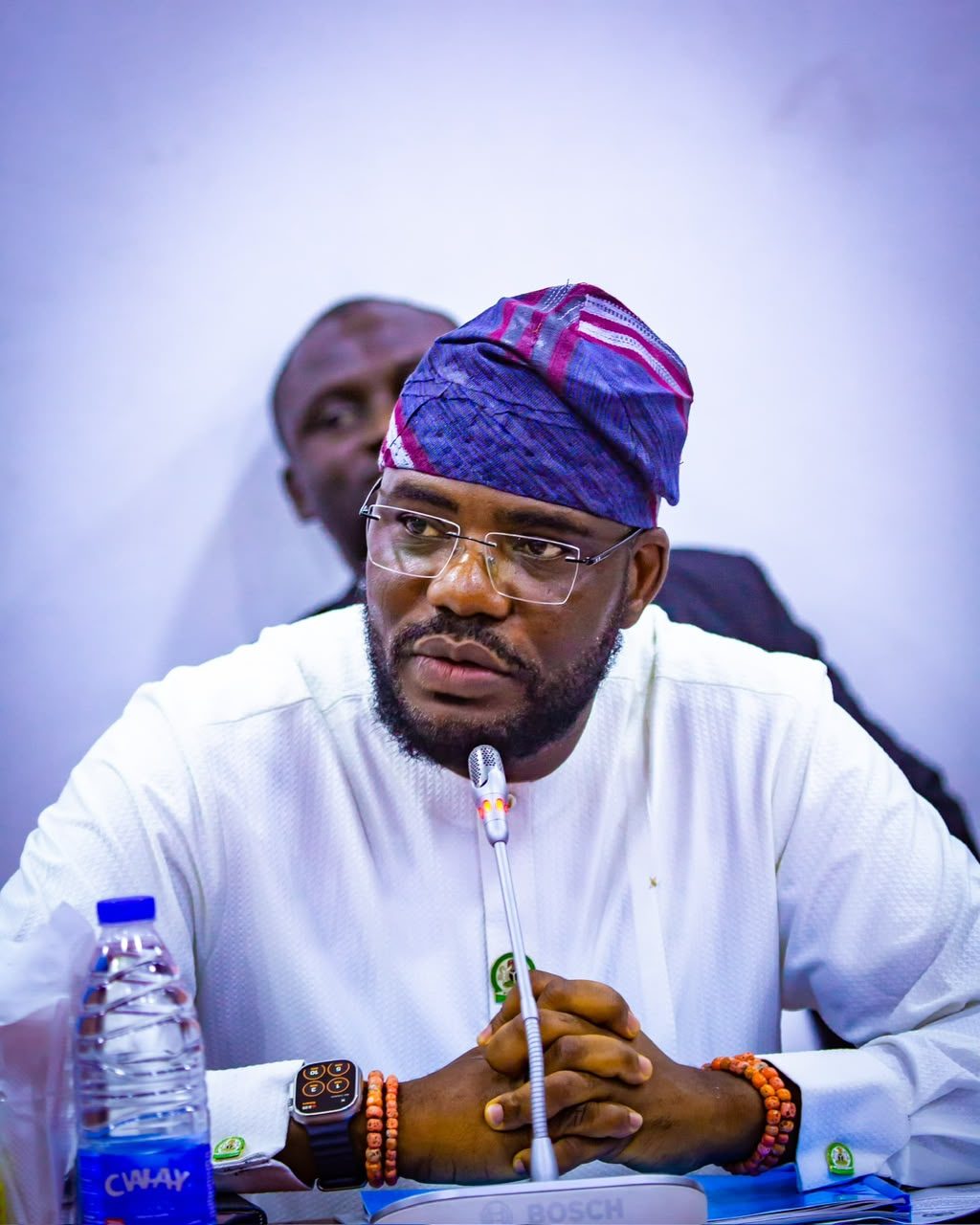
Funso OLOJO, Editor
The National Institute for Hospitality and Tourism (NIHOTOUR) has successfully concluded a five-day intensive practical digital skills training programme for over 700 members of staff across its directorates, in a major step towards strengthening institutional capacity, improving workforce productivity and advancing its digital transformation agenda.
The programme, conducted from November 2 to 6, 2026, in partnership with Jampitech Solutions Company Limited, was designed to equip staff with practical digital competencies required for effective performance in an increasingly technology-driven workplace.
The training covered essential areas including computer and internet fundamentals, Microsoft Office, Google Workspace, artificial intelligence and workplace automation, cybersecurity and digital safety, digital communication, content creation and practical digital applications.
Speaking at the commencement of the programme, the Director-General/CEO of NIHOTOUR, Aare Abisoye Fagade, FNHT, FRPA, FIMC, described the initiative as a strategic investment in the Institute’s human capital and institutional future.
He emphasised that an organisation seeking to lead professional development and transformation in the hospitality and tourism industry must first demonstrate those values within its own operations.
According to him, “We cannot lead the digital transformation of Nigeria’s hospitality and tourism industry if we are not prepared to embrace digital transformation within our own institution.”
The Director-General noted that the training went beyond basic computer literacy, stressing that the objective was to build a workforce capable of using technology to improve efficiency, strengthen communication, manage information, support informed decision-making and deliver better institutional outcomes.
He further stated that digital transformation was not the responsibility of the ICT Department alone, but a collective responsibility requiring the participation and commitment of every member of staff, irrespective of department or designation.
The initiative aligns with the Federal Government’s Renewed Hope Agenda under the leadership of President Bola Ahmed Tinubu, GCFR, particularly its emphasis on human capital development, institutional efficiency, technology adoption, skills acquisition and improved public service delivery.
For NIHOTOUR, the programme also represents an important internal dimension of the ongoing institutional reforms aimed at strengthening its capacity to implement the NIHOTOUR Act 2022 and effectively discharge its responsibilities in training, certification, registration, accreditation and professional standards development across Nigeria’s hospitality and tourism sector.
The Institute recognises that effective implementation of its statutory mandate requires not only sound policies and regulatory frameworks but also a competent, motivated and technologically equipped workforce.
The successful participation of over 700 staff members reflects the Institute’s commitment to ensuring that digital competence becomes an integral part of its organisational culture and everyday operations.
The positive response from staff was also reflected in the appreciation conveyed by the NIHOTOUR Lagos Directorate, which commended the Director-General for his commitment to staff development and investment in building a more digitally capable workforce.
NIHOTOUR expressed appreciation to Jampitech Solutions Company Limited for its technical partnership and facilitation of the programme, as well as to the management and staff members who participated actively throughout the five-day exercise.
The Institute will continue to encourage the practical application of the knowledge acquired, with the expectation that the training will translate into improved departmental efficiency, stronger collaboration, better service delivery and measurable productivity gains.
As NIHOTOUR advances its reform and modernisation agenda, the Institute remains committed to building a workforce that is professionally competent, digitally empowered and adequately prepared to support the growth and global competitiveness of Nigeria’s hospitality and tourism industry.
Headlines
Ibom Deep Seaport: From paper approvals to real action

Monday Discourse with Nasiru Ibrahim
The Nigerian maritime media space is currently buzzing with triumphant headlines regarding President Bola Tinubu’s recent “approval” of the Ibom Deep Seaport project in Akwa Ibom State. To the casual observer, this announcement signals the dawn of a new infrastructural era.
Predictably, however, maritime historians, logistics experts, and industry critics have quickly pulled out the archives.
They are rightly pointing out that the Federal Executive Council (FEC) granted this exact project its Final Business Case approval six years ago, on December 16, 2020, under the administration of Muhammadu Buhari.
This retrospective reality check raises immediate, uncomfortable questions for stakeholders: What exactly is new here?
Is this latest declaration just another round of recurring political packaging designed to score cheap points during a high-profile presidential weekend in Uyo?
Or is there a genuine, structural shift taking place beneath the surface of the standard public relations machinery?
To understand this development correctly, we must look past the celebratory press releases and separate the administrative conception of a national infrastructural asset from its actual executive activation.
When the Buhari administration granted FEC approval in late 2020, it successfully established the legal, regulatory, and structural framework for the port under a Public-Private Partnership (PPP) model. It gave the project its baseline legitimacy.
However, as veterans of the Nigerian maritime sector know all too well, administrative approvals do not dredge channels, certificates do not construct breakwaters, and gazettes do not build berths.
For the past six years, the ambitious $4.6 billion megaproject remained thoroughly trapped in an agonizing bureaucratic deadlock.
It lacked the crucial executive push, inter-ministerial synchronization, and specific sovereign financial guarantees required to move the preferred international bidders and concessionaires from the comfort of the boardroom to the physical reality of the Atlantic coastline.
What occurred during the President’s visit to Uyo on Friday, November 6, 2026, was not a mere repetition of the 2020 approval.
It was the critical, long awaited unblocking of the project’s sovereign financing arrangements and federal regulatory clearances.
By responding directly to Governor Umo Eno’s strategic, cross-party appeal, the presidency effectively transitioned the Ibom Deep Seaport from a dusty, dormant file of “past approvals” into an active, high-priority federal execution layout.
The overarching lesson here is a bitter truth that has defined Nigeria’s maritime history for decades: getting a multi-billion-dollar project approved on paper in Abuja is only half the battle.
The real, defining victory lies in securing the executive willpower to trigger the underlying financial and logistics mechanisms.
Former President Buhari gave the project its formal birth certificate in 2020; President Tinubu has just handed it an aggressive mobilization order.
However, this is precisely where the political theater must end and rigorous structural engineering must begin.
The federal greenlight from Abuja has been secured, but the actual burden of execution has now shifted entirely away from the federal capital.
The weight of history and the ultimate success of this asset are now firmly in the court of two critical entities: the Nigerian Ports Authority (NPA) and the Akwa Ibom State Government.
If this renewed momentum is to avoid the graveyard of unfulfilled Nigerian infrastructure dreams, both parties must immediately collaborate on three non-negotiable operational pillars.
First, they must aggressively lock down the financial commitments of the preferred international concessionaire, ensuring that the 60% private equity investment is formally signed off and liquid.
The Akwa Ibom State Government’s 40% stake can only yield fruit if the private capital is fully mobilized to the site.
Second, the technical teams must instantly accelerate engineering reviews to take full advantage of the site’s most valuable asset: its enviable 18.2-meter natural draft channel.
This deep draft is specifically designed to welcome modern, heavy-set New Panamax vessels that currently bypass Nigeria for neighboring West African ports. Synchronizing the port master plan with immediate capital dredging schedules is paramount.
Third, and perhaps most critical, the landward logistics network cannot be ignored. A deep seaport is only as efficient as its evacuation corridors.
The Akwa Ibom State Government must move with speed to dualize the access road networks and map out future rail connections to link the port directly into the national commercial grid, preventing the nightmarish gridlocks that have crippled the Lagos ports for generation.
Without rapid, transparent, and aggressive operational tracking on these fronts, this new presidential directive will stall. The federal signatures have dried, and the political speeches are over.
If the NPA and the Akwa Ibom leadership drag their feet in the coming months, this mobilization order will simply slip back into the archives of historical disappointments.
The boardroom politics are settled; it is time for the engineers to take over the coastline.
Ibrahim Nasir, a public affairs analyst, writes from Abuja
Headlines
SON joins NESS technical committee, set to boost non-oil exports
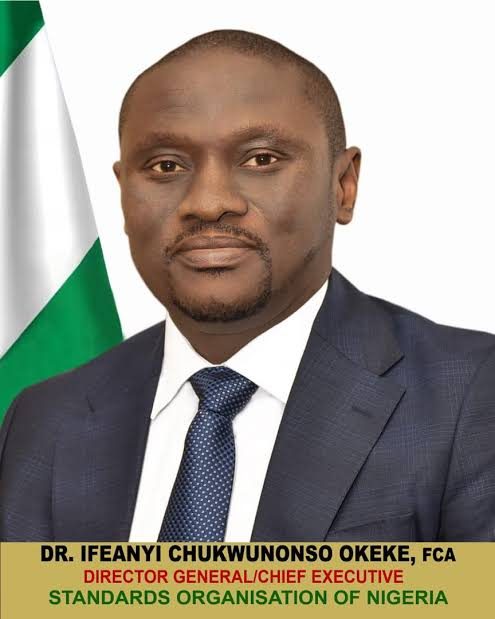
Gloria Odion,Maritme reporter
The Standards Organisation of Nigeria (SON) has secured a place on the Technical Committee of the Nigerian Export Supervision Scheme (NESS), a development expected to strengthen export quality assurance, improve regulatory coordination and enhance the competitiveness of Nigerian products in international markets.
SON, in a statement issued by its management, said its approval as a member of the committee was a significant recognition of its statutory responsibility for ensuring the quality, safety and conformity of products manufactured in Nigeria, particularly those destined for export markets.
The organisation said its inclusion would strengthen the integration of export conformity assessment into Nigeria’s trade framework, while facilitating the incorporation of its Export Certificate Programme (SONEXCAP) into the National Single Window (NSW).
According to the agency, the development would also promote closer collaboration among government institutions responsible for export supervision, reduce regulatory bottlenecks and improve the efficiency of export certification processes.
SON described the development as more than institutional recognition, noting that it would help position Nigerian products to compete more effectively in the global marketplace, strengthen international confidence in Made-in-Nigeria goods and support the Federal Government’s drive to diversify the economy through non-oil exports.
The organisation maintained that credible standards, product certification and conformity assessment were critical to overcoming barriers to international trade and ensuring that Nigerian exporters meet the technical and quality requirements of destination markets.
Our correspondent reports that the Nigerian Export Supervision Scheme was established under the Pre-shipment Inspection of Exports Act of 1996 to provide a framework for the inspection and supervision of goods exported from Nigeria.
Under the scheme, export goods are subjected to inspection by government-appointed inspection agents before shipment to ensure compliance with applicable requirements.
The scheme’s scope was subsequently expanded in 2007 to cover additional export products, reinforcing the government’s regulatory framework for monitoring the quality and standards of goods leaving the country.
SON’s entry into the NESS Technical Committee is therefore expected to strengthen the technical dimension of export supervision by bringing the country’s standards and conformity assessment regulator more directly into the decision-making process.
The development also comes against the backdrop of the Federal Government’s efforts to expand non-oil exports, improve trade facilitation and leverage the National Single Window as a platform for streamlining import and export documentation.
With SON’s participation, stakeholders expect improved alignment between product certification, export inspection and other regulatory procedures, potentially reducing duplication and making the export process more predictable for Nigerian businesses.
- The effective integration of SONEXCAP into the National Single Window is also expected to improve transparency, facilitate information exchange among relevant agencies and ease exporters’ access to certification services.
For Nigeria’s non-oil export ambitions to translate into sustainable foreign exchange earnings and stronger economic diversification, stakeholders have consistently emphasised the need for internationally recognised standards, efficient regulatory institutions and a seamless export clearance process.
SON’s inclusion in the NESS Technical Committee is expected to contribute to these objectives by strengthening quality assurance at the export stage and improving the credibility of Nigerian products in international markets.

 Headlines2 months ago
Oyetola presents three-year score card as blue economy industry revenue hits ₦1.83trn

 Customs3 months ago
Apapa Customs sets new single-day revenue record with ₦28.1bn collection
 Customs3 months ago
Apapa Customs sets new record of monthly revenue haul with ₦323bn collection in July
 Customs1 month ago
FOU Zone ‘A’: Aliyu retires after ₦3.19bn revenue recovery, Afeni takes over

 Customs1 week ago
FOU Zone A: Afeni intensifies anti-smuggling operations, seizes N511.4m drugs, rescues eight pangolins

 Customs2 months ago
Nigeria, Benin Customs move to harmonise trans-border trade, establish joint border post at Seme-Krake