
Headlines
NPA MD frowns at redundancy of terminals at Eastern Ports

communications



Headlines
NIMASA flaunts automation process of Nigerian ship registry at 2- day webinar with stakeholders
Funso OLOJO Editor
The Nigerian Maritime Administration and Safety Agency (NIMASA) will host a two-part stakeholder webinar on October 6 and 8, 2026, to showcase the ongoing automation of the Nigerian Ship Registry as part of efforts to modernise ship registration services and enhance the competitiveness of the Nigerian flag.
The webinars will provide shipowners, operators, maritime professionals, financial institutions, insurers and other stakeholders with insights into the new digital registration platform and its potential to significantly improve the speed, transparency and efficiency of ship registration and related services.
The automated system is designed to enable 24/7 access to registration services, streamline application and approval processes, and facilitate faster issuance of electronic certificates, thereby reducing administrative delays associated with conventional paper-based procedures.
A key feature of the platform is its capacity to provide secure, real-time tracking of ship mortgages and related registry transactions. This will strengthen transparency and provide greater visibility for stakeholders, including financial institutions and other parties involved in vessel financing.
The automation initiative is also expected to make interaction with the Nigerian Ship Registry more seamless for local and international shipowners, while improving the Agency’s ability to deliver efficient, responsive and globally competitive flag-state services.
Speaking on the initiative, the Director-General/Chief Executive Officer of NIMASA, Dr Dayo Mobereola, said the automation of the Ship Registry was part of the Agency’s broader commitment to transforming the Nigerian flag and creating an enabling environment for increased participation in the global shipping industry.
“The automation of the Nigerian Ship Registry represents a significant step in our commitment to providing efficient, transparent and globally competitive services to shipowners and other maritime stakeholders.
“Our objective is to make the Nigerian flag more accessible, responsive and attractive through technology-driven processes that meet international standards,” Mobereola declared.
The ongoing user-testing phase is focused on validating the platform’s functionality, security and user experience ahead of its official deployment.
NIMASA said the webinars would also provide an opportunity for stakeholders to understand the platform, experience its key features and provide feedback as the Agency moves towards full implementation.
The Agency is inviting shipowners, ship managers, maritime professionals, financial institutions, insurers, legal practitioners, classification societies and other interested stakeholders to participate in the webinars.
Headlines
NRC joins global community to celebrate customers’ loyalty
Funso OLOJO, Editor
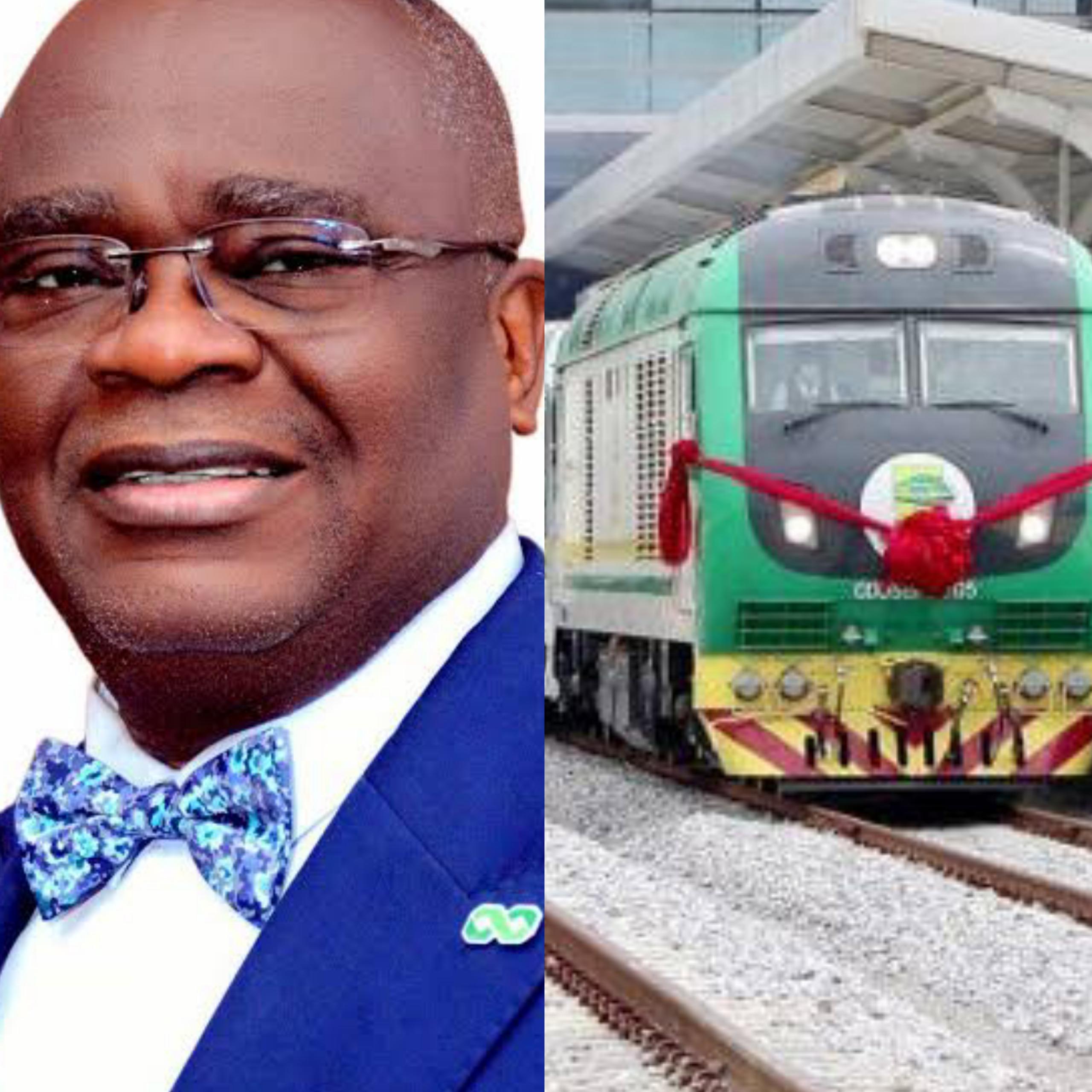
For the first time in its 128 years of existence, the Nigerian Railway Corporation(NRC) joins the global community to commemorate 2026 Customer Service Week from October 5 to 9, with a renewed commitment to putting passengers at the centre of its operations.
The week, being celebrated under the theme, “The Extra Mile,” marks a significant milestone for the 128-year-old Corporation, which is observing Customer Service Week for the first time in its history.
For the NRC, the celebration goes beyond appreciating its passengers. It is also an opportunity to recognise employees who have demonstrated exceptional commitment to service delivery while reinforcing a culture of customer-centricity across the Corporation.
The initiative is in line with the vision of the Managing Director of the NRC, Dr. Kayode Opeifa, who has consistently emphasised the need to place passengers at the heart of the Corporation’s operations and improve their overall travel experience.
Opeifa said the experiences of the Corporation in recent times had further underscored the importance of listening to customers and responding more effectively to their needs.
“Customers are at the heart of everything we do. Their feedback, trust and partnership challenge us to keep improving and delivering value every day.
“Customer Service Week is an opportunity to recognise that relationship and remind ourselves that great service must go beyond expectations,” he said.
According to the NRC, the theme, “The Extra Mile,” reflects the changing expectations of modern train passengers and the need for service providers to go beyond routine obligations.
Going the extra mile, the Corporation noted, could mean listening more attentively to passengers, resolving complaints more quickly, providing clearer and timely information, anticipating customer needs, simplifying processes or demonstrating empathy when it matters most.
The NRC said the commitment would apply across all its operational areas nationwide, with emphasis on providing passengers with a consistent, responsive and dependable experience regardless of where or how they interact with the Corporation.
The Corporation also pledged to strengthen its customer-feedback mechanisms and establish a closer link between passenger insights and continuous improvements in service delivery.
It said its objective was to ensure that exceptional customer service becomes an everyday practice rather than an activity reserved for Customer Service Week.
“Every interaction presents an opportunity to listen better, respond faster, show genuine care and create greater value for our customers,” the Corporation stated.
For the NRC, therefore, “The Extra Mile” is more than a theme for a week-long celebration. It represents a commitment to making every passenger interaction count and ensuring that customers enjoy a safer, more responsive and rewarding experience throughout their journey on Nigerian trains.
Commentaries
Our Oceans, Our Wealth: The real benefits of new fishing port
Monday Discourse with Nasiru Ibrahim
Nigeria has a very long coastline, but we have ignored our oceans for decades. Our major sea gateways, from Apapa to Port Harcourt, are mostly built to handle crude oil exports and heavy manufacturing containers.
Meanwhile, the local fishing industry—which has the capacity to feed the entire nation and create vast wealth—has been left to survive entirely on its own.
This is why the recent announcement by the Managing Director of the Nigerian Ports Authority (NPA), Dr. Abubakar Dantsoho, makes a lot of sense.
Speaking through a representative at the National Conference on Sustainable Fishing in Lagos, the NPA boss stated that Nigeria plans to build a specialized fishing port to finally harness the true value of our ocean resources.
As the country tries to grow its marine and blue economy, this move is completely long overdue.
For a very long time, Nigeria has suffered from an intense oil blindness, focusing all investments on petroleum while ignoring the massive economic potential floating right on our waters.
Right now, our deep seas are teeming with valuable fish, but because we lack proper docks, specialized marine structures, and secure landing sites for large fishing vessels, foreign ships enter our territory and steal our marine resources every single year.
A dedicated fishing port will change this entirely. It will give our local operators and commercial fishing trawlers a safe, modern, and legally protected base to harvest, dock, and process their catch.
Instead of letting foreign poachers dominate our waters, a specialized port ensures that Nigeria profits directly from its own geographical blessings.
We cannot talk about maritime infrastructure without looking at the kitchen table, especially since the average Nigerian family is facing a massive food crisis.
Severe inflation has turned basic proteins like fish and beef into luxury items that ordinary people can no longer afford.
A specialized fishing port will help fix this supply chain problem. The NPA’s plan involves creating dedicated fish terminals equipped with modern cold-room facilities, meaning local fishermen can preserve their catch immediately without it spoiling on the high seas.
When fish can be safely stored and transported into local markets without rotting, the overall supply goes up. When supply goes up, the price goes down, helping ordinary citizens put affordable protein back on their dining tables.
Furthermore, a modern fishing port is much more than just a place to park boats; it is a full-scale industrial business hub.
Building a specialized facility will spark immediate economic activity along our coastlines, naturally attracting seafood processing factories, boat repair yards, ice-making companies, and specialized transport networks.
This infrastructure will create thousands of genuine jobs for young people, refrigeration technicians, boat mechanics, and market women who dominate the local seafood trade. It bridges the gap between rural, traditional fishing and modern, industrial maritime commerce, bringing life back to struggling coastal communities.
The NPA has presented a great vision, and using a Public-Private Partnership model to fund it is a smart strategy.
But as Nigerians, we know our main problem is never a shortage of good plans—it is making those plans actually happen on the ground.
If this fishing port is going to transform our economy, the government must move quickly from conference papers to physical construction. We need to see real investments start on our coastlines.
Utilizing our ocean resources is one of the smartest ways to build a country that does not rely solely on oil. It is time to stop looking at our waters as just shipping lanes, and start treating them as the goldmines they really are.
Ibrahim Nasiru, a public affairs analyst, writes from Abuja.

 Customs2 months ago
Customs releases final recruitment list for ASC II, ends nearly one-year wait for applicants
- Headlines3 months ago
As NRC recovers ₦200m stolen railway assets, Opeifa vows diligent prosecution of suspects
- Customs3 months ago
Customs launches MIS file tracker at PTML in fresh digitalisation drive
- Customs2 months ago
Apapa Customs sets new record of monthly revenue haul with ₦323bn collection in July
- Customs2 months ago
Apapa Customs sets new single-day revenue record with ₦28.1bn collection
- Customs3 months ago
Apapa Customs intercepts ₦26.57bn cannabis hidden in imported vehicles