
Customs
CBN, not Customs determines exchange rate figures for import, export trade

—Customs clarifies amidst wrong public perception
Gloria Odion
The Nigeria Customs Service (NCS) has made a public clarification of the exchange rates that govern the payment of duties on imports and other valuation processes.
In a statement made available to our reporter, the Service said it does not determine, modify, or apply margins to foreign exchange rates used for import and export valuation.
According to the Service, all rates used on the B’Odogwu platform are officially provided by the Central Bank of Nigeria (CBN), which is the statutory authority responsible for exchange rate determination under Nigeria’s monetary framework.
“These rates are transmitted electronically and applied automatically across all Customs formations, ensuring transparency, consistency, and compliance with national fiscal and monetary policies.
”The B’Odogwu system is designed to receive and apply exchange rate data exactly as supplied by the CBN.
“It does not generate or alter rates at any time.
“In situations where there is a delay or change in data transmission format, the system retains the last valid CBN rate until a new update is successfully received, thereby maintaining accuracy and operational continuity.
“As part of ongoing improvements, the NCS is working with the CBN to introduce seamless API-based integration to further enhance real-time transmission, reliability, and system resilience.
”The Service also clarifies that the exchange rate of ₦1,451.63/US$ reported for 6 February 2026 did not originate from the B’Odogwu system.
“That figure came from trade.gov.ng, a legacy trade information portal that does not reflect live Customs processing data.
“Similarly, the National Integrated Customs Information System (NICIS) is not used for real-time valuation and is not recognised as a live Customs processing platform.
“The NCS therefore reiterates that the only authorised platform for Customs declarations, clearance, and valuation is https://bodogwu.customs.gov.ng, which receives exchange rates directly from the Central Bank of Nigeria.
”For the record, the exchange rate applied for Customs valuation on 6 February 2026 was ₦1,365.56 per US Dollar, as officially communicated by the Central Bank of Nigeria.
“All subsequent rates used by the Service have followed the same process, reflecting only the official figures transmitted by the CBN and automatically implemented through the B’Odogwu system.
”The Nigeria Customs Service remains committed to transparency, consistency, and the facilitation of legitimate trade while ensuring full compliance with national fiscal and monetary policies.
“The Service assures stakeholders including the trading community, licensed customs agents, and international partners that its clearance and valuation processes remain accurate, predictable, and aligned with statutory requirements and global best practices.
“The NCS will continue to strengthen its systems, uphold operational integrity, and support Nigeria’s economic growth through efficient and accountable Customs administration” the NCS concluded in its statement.

Continue Reading
Customs
Dera Nnadi bows out of Customs in a blaze of glory
Geraldine Samuel, Reporter
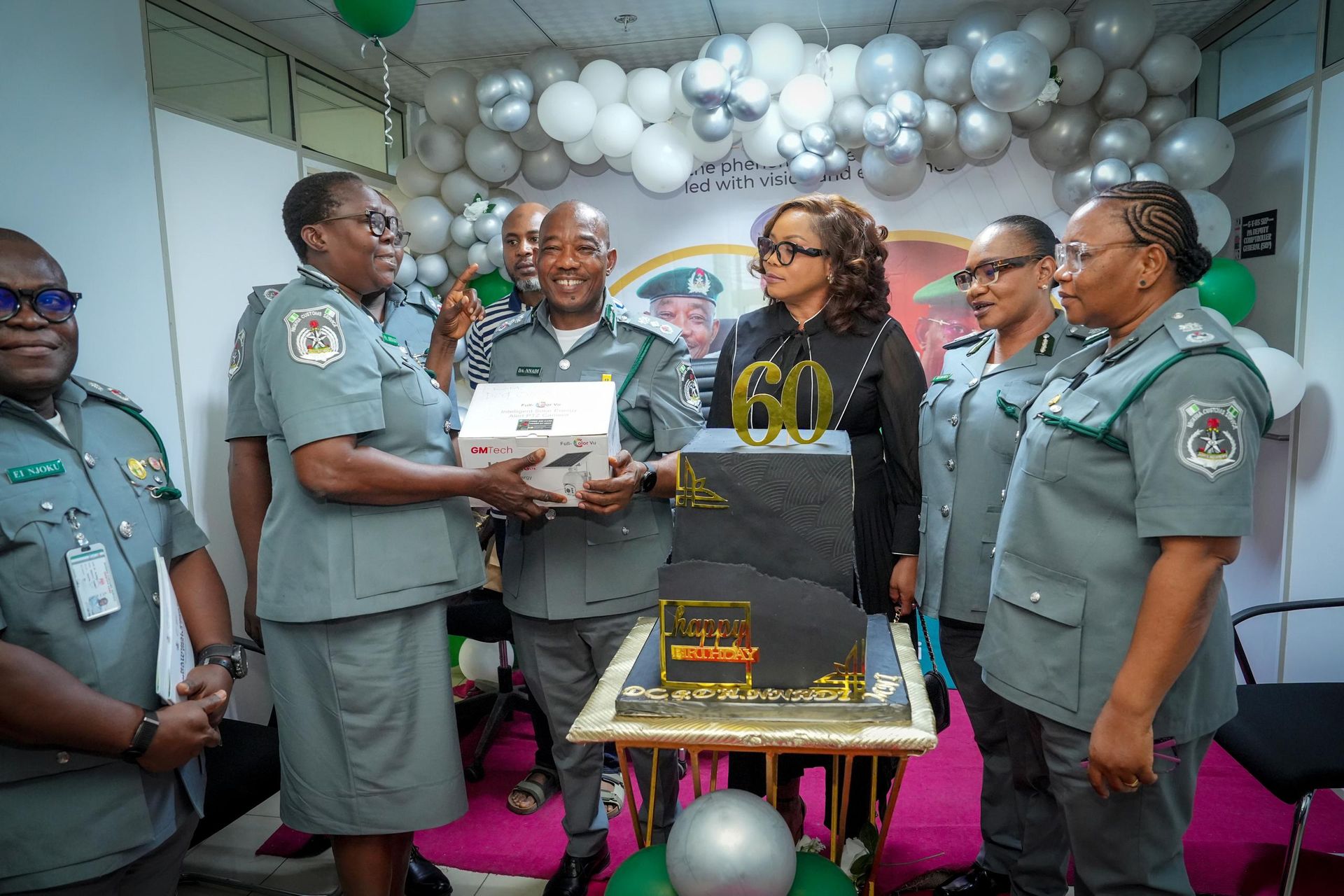
Dera Nnadi, a Deputy Comptroller- General of Customs(rtd), has dropped anchor of service in the Nigeria Customs and graceful bowed out of the agency in a blaze of glory.
In a commemorative retirement ceremony conducted by his appreciative colleagues at the Customs’ Headquarters, Abuja on March 3rd, 2026, Nnadi was pulled out of the Service he has diligently served amidst glowing tributes.
Incidentally, his pull- out ceremony coincided with his 60th birthday.
Leading the management staff, men and officers of the service in paying moving tributes to the retiring Nnadi was the Comptroller- General of Customs, Adewale Adeniyi, who described DCG(rtd) Nnadi as an exemplary officer whose professionalism, discipline, and commitment to duty significantly strengthened the values and operational effectiveness of the NCS.
According to the CGC, the retirement ceremony provided an opportunity not only to celebrate a successful career but also to appreciate the sacrifices and dedication of officers who devote their lives to safeguarding the nation’s economic and border security interests.
He noted that Nnadi’s career reflects the core ideals of the Nigeria Customs Service, particularly in leadership, revenue generation and trade facilitation.
“Today is a moment of celebration and reflection. It is also an opportunity for us to thank Almighty God for the grace that has sustained our colleague throughout his years of service,” the CGC said.
The CGC also highlighted the personal and professional bond he shares with the retiree, noting that their relationship extends beyond official duties to family ties.
He expressed confidence that DCG Nnadi still possesses the energy and experience to continue contributing meaningfully to national development through academic and other professional engagements.
Members of the Service’s management team also paid glowing tributes to the retired DCG, commending his leadership qualities, integrity and mentorship.
Officers who served under him described him as a dependable leader who provided guidance and encouragement to younger personnel while strengthening the Service’s institutional capacity.
Responding to the honour, DCG Dera Nnadi (Rtd) expressed appreciation to the Comptroller-General of Customs, the management team, officers and Men of the Service for their support and cooperation throughout his career.
He described his years in the NCS as a fulfilling journey of growth, learning and service to the nation.
The ceremony featured the presentation of awards, gift items and commemorative photographs in honour of the distinguished officer.
Customs
Customs takes charge of implementation of National Single Window project
– rallies stakeholders for successful take-off
Funso OLOJO, Editor
As the preparations for the official launch of National Single Window(NSW) project on March 27th, 2026 gather momentum, the Nigeria Customs service may have been designated as the lead agency to drive the modernisation project.
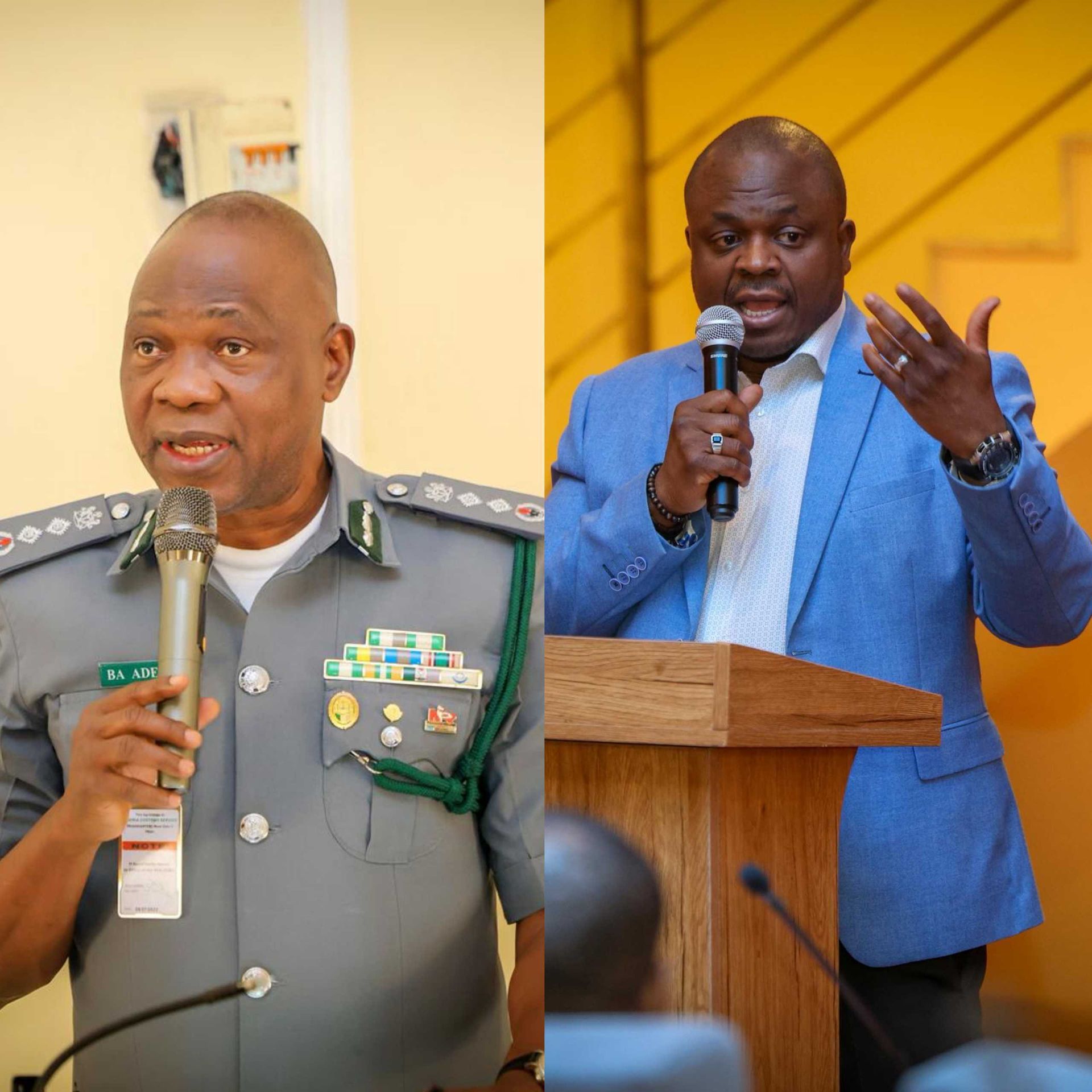
This much was confirmed by the Director of the Project, Tola Fakolade who acknowledged the pivotal leadership of the NCS in the implementation process.
At one of the stakeholders sensitisation programmes in Abuja on March 3rd, 2026, Fakolade declared “Our number one stakeholder is the NCS,”
“We have maintained a strong and constructive working relationship.
Customs’ participation and institutional experience are critical to the success of this project.” the project coordinator confirmed.
Confirming the lead role of the NCS, the Deputy Comptroller-General of Customs in charge of ICT and Modernisation, DCG Oluyomi Adebakin, described the NSW as a major milestone in the Service’s ongoing modernisation drive.
She revealed that the NCS has been actively engaged in preparatory work for months to ensure that the framework being developed reflects operational realities and supports seamless implementation.
“This is a national project, but Customs is at the centre of its execution,” DCG Adebakin said.
“The success of the Single Window depends on collective understanding and cooperation. We must all appreciate its value because we cannot effectively promote what we do not fully understand.”
She reassured officers and stakeholders that the initiative is designed to strengthen institutional capacity rather than replace human resources, explaining that technology will enhance efficiency, transparency, and speed in cargo clearance and trade documentation processes.
Reaffirming the critical role of the service in the implementation of the NSW project, the Comptroller- General of Customs, Adewale Adeniyi, at the Abuja stakeholders engagement with airlines and shipping companies held on March 4th, 2026, emphasised the importance of collaboration in ensuring the successful rollout of the initiative.
He noted that the support of critical stakeholders has played a significant role in the achievements recorded in the Service’s modernisation journey so far.
Adeniyi disclosed that President Bola Ahmed Tinubu has mandated the Service to take a bold step forward towards a successful launch of the National Single Window, a move aimed at positioning Nigeria as a major player in global trade.
He added that airline and shipping line operators remain vital partners in ensuring a seamless transition to the new system.
He further assured stakeholders that adequate support structures are being put in place to ease the migration process.
“A help desk with well-trained personnel will be available to address any operational challenges that may arise during the rollout”, the Comptroller-General stated.
The NCS described the National Single Window as a strategic reform that aligns with Customs’ mandate of trade facilitation, revenue generation, and inter-agency coordination.
With the NCS spearheading coordination and stakeholder engagement, the NSW project is expected to transform Nigeria’s trade environment, enhance revenue generation, and strengthen the country’s position in the global trading community.
Customs
Seme Customs in revenue windfall as it collects N3.5 billion in February.
Funso OLOJO,Editor
The Seme command of the Nigeria Customs Service has continued to sustain its revenue momentious
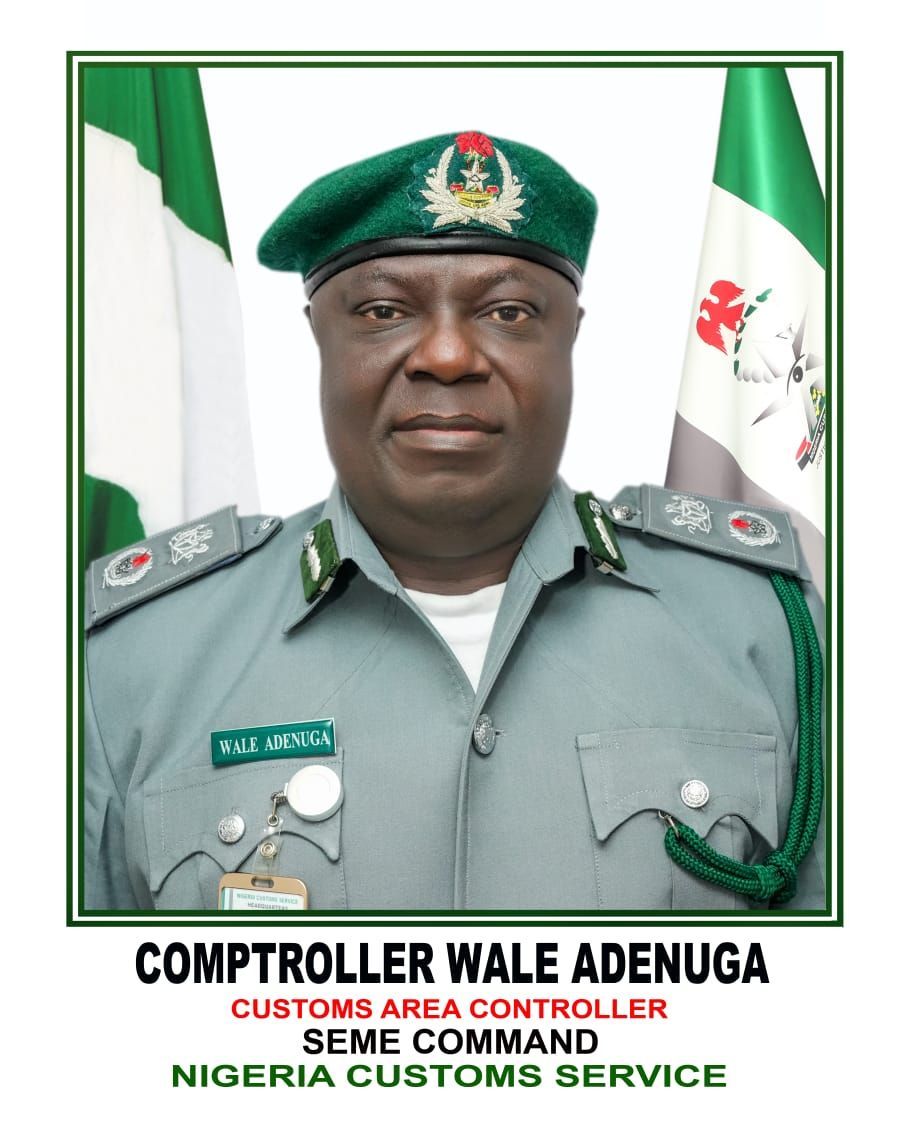
trajectory under the leadership of its Area Controller, Comptroller Wale Adenuga.
According to revenue statistics made available to our reporter by the command, it has garnered a princely sum of N3,480,970,924.67 in revenue for the month of February 2026, with the month still ongoing.
Comptroller Adenuga made this disclosure during an interactive session at a stakeholders’ engagement meeting with cross-border traders ,farmers and stakeholders organised by the Nigerian Shippers’ Council in collaboration with the ECOWAS Commission, ECOWAS Agricultural Trade Programme and GIZ International.
The event, held in Badagry on Wednesday, February 25th, 2026, was themed “Empowering Cross-Border Traders through Trade Information Desk for Agricultural Traders”.
Comptroller Adenuga noted the revenue figure represents a remarkable improvement over the N743,698,652.16 recorded in February 2025 which he attributed to the seamless trade facilitation process adopted at the Command.
“For this February that has not yet ended, we have already generated N3,480,970,924.67 as against N743,698,652.16 revenue generated in February 2025″ Adenuga told the stakeholders.
He said the feat was a reflection of
the flow of trade which he believed was getting better as people are building greater confidence in the Seme–Krake corridor.
Comptroller Adenuga assured traders and stakeholders that the significant reduction in checkpoints along the Seme–Gbaji axis is the direct result of strong collaborative efforts with other security agencies operating within the corridor.
He disclosed that only Agbara and Gbaji remain the officially Customs approved and sanctioned checkpoints along this Lagos-Abidjan corridor.
The Customs Chief further attributed the noticeable decline in crime rates along the Seme-Gbaji axis to the positive outcomes of monthly joint border security meetings involving all agencies at the border post.
These regular inter-agency engagements, according to him, have strengthened better cooperation, improved intelligence sharing and more effective responses to security challenges, thereby creating a safer and more enabling environment for cross-border trade.
Adenuga declared that while revenue generation and trade facilitation remain key priorities, the Command’s mandate extends firmly to combating illicit activities.
The CAC highlighted recent enforcement successes, including the interception of a Toyota Highlander vehicle conveying 22 packages of cocaine with an estimated street value exceeding N1 billion, a feat he claimed was made possible based on very credible information shared by the CGC.
In addition, during February 2026 alone, the Command has seized 1,000 bags of 50kg parboiled rice, underscoring its unwavering commitment to suppressing smuggling and protecting Nigeria’s economic borders.
Comptroller Adenuga reiterated the vigilance and commitment of the operatives of the Command in working closely with stakeholders, traders, farmers, sister security agencies and regional partners to improve the momentum of trade and security along the Lagos-Abidjan corridor.
-

 Headlines3 weeks ago
FIFA sends Nigeria’s Super Eagles to 2026 World Cup, awards boardroom scoreline of 3 goals to nil against DR Congo
-

 Headlines2 months ago
Ayobo residents protest deplorable road at LCDA, complain of 10- year neglect by successive local council administrations.
-

 Headlines3 months ago
FG approves 50 percent price slash on Yuletide train services
-
 Customs3 months ago
Relief as Customs grants January 31st, 2026 extension for fast track operators to migrate to AEO
-

 Customs2 months ago
Apapa Customs stretches illicit drug seizures streak with another new year interdiction of 30.1 kg of cocaine on board vessel.
-

 Customs2 months ago
Tinubu pays glowing tribute to Adeniyi, CGC, at 60