
Headlines
NSC buckles under pressure, suspends implementation of tariff hike at ports

Funso OLOJO, Editor
The Nigerian Shippers’ Council may have capitulated under intense pressure from the freight forwarders who have apparently make the regulatory agency hastily reverse itself over the tariff hike at the Ports.
It could be recalled that the NSC approved tariff increase in shipping and terminal charges due to what it said was necessitated by the exigency of time.
However, the implementation of the hike has sparked an uproar among the freight forwarders who have rebuffed all entreaties from the NSC but vowed to shut down the operations of service providers.
Last week, the irate freight forwarders have commenced systematic picketing of some of the shipping company, including MSC, promising to resume the targeted shut -down of the operations of other service providers in the coming weeks.
However, in a dramatic turn of event, the management of the NSC has directed an immediate suspension of the implementation of the tariff hike by the terminal operators, while urging them to revert to old rate until the issues surrounding the controversial hike are resolved.
In a terse statement by the management, the council said the directive is necessary in order to safeguard fair competition, transparency, and sectoral stability, as well as to give room for likely review of the new charges and conclusion of the ongoing consultation with stakeholders.
“The Nigerian Shippers’ Council (NSC), in the exercise of its statutory mandate as the economic regulator of the port and shipping sector, hereby directs all shipping lines and their respective agencies to immediately suspend the implementation of the recently approved tariffs.
“This directive is issued pursuant to ongoing engagements with critical stakeholders and in response to substantive concerns raised regarding the timing, structure, and potential impact of the said tariffs on port users and the wider logistics value chain.
“In order to safeguard fair competition, transparency, and sectoral stability, the Council considers it necessary to halt further implementation pending the conclusion of comprehensive consultations and regulatory review.
“Accordingly, all affected operators are mandated to revert to, and apply strictly, the tariff regime that was in force immediately prior to the said increase.
“Any deviation from this directive shall constitute a breach of regulatory compliance and will attract appropriate sanctions in line with extant laws and regulations.
“The Council will, upon conclusion of stakeholder consultations and internal review processes, communicate a definitive position on the matter.
“The NSC remains resolute in its commitment to effective economic regulation, protection of cargo interests, and the promotion of an efficient and equitable maritime transport system.
“All operators are hereby enjoined to ensure strict and immediate compliance”, the statement concluded.




Headlines
NSC condemns picketing of MSC over tariff hike, urges freight forwarders to embrace dialogue

Gloria Odion, Maritime Reporter
The Executive Secretary/Chief Executive Officer of the Nigerian Shippers’ Council, Akutah Pius, has called on freight forwarders to embrace dialogue as a constructive means of resolving their grievances rather than resorting to industrial actions capable of undermining the nation’s economy.
Akutah appealed while reacting to the picketing of the offices of Mediterranean Shipping Company (MSC) by freight forwarders protesting the recent increase in shipping line tariffs.
Despite the protests, the Council’s attempt to engage the aggrieved freight forwarders in discussions was resisted, as the protesters insisted that there was no basis for dialogue.
They also vowed to continue the protest on Monday until the increased charges are immediately reversed.
The Shippers’ Council boss stressed that dialogue remains the most effective and modern dispute resolution mechanism, noting that it is faster, more humane, and more productive than what he described as a “bottled anger approach.”
He warned that prolonged industrial disputes within the maritime sector could disrupt port operations and negatively impact trade and economic activities.
While acknowledging the right of stakeholders to express their concerns, the Council condemned what it described as the unprofessional conduct of some freight forwarders, particularly the act of blocking regulators from accessing the MSC premises to address the matter.
Akutah also recalled that during a similar protest over the same tariff increment a few weeks earlier, the Council intervened and compelled MSC to suspend the collection of the disputed charges for two days while discussions were ongoing.
He reiterated the Council’s commitment to mediating between shipping companies and freight forwarders to ensure fair practices and stability within the maritime industry.
Headlines
NRC announces increased train services to accommodate Sallah surge in passenger travels

Funso OLOJO, Editor
The Nigerian Railway Corporation (NRC) has announced special train service arrangements across its major corridors to facilitate seamless travel during the Eid-el-Fitr (Sallah) celebrations, with increased capacity and additional services deployed to meet the anticipated surge in passenger movement nationwide.
As part of the festive arrangements, the Lagos–Ibadan Train Service (LITS) will operate three trips on Thursday, March 19, 2026.
From the Lagos end (Mobolaji Johnson Station, Ebute Metta), departures are scheduled for 7:40 a.m., 1:40 p.m., and 4:00 p.m., while from the Ibadan end (Obafemi Awolowo Station, Moniya), departures will be at 8:00 a.m., 10:50 a.m., and 4:30 p.m.
This one-day special arrangement is designed to accommodate increased passenger traffic during the Sallah celebration, after which the service will revert to its regular schedule.
On the Abuja–Kaduna Train Service (AKTS) corridor, the Corporation will operate two trips on Thursday, March 19, 2026, while three trips will run on Friday, March 20; Saturday, March 21; Sunday, March 22; and Monday, March 23, 2026, to provide additional travel options and ease passenger movement during the festive period.
In addition, the Corporation, under a partnership with the Osun State Government, will operate the Imole Special Train on the narrow gauge corridor from Iddo Station in Lagos to Osogbo, conveying indigenes of Osun State free of charge as part of the State Government’s Sallah initiative.
The service is fully sponsored by the Osun State Government, with the NRC providing rolling stock, technical support, and operational services.
On the Warri–Itakpe Train Service (WITS) corridor, trains will operate three times weekly.
From Warri to Itakpe, services will run on Sundays, Tuesdays, and Fridays, departing at 8:00 a.m. prompt.
From Itakpe to Warri, trains will operate on Mondays, Wednesdays, and Saturdays, departing at 12:00 noon.
Thursdays are reserved for maintenance activities to ensure safe and efficient operations on the corridor.
Similarly, on the Eastern narrow gauge corridor, the Port Harcourt–Aba Train Service will continue to operate its regular schedule throughout the Sallah period.
The management of the Nigerian Railway Corporation reassures passengers of its commitment to safe, reliable, and efficient rail transport services across all corridors.
Passengers are advised to plan their journeys accordingly, arrive early at stations, and comply with all ticketing and security procedures.
The Corporation wishes all Muslim faithful a peaceful and joyous Eid-el-Fitr celebration and encourages the public to continue to patronize rail transport as a safe and dependable means of travel.
Headlines
Oyetola secures £746m financing deal with UK govt to upgrade, modernise Apapa, Tin Can ports.
Funso OLOJO, Editor
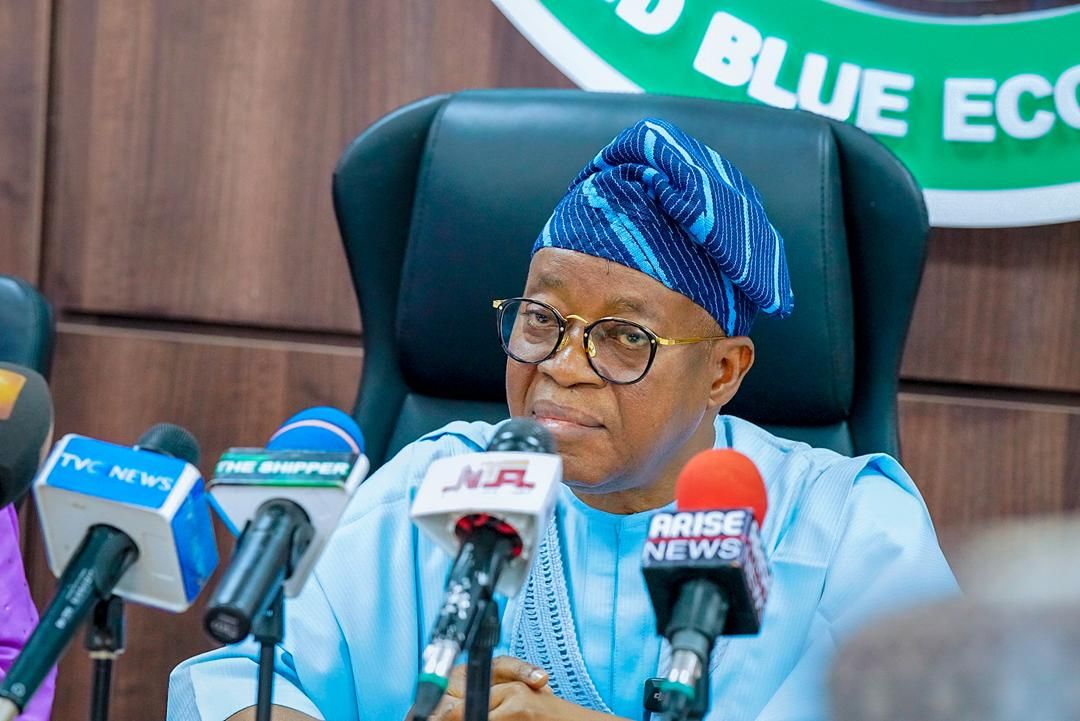
The Minister of Marine and Blue Economy, Adegboyega Oyetola, has unveiled a landmark £746 million financing agreement with the United Kingdom that will deliver the most ambitious modernisation of Nigeria’s seaport infrastructure in nearly half a century.
The deal is expected to transform the country’s principal maritime gateways and repositioning its port system for global competitiveness.
The historic financing arrangement, secured with the backing of UK Export Finance (UKEF), will fund the comprehensive modernisation and upgrade of the Lagos Port Complex Apapa, popularly known as Apapa Port, and the Tin Can Island Port Complex in Lagos.
Together, the two ports handle more than 70 per cent of Nigeria’s imports and exports, and serve as the central arteries of the nation’s maritime trade.
The landmark financing agreement will be formally signed during the high-profile state visit of President Bola Ahmed Tinubu to London on March 18 and 19, 2026, signalling a deepening of strategic economic cooperation between Nigeria and the United Kingdom while opening a new chapter in Nigeria’s maritime development.
The Minister described the financing package as a transformative milestone for the country’s port system, noting that the scale and scope of the modernisation project mark the first comprehensive overhaul of the facilities since their establishment.
The Lagos Port Complex Apapa, established in 1913, has for more than a century remained Nigeria’s oldest and busiest seaport, serving as the gateway for a vast proportion of the nation’s imports and exports.
The Tin Can Island Port Complex was later developed to complement Apapa and was officially commissioned on 14 October 1977.
Despite their strategic importance, neither facility has experienced a modernisation programme of this magnitude, making the initiative the most significant port upgrade undertaken by the Federal Government in almost fifty years.
According to Oyetola, the project forms a central pillar of the Federal Government’s broader agenda to unlock the vast economic potential of Nigeria’s marine and blue economy while restoring efficiency and global competitiveness to the country’s maritime infrastructure.
“This financing agreement represents a defining moment for Nigeria’s maritime sector,” the minister said.
“For decades, Apapa Port and Tin Can Island Port have borne the weight of our national trade, yet their infrastructure has not kept pace with the scale and complexity of modern global shipping.
” What we are set to do is not merely an upgrade, but a comprehensive transformation that will bring our ports into alignment with international best practice.”
He emphasised that the partnership with the United Kingdom reflects a shared commitment to strengthening economic cooperation and advancing sustainable maritime development.
“Through this historic collaboration with the United Kingdom, we are laying the groundwork for a new era in the management and operation of Nigerian ports,” Oyetola said.
“Modern infrastructure supported by digitalised and automated processes will significantly enhance efficiency, transparency and operational reliability.
* Our objective is clear: to create a port system that is modern, competitive and capable of serving as a strategic maritime hub for West and Central Africa.”
He said the modernisation programme will introduce advanced cargo-handling infrastructure, expanded port capacity and integrated digital systems designed to eliminate many of the operational bottlenecks that have historically slowed cargo movement through Nigeria’s busiest ports.
Oyetola noted that once completed, the reforms will fundamentally reshape the operational landscape of Nigeria’s maritime gateways.
Vessel turnaround times are expected to decline significantly, while cargo dwell times within the ports will be sharply reduced as automated systems replace paper-based procedures and outdated manual processes.
“Efficiency at the ports is central to the health of the national economy,” he said.
“By modernising our infrastructure and embracing digital technologies, we will enable faster clearance of imports and exports, reduce demurrage and logistics costs for businesses, and ensure a more predictable and transparent cargo movement system.
These improvements will not only ease trade but will also stimulate economic growth and generate increased revenue for national development.”
The Minister added that the transformation of the two port complexes will strengthen Nigeria’s strategic position within regional and global maritime networks, attracting greater shipping traffic and reinforcing the country as a vital gateway for trade across West and Central Africa.
“Our vision is to build a port system that reflects the aspirations of a modern and globally competitive Nigeria.
” The modernisation of Apapa and Tin Can Island ports is a bold and necessary step in that direction. It will enhance the efficiency of our logistics chain, deepen investor confidence and ensure that Nigeria’s maritime infrastructure is capable of supporting the nation’s long-term economic ambitions,” Oyetola added.
-

 Headlines1 month ago
FIFA sends Nigeria’s Super Eagles to 2026 World Cup, awards boardroom scoreline of 3 goals to nil against DR Congo
-

 Headlines2 months ago
Ayobo residents protest deplorable road at LCDA, complain of 10- year neglect by successive local council administrations.
-
 Headlines3 months ago
FG approves 50 percent price slash on Yuletide train services
-
 Customs3 months ago
Apapa Customs stretches illicit drug seizures streak with another new year interdiction of 30.1 kg of cocaine on board vessel.
-
 Headlines3 months ago
FG trains 75 boat operators on safe inland waterway navigation
-

 Headlines3 months ago
Mobereola, NIMASA DG, reflects on year 2025 with satisfaction, says 2026 holds promising opportunities for maritime industry