
Headlines
MARAN upbeat as preparations for reception to honour its past leaders peak

Gloria Odion, maritime reporter
The Maritime Reporters Association of Nigeria (MARAN) has expressed optimism as preparations have reached an advanced stage for its forthcoming special reception in honour of its distinguished past presidents.
The landmark event is designed to celebrate leadership, dedicated service, and lasting contributions of media professionals to Nigeria’s maritime industry.
Following weeks of detailed planning and stakeholder engagement,the association confirmed that arrangements for the high-profile ceremony are well advanced, with strong support and positive responses from key players across the maritime sector.
The reception is expected to attract industry leaders, government officials, policymakers, regulators, terminal operators,shipping companies, freight forwarders, and other critical stakeholders.
Beyond honouring former presidents, the event will also highlight the vital role of maritime journalism in shaping policy, promoting accountability, and supporting sectoral growth.
Speaking on the event, Chairman of the MARAN Caretaker Committee, Mr. Tunde Ayodele, said the reception would provide an opportunity to reflect on the legacies of past leaders whose contributions have helped position the association as a respected voice in the maritime industry.
He added that the gathering would also strengthen collaboration between the media and industry stakeholders, especially at a time of ongoing reforms and modernization within the sector.
The Chairman of the Planning Committee, Mr. Funso Olojo, disclosed that prominent dignitaries, including officials from the Ministry of Marine and Blue Economy and heads of key maritime agencies, have shown strong interest in attending the event.
He noted that several corporate organisations and industry groups have also indicated their willingness to support the initiative, underscoring its significance to the wider maritime community.
Providing further insight into the event, Olojo said the reception would serve as a platform to celebrate excellence, commitment, and quality leadership demonstrated by MARAN’s past presidents.
He highlighted that the association, as a pioneer maritime beat association, has produced exceptional leaders who have gone on to excel in various fields, including pastoring, law, media entrepreneurship, and public service.
“These individuals have made significant sacrifices to build and sustain MARAN’s reputation as a leading voice in the maritime industry.
“Today, they continue to distinguish themselves in their respective careers, and this event will celebrate their achievements and rising profiles,” he said.
The reception is scheduled to be held on April 24, 2026, at Rockview Hotel, Apapa, Lagos.
It will feature award presentations, goodwill messages, and networking sessions aimed at fostering stronger collaboration among stakeholders while celebrating excellence in maritime journalism.
As momentum builds, MARAN has called on industry stakeholders, corporate organisations, and well-meaning individuals to support the event through sponsorships, partnerships, and active participation.
MARAN remains the foremost maritime journalists’ association in Nigeria, committed to promoting ethical journalism,capacity building, and informed reporting within the maritime and blue economy sector.




Headlines
LASWA, Iterferry deepen ferry safety expertise, complete sixth training module
Gloria Odion, Maritme Reporter
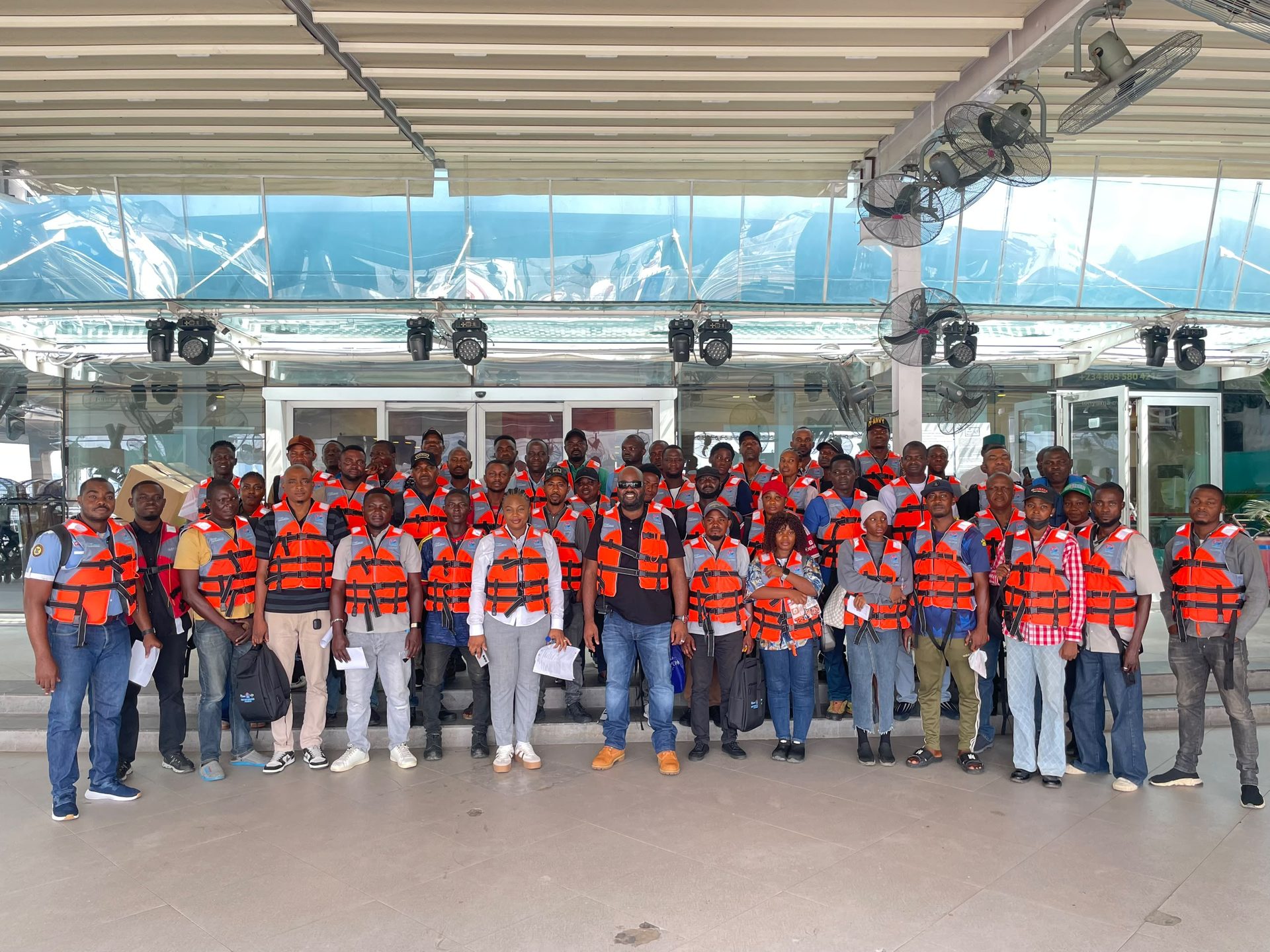
The Lagos State Waterways Authority (LASWA), in partnership with Interferry, has completed Module 6 of the Africa Ferry Safety Development and Mentoring Programme, reinforcing efforts to improve technical competence, strengthen vessel inspection and enhance passenger safety across Africa’s ferry transportation sector.
The latest module, which focused on Survey and Inspection and ran throughout October 2026, provided participating mentees with practical knowledge and technical skills required to assess vessel conditions, identify safety deficiencies and ensure compliance with established international maritime safety standards.
The training combined self-paced theoretical sessions facilitated by class surveyors from the American Bureau of Shipping (ABS) and Lloyd’s Register with interactive virtual mentorship and supervised practical field exercises.
A major component was the virtual Ask the Expert session held on October 21, featuring Interferry maritime professionals Joep Bollerman, Francesco Ruisi and Darren Johnston.
The session exposed participants to international ferry safety regulations, professional surveying techniques and industry best practices, while providing an opportunity to engage directly with experienced practitioners.
The theoretical component was complemented by a practical field exercise on October 28, during which participants conducted live Condition and Safety Compliance Audits at operational passenger ferry terminals.
Supervised by Sandra (Okoli) Ubong of ABS and Engr. Frank Fayinto of Lloyd’s Register, the exercise enabled participants to apply international classification standards and established inspection procedures in real operational environments.
A key highlight was the application of an eight-step survey methodology, covering the entire inspection process, from preliminary preparations and onboard assessments to documentation and field reporting.
Participants also received hands-on training in identifying safety deficiencies relating to hull integrity, life-saving appliances, fire protection systems and machinery installations.
Other critical areas covered included evidence-based reporting using the 5W+1H principle, systematic documentation of inspection findings, deficiency logging and risk prioritisation.
The programme also strengthened participants’ capacity to evaluate and classify identified deficiencies according to their level of urgency, distinguishing between immediate, medium-term and low-priority interventions.
The approach is designed to facilitate timely corrective action, minimise operational risks and improve safety across ferry services.
The completion of Module 6 marks another milestone in LASWA’s efforts to strengthen technical capacity, improve professional competence and entrench a sustainable safety culture within Lagos State’s inland waterways and the wider African ferry transportation industry.
LASWA acknowledged the contributions of Interferry mentors Joep Bollerman, Francesco Ruisi and Darren Johnston, as well as field facilitators Sandra (Okoli) Ubong and Engr. Frank Fayinto.
The Authority also recognised the support of Interferry Chief Executive Officer, Mike Corrigan, and Ferrysafe Executive Sponsor, Shari Corrigan, whose contributions helped ensure the successful delivery of the module.
The programme continues to enjoy institutional support from LASWA and the Lagos State Government, alongside the strategic guidance of the Special Adviser to the Governor on Blue Economy, Mr. Oluwadamilola Emmanuel.
With the successful conclusion of Module 6, attention now shifts to Module 7, which will focus on Watchkeeping and is scheduled for November 2026.
The next phase will equip participants with improved knowledge of vessel operations, navigational safety and effective watchkeeping practices, all of which are critical to safe, efficient and reliable ferry transportation.
Through its partnership with Interferry, LASWA is seeking to develop a pool of skilled maritime professionals, raise operational safety standards and promote a more reliable, efficient and sustainable water transportation system in Lagos State and across Africa.
Headlines
NIHOTOUR trains over 700 staff in digital skills, advocates institutional reforms
Funso OLOJO, Editor
The National Institute for Hospitality and Tourism (NIHOTOUR) has successfully concluded a five-day intensive practical digital skills training programme for over 700 members of staff across its directorates, in a major step towards strengthening institutional capacity, improving workforce productivity and advancing its digital transformation agenda.
The programme, conducted from November 2 to 6, 2026, in partnership with Jampitech Solutions Company Limited, was designed to equip staff with practical digital competencies required for effective performance in an increasingly technology-driven workplace.
The training covered essential areas including computer and internet fundamentals, Microsoft Office, Google Workspace, artificial intelligence and workplace automation, cybersecurity and digital safety, digital communication, content creation and practical digital applications.
Speaking at the commencement of the programme, the Director-General/CEO of NIHOTOUR, Aare Abisoye Fagade, FNHT, FRPA, FIMC, described the initiative as a strategic investment in the Institute’s human capital and institutional future.
He emphasised that an organisation seeking to lead professional development and transformation in the hospitality and tourism industry must first demonstrate those values within its own operations.
According to him, “We cannot lead the digital transformation of Nigeria’s hospitality and tourism industry if we are not prepared to embrace digital transformation within our own institution.”
The Director-General noted that the training went beyond basic computer literacy, stressing that the objective was to build a workforce capable of using technology to improve efficiency, strengthen communication, manage information, support informed decision-making and deliver better institutional outcomes.
He further stated that digital transformation was not the responsibility of the ICT Department alone, but a collective responsibility requiring the participation and commitment of every member of staff, irrespective of department or designation.
The initiative aligns with the Federal Government’s Renewed Hope Agenda under the leadership of President Bola Ahmed Tinubu, GCFR, particularly its emphasis on human capital development, institutional efficiency, technology adoption, skills acquisition and improved public service delivery.
For NIHOTOUR, the programme also represents an important internal dimension of the ongoing institutional reforms aimed at strengthening its capacity to implement the NIHOTOUR Act 2022 and effectively discharge its responsibilities in training, certification, registration, accreditation and professional standards development across Nigeria’s hospitality and tourism sector.
The Institute recognises that effective implementation of its statutory mandate requires not only sound policies and regulatory frameworks but also a competent, motivated and technologically equipped workforce.
The successful participation of over 700 staff members reflects the Institute’s commitment to ensuring that digital competence becomes an integral part of its organisational culture and everyday operations.
The positive response from staff was also reflected in the appreciation conveyed by the NIHOTOUR Lagos Directorate, which commended the Director-General for his commitment to staff development and investment in building a more digitally capable workforce.
NIHOTOUR expressed appreciation to Jampitech Solutions Company Limited for its technical partnership and facilitation of the programme, as well as to the management and staff members who participated actively throughout the five-day exercise.
The Institute will continue to encourage the practical application of the knowledge acquired, with the expectation that the training will translate into improved departmental efficiency, stronger collaboration, better service delivery and measurable productivity gains.
As NIHOTOUR advances its reform and modernisation agenda, the Institute remains committed to building a workforce that is professionally competent, digitally empowered and adequately prepared to support the growth and global competitiveness of Nigeria’s hospitality and tourism industry.
Headlines
Ibom Deep Seaport: From paper approvals to real action

Monday Discourse with Nasiru Ibrahim
The Nigerian maritime media space is currently buzzing with triumphant headlines regarding President Bola Tinubu’s recent “approval” of the Ibom Deep Seaport project in Akwa Ibom State. To the casual observer, this announcement signals the dawn of a new infrastructural era.
Predictably, however, maritime historians, logistics experts, and industry critics have quickly pulled out the archives.
They are rightly pointing out that the Federal Executive Council (FEC) granted this exact project its Final Business Case approval six years ago, on December 16, 2020, under the administration of Muhammadu Buhari.
This retrospective reality check raises immediate, uncomfortable questions for stakeholders: What exactly is new here?
Is this latest declaration just another round of recurring political packaging designed to score cheap points during a high-profile presidential weekend in Uyo?
Or is there a genuine, structural shift taking place beneath the surface of the standard public relations machinery?
To understand this development correctly, we must look past the celebratory press releases and separate the administrative conception of a national infrastructural asset from its actual executive activation.
When the Buhari administration granted FEC approval in late 2020, it successfully established the legal, regulatory, and structural framework for the port under a Public-Private Partnership (PPP) model. It gave the project its baseline legitimacy.
However, as veterans of the Nigerian maritime sector know all too well, administrative approvals do not dredge channels, certificates do not construct breakwaters, and gazettes do not build berths.
For the past six years, the ambitious $4.6 billion megaproject remained thoroughly trapped in an agonizing bureaucratic deadlock.
It lacked the crucial executive push, inter-ministerial synchronization, and specific sovereign financial guarantees required to move the preferred international bidders and concessionaires from the comfort of the boardroom to the physical reality of the Atlantic coastline.
What occurred during the President’s visit to Uyo on Friday, November 6, 2026, was not a mere repetition of the 2020 approval.
It was the critical, long awaited unblocking of the project’s sovereign financing arrangements and federal regulatory clearances.
By responding directly to Governor Umo Eno’s strategic, cross-party appeal, the presidency effectively transitioned the Ibom Deep Seaport from a dusty, dormant file of “past approvals” into an active, high-priority federal execution layout.
The overarching lesson here is a bitter truth that has defined Nigeria’s maritime history for decades: getting a multi-billion-dollar project approved on paper in Abuja is only half the battle.
The real, defining victory lies in securing the executive willpower to trigger the underlying financial and logistics mechanisms.
Former President Buhari gave the project its formal birth certificate in 2020; President Tinubu has just handed it an aggressive mobilization order.
However, this is precisely where the political theater must end and rigorous structural engineering must begin.
The federal greenlight from Abuja has been secured, but the actual burden of execution has now shifted entirely away from the federal capital.
The weight of history and the ultimate success of this asset are now firmly in the court of two critical entities: the Nigerian Ports Authority (NPA) and the Akwa Ibom State Government.
If this renewed momentum is to avoid the graveyard of unfulfilled Nigerian infrastructure dreams, both parties must immediately collaborate on three non-negotiable operational pillars.
First, they must aggressively lock down the financial commitments of the preferred international concessionaire, ensuring that the 60% private equity investment is formally signed off and liquid.
The Akwa Ibom State Government’s 40% stake can only yield fruit if the private capital is fully mobilized to the site.
Second, the technical teams must instantly accelerate engineering reviews to take full advantage of the site’s most valuable asset: its enviable 18.2-meter natural draft channel.
This deep draft is specifically designed to welcome modern, heavy-set New Panamax vessels that currently bypass Nigeria for neighboring West African ports. Synchronizing the port master plan with immediate capital dredging schedules is paramount.
Third, and perhaps most critical, the landward logistics network cannot be ignored. A deep seaport is only as efficient as its evacuation corridors.
The Akwa Ibom State Government must move with speed to dualize the access road networks and map out future rail connections to link the port directly into the national commercial grid, preventing the nightmarish gridlocks that have crippled the Lagos ports for generation.
Without rapid, transparent, and aggressive operational tracking on these fronts, this new presidential directive will stall. The federal signatures have dried, and the political speeches are over.
If the NPA and the Akwa Ibom leadership drag their feet in the coming months, this mobilization order will simply slip back into the archives of historical disappointments.
The boardroom politics are settled; it is time for the engineers to take over the coastline.
Ibrahim Nasir, a public affairs analyst, writes from Abuja

 Headlines2 months ago
Oyetola presents three-year score card as blue economy industry revenue hits ₦1.83trn
 Customs3 months ago
Apapa Customs sets new record of monthly revenue haul with ₦323bn collection in July

 Customs3 months ago
Apapa Customs sets new single-day revenue record with ₦28.1bn collection
 Customs1 month ago
FOU Zone ‘A’: Aliyu retires after ₦3.19bn revenue recovery, Afeni takes over
 Customs2 weeks ago
FOU Zone A: Afeni intensifies anti-smuggling operations, seizes N511.4m drugs, rescues eight pangolins

 Customs2 months ago
Nigeria, Benin Customs move to harmonise trans-border trade, establish joint border post at Seme-Krake