Customs
Customs launches AI-driven training to strengthen revenue management, transparency
Gloria Odion, Maritime Reporter
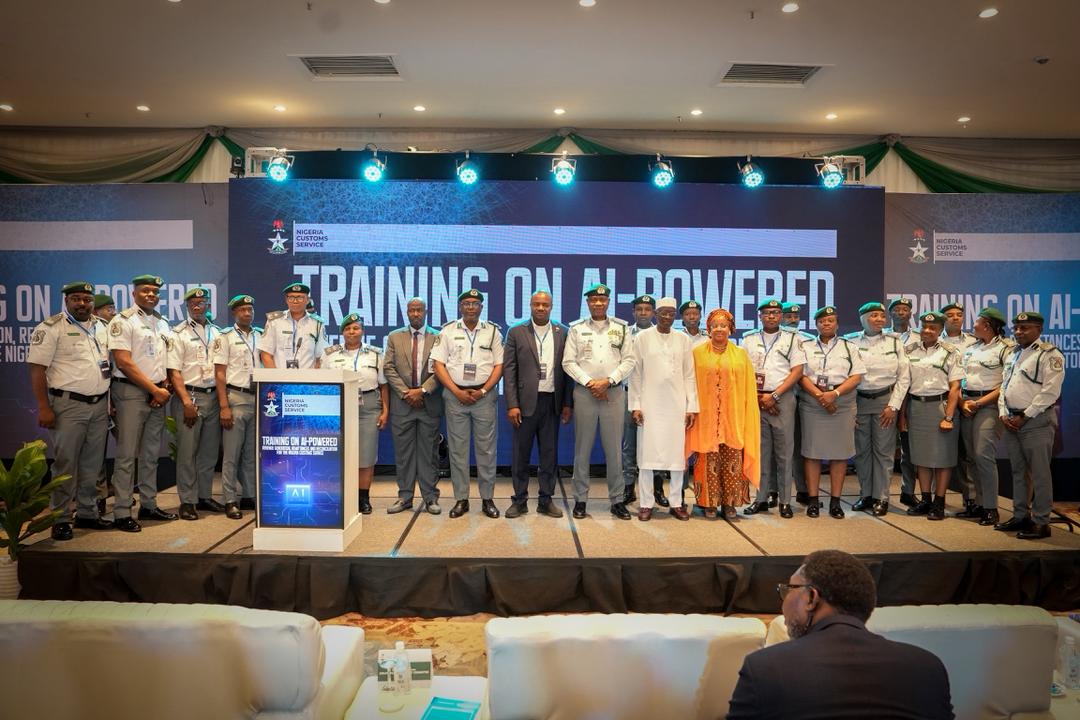
The Nigeria Customs Service (NCS) has launched a capacity-building programme focused on the application of Artificial Intelligence (AI) in revenue generation, remittances, and reconciliation, as part of its ongoing efforts to enhance transparency and efficiency in public financial management.
The training,held on Monday,13th April 2026, at the Ladi Kwali Hall of the Abuja Continental Hotel, brought together senior Customs officers, technology experts, and members of legislative oversight committees.
The participation of both lawmakers and Customs officials highlights the growing collaboration between the Service and the National Assembly to strengthen accountability and integrate modern technological solutions into public administration.
Speaking at the event,the Comptroller-General of Customs, Adewale Adeniyi,reaffirmed the Service’s commitment to improving transparency in public accounting through innovation.
“We are united in our resolve to ensure transparency in public accounting.
“As technology continues to evolve, it plays a critical role in strengthening our operations and enhancing our understanding of global trade patterns,” he said.
The Comptroller-General expressed optimism about the potential of Artificial Intelligence to transform Customs operations, noting that the Service operates within a complex national and international trade ecosystem.
“We aim to harness the full benefits of Artificial Intelligence collectively. I encourage participants to actively engage with facilitators, ask questions, and maximise the opportunities provided by this training,” he added.
In her welcome address,the Deputy Comptroller-General in charge of Finance, Administration and Technical Services, Kikelomo Adeola, described the programme as both timely and strategic.
“This initiative underscores our commitment to national development. Artificial Intelligence is no longer a concept of the future—it is a present-day tool we must embrace to strengthen our systems,” she said.
DCG Adeola explained that the training is designed to address existing gaps in revenue management while equipping officers with the necessary skills to deploy AI tools in safeguarding public funds.
She also commended the presence of members of legislative oversight committees, describing it as a reflection of shared commitment to transparency and accountability.
“This level of collaboration is vital. I encourage participants to engage meaningfully and exchange ideas that will enhance the impact of this initiative,” she added.
Delivering a goodwill message, the Chairman of the House of Representatives Public Accounts Committee, Bamidele Salam, praised the NCS for its reform-driven approach and commitment to innovation.
“Customs is a global institution with a critical role in shaping Nigeria’s economic image.
“I commend the Comptroller-General for the progress recorded so far,” he said.
Salam described the training as a necessary intervention,noting that the adoption of Artificial Intelligence within Nigeria’s public sector remains limited.
“We must continue to invest in capacity building, as the effectiveness of any system ultimately depends on the people who operate it,” he added.
Similarly, the Chairman of the Senate Public Accounts Committee, Senator Ahmed Aliyu, called for sustained collaboration in building resilient systems capable of serving future generations.
“All hands must be on deck to build systems that will endure and continue to serve the nation effectively in the years ahead,” he said, while commending the Service’s reform efforts.
The programme also featured a technical presentation by AI expert Bamidele Oyedeji, who highlighted the role of Artificial Intelligence in enhancing trade facilitation and improving operational efficiency in Customs administration.
The initiative underscores the Nigeria Customs Service’s determination to leverage emerging technologies to strengthen revenue assurance, promote transparency, and enhance overall operational effectiveness.

Customs
FOU ‘A’ seeks stronger security synergy with sister agencies ahead of presidential elections
— as Acting Comptroller Afeni visits Police, Army, DSS, NDLEA, Immigration
Funso OLOJO, Editor
The Acting Comptroller of the Nigeria Customs Service (NCS), Federal Operations Unit (FOU), Zone ‘A’, Ikeja, Lagos, Deputy Comptroller Oladapo Olukayode Afeni, has called for stronger collaboration among security agencies to combat smuggling, cross-border crimes and other threats to national security, particularly as the country approaches another election period.
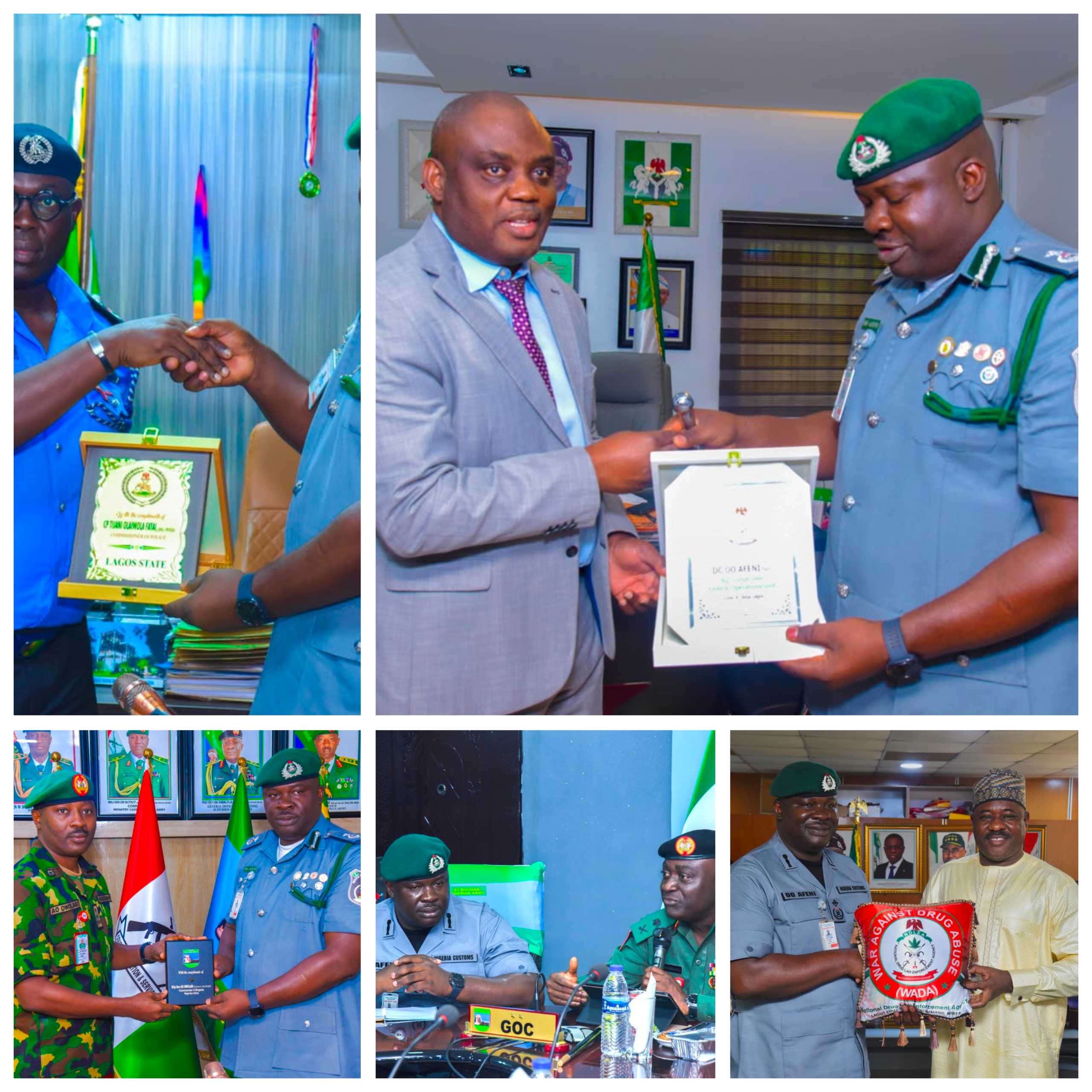
Afeni made the call during a familiarisation tour of sister security and law enforcement agencies in Lagos, which commenced on Wednesday, October 14, 2026.
The tour took him to the Lagos State Police Command Headquarters, Ikeja; the Department of State Services (DSS); Headquarters, 81 Division, Nigerian Army; the National Drug Law Enforcement Agency (NDLEA) Strategic Command; the Nigeria Immigration Service (NIS); and the 9 Brigade, Nigerian Army, Ikeja.
The visits were aimed at strengthening existing institutional relationships and identifying practical areas of cooperation in intelligence sharing, joint operations, information exchange and the enforcement of relevant laws across Lagos State and the wider operational jurisdiction of FOU Zone ‘A’.
At the Lagos State Police Command Headquarters, Afeni was received by the Commissioner of Police, CP Tijani Fatai, where he stressed the importance of coordinated security operations in preventing criminal elements from exploiting the election period to undermine public safety.
“We know that crime rates often increase as the country approaches the election period, as some people may attempt to take advantage of the period to perpetrate illicit activities capable of causing crises during the elections.
“Therefore, we are here to call for closer synergy so that these bad elements do not have their way,” he said.
The Customs chief emphasised that the responsibilities of FOU Zone ‘A’ extended beyond border protection to include collaboration with other security institutions in safeguarding national interests.
He noted that no security agency could effectively discharge its responsibilities in isolation, stressing that sustained cooperation was essential to tackling the increasingly complex nature of criminal activities.
Afeni particularly acknowledged the Nigeria Police Force’s intelligence-gathering capabilities, describing effective information sharing and coordinated operations as critical to achieving better security outcomes.
In his response, CP Fatai welcomed the visit, describing sustained engagement among security agencies as an established practice that had contributed to their operational successes over the years.
“In Lagos, we have a very strong and robust relationship with all security agencies, notwithstanding the huge population of the state,” the police commissioner said.
The Customs delegation also visited the Headquarters of the Nigerian Army’s 81 Division, where Afeni was received by the General Officer Commanding (GOC), Major General Adebayo Abdulrahman Babalola.
Babalola underscored the importance of joint operations and inter-agency cooperation in combating criminality, while cautioning against unnecessary administrative bottlenecks that could impede operational effectiveness.
The engagement highlighted the need for security institutions to streamline their operational processes, improve coordination and ensure that bureaucratic procedures do not frustrate timely responses to security threats.
Other agencies visited equally reaffirmed their commitment to sustaining cooperation with the Nigeria Customs Service in the collective effort to combat smuggling and other unlawful activities.
The familiarisation tour underscores FOU Zone ‘A’s commitment to strengthening inter-agency partnerships as a vital instrument for effective enforcement, national security and economic protection.
Beyond combating smuggling and trans-border crimes, the initiative is expected to reinforce efforts to protect government revenue, facilitate legitimate trade and safeguard Nigeria’s broader economic interests through coordinated security operations.
Customs
Calabar Customs seeks strong collaboration with sister agencies for enhanced security
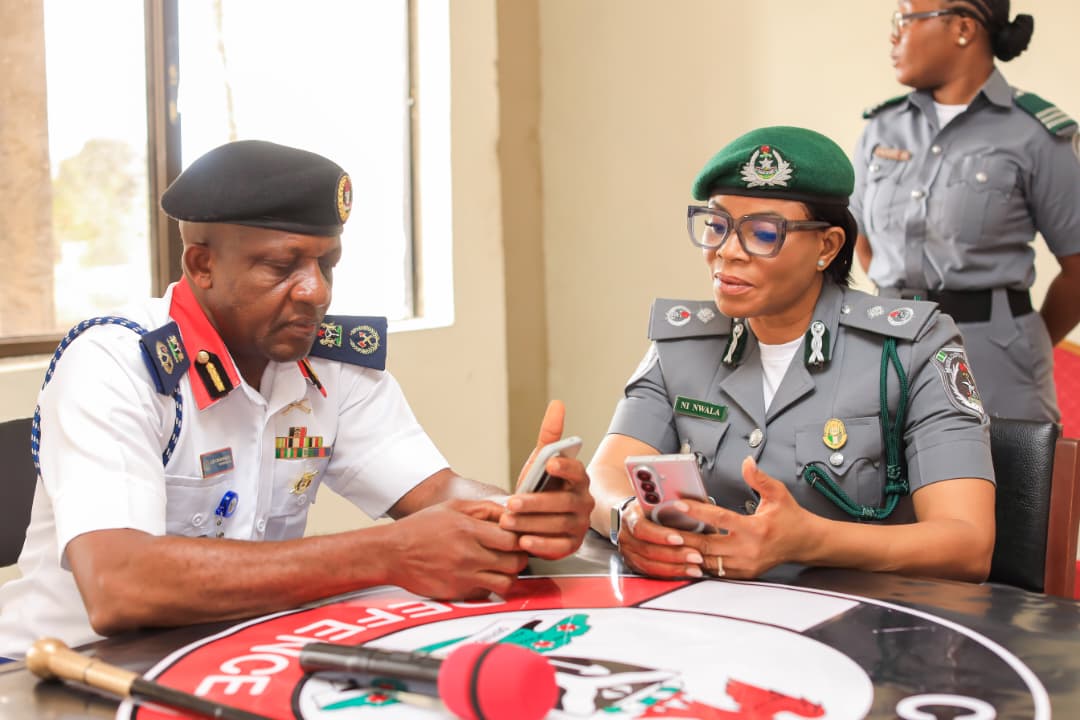
Gloria Odion, Maritme reporter
The Nigeria Customs Service (NCS), Cross River/Calabar Free Trade Zone/Akwa Ibom (CR/CFTZ/AK) Area Command, has reaffirmed its commitment to strengthening inter-agency collaboration and intelligence sharing to address security challenges, facilitate legitimate trade and enhance operational efficiency.
The commitment was reinforced during a series of familiarization visits by the Acting Area Controller of the Command, Deputy Comptroller Dr Nkiru Nwala to the leadership of the Nigeria Security and Civil Defence Corps (NSCDC), the Nigerian Correctional Service and the Department of State Services (DSS) on Tuesday, October 13, 2026.
During the visits, Nwala held discussions with the NSCDC Commandant, C. E. Okarazu; the Controller of Corrections, Nigerian Correctional Service, Aniekan Archibong Nya; and the State Director of the DSS, Dr Faluyi Oluwole.
The engagements provided an opportunity to strengthen existing institutional relationships, establish direct communication channels and explore practical ways to improve cooperation among the agencies following Nwala’s assumption of duty.
The Acting Area Controller emphasised the importance of sustained collaboration among security and law enforcement agencies in tackling common security threats, promoting compliance with relevant laws and protecting the nation’s economic and security interests.
The visits emphasised the importance of intelligence sharing and coordinated operations in tackling security threats, safeguarding national assets and facilitating legitimate trade.
The Command noted that stronger partnerships among the agencies would enhance operational coordination, support the enforcement of relevant laws and contribute to the protection of critical national assets and infrastructure.
The initiative aligns with the Comptroller-General of Customs’ strategic mantra of Consolidation, Innovation and Collaboration, which prioritises strengthening existing partnerships, embracing innovative approaches to operational challenges and promoting effective cooperation among relevant institutions.
The Command reaffirmed its commitment to working closely with sister security agencies to strengthen national security, facilitate legitimate trade and advance the broader objectives of national development.
Customs
MACI hails Customs’ anti-corruption framework, demands full implementation
Funso OLOJO, Editor
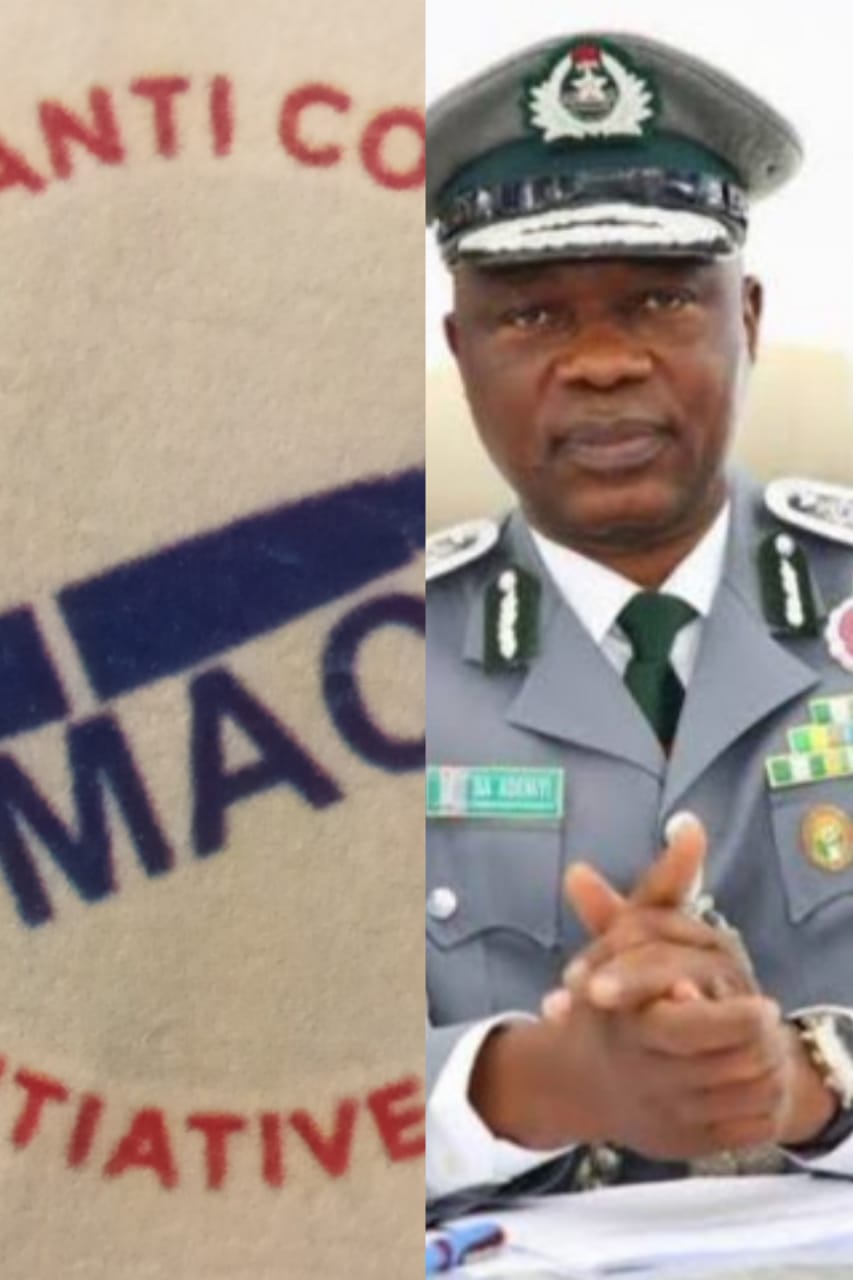
The Media Anti-Corruption Initiative (MACI) has applauded the Comptroller-General of Customs, Adewale Adeniyi, for introducing a comprehensive anti-corruption framework aimed at identifying institutional vulnerabilities, strengthening internal controls and promoting integrity across the operations of the Nigeria Customs Service (NCS).
The initiative, which MACI described as a significant milestone in the fight against corruption within the Service, is anchored on three key documents signed by the Customs chief: the Standard Operating Procedure (SOP) for Internal Corruption Risk Analysis and Mapping (ICRAM), the ICRAM Handbook and the Integrity Action Plan (IAP).
In a statement jointly signed by MACI President, Funso Olojo, and Project Coordinator, Lod Onyeji, the organisation described the development as a “pivotal moment in the fight against corruption within the Nigeria Customs Service.”
Mr Olojo, who commended the initiative of the Customs, noted that the stance of the agency on corruption is in alignment with the aims and objectives of MACI which is an advocate for corruption- free society.
The signing ceremony, held on October 6th, 2026, at the NCS Headquarters in Abuja, also witnessed the inauguration of the ICRAM Steering Committee, which is responsible for identifying, assessing and mapping corruption risks across the Service’s operations.
According to the statement, the framework represents a proactive institutional approach to tackling corruption by identifying vulnerabilities in Customs processes and establishing measures to prevent abuse of office, improve accountability and strengthen public confidence in the Service.
The Comptroller-General, Adeniyi, disclosed that the framework was developed in collaboration with the World Customs Organisation (WCO) and partner administrations, including His Majesty’s Revenue and Customs (HMRC) of the United Kingdom.
He explained that the documents provide practical guidance for Customs officers operating at seaports, land borders and airports, equipping them with procedures and controls designed to promote integrity, transparency and accountability in the discharge of their responsibilities.
MACI noted that the introduction of the framework followed a pilot programme conducted across seven Customs Commands and Units, covering 66 processes spanning regulatory activities, core Customs operations and support functions.
The exercise culminated in the development of a comprehensive Integrity Action Plan containing 101 action items and 295 sub-actions designed to address identified corruption risks and strengthen institutional safeguards.
Key measures outlined in the plan include increased automation and improved audit trails, stronger supervisory mechanisms, clearer accountability structures, effective segregation of duties, regular staff rotations and targeted training programmes.
The framework also seeks to strengthen controls governing interactions between Customs officers and stakeholders, an area considered critical to reducing opportunities for corrupt practices and improving compliance with established procedures.
MACI commended the Customs leadership for adopting a risk-based approach to corruption prevention, noting that identifying and addressing institutional weaknesses before they are exploited is essential to building a transparent and accountable public institution.
The organisation, however, stressed that the effectiveness of the initiative would ultimately depend on the consistent implementation of the prescribed measures across all commands and operational units of the Service.
It therefore urged Customs management, officers, stakeholders and relevant partner institutions to support the full implementation of the framework to ensure that the initiative delivers measurable improvements in institutional integrity.
MACI expressed confidence that effective implementation of the ICRAM framework and Integrity Action Plan would strengthen internal controls, reduce corruption risks, promote ethical conduct and enhance public trust in the Nigeria Customs Service.
The organisation emphasised that the new framework should not merely remain a collection of policy documents but should translate into tangible changes in operational practices, staff conduct and the overall culture of accountability within the Service.

 Customs3 months ago
Customs releases final recruitment list for ASC II, ends nearly one-year wait for applicants
- Headlines2 months ago
Oyetola presents three-year score card as blue economy industry revenue hits ₦1.83trn
- Customs2 months ago
Apapa Customs sets new single-day revenue record with ₦28.1bn collection
- Customs2 months ago
Apapa Customs sets new record of monthly revenue haul with ₦323bn collection in July
- Customs3 months ago
Customs launches MIS file tracker at PTML in fresh digitalisation drive
- Customs3 months ago
NCS intercepts container concealing pump-action rifle parts, seizes ₦373.8m worth of cannabis products at Tincan Port