
Aviation
Controversy over N1.8bn severance package rocks SAHCO

|
—as aggrieved ex-staff issue threat to ground operations
Eyewitness Reporter
Ex-workers of the Skyway Aviation Handling Company (SAHCO) owned by Taiwo Afolabi, the Executive Vice-Chairman of SIFAX Group have issued a one-week ultimatum to the Ground Handling operator to pay the sum of N1.8billion as their severance package or risk their operations in the 22 airports in the country grounded.
The aggrieved workers claimed the management of the ground handling company has failed to pay this sum being their severance entitlement since 11 years when the company was privertised.
SAHCO, which has since gone public, was an arm of the defunct Nigerian Airways which was sold to SIFAX Group in 2009.
But the ex-workers, who are 982 in number, said no fewer than 15 of them have died fighting for their entitlemenst while many of them are currently incapacitated.
They however gave the company and the Bureau of Public Enterprises (BPE) one week to pay their entitlement, saying failure to do so would disrupt SAHCO’s operation in 22 airports across the country.
Chairman of the former SAHCO retirees, Ochai Adamu, who spoke with newsmen at the Murtala Muhammed Airport, Lagos, asked the BPE to intervene in the matter immediately, adding that SAHCO has handed off payment of the benefits.
He said the entire benefit was N3.5bn but was later reduced to N1.8bn, adding that none of the workers has got any money in 11 years.
Aviation unions, comprising the National Union of Air Transport Employees (NUATE) and the Air Transport Services Senior Staff Association of Nigeria (ATSSSAN) had on 31st of August wrote a letter to SAHCO that the continued refusal to pay the benefit of the affected workers “is a recipe for industrial crisis in the company.”
“We are constrained, therefore, to inform you that our unions can no longer wait helplessly and hopelessly as these victims die one after another without enjoying the benefits of their labour,” the unions said in the letter signed by the General Secretary of NUATE, Comrade Ocheme Aba, and Deputy General Secretary, ATSSSAN, Comrade Frances Akinjole.
But SAHCO in a reply to the letter insisted that the redundancy claim by the ex-workers is for the number of years they worked for the federal government and not for SAHCO, and directed that the threat should be directed to the appropriate quarters.
|
|

Aviation
Tension de-escalates at Lagos Airport as FAAN, Cargo agents reach truce over new tariff

Aviation
Why we increased cargo tariff at Airports– FAAN

FAAN stated it’s own side of the story thus
Why we increase the tariff?
FAAN has increased tariffs after careful consideration of current economic realities.
Our tariffs have remained static since 2008. Over the past 18 years, Nigeria has experienced significant inflation (approximately 287%) and a drastic depreciation of the Naira.
This adjustment is essential to sustain and upgrade critical airport infrastructure, which has become financially unsustainable under the old rates.
The tariff is increasing from ₦7 to ₦20. Isn’t this a huge jump?
While the percentage increase appears large, it is important to view it in the context of time and inflation.
Based on data from the National Bureau of Statistics (NBS), a service that cost ₦7 in 2008 should cost about ₦27.09 today just to have the same value.
The new tariff of ₦20 is actually below this inflation-adjusted benchmark. This demonstrates FAAN’s commitment to sharing the burden and not passing the full cost onto operators.
How does the foreign exchange (FX) rate affect airport charges?
A significant portion of the equipment and materials needed for airport infrastructure—such as runway asphalt, aerodrome lighting, and fire truck parts—are imported.
In 2008, the exchange rate was about ₦118/$1. Today, it is about ₦1,500/$1.
This means the cost of these essential items has increased by over 1,000%. The tariff review is crucial to generate the necessary revenue in Naira to meet these dollar-denominated costs.
How does Nigeria’s new cargo tariff compare to other countries in West Africa?
Our analysis shows that even with this adjustment, Nigeria’s cargo charges will remain competitive. Prior to this review, our charges were lower than those at major regional hubs like Kotoka International Airport (Ghana) and Cotonou Airport (Benin).
This move aligns us closer to regional standards while ensuring we remain an attractive destination for air cargo operators and investors.
Is this not a form of double taxation on top of what the concessionaires charge?
No, this is not double taxation. There is a clear distinction between the two charges:”FAAN Port Charge: This covers the use of shared airport infrastructure that everyone benefits from, such as runways, taxiways, perimeter fencing, security, access roads, and airfield lighting.
It is like a toll for using the airport’s common facilities.Concessionaire’s Handling Fee: This fee is charged by the private warehouse operators for specific services they provide within their terminals, such as cargo handling, storage, and documentation.Will this tariff increase lead to higher prices for goods and services for the average consumer?FAAN expects the impact on consumer prices to be minimal. The Port Charge is a very small component of the total cost of air freight.
The significant benefits of improved infrastructure—such as faster turnaround times and reduced delays—will ultimately lead to greater efficiency and could help stabilize or even lower logistics costs in the long run.
What specific projects will the revenue from this tariff increase be used for?
The additional revenue will be reinvested directly into critical cargo infrastructure projects, including:”Rehabilitation of aprons and access roads to cargo terminals.
Enhanced perimeter security and access control systems.Implementation of a Cargo Community System (CCS) for digital documentation.Installation of a Truck Call-Up System to reduce congestion at the Premier Cargo Terminal (PCT).Upgrades to airfield lighting and other essential facilities.Development of domestic cargo infrastructure.Was there any consultation with stakeholders before this decision was made?“Yes. FAAN is committed to transparent stakeholder engagement. Formal communication has been sent to all cargo operators and industry players.
Furthermore, stakeholder consultations are ongoing and will continue as a permanent exercise.
This ensures that all relevant parties are informed about cargo initiatives and can provide feedback.
What is the long-term goal of this tariff adjustment?
This is not merely a revenue-generation measure. It is a strategic investment in the future of Nigeria’s air cargo sector.
The goal is to build a resilient, efficient, and future-ready cargo ecosystem that is globally competitive, enhances security, and supports economic growth”
Aviation
Freight forwarders warn FAAN’s new charges regime could cripple airport operations

-

 Headlines3 months ago
Ex-NIWA boss, Oyebamiji, emerges most media-friendly CEO in maritime industry
-

 Headlines3 days ago
FIFA sends Nigeria’s Super Eagles to 2026 World Cup, awards boardroom scoreline of 3 goals to nil against DR Congo
-

 Headlines3 months ago
MARAN pulls industry’s stakeholders to unveil its iconic book on Maritime industry.
-
 Customs3 months ago
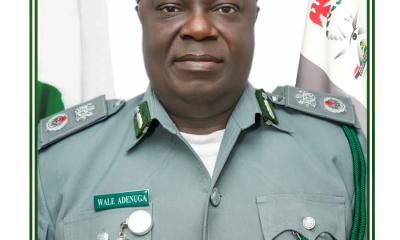
How Comptroller Adenuga is raising revenue profile of Seme command, facilitating regional trade.
-

 Headlines3 months ago
Nigeria showcases readiness for compliance with IMO decarbonization policy at Brazil conference
-

 Headlines3 months ago
Ondo govt inaugurates former NIMASA Director, Olu Aladenusi, as Special Aide on Marine and Blue Economy