Connect with us

Headlines

Why we can’t drydock our vessels in Nigeria—- NLNG


Nigerian Liquefied Natural Gas(NLNG) company has said lack of capacity and availability of requisite drydocking facilities in Nigeria has made the company take its vessels abroad for drydocking at huge foreign exchange.
The company was established in 1989 as a joint venture.
This has resulted in the loss of several billions of naira to capital flight as a result of this development.
Making this disclosure in Lagos at the weekend was Abdul-Kadri Ahmed,  the Managing Director of NLNG Ship Management Limited (NSML),
the vessel management company of NLNG.
 He disclosed that none of the dockyards available in Nigeria can dry dock any of her LNG vessels.
Ahmed stated that his company would have wanted to dry-dock its 11 LNG vessels and one LPG vessel in Nigeria due to the huge revenue such would generate for the country but lamented there is no such dry-docking facility that can handle an LNG vessel in the country.
This, he said, has compelled the company to dry-dock her vessels outside the country.

“Yes, capital flight is an issue when it comes to dry docking of our LNG vessels. However, underpinning that issue of capital flight is the capacity and ability to do it here in Nigeria.

“As a Nigerian ship management company, it’s so much easier for me to dry-dock our vessels here in Nigeria, that is if there is anywhere I can do it but, at the moment, there is no facility in Nigeria that can dry-dock vessels of the sizes that we manage.
“I don’t want to sound critical but realistic, there is currently no facility in Nigeria that can handle any of our LNG vessels.
“I am not saying there are no dry-docking facilities in Nigeria but, if you understand the nature and size of an LNG vessel, then we will all know that there is nowhere in Nigeria that such vessels can be dry-docked as at today.”

Ahmed however disclosed that the company planned to set up standard dry-docking facilities in the country to put an end to capital flight that is occasioned by dry-docking vessels outside Nigeria.

“But, most importantly, underpinning ability is capacity development, and we have already embarked on that path.

” As part of our Bonny Gas Transport (BGT) Plus Project, there was a scheme to bring in Samsung and Hyundai together with some Nigerian investors to establish a dry-docking facility in Nigeria. Unfortunately, the scheme has not fully taken off, but we are still optimistic.
” We hope that when it fully takes off, it will commence effectively at the right standard.
“We are optimistic that this happens because as a Nigerian company, it is cheaper and more affordable for us to patronize dry-docking facilities in country.
“Unfortunately, at the moment, there is no such facility in the country that can handle our vessels, and this has left us with no other choice than to patronize dry-docking facilities outside the country,” he bemoaned.
According to the guidelines by the International Maritime Organization (IMO), every vessel must undergo dry-docking once every three years in order to retain its safety classification and insurance cover.
It costs between $300,000 and $500,000 to dry-dock a vessel, according to prevailing international rates.
Dockyards in Nigeria include Niger Dock, Dormanlong, Kaztec Engineering, Naval Dock among others.
 They were established to conserve foreign exchange, building indigenous capacity as well as promoting technological advancement in the nation.
But unfortunately, none can handle the size of NLNG vessels.
Nigeria, through the Nigeria National Petroleum Corporation(NNPC), owns 49 percent, Shell Gas B.V owns 25.6 percent, Total LNG Nigeria Limited owns 15 percent while Eni International owns 10.4 percent.
Continue Reading
Click to comment

Leave a Reply

Your email address will not be published. Required fields are marked *

Headlines

NIWA partners ICPC to strengthen internal transparency in its operations  
Gloria Odion, Maritime Reporter 
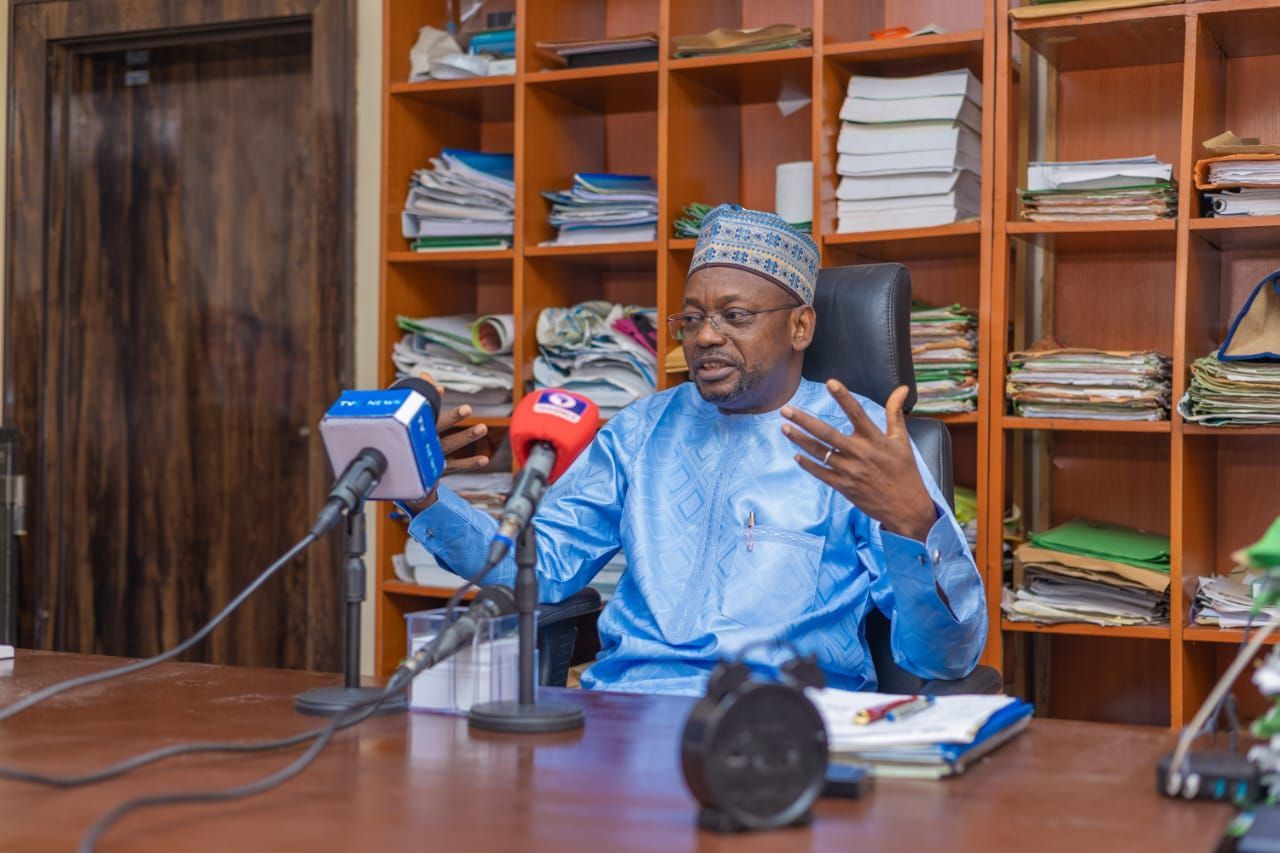
The National Inland Waterways Authority (NIWA) has announced new strategies aimed at improving its operational system and enhancing collaboration with key stakeholders as part of efforts to boost efficiency and accountability.
Speaking at a post event Press Conference at NIWA Headquarters Lokoja, the Acting Managing Director, Umar Yusuf Girei, while answering questions from journalists stated that, the organization convened a two -day Executive and Anti-Corruption training with the theme “Strengthening Integrity and Revenue System in Inland Waterways Management” organized for Board Members, Management and Area Managers and also 2026 NIWA Management Retreat in Abuja.
The Acting MD noted as part of the Renewed Hope Agenda of President Bola Ahmed Tinubu,with the support  Adegboyega Oyetola, Minister of Marine and Blue Economy, the Authority is focused on aligning institutional goals in ensuring better service delivery to Nigerians.
He further said, as part of its anti-corruption drive, the Management held discussions with the Independent Corrupt Practices and Other Related Offences Commission (ICPC) to explore measures for strengthening transparency within its operations.
Girei therefore, assured staff that the ongoing reforms under his watch would translate into improved service and better working conditions.
“NIWA remains committed to continuous improvement and stakeholder engagement and the reforms are expected to enhance both internal performance and public confidence”. he stated.
Continue Reading

Headlines

Navy appoints new Maritime Guard Commander for NIMASA 
Gloria Odion,  Maritime Reporter 

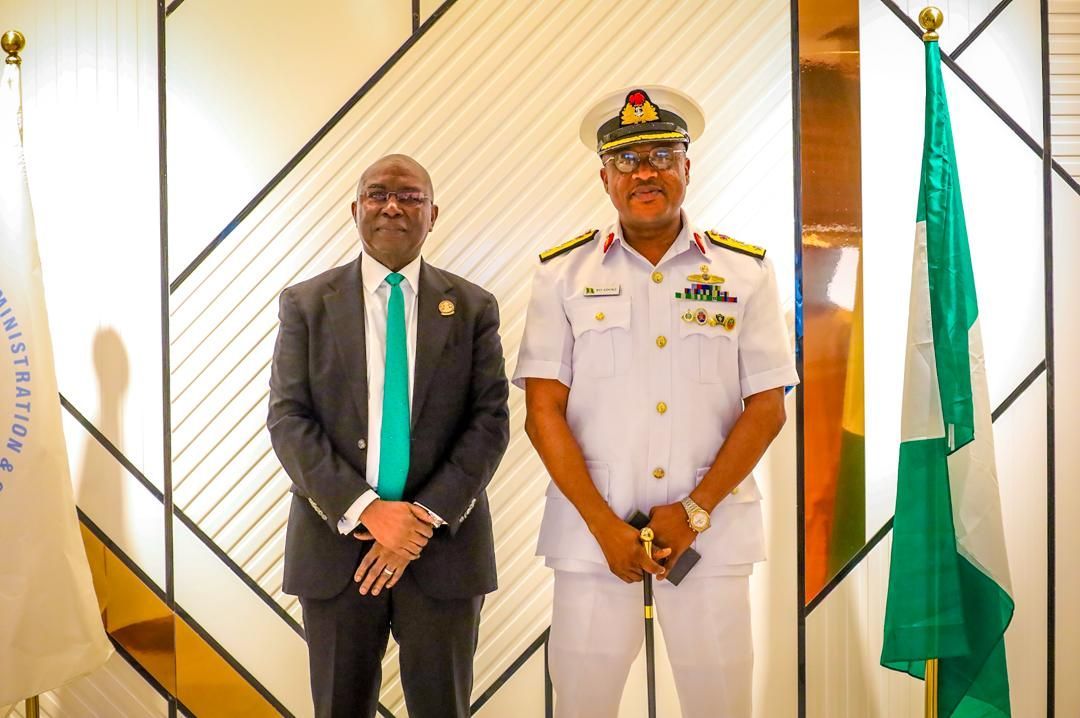
The Chief of the Naval Staff, Vice Admiral Idi Abbas, has approved the appointment of Commodore Reginald Odeodi Adoki as the Commander of the Maritime Guard Command at the Nigerian Maritime Administration and Safety Agency (NIMASA).
Commodore Adoki takes over from Commodore H.C Oriekeze who has been redeployed.

Commodore Adoki, a principal Warfare Officer specializing in communication and intelligence,  brings onboard 25 years experience in the Nigerian Navy covering training, staff and operations.

 As a seaman, he has commanded NNS Andoni, NNS Kyanwa and NNS Kada.
It was under his command that NNS Kada under took her maiden voyage, sailing from the country of build (the United Arab Emirates) into Nigeria.
He was commissioned into the Nigerian Navy in 2000 with a BSc in Mathematics.
 He has since earned a Masters in International Law and Diplomacy from the University of Lagos and an M.Sc in Terrorism, Security and Policing at University of Leicester, England.
He is currently pursuing a Ph.D in Defence and Security Studies at the National Defence Academy (NDA).
He is a highly decorated officer with several medals for distinguished service.

Welcoming the new MGC Commander to the Agency, the Director General, Dr Dayo Mobereola, expressed confidence in Adoki’s addition to the team, emphasising that it will further strengthen the nation’s maritime security architecture given his vast experience in the industry.

The Maritime Guard Command domiciled in NIMASA was established as part of the resolutions of the Memorandum of Understanding (MoU) with the Nigerian Navy to assist NIMASA strengthen operational efficiency in Nigeria’s territorial waters, especially through enforcement of security, safety and other maritime regulations.

Continue Reading

Customs

Customs collects N1.585 trillion from 51 compliant traders under AEO programme 
Funso OLOJO,  Editor 
The Authorized Economic Operator (AEO), one of the trade facilitation tools introduced by the Nigeria Customs Service in 2025, has begun to yield bountiful harvests with the revenue growth of ₦362.79 billion recorded in 2025.
According to the AEO scorecard released by the Service, the facilitation tool grossed the sum of N1.585 trillion after certification, an increase revenue from N1.222 trillion before certification.
This represents the growth of N362.79 billion(29.68 per cent) for 51 AEO – certified entities as at October, 2025.
The Programme, according to the NCS,  also contributed 21.77% to its total revenue collection of ₦7.281 trillion in 2025, while customs duties paid rose by 85.66% due to enhanced compliance and increased volumes of legitimate trade.
According to AEO Monitoring and Evaluation (M&E) Report, the Programme achieved an average compliance rate of 85.45 per cent with the highest at 100 per cent and the lowest at 60 per cent.
“The evaluation applied rigorous methodologies to ensure objectivity, transparency, and alignment with the World Customs Organisation (WCO) SAFE Framework of Standards and the provisions of the Nigeria Customs Service Act, 2023.
“In the area of trade facilitation, AEO participation reduced average cargo clearance time from 168 hours to 41 hours, representing a 75.60% time saving.
“Company operating costs declined by 57.2 per cent while demurrage payments dropped by 90 per cent, limiting capital flight to foreign-owned port service providers and strengthening foreign exchange retention.
” Overall trade efficiency improved by 77.11 per  through digitalisation, simplified procedures, and targeted risk management” the Customs declared in the AEO scorecard.
However, the Service singled out with Eight companies for commendation due to their integrity and compliance under the programme.
The companies include Coleman Technical Industries Limited, WACOT Rice Limited, ROMSON Oil Field Services Ltd, WACOT Limited, Chi Farms Ltd, CORMART Nigeria Ltd, PZ Cussons Nigeria Plc, Nigerian Bottling Company Limited and MTN Nigeria Communications Plc.
The Service lauded them for a cumulative voluntary remittance of over a billion naira into the Federation Account following their self-initiated transaction review and disclosure.
“These actions reflect the strengthening of post-clearance audit mechanisms and a growing culture of voluntary compliance within the trading community.
Nevertheless, the Service suspended a firm under the programme for its non- compliance and display of lack of integrity.
The suspended firm engaged in false declaration of consignments contrary to programme obligations.
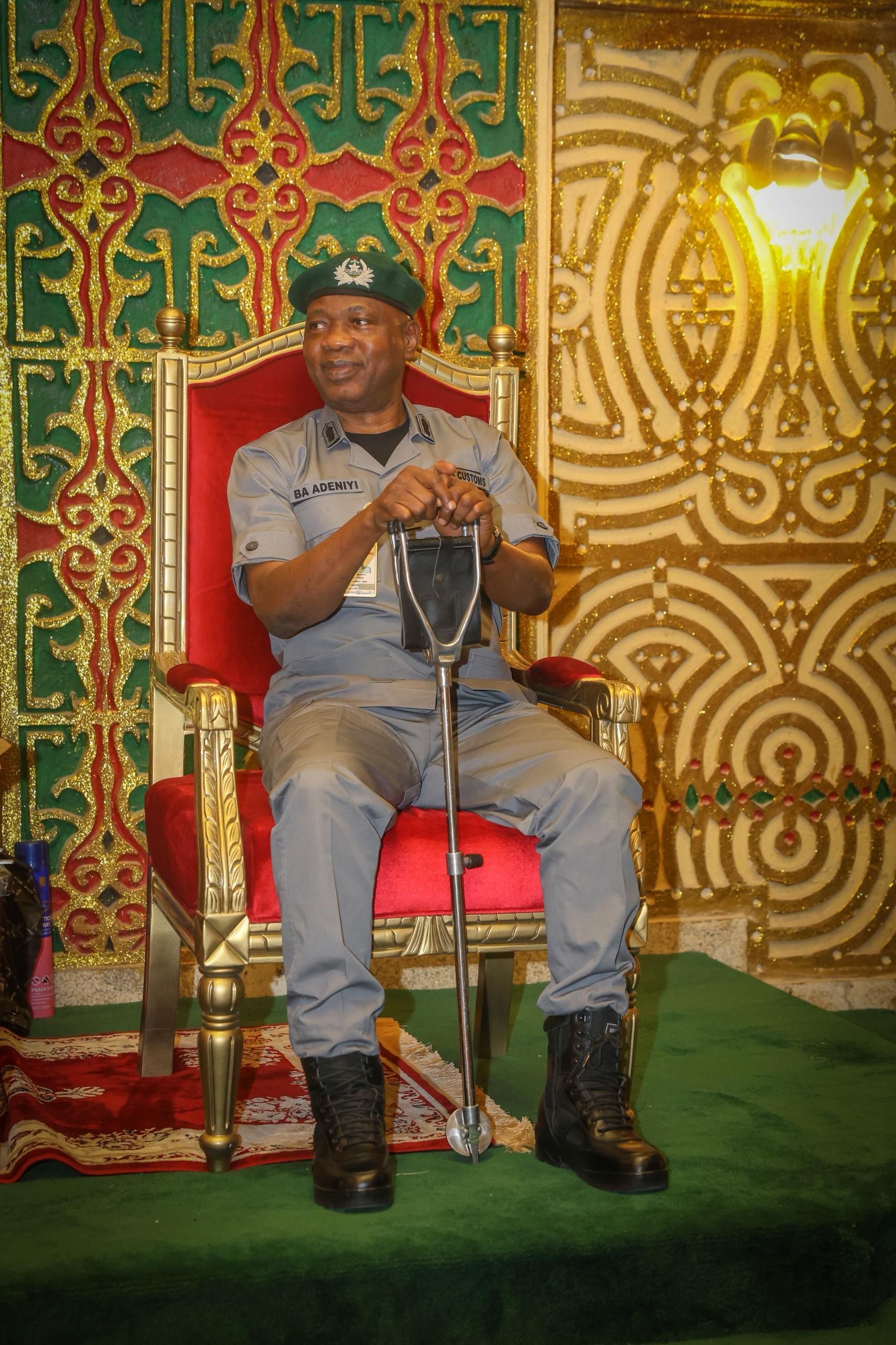
“Consequently, the Comptroller-General of Customs, Bashir Adewale Adeniyi, directed the immediate suspension of the company’s AEO status in accordance with the AEO Guidelines, the WCO SAFE Framework of Standards, and Section 112 of the Nigeria Customs Service Act, 2023.
The NCS reiterated that the AEO Programme is founded on trust, transparency, and continuous compliance.
“While compliant operators will continue to benefit from expedited clearance and reduced inspection, appropriate sanctions will be applied where violations are established.
“The Service remains resolute in safeguarding national revenue, facilitating legitimate trade, and preserving the integrity and global credibility of Nigeria’s AEO framework” the NCS concluded in the report.
Continue Reading

Trending