
Connect with us

Headlines

NIMASA’s regional collaborative efforts reduce piracy in GoG as pirates embrace alternative criminal enterprise

The Eyewitness Reporter with agency report
The regional collaborative efforts coordinated by Nigeria through the Nigerian Maritime Administration and Safety Agency (NIMASA) against piracy in the West African sub-region, have reduced pirate attacks in the Gulf of Guinea.
 According to Dryad Global’s 2022/2023 annual report, the intense anti-piracy war championed by NIMASA in the subregion has pushed pirate activities to all-time low in 2022 as the criminals have abandoned the illicit activities.
However, the report said the criminals have instead taken up oil theft and drug trafficking as alternative criminal enterprises.
“Piracy and maritime crime continued to decline in the Gulf of Guinea last year, largely in response to heightened regional and international anti-piracy efforts, but this has pushed pirates into other criminal enterprises, such as oil theft and drug trafficking”
The report noted that last year’s reduction in piracy in the waters of Nigeria and the wider Gulf of Guinea was a result of governments and organisations working together to carry out joint naval patrols, share intelligence, and coordinate responses to piracy incidents.
“Governments in the region also increased their law enforcement presence, deploying more naval vessels and patrol boats to piracy-prone areas.

“Additionally, counter-piracy legislation and prosecution were strengthened, criminalizing piracy and establishing specialized courts,” Dryad stated.

The International Maritime Bureau (IMB) of the International Chamber of Commerce (ICC) reported 115 incidents of piracy and armed robbery against ships in 2022 – compared to 132 in 2021 – with half in south-east Asian waters, particularly the Singapore Straits, where incidents continue to rise.

 This is broken down into 107 vessels boarded, two hijacked, five attempted attacks and one vessel fired on.
 In “many cases”, vessels were either anchored or steaming when boarded, with nearly all incidents occurring during the hours of darkness.
The continued and much-needed reduction in global piracy is attributed to an overall decrease in pirate activity in the highly risky waters of the Gulf of Guinea – down from 35 incidents in 2021 to 19 in 2022.

The Gulf of Guinea continues to report a decreasing number of incidents, with just five reported in the first quarter of 2023, down from eight last year and 16 in 2021, the IMB reported.

Nevertheless, the region remains dangerous.

In March 2023, pirates boarded a product tanker off the coast of the Democratic Republic of the Congo, while in April, another tanker was boarded about 300 nautical miles southwest of Abidjan, Ivory Coast – all crew were later reported safe with the oil cargo the target.
According to Dr. Okafor-Yarwood, a Lecturer in the School of Geography and Sustainable Development at the University of St Andrews, the reduction in piracy “is something of a contradiction because, while we’re seeing a decrease in some maritime crimes thanks to increased collaboration and cooperation on regional, national and international levels, criminals are unfortunately moving elsewhere.

“For instance, when it comes to oil theft and drug trafficking, criminals are having more success as our repulsion efforts drive their creativity.”

Okafor-Yarwood said there is increased collaboration and cooperation between nations on the maritime security front, on regional and international levels but the biggest challenge at a regional level is a limitation of assets and not being able to coordinate their use between those who have such assets, and those who do not.

 However, improved coordination in Nigeria is bearing fruit, notably through the Deep Blue Project run by the Nigerian Maritime Administration and Safety Agency (NIMASA).
“When NIMASA and other Nigerian maritime agencies are fully integrated, I think they’ll be able to do far more effective work than they are currently.

“We’re seeing evidence of the Nigerian navy’s ability to work effectively and actually lead as an example showing that the Gulf of Guinea countries are able to secure their waters when they have the right assets, information, and support,” she said.

Less piracy but more attacks in the Indian Ocean

Although piracy has dropped on both Africa’s East and West coasts, in 2022, the northern Indian Ocean witnessed several maritime security incidents that had significant implications for the region.

 These included the targeted attack on the Israeli vessel M/T Pacific Zircon by Iran in November, a series of incidents involving Houthi rebels offshore of Hodeidah in Yemen, and a number of attacks on vessels calling at southern Yemeni ports along the Gulf of Aden coast.

 Alongside such notable events were a number of smaller but no less tangible maritime security concerns in the form of approaches recorded within the Bab al Mandab and the Gulf of Aden, Dryad reported.

“In November 2022, Iran’s role in targeting the M/T Pacific Zircon, an Israeli-owned vessel, stood out as a prominent maritime security event.

” The attack on the tanker, reportedly carried out by Iranian forces, involved the use of explosive-laden drones. This act of aggression resulted in substantial damage to the vessel’s hull.

” The incident drew international attention due to its connection to the broader pattern of Iran targeting Israeli-linked vessels in the region.

“Simultaneously, Houthi rebels in Yemen played a significant role in maritime incidents offshore of Hodeidah within 2022, originating with the boarding and subsequent detention of the M/V Rwabee 20nm West Ras Isa Terminal in January.

” Whilst currently involved in a protracted peace process as well as a protracted conflict with the Yemeni government and its international allies, Houthi rebels continue to employ various asymmetric tactics in their actions.
“These have included the use of naval mines, coastal defence missiles, and unmanned explosive-laden boats.

“The targets of these attacks included commercial ships and military vessels, posing threats to maritime trade, the lives of seafarers, and the environment due to potential oil spills.

“Within southern Yemen, several incidents highlighted the threat to vessels calling at ports in the region. These included two drone-driven explosions in close proximity to the M/T Nissos Kea at the port of Ash Shihr, an attack on the al-Dhabba oil terminal by Houthi rebels, and an aerial drone attack on the cargo vessel Ata M at the port of Qena.

“These incidents underscored the volatile nature of the region and the challenges in maintaining maritime safety, emphasizing the need for comprehensive security measures,” Dryad stated.

“The combined effect of these incidents highlights the persistent challenges faced in ensuring maritime security in the northern Indian Ocean.

“The targeted attack on the M/T Pacific Zircon by Iran illustrated the ongoing tensions between Iran and Israel and the potential repercussions for states involved in perceived grievance with Iran.

” Meanwhile, Houthi rebel activities off the coast of Hodeidah highlighted the disruptive impact of regional conflicts on maritime operations, emphasizing the need for robust security measures.”

Continue Reading
Click to comment

Leave a Reply

Your email address will not be published. Required fields are marked *

Headlines

NIWA partners ICPC to strengthen internal transparency in its operations  

Gloria Odion, Maritime Reporter 
The National Inland Waterways Authority (NIWA) has announced new strategies aimed at improving its operational system and enhancing collaboration with key stakeholders as part of efforts to boost efficiency and accountability.
Speaking at a post event Press Conference at NIWA Headquarters Lokoja, the Acting Managing Director, Umar Yusuf Girei, while answering questions from journalists stated that, the organization convened a two -day Executive and Anti-Corruption training with the theme “Strengthening Integrity and Revenue System in Inland Waterways Management” organized for Board Members, Management and Area Managers and also 2026 NIWA Management Retreat in Abuja.
The Acting MD noted as part of the Renewed Hope Agenda of President Bola Ahmed Tinubu,with the support  Adegboyega Oyetola, Minister of Marine and Blue Economy, the Authority is focused on aligning institutional goals in ensuring better service delivery to Nigerians.
He further said, as part of its anti-corruption drive, the Management held discussions with the Independent Corrupt Practices and Other Related Offences Commission (ICPC) to explore measures for strengthening transparency within its operations.
Girei therefore, assured staff that the ongoing reforms under his watch would translate into improved service and better working conditions.
“NIWA remains committed to continuous improvement and stakeholder engagement and the reforms are expected to enhance both internal performance and public confidence”. he stated.
Continue Reading

Headlines

Navy appoints new Maritime Guard Commander for NIMASA 
Gloria Odion,  Maritime Reporter 

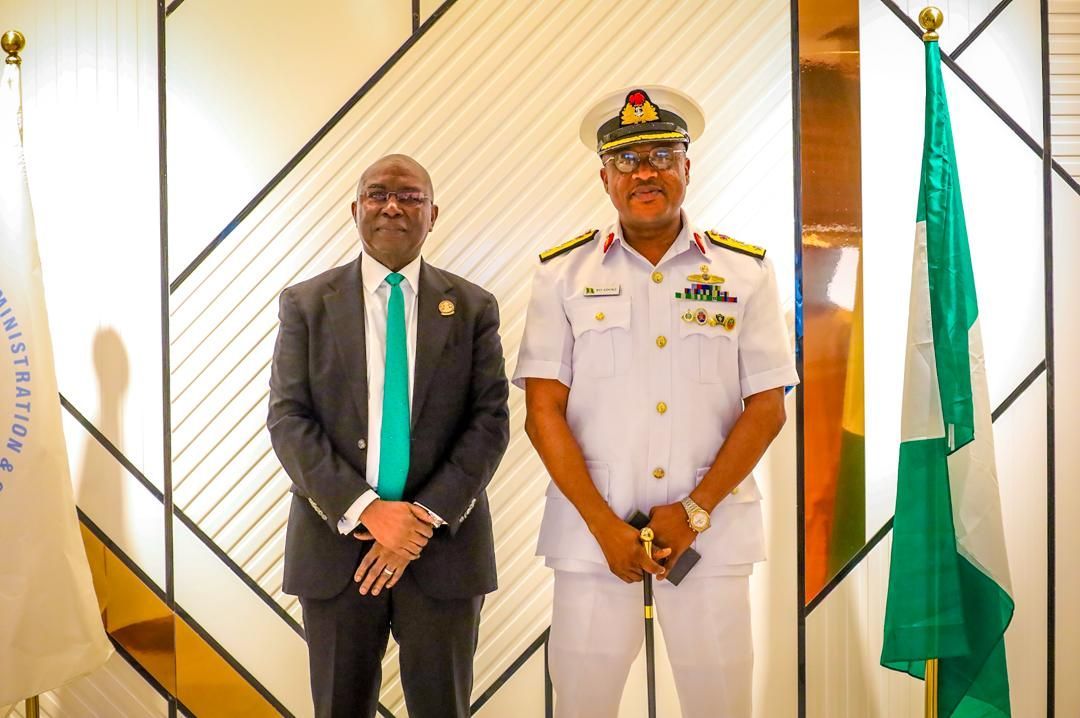
The Chief of the Naval Staff, Vice Admiral Idi Abbas, has approved the appointment of Commodore Reginald Odeodi Adoki as the Commander of the Maritime Guard Command at the Nigerian Maritime Administration and Safety Agency (NIMASA).
Commodore Adoki takes over from Commodore H.C Oriekeze who has been redeployed.

Commodore Adoki, a principal Warfare Officer specializing in communication and intelligence,  brings onboard 25 years experience in the Nigerian Navy covering training, staff and operations.

 As a seaman, he has commanded NNS Andoni, NNS Kyanwa and NNS Kada.
It was under his command that NNS Kada under took her maiden voyage, sailing from the country of build (the United Arab Emirates) into Nigeria.
He was commissioned into the Nigerian Navy in 2000 with a BSc in Mathematics.
 He has since earned a Masters in International Law and Diplomacy from the University of Lagos and an M.Sc in Terrorism, Security and Policing at University of Leicester, England.
He is currently pursuing a Ph.D in Defence and Security Studies at the National Defence Academy (NDA).
He is a highly decorated officer with several medals for distinguished service.

Welcoming the new MGC Commander to the Agency, the Director General, Dr Dayo Mobereola, expressed confidence in Adoki’s addition to the team, emphasising that it will further strengthen the nation’s maritime security architecture given his vast experience in the industry.

The Maritime Guard Command domiciled in NIMASA was established as part of the resolutions of the Memorandum of Understanding (MoU) with the Nigerian Navy to assist NIMASA strengthen operational efficiency in Nigeria’s territorial waters, especially through enforcement of security, safety and other maritime regulations.

Continue Reading

Customs

Customs collects N1.585 trillion from 51 compliant traders under AEO programme 
Funso OLOJO,  Editor 
The Authorized Economic Operator (AEO), one of the trade facilitation tools introduced by the Nigeria Customs Service in 2025, has begun to yield bountiful harvests with the revenue growth of ₦362.79 billion recorded in 2025.
According to the AEO scorecard released by the Service, the facilitation tool grossed the sum of N1.585 trillion after certification, an increase revenue from N1.222 trillion before certification.
This represents the growth of N362.79 billion(29.68 per cent) for 51 AEO – certified entities as at October, 2025.
The Programme, according to the NCS,  also contributed 21.77% to its total revenue collection of ₦7.281 trillion in 2025, while customs duties paid rose by 85.66% due to enhanced compliance and increased volumes of legitimate trade.
According to AEO Monitoring and Evaluation (M&E) Report, the Programme achieved an average compliance rate of 85.45 per cent with the highest at 100 per cent and the lowest at 60 per cent.
“The evaluation applied rigorous methodologies to ensure objectivity, transparency, and alignment with the World Customs Organisation (WCO) SAFE Framework of Standards and the provisions of the Nigeria Customs Service Act, 2023.
“In the area of trade facilitation, AEO participation reduced average cargo clearance time from 168 hours to 41 hours, representing a 75.60% time saving.
“Company operating costs declined by 57.2 per cent while demurrage payments dropped by 90 per cent, limiting capital flight to foreign-owned port service providers and strengthening foreign exchange retention.
” Overall trade efficiency improved by 77.11 per  through digitalisation, simplified procedures, and targeted risk management” the Customs declared in the AEO scorecard.
However, the Service singled out with Eight companies for commendation due to their integrity and compliance under the programme.
The companies include Coleman Technical Industries Limited, WACOT Rice Limited, ROMSON Oil Field Services Ltd, WACOT Limited, Chi Farms Ltd, CORMART Nigeria Ltd, PZ Cussons Nigeria Plc, Nigerian Bottling Company Limited and MTN Nigeria Communications Plc.
The Service lauded them for a cumulative voluntary remittance of over a billion naira into the Federation Account following their self-initiated transaction review and disclosure.
“These actions reflect the strengthening of post-clearance audit mechanisms and a growing culture of voluntary compliance within the trading community.
Nevertheless, the Service suspended a firm under the programme for its non- compliance and display of lack of integrity.
The suspended firm engaged in false declaration of consignments contrary to programme obligations.
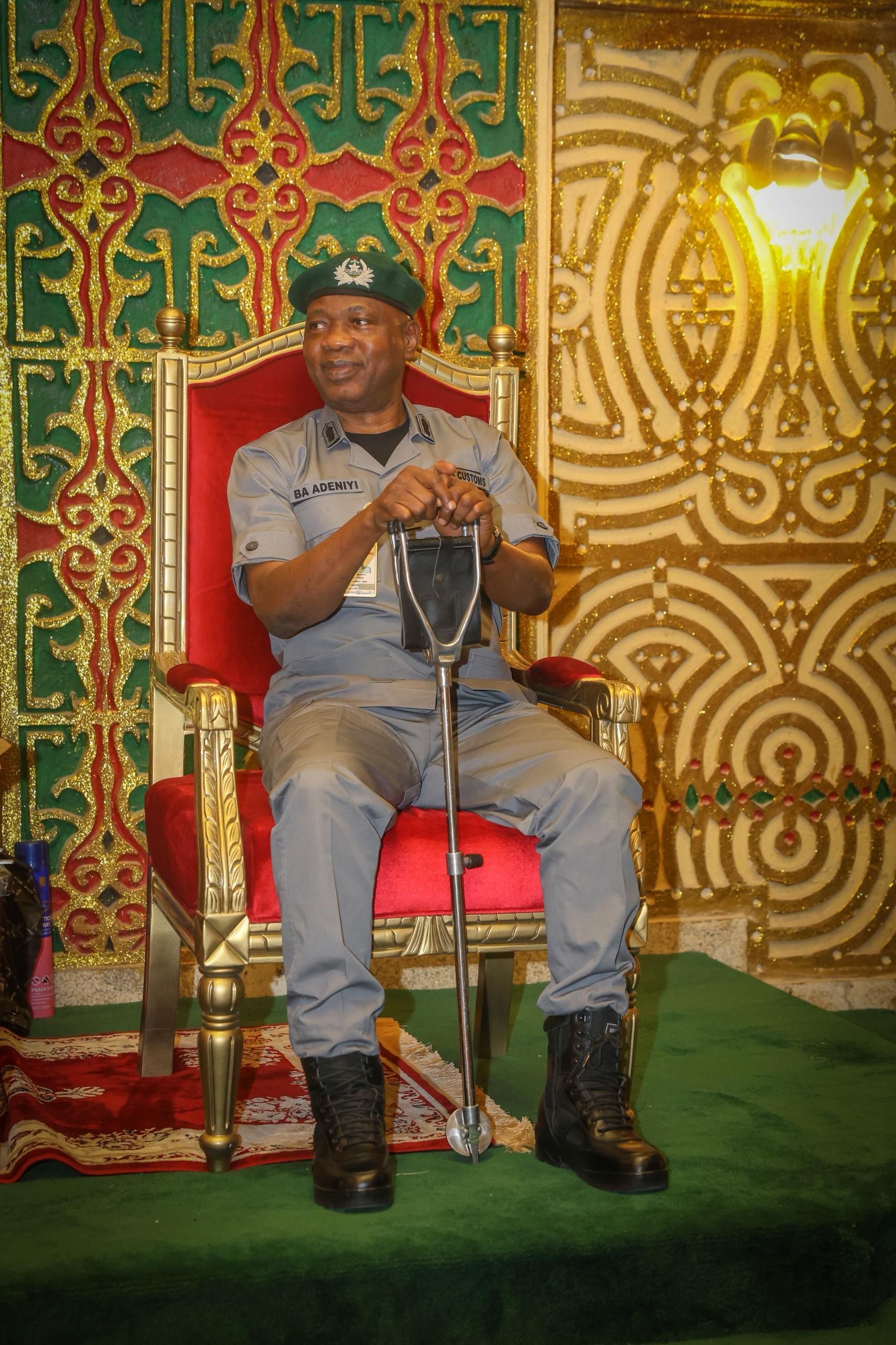
“Consequently, the Comptroller-General of Customs, Bashir Adewale Adeniyi, directed the immediate suspension of the company’s AEO status in accordance with the AEO Guidelines, the WCO SAFE Framework of Standards, and Section 112 of the Nigeria Customs Service Act, 2023.
The NCS reiterated that the AEO Programme is founded on trust, transparency, and continuous compliance.
“While compliant operators will continue to benefit from expedited clearance and reduced inspection, appropriate sanctions will be applied where violations are established.
“The Service remains resolute in safeguarding national revenue, facilitating legitimate trade, and preserving the integrity and global credibility of Nigeria’s AEO framework” the NCS concluded in the report.
Continue Reading

Trending