Connect with us

Economy

Government officials spend $3.95 billion on estacodes in 2019—-CBN

Governor of Central Bank of Nigeria, Godwin Emefiele


—- as CBN uses N538.59m to destroy dirty naira notes worth N698.59bn in 2020
 Eyewitness reporter

The Federal government spent a whopping sum of $3.95 billion as estacodes and Personal Travel Allowances to ministries, departments as well as to fund Bureaux De Change operations in 2019.

The CBN, in the 2020 annual report of its Currency Operations Department released on Thursday, said the forex procured for the payment of estacodes and PTA to the MDAs as well as the funding of BDC operations dropped to $2.12bn last year.

“The receipt and authentication of foreign currency deposits by Deposit Money Banks reduced significantly due to the downturn in global trade in 2020,” it said.

The apex bank said it recorded a significant reduction in the volume and cost of forex procurement last year.

It said, “A total of $1,830.00m was procured over the course of 2020. This value represents a decrease of $2,120.00m or 53.67 percent relative to the $3,950.00m procured in 2019.

“This was used to fund Bureaux De Change operations, payment of estacode and Personal Travel Allowances to Ministries, Departments, and Agencies.”

The CBN said it used N538.59m to destroy unfit naira notes worth N698.59bn last year.

The report said, “The bank sustained banknotes disposal operations in 2020 to ensure the circulation of clean banknotes

” In furtherance of this objective, it deployed 11 banknote destruction systems and three currency disintegrating systems for currency disposal activities in the period under review.

“At end-December 2020, a total of 1,514.66 million pieces (151,427 boxes) valued at N698.59bn was disposed, compared with 1,572.17 million pieces (157,217 boxes) valued at N814.44bn in 2019.

“The boxes and value of unfit notes disposed of in 2020 decreased by 5,790 boxes and N1.12bn, respectively, below 157,217 boxes, valued at N814.44bn in 2019.

“The decrease was attributed to the suspension of disposal activities due to COVID-19 restrictions.”

“The sum of N538.59m was incurred on currency disposal activities in 2020, compared with N647.82m in 2019. This was N109.23m or 16.86 percent lower than the cost in 2019,” it added.

The report said a total of 79,993 pieces of mutilated banknotes of various denominations valued at N52.82m was audited, disposed and replaced in 2020, compared with 865,775 pieces valued at N45.99m.

The CBN said to maintain the integrity of the banknotes in circulation, it sustained efforts at combating counterfeiting activities in 2020, in collaboration with security agencies.

It said a total of 67,265 pieces of counterfeit notes with a nominal value of N56.83m was recorded in 2020, compared to 84,934 pieces valued at N64.71m in 2019.

It said the N1,000 and N500 denominations constituted the bulk of counterfeited banknotes, accounting for 69.06 percent and 30.79 percent, respectively, of the total counterfeit notes.

Continue Reading
Click to comment

Leave a Reply

Your email address will not be published. Required fields are marked *

Business

National Single Window goes live in March, 2026 

– as FG launches phase 1 of the project for trade facilitation 
Funso OLOJO
The Federal Government of Nigeria has announced the commencement of Phase 1 of the National Single Window (NSW) Project, scheduled to launch on March 27, 2026.
The launch marks a decisive step toward reforming Nigeria’s trade ecosystem through technology, transparency, and smarter regulation.
The National Single Window is a centralised digital platform designed to simplify and harmonise trade procedures by enabling traders to submit trade-related information once,
through a single interface, while relevant government agencies access, process, and approve the required documentation seamlessly.
 The initiative is expected to significantly reduce delays, eliminate duplication, curb inefficiencies, and lower the cost of doing business at Nigeria’s ports and borders.
Speaking on the transformative potential of the project during the inauguration of the project on the 16th of April 2024, President Bola Ahmed Tinubu described the National Single Window as a cornerstone of Nigeria’s trade and economic reform agenda.
“The National Single Window will change the way trade is done in Nigeria. It will replace fragmentation with coordination, opacity with transparency, and delay with efficiency,” says Presidency.
The President added that the NSW aligns with the administration’s commitment to
economic diversification, non-oil export growth, and improved ease of doing business, noting that efficient trade systems are critical to national development.
Also speaking on the initiative, the Minister of Industry, Trade and Investment, Dr. Jumoke Oduwole, described the National Single Window as a game-changer that will simplify and
democratize trade in Nigeria.
Dr. Oduwole explained that the platform will streamline trade documentation through a unified window, enabling greater transparency, improved transaction tracking, and
increased trade volumes.
 She added that experienced traders, in particular, would benefit from the efficiency gains offered by the system.
Providing insight into the implementation strategy, Mr. Tola Fakolade, Director of National Single Window Project, explained that the Federal Government has deliberately adopted a phased rollout approach, beginning with Phase 1, which will focus primarily on statutory permits and manifests.
“The National Single Window will be rolled out in phases, starting with Phase 1, which concentrates on statutory permits and cargo manifests,” Mr. Fakolade stated.
“This allows us to stabilise the system, build confidence among stakeholders, and deliver immediate value where bottlenecks are most pronounced.”
According to Mr. Fakolade, the decision to phase the launch reflects lessons learned from previous large-scale technology initiatives that adopted a “big bang” approach.
“We have learned from the flaws of past big bang technological rollouts, where attempting to do everything at once created avoidable disruptions,” he noted.
 “Phasing the National
Single Window is a deliberate and strategic choice—one that prioritises sustainability, user adoption, and continuous improvement over speed for speed’s sake.”
He further emphasized that subsequent phases will gradually expand the scope of the platform, onboard additional agencies, and deepen integration across the trade value chain, ensuring a resilient and scalable system.
“This approach ensures that the National Single Window grows with the ecosystem, guided by real data, user feedback, and operational realities,” Mr. Fakolade added.
As Phase 1 goes live, the Federal Government reaffirmed its commitment to working closely with the private sector, development partners, and trade stakeholders to ensure a smooth
transition and shared ownership of the reform.
“By simplifying trade processes and leveraging digital innovation, we are unlocking faster movement of goods, strengthening revenue assurance, and creating a more competitive
environment for Nigerian businesses to thrive locally and globally.” Mr. Fakolade added.
With the launch of the National Single Window, Nigeria takes a bold and pragmatic step towards modern trade governance—one that places efficiency, transparency, and learning at the heart of national progress.
Continue Reading

Economy

We haven’t stopped Customs, FIRS, NUPRC, others from deducting cost of revenue collection at source – FG
Funso OLOJO
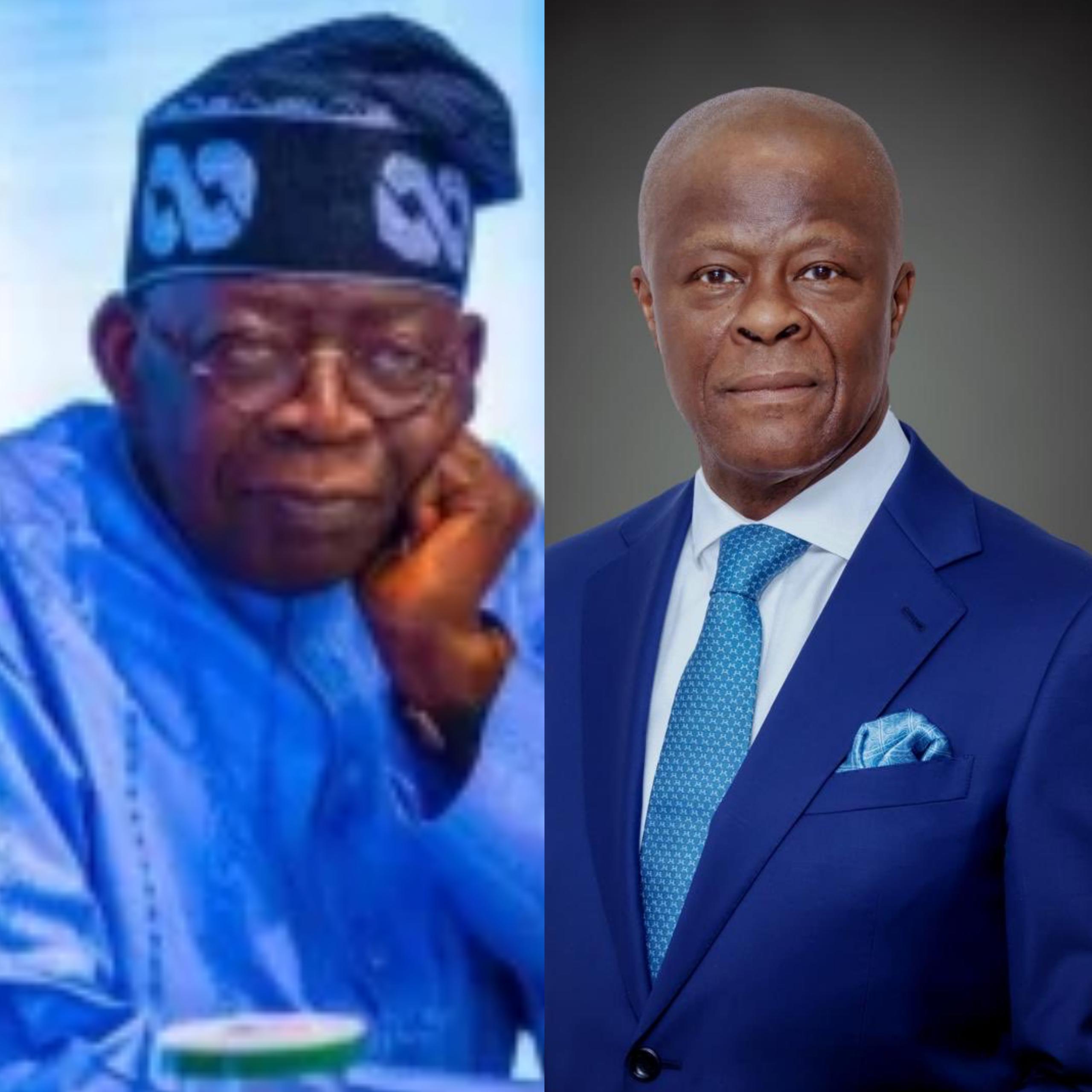
The Federal government has debunked the widely- held insinuation that it has stopped the standard practice of revenue – generating agencies such as the Federal Inland Revenue Service (FIRS), the Nigerian Upstream Petroleum Regulatory Commission (NUPRC), and the Nigeria Customs Service (NCS) to deduct their cost of collection at source.
In a statement issued by the Federal Ministry of Finance and signed by Mohammed Manga, Director of  Information and Public Relations in the ministry, at no point did the Minister of Finance and the Coordinating Minister of Economy, Wale Edun, announced the discontinuation of such practice.
“We categorically state that these reports are inaccurate and misleading.
“At no point during his remarks at the Nigeria Development Update (NDU) programme hosted by the World Bank did the Honourable Minister of Finance and Coordinating Minister of the Economy, Mr. Wale Edun, announce or imply any change to the existing policy on the cost of collection deductions.
“For the avoidance of doubt, there has been no policy change regarding the deduction of costs of collection at source by revenue-generating agencies. The current framework remains in effect.
“What is underway are ongoing policy discussions in line with the directives of His Excellency, President Bola Ahmed Tinubu, to review cost of collection structure.
“These discussions are part of broader efforts to enhance transparency, efficiency, and value-for-money in public financial management.
“However, no final decision has been made on this matter.
“The Ministry assures all stakeholders and the public that revenue operations continue uninterrupted and that any future adjustments will be guided by due process, stakeholder engagement, and clear communication.
“We urge media organisations to seek clarification from official sources before publishing information that may cause unnecessary confusion.
“The Ministry appreciates the continued support of Nigerians as we work collectively to build a stronger, more transparent, and sustainable economy” the statement concluded
Continue Reading

Economy

Le Look Nigeria marks 40 years of ingenious local fabric branded bags on October 1st

Gloria Odion 
All is set to mark the 40 years anniversary of Le Look Nigeria Limited, makers of Le look Bags brands.
According to the founder and Chief Executive Officer(CEO), Chief Mrs. Chinwe Ezenwa, arrangements have been concluded to hold the event on October 1, 2025 at Federal Palace Hotel, Lagos.
The event with morning and award night sessions is themed: “Legacy of Resilience: Empowering Entrepreneurs for Africa’s Economic Future.”
Ezenwa added:”Le Look 40th Anniversary is a milestone that celebrates resilience, creativity, and the power of Nigerian enterprise.
“Founded in 1985, Le Look has grown from a small women-led business into a proudly Nigerian manufacturer, exporting unique, locally crafted bags to international markets.
“Over four decades, we have stayed true to our mission of:
Strengthening local manufacturing;
creating jobs and transferring skills;
opening doors for women and youth in enterprise;
supporting Nigeria’s non-oil export drive and the AfCFTA agenda.
“This anniversary is more than a celebration—it is a call to sustain entrepreneurship in Africa’s fast-changing economy,” she noted.
With expected over 300 distinguished guests, including senior government officials, private sector leaders, development partners, and entrepreneurs across generations;
the day will feature keynote address and fireside conversations with veteran entrepreneurs as well as panel sessions on business longevity.
 Other features are African Continental Free Trade Agreement(AfCFTA) readiness;
Youth and women forums on inclusive business practices
Exhibitions by government and trade agencies will be part of the activities.
Le Look Nigeria Limited has grown to a global brand with the Le Look Bags Academy built in Abuja, Enugu and Lagos.
Le Look is a manufacturer of afro-centric luxury-life style branded bags inspired by African culture and sensibility.
These handbags are crafted from African prints in celebration of the rich African heritage with international and modern fashion flair.
The company offers multiple product categories, including ready-to-wear, handbags, Apple-support products and other carry-on unique and durable accessories.
“Our partnership with designers in Africa has catalysed the resurgence of retailing locally made goods across the continent,” Ezenwa said.
According to her,  “Through our studio in Lagos, we provide on- the-job training, school tuition and health care benefits.
“Our philosophy is simple-to be the first and foremost African luxury brand with global reach”, she added.
Over the years, Le Look Bags Academy has partnered  international and government institutions to promote trade and build capacities for the continent.
The Nigerian Export Promotion Council (NEPC) last year partnered  Le Look Nigeria Limited to boost Nigeria’s non-oil exports and empower local artisans, particularly women and youth in Lagos. This collaboration,  includes the launch of an export skills acquisition center and a fashion innovation hub to equip individuals with skills in bag-making and international trade to meet growing global demand for handcrafted bags.
Also, UNDP Nigeria  is in  partnership with Le Look Bags Academy, to launch a training program designed to equip unemployed youth with limited formal education, primarily women, with practical skills in bag-making as a sustainable livelihood mechanism.
Le Look Bags Academy serves as the leading hub for mastering bag-making and digital technology skills.
The academy provides a unique, personalized approach to equipping learners with the necessary skills to succeed in the dynamic global landscape.
Le Look Nigeria Limited is the first Small and Medium Enterprise (SME) to receive the Authorized Economic Operator (AEO) certificate from the Nigeria Customs Service (NCS).
As a certified AEO, Lelook benefits from trade facilitation, reduced costs, and improved efficiency in its export and import activities, supporting Nigeria’s goal of becoming a leading trade hub.
 Le Look Nigeria is No 0001 under the AFCFTA guided trade Initiative to receive the Certificate of Origin to trade across Africa
Continue Reading

Trending