Headlines
Shippers’ Council seeks stakeholders’ support for efficient National Single Window project




Headlines
Dredgers association disowns extortion allegations against Lagos commissioner

Funso OLOJO, Editor
The Dredgers Association of Nigeria (DAN) has disowned a media report alleging extortion, harassment and intimidation of dredgers and tipper operators by the Lagos State Commissioner for Waterfront Infrastructure Development, Hon. Ekundayo Alebiosu and Mr. Cardozo.
The association, in a disclaimer issued on Friday, October 23, 2026, said the report, published by Linda Ikeji’s Blog and other online platforms under the headline “Dredgers Association Appeals to Sanwo-Olu Over Alleged Extortion, Urges Governor to Call Alebiosu, Cardozo to Order,” did not originate from its national leadership or any authorised organ of the association.
DAN stated categorically that it neither authorised nor approved any petition or press release accusing the commissioner and Cardozo of harassment, intimidation or extortion.
It also denied having any record of the alleged impounding of trucks and the purported demand for ₦500,000, which featured in the publication.
The association, therefore, distanced itself entirely from the allegations, urging the public and relevant stakeholders not to regard the report as an official statement of its position.
Reaffirming its relationship with the Lagos State Government under Governor Babajide Sanwo-Olu, DAN described its engagements with the government and the Ministry of Waterfront Infrastructure Development as cordial and collaborative.
According to the association, issues concerning dredging regulations and the interpretation of Supreme Court judgments on shoreline authority are being addressed through appropriate institutional channels and dialogue with relevant federal and state authorities.
It stressed that such matters were being handled through established processes rather than media confrontations.
DAN consequently urged the Lagos State Government, Alebiosu and other stakeholders to disregard the publication in its entirety, insisting that it did not represent the association’s official position.
The association also expressed regret over any embarrassment, inconvenience or reputational damage the report might have caused the Lagos State Government, the commissioner and other officials mentioned.
Reaffirming its commitment to responsible industry engagement, DAN said it remained dedicated to promoting lawful and sustainable dredging operations across Nigeria through constructive collaboration with relevant authorities and stakeholders.
The disclaimer was signed by the association’s National President, Batare Akpomejero, and National Secretary, Richard Ntan.
Customs
Customs intercepts five live Pangolins in Ogun, goes after wildlife traffickers
Funso OLOJO, Editor
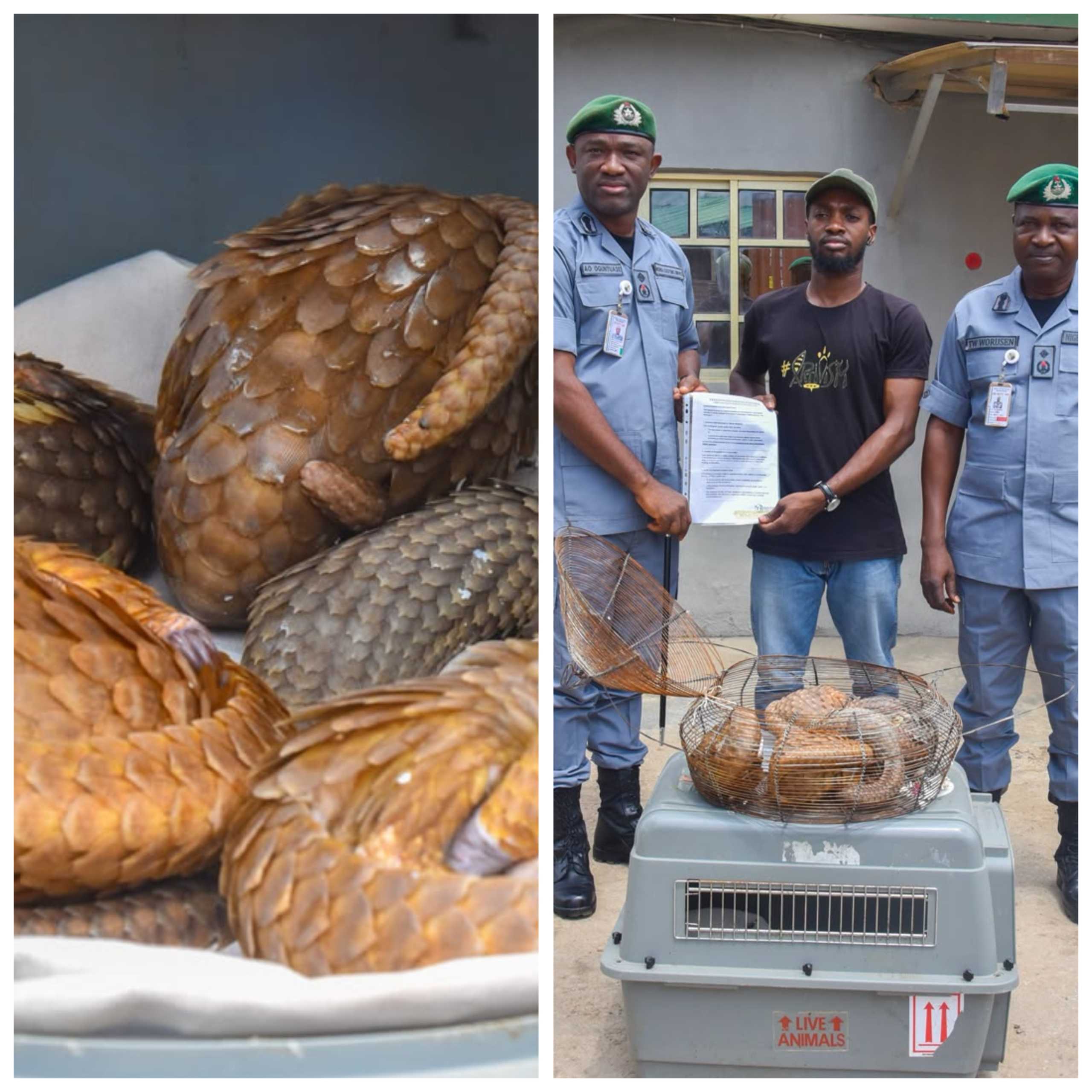
The Nigeria Customs Service (NCS), Federal Operations Unit (FOU) Zone ‘A’, has rescued five more live pangolins in Ogun State, intensifying its crackdown on the illegal wildlife trade and raising fresh concerns about the activities of endangered-species trafficking syndicates.
The latest interception, carried out at about 1:18 a.m. on Friday, October 23, 2026, along the Igbo-Ora/Imeko-Afon axis of Ogun State, followed intelligence reports on the suspected movement of endangered wildlife.
Acting on the intelligence, Customs officers intercepted the five pangolins confined in wire-mesh cages and concealed in a manner suspected to have been designed to evade detection.
The suspected traffickers reportedly abandoned the animals and fled upon sighting the patrol team.
The rescue marks another intervention by the Unit against wildlife trafficking within approximately seven days, prompting calls for an extensive investigation to identify and dismantle the criminal networks behind the illicit trade.
In line with its commitment to wildlife protection, FOU Zone ‘A’ formally handed over the rescued animals to the Greenfingers Wildlife Initiative Centre for safekeeping, rehabilitation and eventual release into a protected habitat.
The handover was conducted by the Deputy Comptroller in charge of Enforcement, Oluwaseun Oguntuase, on behalf of the Acting Controller of the Unit, Deputy Comptroller Oladapo Afeni.
Speaking at the handover ceremony, Oguntuase said the interception of multiple wildlife consignments within a short period underscored the need for sustained investigations and stronger enforcement measures against those involved in the illegal capture, transportation and trafficking of endangered species.
He reaffirmed the Service’s commitment to combating wildlife trafficking, protecting endangered animals and enforcing Nigeria’s obligations under the Convention on International Trade in Endangered Species of Wild Fauna and Flora (CITES), alongside relevant national legislation.
“Pangolins are among the world’s most trafficked mammals. This seizure is another clear warning to those involved in the illegal wildlife trade that Nigeria’s borders and transport corridors remain under active surveillance,” Oguntuase said.
Pangolins are listed under Appendix I of CITES, which generally prohibits international commercial trade in wild-caught specimens and their derivatives, subject to the Convention’s applicable provisions.
Nigeria’s Endangered Species (Control of International Trade and Traffic) Act also provides a legal framework for protecting endangered wildlife and regulating activities involving listed species.
Oguntuase said FOU Zone ‘A’ would sustain intelligence-led operations, deepen collaboration with conservation organisations and other relevant stakeholders, and ensure that rescued animals receive appropriate care.
He warned that individuals involved in wildlife trafficking would face the full weight of the law.
“Those who engage in wildlife trafficking will be made to face the full weight of the law,” he declared.
Receiving the rescued pangolins, Dr. Austin Tochukwu of the Greenfingers Wildlife Initiative Centre commended the Nigeria Customs Service for its vigilance and prompt intervention.
He assured the Service that the organisation would provide the animals with the necessary care and undertake efforts towards their rehabilitation and eventual release into a safe, protected environment.
The latest rescue underscores the importance of collaboration between law enforcement agencies and wildlife conservation organisations in confronting the illegal wildlife trade.
The Nigeria Customs Service reiterated that protecting the country’s biodiversity is a shared national responsibility requiring sustained cooperation among government institutions, conservation partners and citizens.
As enforcement operations continue, attention is expected to focus on identifying the individuals and networks responsible for the movement of endangered wildlife through Nigeria’s transport corridors.
Headlines
Tinubu reaffirms support for tourism reforms, receives Nigeria’s highest tourism honour
Funso OLOJO, Editor
President Bola Ahmed Tinubu has reaffirmed his administration’s commitment to tourism development and hospitality sector reforms, pledging continued support for initiatives aimed at unlocking the industry’s economic potential and positioning it as a major contributor to Nigeria’s non-oil economy.
The President gave the assurance on Thursday, October 22nd, 2026, during a meeting with the Director-General and Chief Executive Officer of the National Institute for Hospitality and Tourism (NIHOTOUR), Aare Abisoye Fagade, who briefed him on ongoing efforts to strengthen professional standards, develop industry skills and improve service delivery across the tourism, hospitality and travel sectors.
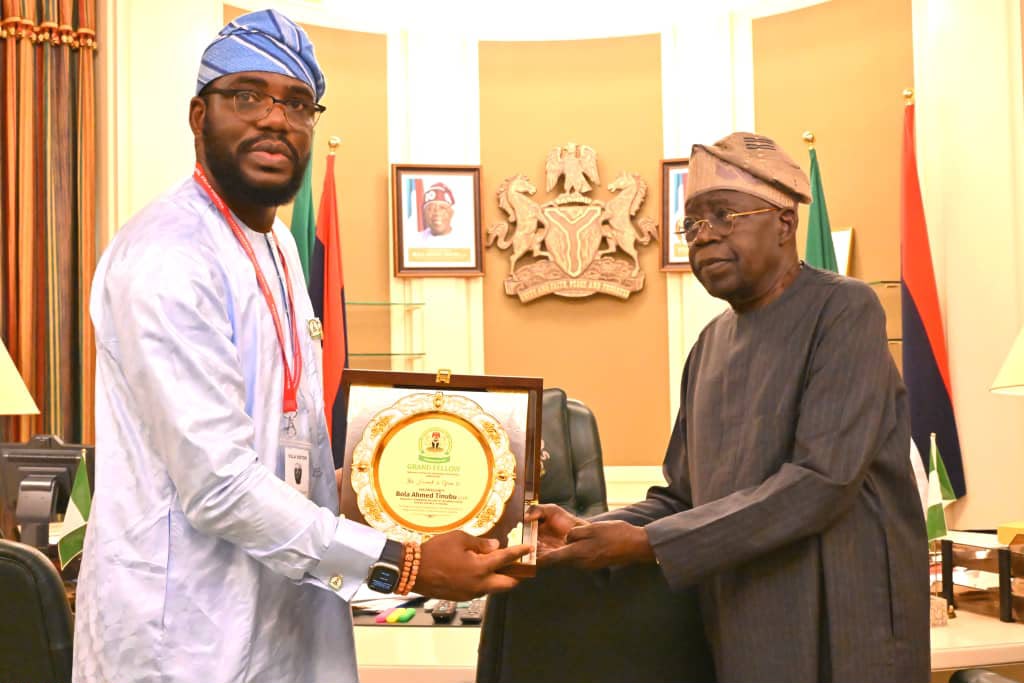
The engagement also featured the presentation of the Grand Fellow of National Hospitality and Tourism (GFNHT) to President Tinubu by Fagade.
The distinction, conferred by NIHOTOUR, is described by the institute as the highest singular honour in Nigeria’s tourism sector.
The meeting comes amid efforts to reposition tourism as a viable instrument for economic diversification, employment generation, investment attraction and enterprise development.
During his briefing, Fagade highlighted the institute’s ongoing reforms, particularly the implementation of the NIHOTOUR Act 2022, which provides a framework for strengthening professional standards, promoting accountability and improving the quality of services across the industry.
He explained that the reforms were designed to build a more structured and professional tourism ecosystem capable of attracting investment, creating jobs and enhancing Nigeria’s competitiveness in the global tourism market.
According to him, Nigeria’s tourism potential extends far beyond leisure and recreation, offering significant opportunities for economic growth through hospitality, travel services, skills development and related businesses.
Fagade stressed that unlocking these opportunities would require sustained investment in human capital, effective institutional oversight and closer collaboration between government and private-sector operators.
“Our responsibility is to build the professional and institutional foundations that will enable Nigeria’s tourism potential to translate into jobs, investment and sustainable economic growth. ”
The President’s continued support is important to advancing these reforms and positioning the sector for greater national impact,” he said.
He noted that improving professional competence and establishing credible regulatory standards were essential to building public confidence, strengthening service delivery and creating an environment in which tourism businesses could thrive.
The NIHOTOUR chief executive added that a more professional and competitive industry would enhance Nigeria’s capacity to attract domestic and international visitors while expanding opportunities for entrepreneurs and other stakeholders across the tourism value chain.
The President’s pledge of continued support, according to the institute, underscores the importance of tourism within the Federal Government’s broader economic development strategy.
The sector aligns with the objectives of the Renewed Hope Agenda, particularly its emphasis on diversifying the economy, generating employment and developing productive sectors beyond oil.
With its potential to stimulate hospitality businesses, transport services, cultural enterprises and other supporting industries, tourism is increasingly being viewed as an avenue for broadening Nigeria’s economic base and creating opportunities for small and medium-sized enterprises.
NIHOTOUR reaffirmed its commitment to working with government institutions and private-sector stakeholders to advance the reforms, strengthen professional training and promote standards that can support a globally competitive tourism industry.
The institute said its objective was to build a more professional, accountable and internationally recognised sector capable of generating sustainable economic value and delivering lasting benefits to Nigerians.

 Customs3 months ago
Customs releases final recruitment list for ASC II, ends nearly one-year wait for applicants
- Headlines2 months ago
Oyetola presents three-year score card as blue economy industry revenue hits ₦1.83trn
- Customs2 months ago
Apapa Customs sets new single-day revenue record with ₦28.1bn collection
- Customs2 months ago
Apapa Customs sets new record of monthly revenue haul with ₦323bn collection in July
- Customs3 months ago
NCS intercepts container concealing pump-action rifle parts, seizes ₦373.8m worth of cannabis products at Tincan Port
- Customs3 months ago
FG exempts CNG, electric vehicles from Customs duty, VAT