Connect with us

Headlines

“Where is Adegboyega Isiaka Oyetola?”

-maritime industry on auto-pilot as Minister’s whereabouts unknown

 –maritime stakeholders express concerns over continued absence of minister at major public events 
FUNSO OLOJO 
Maritime stakeholders in the industry have expressed concerns and worries over the continued absence of the Minister of Marine and Blue Economy, Gboyega Isiaka Oyetola, at major high-stakes functions in the sector.
The concerned industry operators, who seemed to be expressing genuine agitation over the whereabouts of the minister, observed that Oyetola has consistently absented himself in the last few weeks from some critical government and corporate functions that signpost the core functions of his ministry.
According to them, such events were attended by the representatives of the Minister.
They make copious references to the international workshop on Deep Seabed activities held on Wednesday, 18th- Thursday 19th, 2024 in Abuja where the minister, due to the importance of the meeting, was supposed to welcome participants but was represented by Oloruntola Olufemi, the Permanent Secretary of Ministry of Marine and Blue Economy.
Similarly, the stakeholders pointed to the two-day 4th Annual Symposium and workshop organized by the African Marine Environment Sustainability Initiative (AFMESI) held in Lagos on September 24th- 25th, 2024 where he was also represented.
More poignant among the events in which the inexplicable absence of the minister raised the adrenaline of the stakeholders was the ongoing 79th United Nations General Assembly(UNGA) 2024 at New York, United States of America.
The concerned stakeholders expressed alarm over his absence at the global event where they believed he should have used the platform to sell the programmes of the ministry to the global world.
According to them, that was one absence too many.
Similarly, the World Maritime Day held in Lagos on Thursday, September, 26th, 2024 which the Minister was supposed to have declared open, was done on his behalf by Mr Olufemi, the Permanent Secretary.
” We would have understood the absence of the Minister at the World Maritime Day if he had attended the UNGA 2024″ an agitated stakeholder observed.
” Even if he had attended the global event in New York, he would still have had time to fly back to attend the World Maritime Day where he was supposed to address the participants who are the key industry stakeholders on the achievements of his ministry, his policy thrust and projection.
“After all, I learned that NIMASA DG who addressed the Atlantic Cooperation submit which the Minister should have ordinarily addressed if he had gone, had time to fly back to attend the World Maritime Day” an obviously unhappy stakeholder interjected.
Checks by our reporter revealed that the Minister had busy schedules during the weeks in  July and August 2024  when he was actively involved in maritime activities to the delight of stakeholders.
However, the observant stakeholders claimed that they started to notice the gradual withdrawal of the minister from public functions at the beginning of September 2024 till the end of the month when his representatives held forth for him at all events.
“From the beginning of September up till the moment am talking with you, we haven’t seen the minister at the crucial public functions which raise our concerns” another industry operator volunteered.
A perusal of the minister’s X official page and the Ministry of Marine and Blue Economy, which normally give detailed coverage of his official activities, showed that the minister’s last public outing was on August 27th, 2024, when he attended the 2024 International Business Conference and Expo organized by the Lagos Chamber of Commerce and Industry.
On August 24th, Oyetola attended the signing of the Agreement on Minimum Conditions of Service for Labour in Nigeria’s Shipping industry.
On July 13th, the minister attended Chief Olusegun Osoba’s 85th birthday and book launch.
On July 11th, he was at his Alma Mater, the University of Lagos, as the Keynote speaker during the institution’s Employment Clinic Education to Empowerment Transition Programme (EETP) career event tagged ” Blue Career Insights”
The Minister was also at the 17th Seminar for Judges organized by the Nigerian Shippers’Council on July 9th-July 11th, 2024 in Abuja.
On July 4th, Oyetola personally commissioned NPA’s High Tech Marine Crafts in Lagos.
On July 3rd, he hosted the Belgian Ambassador to Nigeria, Pieter Leenknegt, in his Office in Abuja.
The minister’s above itinerary clearly showed that he was a busy man who was always engaged in industry activities.
It was against the background of this realization that there are now heightened concerns about his less public appearance in recent times.
More worrisome, according to the concerned stakeholders, was the absence of the minister at the 79th edition of UNGA in New York.
He was at the 2023 edition of the global conference where he accompanied President Bola Ahmed Tinubu.
He also addressed the 2023 Atlantic Cooperation submit chaired by the US Secretary of State, Antony Blinken.
His engagement with Dr Adesina, the President of the African Development Bank and Governor Rahman of Kwara state was generously captured on his X page.
As was the usual practice of the minister, his attendance at the 78th UNGA in 2023 was flamboyant and captured on his official X page, including the official X page of the ministry.
Even, his  Special Assistant on Media, Ismail Omipidan, made a public spectacle of the minister’s departure to 2023 UNGA on his Facebook account page with copious pictures.
The absence of such a flamboyant display of the activities at the 79th UNGA in New York on the Minister’s  X page raises the suspicion of discerning stakeholders that the minister did not attend the all-important 2024 UNGA which heightens their anxiety over the whereabout of the the former Osun state governor.
The suspicion and anxiety of industry operators were hinged on the fact that it was the Director General of the Nigerian Maritime and Administration Agency (NIMASA), Dr Dayo Mobereola, who addressed the 2024 Atlantic Cooperation submit held on the sideline of the 79th UNGA.
The same summit which was addressed by Oyetola last year.
The Atlantic Cooperation submit, a ministerial gathering, was curiously addressed by Mobereola, the head of an agency under the Ministry of Marine and Blue Economy.
“If he(Oyetola)  was there, Mobereola wouldn’t have been the one to address that important submit” an operator said.
Also, President Bola Ahmed Tinubu has directed through a memo signed by the Secretary to the Government of the Federation(SGF) that a lean size of Nigeria’s delegation should go to 2024 UNGA to reflect the mood of the nation.
As a result, government officials whose office have direct relevance to the topics of the global event were only allowed to go.
Consequently, the advance party who welcomed Vice President Kashim Shettima, the Federal government Head of Nigeria’s delegation to the global event, was on hand to receive the Vice president when his presidential plane touched down at John F Kennedy International Airport on Sunday, September 22nd, 2024.
The advance party included the Minister of Foreign Affairs, Yusuf Tuggar who coordinated the visit, the Minister of Communications, Innovation and Digital Economy, Dr. Bosun Tijani, Director General of the National International Technology Development Agency(NITDA) , Kashifu Inuwa as well as Nigerian Diplomats and UN officials.
Observers claimed that Oyetola should have been among the delegates due to the Atlantic Cooperation submit which he expected to participate which is relevant to the global event that could have warranted his attendance according to the Presidential order.
The attendance of Dr Tijani, the  Minister of Communication and Inuwa, DG, NITDA was hinged on their participation in the SDG Media Zone meeting convened by the UN Department of Global Communications held on the sideline of the global conference.
The same criterion qualifies Oyetola to attend the conference because of the Atlantic Cooperation submit which he was supposed to have addressed.
However, stakeholders said they were worried that the minister was missing at such a critical global event.
However, Mohammed Tahir Zakari, the Assistant Director, Press and Public Relations, Federal Ministry of Marine and Blue Economy, acknowledged the absence of the minister at recent industry events, including the 79th edition of UNGA.
“Indeed it is true the minister has not been seen at public events in recent times but I am not in a position to tell you where he is.
” All I know is that the minister is hale and hearty. He is ok” the ministry’s official spokesman said.
But in another breath, Zakari claimed that Oyetola was on official assignment outside the country, but not at UNGA.
” He is on an official assignment outside the country. That is all that I can say.
”Anywhere the minister is, he is on official assignment” Zakari claimed.
When he was asked why the minister was not at UNGA and if his purported official assignment outside the country was more important than the global event in New York, Zakari retorted in a menacing voice ”My friend, I cannot answer all these questions you are asking me.
” I am not in a position to tell you more than what I have told you. “
He however acknowledged that the minister had been having quality representations at the public events he was supposed to attend which he believed was normal.
He however expressed gratitude to the stakeholders for their concerns over the whereabouts of the minister.
Beyond the levity the official spokesman of the ministry took the unknown whereabouts of the minister, some angry stakeholders said they are looking forward to the impending cabinet reshuffle by President Bola Ahmed Tinubu which will see non-performing ministers lose their job.
” Oyetola has not provided the expected quality leadership in the maritime industry since he assumed office a year ago.
” Can you imagine a minister who is supposed to provide quality leadership and direction to his field lieutenants now on AWOL and remains incommunicado, leaving the industry on autopilot.
”He also refused to avail us of his performance as a minister when he clocked one year in office in August”, the agitated industry operator said.
” If the assessment by the  Special Adviser to the President on Policy Coordination and head of the Central Delivery Coordination Unit,  Hadiza Bala Usman, on whose recommendations the cabinet reshuffle will be based, is anything to go by, Ministers like Oyetola should be among the causalities” another angry stakeholder blurted out his frustration at what he described as uninspiring leadership of Oyetola in the last one year in office.
It could be recalled that the presidency has confirmed the resolve of President Bola Ahmed Tinubu to reshuffle his 47-member cabinet soonest.
According to the Special Adviser to the President on Information and Strategy, Bayo Onanuga, who made the planned cabinet known, the exercise would be evidence-based.

Besides, the presidency stated that Tinubu would be aided in his decision by public opinion that has been empirically extracted.

Onanuga, who was in the company of Senior Special Assistant to the President on Digital and New Media, O’tega Ogra, said there was no timeline as to when Tinubu would reshuffle his cabinet which was inaugurated in August 2023.

He disclosed that the president had indicated his plan to reshuffle his cabinet, but said he could not be categorical about when he will do it.

“I don’t have any timeline. The president has expressed his desire to reshuffle his cabinet and he will do it. I don’t know whether he’s going to do it before October 1st, but he will surely do it. So that’s what I will say. He has not given us any timeline he’ll do it, but he will do it. He has expressed his plan he wants to do it.”
Shedding more light on the planned cabinet shake-up, Ogra explained that the President would be guided by an empirical process, making reference to the performance indicator, which is being coordinated by the Special Adviser to the President on Policy Coordination and head of the Central Delivery Coordination Unit,  Hadiza Bala Usman.


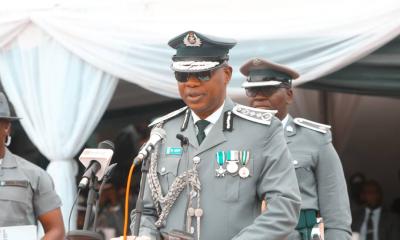
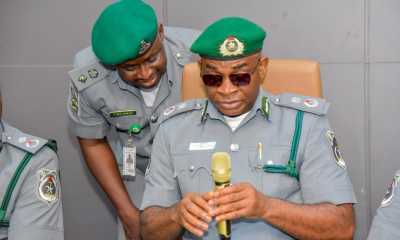
All the pictures are from the Minister’s attendance of 2023 UNGA

Continue Reading
Click to comment

Leave a Reply

Your email address will not be published. Required fields are marked *

Headlines

Marine Platforms hails impact of Cabotage regime on indigenous shipping 

—as NIMASA reiterates its commitment to its implementation

Funso OLOJO, Editor

The Federal Government has reaffirmed its commitment to using Nigeria’s Cabotage regime to deepen indigenous participation in the maritime sector, with the Nigerian Maritime Administration and Safety Agency (NIMASA) declaring the development of local shipping capacity a priority.

The Director-General of NIMASA, Dr. Dayo Mobereola, stated this during an inspection tour of the African Pioneer Lagos, a specialised offshore Diving Support Vessel (DSV) operated by Marine Platforms Limited.

The visit, according to the NIMASA DG, underscored the growing capacity of Nigerian-owned and Nigerian-flagged vessels to undertake highly specialised offshore operations that were traditionally dominated by foreign operators.

The African Pioneer Lagos, with IMO Number 9808613, is a Nigerian-flagged DSV measuring approximately 143 metres in length, with a deadweight of about 8,000 metric tonnes.

The vessel is equipped for specialised deep-water subsea construction, diving, inspection and offshore oil and gas operations.

Mobereola said he was impressed by the vessel’s capabilities, stressing that Nigerian-flagged vessels with such capacity should enjoy priority in the nation’s maritime space.

“I’m quite happy at what I have seen today after the tour of this 8,000 metric tonnes African Pioneer Specialised Vessel.

“A vessel such as this flying the Nigerian flag should have priority over any foreign vessel.

“We are automating the Nigerian Ship Registry to make it more attractive and to ensure that more vessels like this fly the Nigerian flag.”

The NIMASA boss said improving the attractiveness and efficiency of the Nigerian Ship Registry was critical to encouraging more shipowners to register their vessels under the Nigerian flag.

He added that strengthening the Cabotage regime remained central to the Federal Government’s efforts to build indigenous shipping capacity and ensure that Nigerian companies and professionals occupy a greater share of opportunities in the country’s maritime and offshore sectors.

For the Chief Executive Officer of Marine Platforms Limited, Mr. Taofeek Adegbite, the company’s experience demonstrates the impact that the Cabotage regime and Nigerian Content legislation can have on indigenous shipping companies.

Adegbite said Marine Platforms had benefited significantly from the policy since acquiring its first vessel, Mt. African Vision, in 2012.

He said the company was proud to operate its vessels under the Nigerian flag and encouraged other Nigerian shipowners to embrace the Nigerian Ship Registry.

“Since 2012, when we got our very first vessel, ‘Mt. African Vision’, we are happy and proud to say NIMASA’s Cabotage Regime and the Nigerian Content Development and Monitoring Board Act has played a major role in ensuring that our vessels have contracts on a regular basis.

“We have no regret flying the Nigerian flag and I will invite more ship owners to register their flags in the Nigerian Ship Registry.”

Adegbite, however, called for greater attention to the classification and certification of crews operating large and highly specialised vessels.

“At the moment, we would appreciate a classification in such a way that the crew who are operating very big vessels are given special attention so that more very large vessels can fly the Nigerian flag,” he said.

He commended NIMASA for its support, stressing that the African Pioneer Lagos demonstrated that Nigerian companies and maritime professionals possess the technical capacity to operate sophisticated vessels to international standards.

According to him, the continued development of Nigerian-flagged vessels would also create greater opportunities for indigenous maritime manpower and professional development.

Adegbite said Nigeria could learn from countries that had successfully developed specialised niches within the global maritime industry.

He cited the Philippines, which has established a strong global reputation in seafaring, and Norway, renowned for shipbuilding, arguing that Nigeria could equally develop a globally recognised area of maritime specialisation.

He stressed that sustained government policies, effective implementation of the Cabotage regime, access to finance, appropriate regulation and development of maritime manpower would be essential to achieving that objective.

Continue Reading

Headlines

MAMAL 2026: Anishere, Ani demand stronger maritime media, more women in leadership

Gloria Odion, Maritme reporter 

President of the Maritime Arbitrators Association of Nigeria (MAAN), Chief Jean Chiazor Anishere, SAN, and President of the Women’s International Shipping and Trading Association (WISTA) Nigeria, Dr. Odunayo Ani, have called for a stronger and more professional maritime media and greater representation of women in leadership and decision-making positions across Nigeria’s maritime and blue economy sectors.

The two industry leaders made the call at the 4th Annual Maritime Lecture of the Maritime Reporters Association of Nigeria (MARAN), where they stressed that credible journalism and inclusive leadership were critical to ensuring accountability, transparency and sustainable growth in the maritime industry.

Represented at the event by Mrs Oyeyemi Jimi-Salami, Anishere said an informed, independent and professionally grounded maritime press was indispensable to the development of the sector, particularly as Nigeria intensifies efforts to unlock the economic opportunities inherent in the Blue Economy.

She commended MARAN for its sustained engagement with critical maritime issues and what she described as its commitment to responsible reportage.

According to her, the association’s annual lecture had become an important platform for industry stakeholders to interrogate emerging challenges, exchange ideas and seek practical solutions to the problems confronting the maritime sector.

Anishere noted that although sound policies, effective regulation and infrastructure investment were essential to maritime development, these could not deliver the desired results without a knowledgeable media capable of educating the public, scrutinising government policies, promoting transparency and demanding accountability from industry players.

She urged MARAN to continue using its platform to promote professionalism, innovation, accountability and sustainable development in the maritime industry.

“Journalism remains a key pillar of a vibrant maritime sector because it strengthens public confidence, supports informed decision-making and ensures that critical industry issues receive the attention they deserve,” she said.

Meanwhile, Ani called for a fundamental shift in the approach to women’s participation in the maritime industry, arguing that it was no longer sufficient merely to promote inclusion without creating clear pathways for women to attain leadership and decision-making positions.

She said WISTA Nigeria would continue to expand its mentorship, networking, advocacy and leadership development programmes to equip women with the skills, experience and opportunities required to advance in the sector.

Ani challenged government agencies, private-sector operators and other maritime stakeholders to go beyond rhetoric by recruiting, retaining, promoting and sponsoring qualified women, while adopting inclusive workplace policies and setting measurable targets for gender diversity.

She also called for concerted action against discrimination, unequal access to opportunities and unsafe workplace practices which, she said, continued to impede the advancement of women in the maritime industry.

The WISTA Nigeria president further urged male professionals and industry leaders to become active allies in promoting gender equality by mentoring, sponsoring and advocating for women in their organisations.

Ani stressed that women should not be regarded as mere participants in Nigeria’s maritime development but as critical drivers of innovation, leadership and sustainable economic growth.

She argued that providing women with equal opportunities to lead and contribute would not only advance fairness but also strengthen Nigeria’s ability to fully harness the enormous economic potential of its maritime and blue economy.

The speakers’ interventions at the MARAN lecture underscored the growing recognition that Nigeria’s maritime transformation requires not only infrastructure, policy and investment, but also a credible media that can hold the industry to account and a leadership structure that draws fully on the talents of both men and women.

Continue Reading

Commentaries

Blue Economy Engine: Decoding unstoppable rise of Nigeria’s maritime gateways

Monday Discourse with Ibrahim Nasiru

The latest operational data from Nigeria’s maritime sector shows a significant shift in trade capacity that deserves close attention.

In a period where national economic discourse is heavily focused on foreign exchange stability and trade balance, the Nigerian Ports Authority (NPA) recently released its operational performance report for the second quarter of 2026.

The figures indicate clear, measurable progress across our major shipping channels.

Under the current management led by Dr. Abubakar Dantsoho, total cargo throughput at the nation’s seaports grew by 12.3% year-on-year, moving from 31.83 million metric tonnes in the second quarter of 2025 to 35.74 million metric tonnes in Q2 2026.

This growth was closely supported by a 14.4% increase in ocean-going vessel traffic, which recorded 1,201 vessel calls during the three months under review.

These statistics are notable because they reflect actual operational changes rather than mere administrative adjustments.

For decades, Nigerian Ports were held back by slow container clearing times, heavy bureaucratic red tape, and severe traffic congestion around the Lagos Ports.

The current upward trend shows that the ongoing efforts toward Port modernization, including the digital integration of the National Single Window system, are beginning to show results on the ground.

By reducing physical bottlenecks and shortening the time cargo spends at the berths, terminal operations are becoming more reliable for international shipping lines and domestic businesses alike.

A highly encouraging aspect of the Q2 2026 data is the 22% increase recorded in export-related outward cargo.

For an economy that urgently needs to diversify away from absolute reliance on crude oil revenues, this rise in export volumes shows that the policy of establishing dedicated export terminals is functioning as intended.

Local manufacturing concerns, agricultural aggregators, and non-oil exporters are finding it relatively easier to move their goods out to global markets.

Additionally, the emergence of transshipment container traffic—which grew to 29,038 TEUs this quarter from zero in the same period last year—proves that Nigeria is regaining its position as a major logistics transit hub for the West African sub-region.

However, the report also highlights a persistent structural reality that economic planners must continue to address.

Out of the 35.74 million metric tonnes of cargo handled, inward cargo or imports still accounted for the larger share at 56.8%, while outward cargo stood at 41.9%.

While the gap is closing due to the 22% export growth, it reminds us that maritime efficiency must be backed by a strong domestic production base.

The Ports can only serve as efficient gateways; the real value lies in ensuring that what leaves our shores consists of processed, value-added Nigerian goods rather than just raw agricultural products or unrefined solid minerals.

The second-quarter performance numbers show that the maritime sector is currently serving as a stable and productive engine for the nation’s broader economic goals.

It demonstrates that clear policy direction and disciplined institutional management can stabilize critical national infrastructure even during periods of global trade volatility.

As the NPA works to sustain this momentum through the rest of the year, the priority must remain on full automation, eliminating unreceipted costs at the Ports, and strengthening rail connectivity to the hinterland.

By locking in these operational gains, Nigeria is steadily turning its maritime gateways into solid pillars of long-term commercial prosperity.

Chief Ibrahim Nasiru, a public affairs analyst, writes from Abuja 

Continue Reading

Trending