Connect with us

Headlines

Oyetola unfolds multi-prong approach to end fish importation, boost local production

Funso OLOJO
The Minister of Marine and Blue Economy, Adegboyega Oyetola, has expressed dissatisfaction with the current dependence of Nigeria on fish  importation but vowed to halt the trend through aggressive pursuit of local production to meet the rising consumption level amongst Nigerians.
Speaking on Wednesday, July 16th, 2025, at a high-level consultative meeting with fisheries cooperative groups in Abuja, the Minister outlined a bold vision aimed at transforming the nation’s aquaculture sector into a powerhouse of food security, employment, and export competitiveness.
Declaring that “Nigeria must chart a new course towards self-sufficiency in fish production,” Oyetola emphasised that the Federal Government is fully committed to supporting the fisheries and aquaculture subsector through policy, technical support, and financial inclusion.
“We will scale up domestic fish production, reduce dependency on imports, and reposition the sector for sustainable growth,” he said.
The meeting, convened by the Federal Ministry of Marine and Blue Economy, brought together leaders and members of major fisheries and aquaculture associations, including the Fisheries Cooperative Federation of Nigeria (FCFN), Tilapia Aquaculture Developers Association of Nigeria (TADAN), Catfish Farmers Association of Nigeria (CAFAN), Women in Fish Farming and Aquaculture, and the Practicing Farmers Association of Nigeria.
Oyetola announced that the Ministry is intensifying efforts to support women and youth in the fishing sector, stating that start-up grants and other empowerment initiatives are already in the pipeline.
He said this move aligns with President Bola Ahmed Tinubu’s Renewed Hope Agenda, which prioritises youth engagement and economic diversification.
“Increasing youth participation in aquaculture is not only vital for food production but also a strategic solution to reducing unemployment,” the Minister said.
“We are committed to ensuring that young people and women are not left behind in this transformation.”
During the interactive session, participants raised a wide range of pressing challenges currently facing the sector.
These included overfishing, environmental degradation, lack of access to affordable finance, post-harvest losses, inadequate cold storage infrastructure, poor transportation and market linkages, low youth involvement, multiple taxation by local government authorities, and the rising cost of imported fish feed.
Responding to these concerns, Oyetola gave strong assurances that the Ministry is already engaging stakeholders, both local and international, to tackle the identified issues head-on.
He revealed that discussions are ongoing with the World Bank to secure financial support for fish farmers and that the Ministry will be collaborating with the Nigerian Agricultural Insurance Corporation (NAIC) to ensure affordable and accessible insurance coverage for fish farmers across the country.
“We are also in talks with the Federal Ministry of Water Resources to replicate the successful aquaculture model at the Oyan Dam in other parts of the country,” he added, pointing to integrated planning and inter-ministerial cooperation as key pillars of the strategy.
“This meeting is not the end — it is the beginning of a sustained and transformative dialogue,” the Minister assured.
Permanent Secretary of the Ministry, Mr Olufemi Oloruntola, who delivered the welcome address, noted that the meeting was in fulfilment of commitments made by the Minister during the Ministry’s second-quarter citizens and stakeholders engagement held in Lagos on 3rd July.
 He reiterated the Ministry’s readiness to build enduring partnerships with cooperative societies to drive inclusive growth.
The Director of Fisheries and Aquaculture, Mr Wellington Omoragbon, also participated in the session and highlighted the importance of strengthening institutional frameworks and adopting enterprise-driven models to enhance productivity and attract funding.
Participants praised the initiative as “timely and long overdue,” expressing hope that the consultative approach would lead to actionable results.
The meeting, described as robust and frank, ended with renewed optimism about Nigeria’s potential to become self-sufficient in fish production and a net exporter of fish in the near future.
Continue Reading
Click to comment

Leave a Reply

Your email address will not be published. Required fields are marked *

Headlines

Maersk’s suspension of shipping operations through Strait of Hormuz raises anxiety among Nigerian importers 
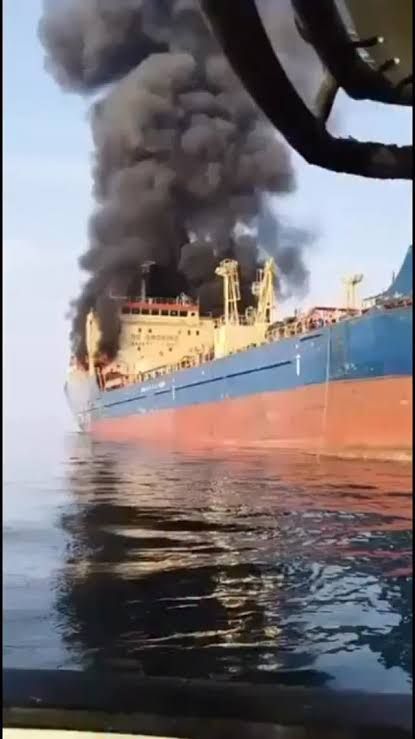
Attack on vessel in the Strait of Hormuz
Funso OLOJO, with agency report
The on- going hostilies in the Middle East have continued to stifle international trade as most of the shipping companies have suspended voyage through the troubled Strait of Hormuz.
The joint attacks by the military forces of the United States of America (USA) and Israel on the Islamic Republic of Iran, which resulted in the assassination of its Supreme leader, Ayatollah Ali Khomenei and over 40 top military officers of the Islamic country,have put a strain on shipping operations along the busy vessel route of Strait of Hormuz as the Houthis militias, who are sympathetic to Iran, have threatened to attack vessels on the route.
Strait of Hormuz accounts for one third of the world shipping passage while the route accommodates the world largest crude tankers , despite its narrow width.
As a result of the threats, which have raised safety concerns on the vessels, cargos and crews, major shipping lines have halted their operations along the route.
Maersk, the world’s largest container shipping company, has halted passage of cargo vessels through the Strait of Hormuz for “safety” reasons.

“We are suspending all vessel crossings in the Strait of Hormuz until further notice,” the Danish group said in an online advisory.“The safety of our crews, vessels and customers’ cargo remains our key priority,” it said.

Iran’s Revolutionary Guard had earlier announced the Strait’s closure.

Major Middle Eastern oil and gas exporters rely on it to move supplies to international markets while importing nations depend on its uninterrupted operation.
China, one of the biggest destinations of Nigerian importers, make use of the route for import of the crude oil from the Middle East, especially Iran and export of its manufactured goods to the developing countries, especially Nigeria.
This development has raised anxiety among Nigerian importers who expressed concerns over the implications of the disruption on the route one the cost of imports, especially from China.
Continue Reading

Headlines

NRC hosts Rotary Club on mobile train
Gloria Odion, Reporter 
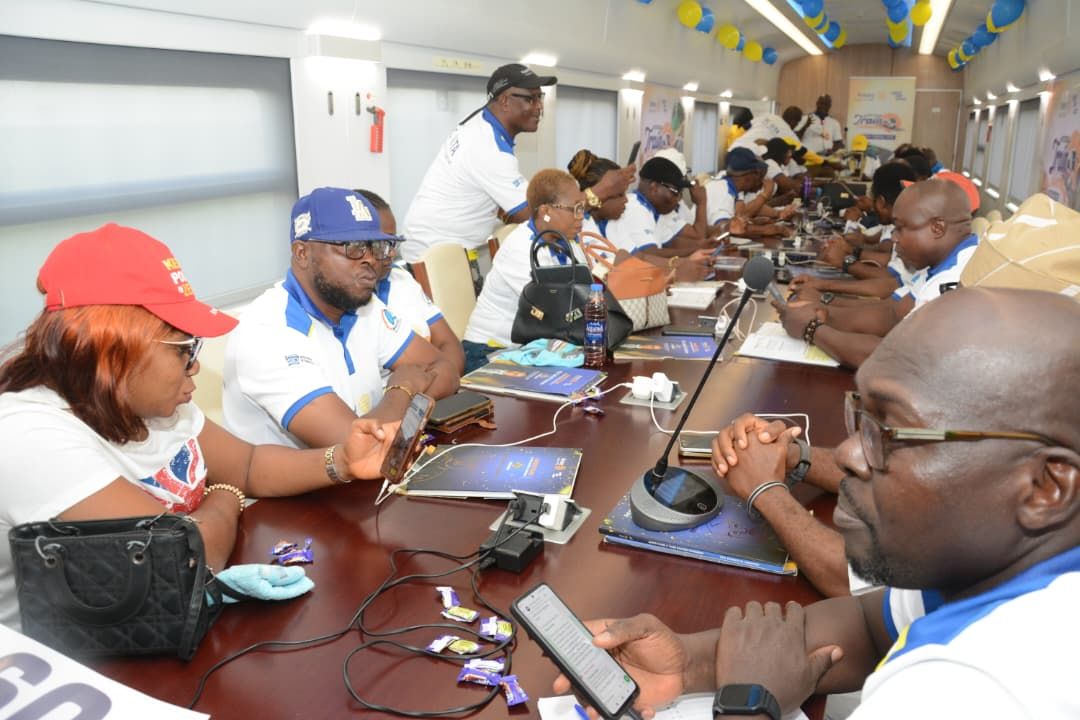
The Nigerian Railway Corporation (NRC) has played host to the Rotary Club of Ota by hosting Nigeria’s first-ever Rotary fellowship on a moving train, setting a remarkable benchmark for innovation in civic and humanitarian engagement.
The groundbreaking event brought together members of the club aboard a moving train for fellowship, leadership interaction, and strategic discussion centered on service to humanity, climate action, and sustainable community development.
The fellowship was led by the President of the Rotary Club of Ota, Mr. Charles Umukoro, alongside members of the club’s executive and general membership.
A major highlight of the occasion was the visit of the Railway District Manager, Engr. Rasheed Adedeji, who warmly welcomed the Rotarians on board.
His presence underscored the significance of the event and further strengthened the cordial relationship between the railway management and the Rotary Club.
In a symbolic moment reflecting shared values of service and partnership, Engr. Rasheed Adedeji was formally inducted as a member of the Rotary Club of Ota following his welcome address, adding prestige and deeper institutional collaboration to the landmark fellowship.
The moving-train fellowship was widely described as symbolic of progress, innovation, and forward movement—values that align closely with the transformation agenda of the Nigerian Railway Corporation.
The Nigerian Railway Corporation said it was committed to supporting initiatives that promote national development, environmental sustainability, and community advancement, while showcasing the railway as a safe, modern, and strategic platform for engagement.
Continue Reading

Headlines

In Malmo, Sweden, NIMASA renews capacity development partnership with WMU
Gloria Odion, Maritime Reporter 

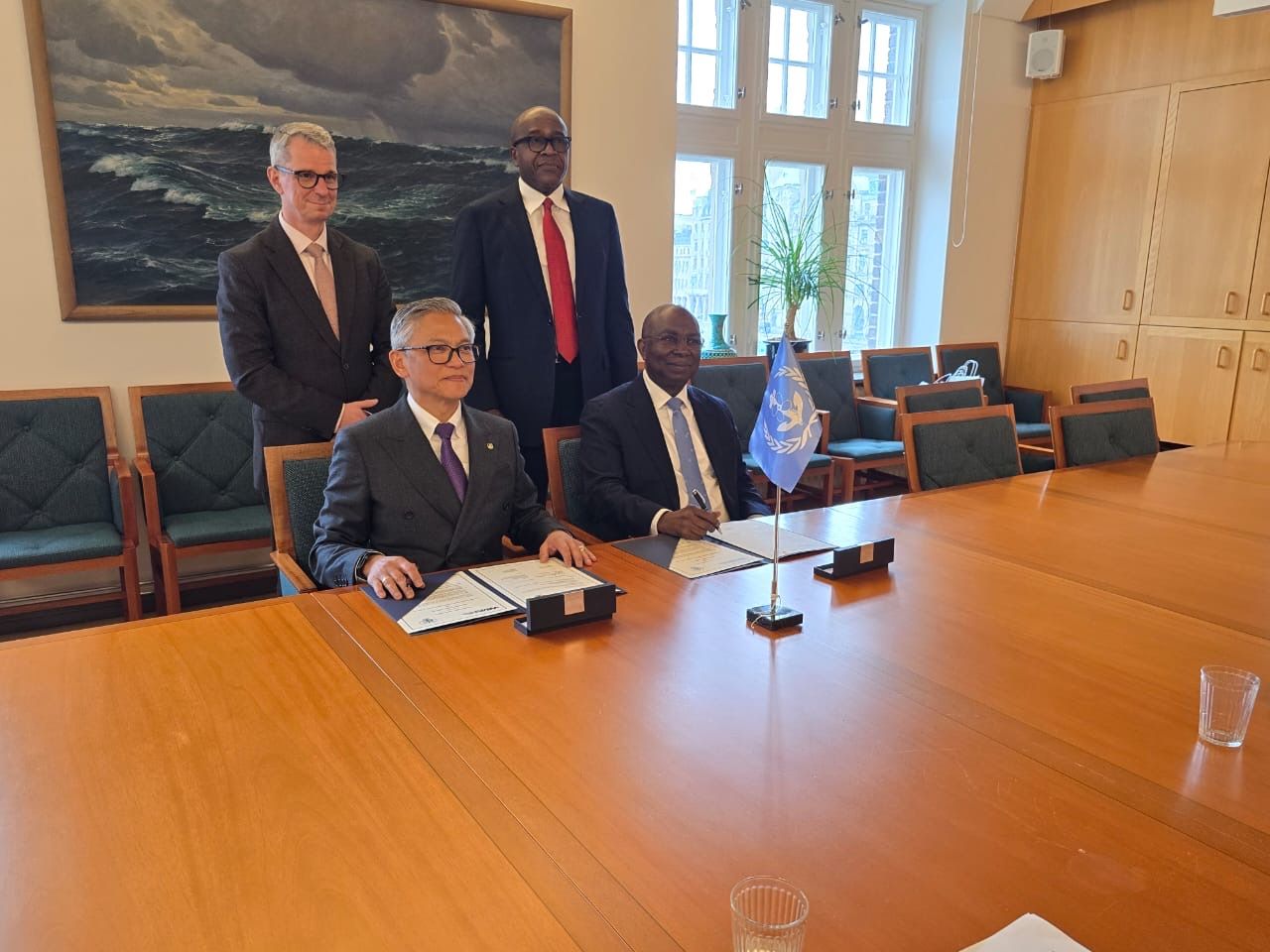
The Nigerian Maritime Administration and Safety Agency (NIMASA), has renewed its strategic capacity development partnership with the World Maritime University (WMU), Malmö, Sweden, through the signing of a four-year Memorandum of Understanding (MoU) aimed at strengthening Nigeria’s maritime human capital and institutional capacity.

Speaking at the MoU signing ceremony, the Director General of NIMASA, Dr. Dayo Mobereola, described the partnership as a critical pillar in NIMASA’s human capital development framework and a strategic investment in Nigeria’s maritime future.
“This collaboration has significantly strengthened our technical and regulatory capabilities over the years.

“Officers trained at WMU have enhanced our effectiveness in maritime safety administration, environmental compliance, maritime law, and shipping management.

“Their expertise has also reinforced Nigeria’s participation at the International Maritime Organization and other international maritime platforms,” he stated.

Under the renewed MoU, which was first signed in 2022, NIMASA will sponsor at least ten officers annually for the 14-month Master of Science programme at WMU in Malmö for the 2026–2029 intakes, as well as at least one officer for the Master of Philosophy (MPhil) programme jointly delivered by WMU and the International Maritime Law Institute (IMLI), Malta.

The MoU also provides for distance learning, executive professional development courses, research collaboration and technical assistance to strengthen NIMASA’s capacity in maritime safety, environmental management, seafarer certification and implementation of international maritime instruments.

WMU will further seek additional fellowships from international donors for qualified NIMASA candidates.

Dr. Mobereola endorsed the MoU on behalf of NIMASA with the President of WMU, Professor Maximo Q. Mejia Jr signing on behalf of the University while Executive Director Finance and Administration, NIMASA ,Chudi Offodile and the Registrar of WMU, Mr. Peter Marriott both signed as witnesses.

Established in 1983 by the International Maritime Organization, WMU was mandated to strengthen global maritime capacity, particularly in developing countries.

The University has since become a leading centre of excellence, and Nigeria has benefited significantly through the training of NIMASA officers who continue to enhance national maritime governance and international engagement.

Continue Reading

Trending