Connect with us

Headlines

Oyetola indulges in self- praise at MARAN event 

– calls for delistment of Nigeria from war risk zone
Funso OLOJO
The Minister of Marine and Blue Economy,Adegboyega Oyetola, has insisted that the maritime industry has witnessed bold and unprecedented reforms which have repositioned the sector for rapid growth.
Oyetola, who declared open the annual Maritime industry lecture organized by the Maritime Reporters Association of Nigeria(MARAN),stated that with the giant steps recorded within the two years of his stewardship as the minister, Nigeria deserves to be removed from the war risk classification by the international cartel of shipping companies.
Represented by his media aide, Dr Bolaji Akinola, Oyetola launched into a labyrinth of his achievements in the last two years that should earn Nigeria a clear bill of health by the foreign shipping companies which have continued to charge War risk insurance premium on Nigerian Shippers.
“In just two years and with the guidance of President Bola Ahmed Tinubu, we have embarked on bold and unprecedented initiatives to harness our nation’s vast maritime and Blue economy resources as engine of growth, just and sustainable development.
” In two years, the ministry has become a case study in what visionary leadership, strategic focus and political will can achieve in record time.
“From restoring sanity to Nigeria’s busiest seaports to unlocking long- frozen funds for indigenous ship owners, from investing in human capital to spearheading Continental maritime financing architecture , the ministry has delivered and will continue to deliver transformation on a scale that is monumental and measurable” the minister declared.
Oyetola further noted that the government had ended the decades-long Apapa gridlock that had crippled port productivity and discouraged foreign investment.
He also pointed to the launch of Africa’s first National Policy on Marine and Blue Economy, a groundbreaking framework that provides a roadmap for shipping, fisheries, offshore energy, aquaculture, tourism, and maritime services.
The Minister also announced that the Federal Executive Council had approved the modernisation of Lagos and Tin Can Island Ports, with plans for the Eastern Ports nearing completion.
According to the Minister, agency-generated revenues more than doubled within two years, from ₦700.79 billion in 2023 to ₦1.39 trillion in 2024, the highest in Nigeria’s maritime history.
He added that the long-stalled Cabotage Vessel Financing Fund had finally been unlocked to empower indigenous shipowners, while a National Flag Carrier Technical Committee had been inaugurated to deliver a private-sector-led national shipping line that would restore Nigeria’s pride in global shipping.
Oyetola further pointed to progress in boosting local fish production to strengthen food security, supporting aquaculture in riverine communities, and reforming inland waterway safety through new regulations, improved patrols, search and rescue coordination, and stricter passenger vessel standards.
Despite these achievements, Oyetola lamented that Nigeria continues to bear the burden of war risk insurance premiums imposed by international underwriters.
He observed that these charges, based on outdated perceptions of insecurity, have cost the nation an estimated $1.5 billion in the last few years.
The Minister stressed that Nigeria’s narrative of piracy and armed robbery on its waters no longer reflects present realities.
Over the past four years, he said, the country has recorded zero piracy incidents due to sustained investments in maritime security, particularly through the Deep Blue Project.
The Deep Blue Project, implemented by the Nigerian Maritime Administration and Safety Agency (NIMASA) in partnership with the Nigerian Navy, integrates air, land, and sea assets to deliver real-time surveillance and interdiction.
 The success of this initiative has been acknowledged globally, earning Nigeria commendations from the International Maritime Organization, the International Maritime Bureau, and removal from the International Bargaining Forum’s list of high-risk nations.
Yet, Oyetola explained, key global insurers, especially Lloyd’s of London, remain reluctant to update their risk classifications, leaving Nigeria and its consumers to shoulder unfair costs.
He assured industry stakeholders that his Ministry, working closely with NIMASA, is engaging directly with BIMCO, the International Chamber of Shipping, and Lloyd’s, presenting empirical data to demonstrate Nigeria’s security progress.
Alongside this diplomatic push, he said the government would continue to strengthen maritime security architecture, publish regular security reports, deepen regional cooperation under the Yaoundé Architecture for Maritime Security, and promote the development of local maritime insurance to retain value within Nigeria’s economy.
The Minister concluded his address on a note of optimism, declaring that the future of Nigeria’s blue economy remains bright.
He emphasised that in just two years, the country has shown what is possible with vision, determination, and partnership, but added that much more lies ahead.
He reaffirmed the government’s commitment to securing Nigeria’s waters, modernising its ports, empowering local operators, expanding fisheries, and ensuring that the blue economy becomes a pillar of growth, jobs, and sustainability for generations to come.
Formally declaring the lecture open, Oyetola urged participants to contribute their recommendations, which he said would enrich government policy and strengthen strategies for the collective advancement of Nigeria’s maritime sector.
Continue Reading
Click to comment

Leave a Reply

Your email address will not be published. Required fields are marked *

Headlines

Tinubu swears in new IGP, Tunde Disu on Wednesday as Police council endorses his appointment

Funso OLOJO,  Editor
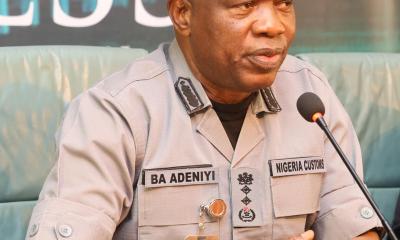
President Bola Ahmed Tinubu will on Wednesday, March 4th, 2026 swear- in the new Inspector – General of Police (IGP), Olatunji Rilwan Disu following the endorsement of his appointment by the Nigeria Police Council.
According to the Presidential spokesman, Bayo Onanuga, the  ceremony will take place during the Federal Executive Council meeting, scheduled for the same day.
The Council’s meeting, which took place at the State House, was presided over by President Bola Ahmed Tinubu and had in attendance Vice President Kashim Shettima, state governors and the Chairman of the Police Service Commission, retired DIG Hashimu Argungu, in accordance with the constitution.
Others in attendance were the Secretary to the Government of the Federation, Senator George Akume; the National Security Adviser, Nuhu Ribadu; the Chief of Staff, Femi Gbajabiamila; the Minister of Police Affairs, Senator Ibrahim Gaidam; the FCT Minister, Nyesom Wike; and the head of service, Mrs Esther Didi Walson-Jack.
The President appointed Disu as the new police chief, following the resignation of the former Inspector-General of Police, Kayode Egbetokun.
Governor of Lagos State, Babajide Sanwo-Olu, who spoke glowingly about the Acting Inspector-General of Police, commended Disu for his exemplary services as a policeman, especially when he served as the Commander of the Rapid Response Squad in Lagos State between 2015 and 2021, where his tenure earned him and the RRS recognition for excellence in crime control.
Governor of Nasarawa State, Abdullahi Sule, commended the President’s appointment of Disu, noting that it was based on his excellent career record.
Minister of the Federal Capital Territory and former Governor of Rivers State, Nyesom Wike, also lauded Disu for his professionalism.
Disu served in Wike’s home state of Rivers as Assistant Commissioner, Criminal Investigation Department, and Officer-in-charge, anti-kidnapping unit, between 2014 and 2015.
He later served as Commissioner of Police in the FCT Command when Wike became the minister.
Wike commended him for his efficiency as a crime fighter and for ensuring the command’s strategic impact in addressing security concerns within the territory.
Governor Peter Mbah of Enugu State seconded the motion endorsing Disu’s appointment.
Disu was born on April 13, 1966, in Lagos State and joined the Nigeria Police Force on May 18, 1992, as a Cadet Assistant Superintendent.
He rose through the ranks with multiple qualifications in public administration, forensic investigation, criminology, security, legal psychology, and entrepreneurship-credentials that reflect his commitment to knowledge-driven, modern policing.
The Acting Inspector-General has held critical operational, investigative, and strategic command positions nationwide.
His last position was as Assistant Inspector-General of Police in charge of the Special Protection Unit and the Force CID Annex, Lagos.
Continue Reading

Headlines

Maersk’s suspension of shipping operations through Strait of Hormuz raises anxiety among Nigerian importers 
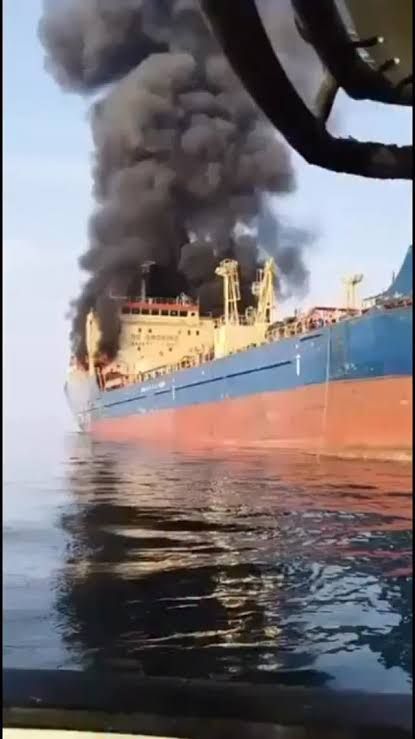
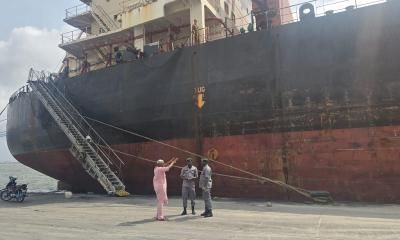
Attack on vessel in the Strait of Hormuz
Funso OLOJO, with agency report
The on- going hostilies in the Middle East have continued to stifle international trade as most of the shipping companies have suspended voyage through the troubled Strait of Hormuz.
The joint attacks by the military forces of the United States of America (USA) and Israel on the Islamic Republic of Iran, which resulted in the assassination of its Supreme leader, Ayatollah Ali Khomenei and over 40 top military officers of the Islamic country,have put a strain on shipping operations along the busy vessel route of Strait of Hormuz as the Houthis militias, who are sympathetic to Iran, have threatened to attack vessels on the route.
Strait of Hormuz accounts for one third of the world shipping passage while the route accommodates the world largest crude tankers , despite its narrow width.
As a result of the threats, which have raised safety concerns on the vessels, cargos and crews, major shipping lines have halted their operations along the route.
Maersk, the world’s largest container shipping company, has halted passage of cargo vessels through the Strait of Hormuz for “safety” reasons.

“We are suspending all vessel crossings in the Strait of Hormuz until further notice,” the Danish group said in an online advisory.“The safety of our crews, vessels and customers’ cargo remains our key priority,” it said.

Iran’s Revolutionary Guard had earlier announced the Strait’s closure.

Major Middle Eastern oil and gas exporters rely on it to move supplies to international markets while importing nations depend on its uninterrupted operation.
China, one of the biggest destinations of Nigerian importers, make use of the route for import of the crude oil from the Middle East, especially Iran and export of its manufactured goods to the developing countries, especially Nigeria.
This development has raised anxiety among Nigerian importers who expressed concerns over the implications of the disruption on the route one the cost of imports, especially from China.
Continue Reading

Headlines

NRC hosts Rotary Club on mobile train
Gloria Odion, Reporter 
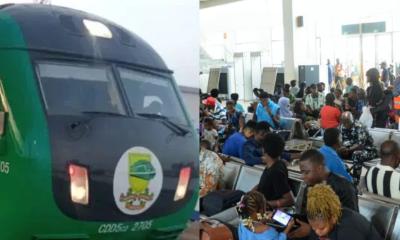
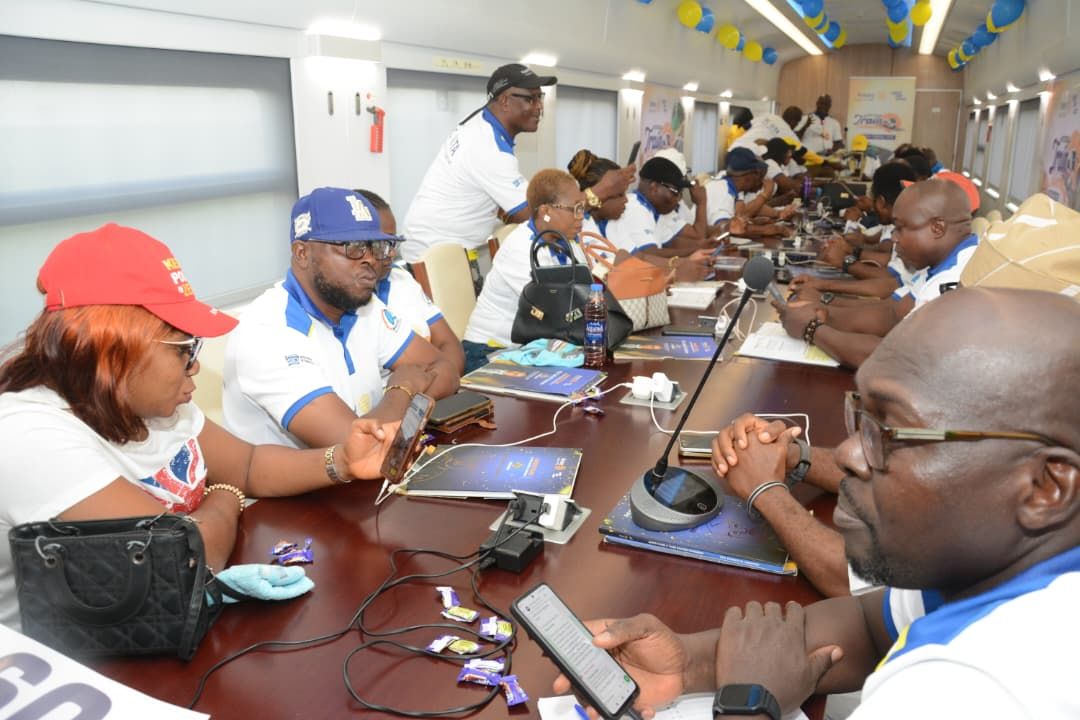
The Nigerian Railway Corporation (NRC) has played host to the Rotary Club of Ota by hosting Nigeria’s first-ever Rotary fellowship on a moving train, setting a remarkable benchmark for innovation in civic and humanitarian engagement.
The groundbreaking event brought together members of the club aboard a moving train for fellowship, leadership interaction, and strategic discussion centered on service to humanity, climate action, and sustainable community development.
The fellowship was led by the President of the Rotary Club of Ota, Mr. Charles Umukoro, alongside members of the club’s executive and general membership.
A major highlight of the occasion was the visit of the Railway District Manager, Engr. Rasheed Adedeji, who warmly welcomed the Rotarians on board.
His presence underscored the significance of the event and further strengthened the cordial relationship between the railway management and the Rotary Club.
In a symbolic moment reflecting shared values of service and partnership, Engr. Rasheed Adedeji was formally inducted as a member of the Rotary Club of Ota following his welcome address, adding prestige and deeper institutional collaboration to the landmark fellowship.
The moving-train fellowship was widely described as symbolic of progress, innovation, and forward movement—values that align closely with the transformation agenda of the Nigerian Railway Corporation.
The Nigerian Railway Corporation said it was committed to supporting initiatives that promote national development, environmental sustainability, and community advancement, while showcasing the railway as a safe, modern, and strategic platform for engagement.
Continue Reading

Trending