Connect with us

Headlines

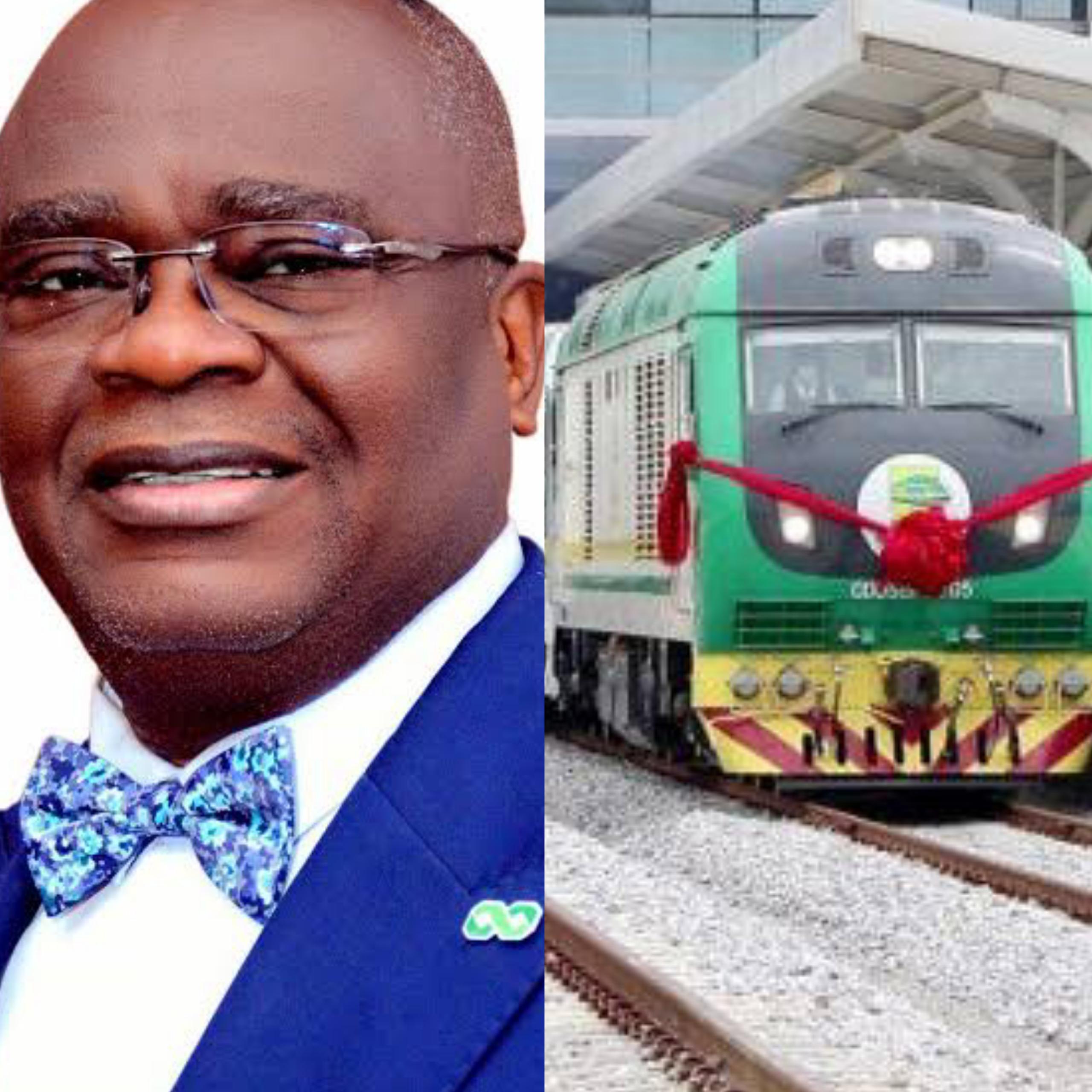
NRC plans electric rail operations across the country- Opeifa
Geraldine Samuel, Reporter 
All things being equal, the Nigerian Railway Corporation(NRC) may soon commence electric rail operations for smoother and faster rail services across the country.
Making this disclosure in a recent interview on a national television, Dr Kayode Opeifa, the Managing Director of NRC, said the corporation is planning  to electrify major rail corridors within the next five years.
He further disclosed that Warri and Lagos will be used a pilot scheme of the ambitious project.
However, Opeifa said this is largely dependent on the availability of gas to support power generation for electric rail operations.
Meanwhile, the NRC boss has called for stronger collaboration between state governments and the Railway Police to enhance the protection of rail infrastructure across the country.
 Opeifa noted that the Railway Police currently operates across 26 states, stressing that state governments should see the unit as part of their security architecture and support it accordingly.
According to him, the security of railway infrastructure is closely tied to the security of mobility corridors across the country, describing the railway as a critical national asset that passes through many states and plays an important role in national development.
Drawing from his experience as a former Commissioner in Lagos State, Opeifa recalled how the Railway Police supported the Lagos State Government during the cleanup of the Oshodi area, demonstrating the importance of inter-agency cooperation in protecting public assets.
“The history of the Nigerian Railway Corporation is the history of Nigeria itself,” he said, adding that the issues confronting the railway system are reflective of broader national challenges.
The NRC Managing Director also traced the evolution of Nigeria’s modern rail development, noting that the real overhaul of the system began in 2015 with the introduction of the standard gauge rail lines.
He credited the administration of former President Muhammadu Buhari with commissioning key projects such as the Abuja–Kaduna Railway, Warri–Itakpe Railway, Abuja Rail Mass Transit, and the Lagos–Ibadan Railway, while also initiating the Port Harcourt–Maiduguri rail corridor.
 Opeifa further highlighted the constitutional amendment that moved railway from the Exclusive List to the Concurrent List, explaining that the development has opened the door for state governments such as Lagos, Kano, Ogun and Plateau to participate more actively in railway development.
He stated that his priority as Managing Director is to ensure that the NRC functions as a key driver of national integration and economic development, while operating in line with international best practices.
According to him, many developed countries treat railway infrastructure primarily as social infrastructure, noting that Nigeria’s rail system currently plays a similar role by enabling mobility and economic activities across regions.
“Railway is an enabler of growth,” he said, adding that the Federal Government’s investment in rail projects across states such as Lagos, Kano and Kaduna is largely due to their strategic economic importance.
 Opeifa also revealed that the NRC has developed a national rail map that clearly shows how state rail systems can connect to the national rail network to enhance connectivity.
Highlighting developments along the Eastern corridor, he described the Enugu main railway station as a massive and well-designed facility with underground structures, recalling that the corridor once contributed significantly to national revenue.
On concerns about ticket racketeering, Opeifa acknowledged that the problem exists largely due to high passenger demand, but explained that the corporation has introduced additional verification procedures to curb the practice.
Passengers, he said, are now subjected to double checks—first at the waiting area and again during boarding, a system that has significantly reduced illegal ticket sales.
He also reassured passengers of the high level of security along the Abuja–Kaduna rail corridor, noting that train movements and station activities are monitored from a central control room.
 According to him, the corporation plans to replicate similar security and monitoring arrangements on other rail lines across the country.
Opeifa announced that the number of daily trips on the Abuja–Kaduna Train Service has now been increased to three, in response to growing passenger demand.
He added that the NRC is also working to promote the tourism and entertainment potentials of railway services, promising that the corporation will continue to expand its services and improve operations until it achieves its development targets.
Continue Reading
Click to comment

Leave a Reply

Your email address will not be published. Required fields are marked *

Customs

Dera Nnadi bows out of Customs in a blaze of glory 
Geraldine Samuel, Reporter 
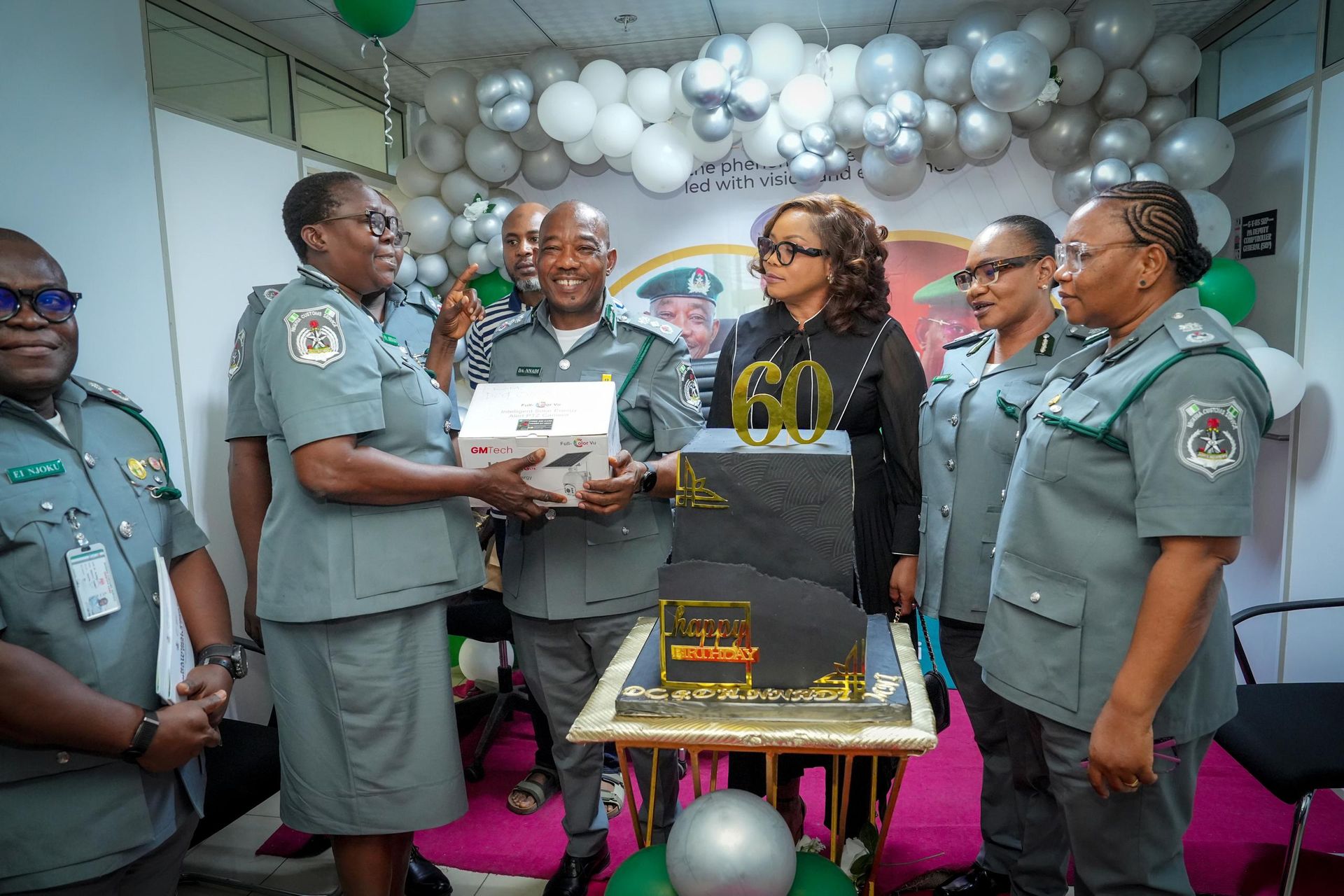
Dera Nnadi, a Deputy Comptroller- General of Customs(rtd), has dropped anchor of service in the Nigeria Customs and graceful bowed out of the agency in a blaze of glory.
In a commemorative retirement ceremony conducted by his appreciative colleagues at the Customs’ Headquarters, Abuja on March 3rd, 2026, Nnadi was pulled out of the Service he has diligently served amidst glowing tributes.
Incidentally, his pull- out ceremony coincided with his 60th birthday.
Leading the management staff, men and officers of the service in paying moving tributes to the retiring Nnadi was the Comptroller- General of Customs, Adewale Adeniyi, who described DCG(rtd) Nnadi as an exemplary officer whose professionalism, discipline, and commitment to duty significantly strengthened the values and operational effectiveness of the NCS.
According to the CGC, the retirement ceremony provided an opportunity not only to celebrate a successful career but also to appreciate the sacrifices and dedication of officers who devote their lives to safeguarding the nation’s economic and border security interests.
 He noted that Nnadi’s career reflects the core ideals of the Nigeria Customs Service, particularly in leadership, revenue generation and trade facilitation.
“Today is a moment of celebration and reflection. It is also an opportunity for us to thank Almighty God for the grace that has sustained our colleague throughout his years of service,” the CGC said.
The CGC also highlighted the personal and professional bond he shares with the retiree, noting that their relationship extends beyond official duties to family ties.
 He expressed confidence that DCG Nnadi still possesses the energy and experience to continue contributing meaningfully to national development through academic and other professional engagements.
Members of the Service’s management team also paid glowing tributes to the retired DCG, commending his leadership qualities, integrity and mentorship.
 Officers who served under him described him as a dependable leader who provided guidance and encouragement to younger personnel while strengthening the Service’s institutional capacity.
Responding to the honour, DCG Dera Nnadi (Rtd) expressed appreciation to the Comptroller-General of Customs, the management team, officers and Men of the Service for their support and cooperation throughout his career.
He described his years in the NCS as a fulfilling journey of growth, learning and service to the nation.
The ceremony featured the presentation of awards, gift items and commemorative photographs in honour of the distinguished officer.
Continue Reading

Customs

Customs takes charge of implementation of National Single Window project 
– rallies stakeholders for successful take-off 
Funso OLOJO, Editor 
As the preparations for the official launch of National Single Window(NSW) project on March 27th, 2026 gather momentum, the Nigeria Customs service may have been designated as the lead agency to drive the modernisation project.
This much was confirmed by the Director of the Project, Tola Fakolade who  acknowledged the pivotal leadership of the NCS in the implementation process.
At one of the stakeholders sensitisation programmes in Abuja on March 3rd, 2026, Fakolade declared “Our number one stakeholder is the NCS,”
“We have maintained a strong and constructive working relationship.
Customs’ participation and institutional experience are critical to the success of this project.” the project coordinator confirmed.
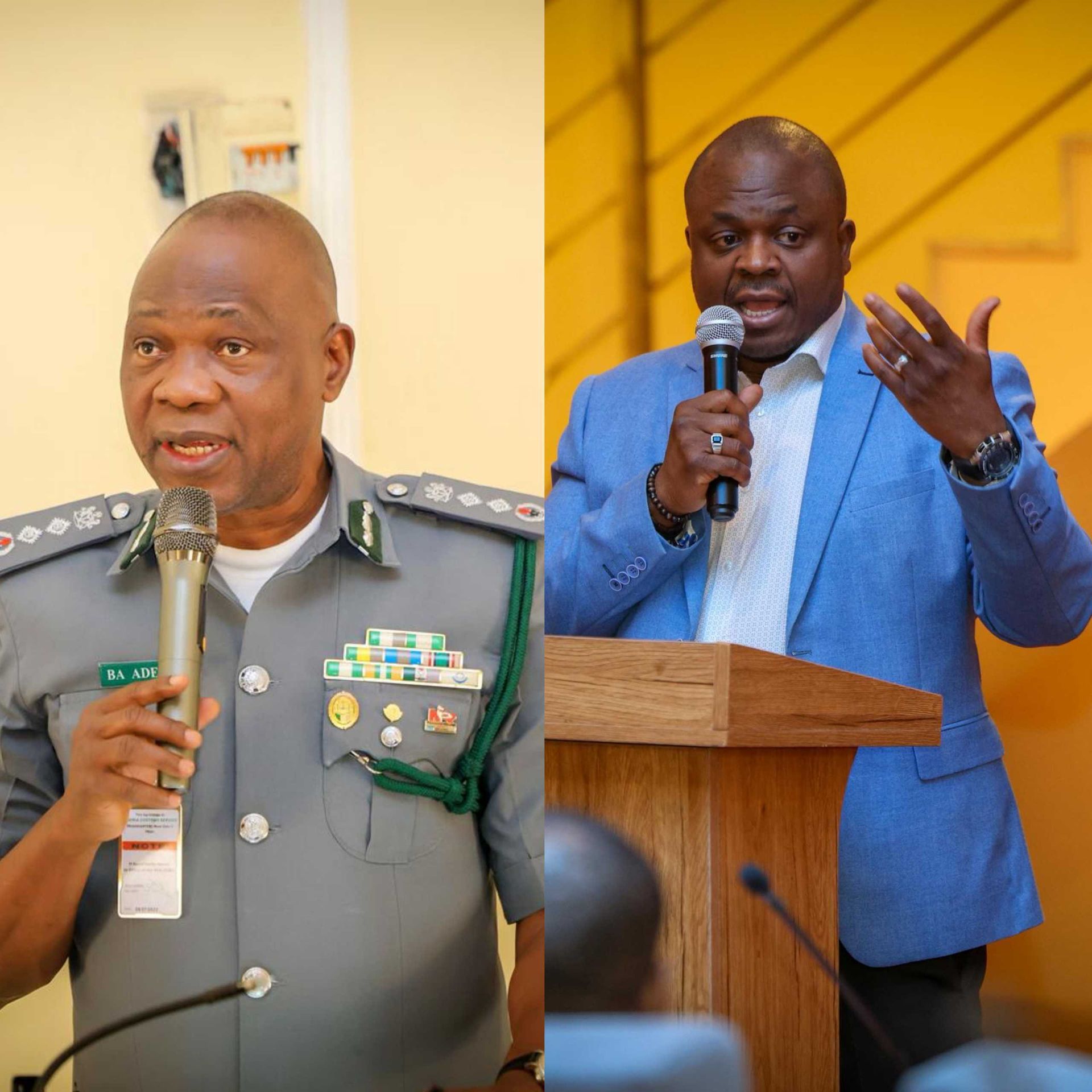
Confirming the lead role of the NCS, the Deputy Comptroller-General of Customs in charge of ICT and Modernisation, DCG Oluyomi Adebakin, described the NSW as a major milestone in the Service’s ongoing modernisation drive.
She revealed that the NCS has been actively engaged in preparatory work for months to ensure that the framework being developed reflects operational realities and supports seamless implementation.
“This is a national project, but Customs is at the centre of its execution,” DCG Adebakin said.
 “The success of the Single Window depends on collective understanding and cooperation. We must all appreciate its value because we cannot effectively promote what we do not fully understand.”
She reassured officers and stakeholders that the initiative is designed to strengthen institutional capacity rather than replace human resources, explaining that technology will enhance efficiency, transparency, and speed in cargo clearance and trade documentation processes.
Reaffirming the critical role of the service in the implementation of the NSW project, the Comptroller- General of Customs, Adewale Adeniyi, at the Abuja stakeholders engagement with airlines and shipping companies held on March 4th, 2026, emphasised the importance of collaboration in ensuring the successful rollout of the initiative.
He noted that the support of critical stakeholders has played a significant role in the achievements recorded in the Service’s modernisation journey so far.
Adeniyi disclosed that President Bola Ahmed Tinubu has mandated the Service to take a bold step forward towards a successful launch of the National Single Window, a move aimed at positioning Nigeria as a major player in global trade.
 He added that airline and shipping line operators remain vital partners in ensuring a seamless transition to the new system.
He further assured stakeholders that adequate support structures are being put in place to ease the migration process.
“A help desk with well-trained personnel will be available to address any operational challenges that may arise during the rollout”, the Comptroller-General stated.
The NCS described  the National Single Window as a strategic reform that aligns with Customs’ mandate of trade facilitation, revenue generation, and inter-agency coordination.
With the NCS spearheading coordination and stakeholder engagement, the NSW project is expected to transform Nigeria’s trade environment, enhance revenue generation, and strengthen the country’s position in the global trading community.
Continue Reading

Headlines

Dangote refinery explains hike in ex- factory price of PMS amidst global market volatility 

– laments Nigeria’s crude expensive than brent benchmark price

Funso OLOJO, Editor 

The on-going crisis in the Middle East occasioned by the United States of America (USA) and Israel attacks on Iran, has disrupted crude oil supply chain in the international market, thereby pushing up  the price of the product.

In a statement by Dangote Petroleum Refinery & Petrochemicals, the conflict in the Middle East has led to the shutdown of some refineries and cut in refinery production across the world.

This, according to the company, is leading to a global scarcity of petroleum products.

China has banned export of gasoline and diesel but  Dangote Refinery pledged that it will ensure that Nigeria is insulated from these supply shocks by prioritising supply to the domestic market.

“This is one of the many benefits of domestic refining” the company asserted.

The conflict has driven global crude and freight prices sharply higher, with benchmark Brent prices rising by about 26% within a short period to above $84.0 per barrel.

The petrochemical company explained that this reality makes it to readjust its ex- factory price of PMS by implementing  “a measured adjustment of N100 per litre in its ex-depot price of Premium Motor Spirit, representing an increase of about 12 percent.”

Accordingly, the refinery claimed it has absorbed 20 per cent of the cost escalation, for now, to cushion the domestic market.

 This is despite continuing to source crude at prevailing international market prices, whether purchased locally or from foreign suppliers.

The company lamented that Nigerian crude oil is more expensive than the Brent benchmark price by $3 to $6 per barrel.

“After adding freight of $3.50 per barrel, crude oil will be landing in our tanks between $88 and $91 per barrel.

” For context, crude oil was landing our tanks at about $68 per barrel when our ex-depot price was N774/litre.

“Furthermore, while we receive about five cargoes a month from NNPC which we pay for in Naira, these cargoes are priced at international market prices + Premium and fall short of the 13 cargoes which we require to support sales into Nigeria.

” We therefore, end up procuring foreign exchange at open market rates to pay for crude cargoes purchased from local and international traders.

” The high crude cost is compounded by the fact that Nigeria upstream producers have failed to supply crude oil to the refinery as required under the PIA, forcing us to source a substantial portion through international traders who charge an additional premium.

“As a private enterprise operating in a deregulated environment, Dangote Petroleum Refinery has remained responsive and has made significant sacrifices by aligning pricing with market realities to ensure sustainability, particularly as it sources all its crude at prevailing international market prices, whether locally or from foreign suppliers.

” Selling below cost would undermine its ability to procure crude, sustain production and guarantee uninterrupted supply to Nigerians.

“Despite these pressures, local refining at this scale continues to reduce exposure to international supply disruptions, moderate foreign exchange demand and protect the country from severe shortages during periods of global instability.

“The refinery is also accelerating deployment of Compressed Natural Gas-powered trucks to cushion the impact of global shocks, enhance nationwide distribution efficiency, reduce logistics costs and improve delivery timelines across the downstream sector.

” The rollout is scheduled to commence this month.

“We remain committed to transparency, operational excellence and the long-term objective of securing sustainable energy security and stability for Nigeria at an affordable cost” the refinery assured.

reassures Nigerians of its unwavering commitment to serving as a stabilising force amid recent shocks in the international oil market.

Continue Reading

Trending