Connect with us

Customs

Terminal operators accuse Customs of reversing gains of port concession.

Princess Vicky Haastrup, STOAN Chairman

—– attribute sluggish port processes, high port costs to physical examination of cargo 

—- Customs processes contribute 81.7 to costs of port operations

Eyewitness reporter

The Operators of terminals at the Nigerian ports have slammed the Nigeria Customs Service for reversing the great milestone recorded by the port concession programme of 2006.

The Chairman of the Seaport Terminal Operators Association of Nigeria(STOAN) Princess Vicky Haastrup, who ventilated the feelings of the operators, said the Customs’ incurable passion for 100 percent physical examination of cargo has set back the progress which the ports have made after exiting the chaotic, disorderly and sluggish port services that characterised the pre- concession era.

Princess Haastrup was speaking as a lead speaker at the one-day town hall meeting organised in Lagos yesterday by the League of Maritime Editors to discuss ”Achieving Effective Digitalization Nigeria’s Maritime Industry.”

The STOAN Chairman, who was unsparing in her condemnation of the damage the customs’ archaic cargo clearance procedures have done to the well being of the port industry, said that despite the gains recorded since 2006 with the efforts and investments of the terminal operators and the Nigerian ports Authority ( NPA), the Customs operations have continually been a drag on the efficient service delivery at the Port.

“The efficiency of our ports has improved multiple folds.

“Vessel waiting time has since been eliminated resulting in significant savings for importers and exporters.

” Government now generates revenue in trillions of Naira – through the tax authorities, Customs, NPA and NIMASA – as against the few billions generated before the concession.

“The concession, without a doubt, has increased the competitiveness of our ports and enhanced movement of goods across international borders.

“I am also glad to inform you that all terminal operators in the six seaports across Nigeria today have effectively deployed technology to drive their operations.

“Consignees and their agents do not need to be at the port physically with regards to their transactions with terminal operators.

“The question that may readily come to your mind at this point will be: why then are there so many people visiting the ports daily in connection with their consignments?

“Why is the cost of doing business at the port still high? Well, my answer to this question is Customs processes.

“Despite the tremendous improvements recorded in cargo handling operations and the provision of marine services by NPA, consignees and their agents still face numerous man-made hurdles at the port because cargo clearing processes have remained manual.

“Customs’ cargo clearing systems in Nigeria, using the words of a former CEO of Nigerian Shippers’ Council Mr. Hassan Bello, have remained “archaic”.

Haastrup believed that this outdated mode of goods clearance by the Customs has not only become a breeding method for extortion and corruption, it has also significantly slowed down the process of cargo clearance at the port.

“From the point of 100% physical examination of cargoes, the discretionary powers of Customs officers kick in.

“Negotiations and underhand dealings inevitably happen due to unbridled human contact.

“A study conducted by Akintola Williams Deloitte in 2017 blamed the high cost of doing business at the nation’s seaports on the Nigeria Customs Service and other government agencies.

“The study stated that Customs processes are responsible for not less than 81.7 percent of the charges incurred by consignees.

” It said Shipping Companies are responsible for 13.8 percent of the port cost; Terminal Operators 1.4 percent; Transporters 1.4 percent and Clearing Agents 1.7 percent.” she quoted.

Princess Haastrup maintained that a major reason for the high cost associated with Customs is manual processes.

She however stated that the only solution to this problem is for the customs to embrace automation in its cargo clearance process by reducing the level of manual process to about 10 per cent and engaging in the use of digital technology such as scanners

“The solution to this major obstacle is to drive the clearing process from end-to-end with digital technology.

“The human interface and the discretionary powers of officers should be taken out of the mix.

Haastrup lamented that manual examination of cargo by Customs has assumed an endemic nature which if not checked will continue to denigrate the efforts of the government to attain proficiency in port Operations.

“Manual examination of cargoes has assumed the proportion of an endemic sore point in Nigeria’s Customs administration.

”The Nigeria Customs Service performs 100 percent physical examination on almost all cargoes passing through the ports.

“This is not efficient and it constitutes a huge drawback to port efficiency. The manual inspection by Customs contributes in no small measure to the high dwell time of cargoes at our ports.

” It is also the main reason why importers and agents troop to the port daily. This is in addition to breeding corruption through numerous human contacts.

Haastrup also faulted the present arrangement by the government to procure a “few” scanning machines for customs.

She believed that apart from the fact that the number of the scanners procured is not enough, they should not be entrusted with the customs to manage for fear of sabotage.

She rather advocated for the engagement of the private sector to acquire and manage these scanners for efficiency as was previously done under the scrapped destination Inspection scheme.

“The solution is for the Federal Government to engage the private sector, as was done under the previous Destination Inspection scheme, to acquire high-end scanners for use of the Nigeria Customs Service.

“It is not enough to merely acquire a couple of scanners as the government is doing at present.

” A sufficient number of high-end scanners should be acquired to put a definitive end to manual cargo examination.

“The effective usage and maintenance of the scanners are also critical. Left in the hands of government officials, the scanners may be grounded in no time – as it happened before – and the system will be reset to the manual era.

“The services of risk assessment/management companies should therefore be engaged and retained for the purposes of providing, effectively utilizing, and maintaining the scanners.

” If we are truly desirous of creating efficiency at our ports, the manual examination will have to be reduced to less than 10 percent of the cargoes handled at the port, in line with international best practices.


“Full automation of the clearing process and the deployment of a sufficient number of scanners at the port will invariably cut down the multiple checks of cargoes by Customs and other security agencies” the STOAN Chief noted.



Continue Reading
Click to comment

Leave a Reply

Your email address will not be published. Required fields are marked *

Customs

Customs collects N1.585 trillion from 51 compliant traders under AEO programme 
Funso OLOJO,  Editor 
The Authorized Economic Operator (AEO), one of the trade facilitation tools introduced by the Nigeria Customs Service in 2025, has begun to yield bountiful harvests with the revenue growth of ₦362.79 billion recorded in 2025.
According to the AEO scorecard released by the Service, the facilitation tool grossed the sum of N1.585 trillion after certification, an increase revenue from N1.222 trillion before certification.
This represents the growth of N362.79 billion(29.68 per cent) for 51 AEO – certified entities as at October, 2025.
The Programme, according to the NCS,  also contributed 21.77% to its total revenue collection of ₦7.281 trillion in 2025, while customs duties paid rose by 85.66% due to enhanced compliance and increased volumes of legitimate trade.
According to AEO Monitoring and Evaluation (M&E) Report, the Programme achieved an average compliance rate of 85.45 per cent with the highest at 100 per cent and the lowest at 60 per cent.
“The evaluation applied rigorous methodologies to ensure objectivity, transparency, and alignment with the World Customs Organisation (WCO) SAFE Framework of Standards and the provisions of the Nigeria Customs Service Act, 2023.
“In the area of trade facilitation, AEO participation reduced average cargo clearance time from 168 hours to 41 hours, representing a 75.60% time saving.
“Company operating costs declined by 57.2 per cent while demurrage payments dropped by 90 per cent, limiting capital flight to foreign-owned port service providers and strengthening foreign exchange retention.
” Overall trade efficiency improved by 77.11 per  through digitalisation, simplified procedures, and targeted risk management” the Customs declared in the AEO scorecard.
However, the Service singled out with Eight companies for commendation due to their integrity and compliance under the programme.
The companies include Coleman Technical Industries Limited, WACOT Rice Limited, ROMSON Oil Field Services Ltd, WACOT Limited, Chi Farms Ltd, CORMART Nigeria Ltd, PZ Cussons Nigeria Plc, Nigerian Bottling Company Limited and MTN Nigeria Communications Plc.
The Service lauded them for a cumulative voluntary remittance of over a billion naira into the Federation Account following their self-initiated transaction review and disclosure.
“These actions reflect the strengthening of post-clearance audit mechanisms and a growing culture of voluntary compliance within the trading community.
Nevertheless, the Service suspended a firm under the programme for its non- compliance and display of lack of integrity.
The suspended firm engaged in false declaration of consignments contrary to programme obligations.
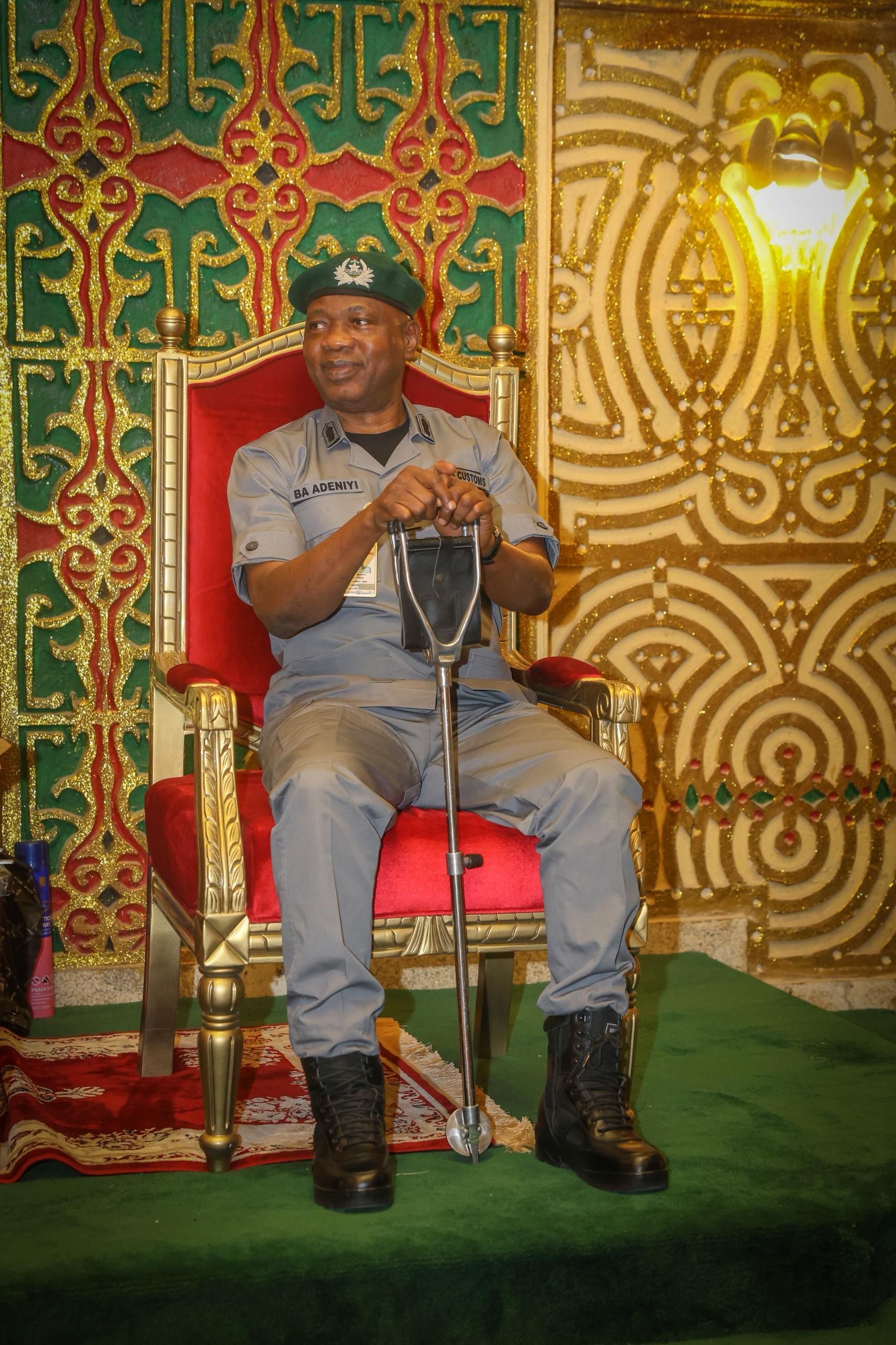
“Consequently, the Comptroller-General of Customs, Bashir Adewale Adeniyi, directed the immediate suspension of the company’s AEO status in accordance with the AEO Guidelines, the WCO SAFE Framework of Standards, and Section 112 of the Nigeria Customs Service Act, 2023.
The NCS reiterated that the AEO Programme is founded on trust, transparency, and continuous compliance.
“While compliant operators will continue to benefit from expedited clearance and reduced inspection, appropriate sanctions will be applied where violations are established.
“The Service remains resolute in safeguarding national revenue, facilitating legitimate trade, and preserving the integrity and global credibility of Nigeria’s AEO framework” the NCS concluded in the report.
Continue Reading

Customs

Customs takes delivery, commissions 60- bed hospital donated by BUA Group in Bauchi
Gloria Odion, Maritime Reporter 
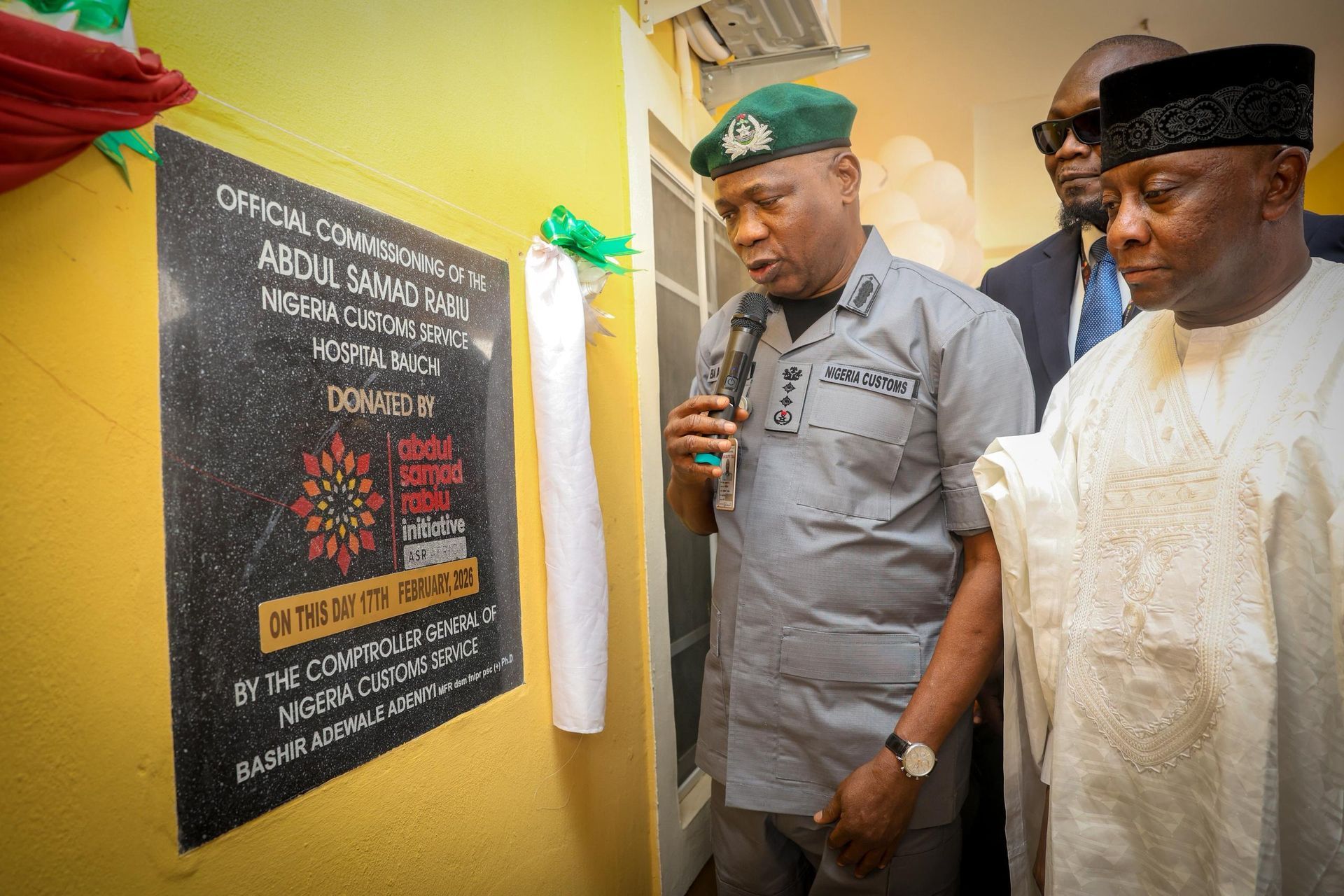
The Comptroller-General of Customs, Adewale Adeniyi, on Tuesday, February 17, 2026, officially commissioned the Abdul Samad Rabiu / Nigeria Customs Service Hospital in Bauchi, a 60-bed healthcare facility constructed and donated by Abdul Samad Rabiu, Chairman of ASR Africa and Founder/Executive Chairman of BUA Group.
The hospital, delivered through the Abdul Samad Rabiu Africa Initiative, is expected to significantly expand healthcare access for Customs officers, their families and host communities across Zone ‘D’ and neighbouring states.
Describing the project as a strategic welfare investment, the CGC said the facility reflects the Service’s commitment to strengthening institutional capacity through improved personnel wellbeing.
 “This commissioning is a clear statement that the NCS prioritises the health and welfare of its officers,” he stated.
“A modern Service requires not only technology and operational reforms, but also strong social infrastructure that supports those who serve.”
In his remarks, the Managing Director/CEO of ASR Africa, Dr Ubon Udoh, emphasised the intervention’s sustainability focus.
“ASR Africa is committed to impact-driven philanthropy,” he said. “Our partnership with the NCS demonstrates what can be achieved when private sector commitment aligns with institutional reform and clear developmental goals.”
Also delivering a message on behalf of the Executive Governor of Bauchi State, Senator Bala Mohammed, the Secretary to the State Government, Aminu Hammayo, described the commissioning as a boost to the state’s healthcare ecosystem.
“This facility will complement existing public health institutions and improve access to specialised services,” he said.
 “It reflects the value of collaboration between government and responsible corporate entities.”
The hospital’s commissioning marks the culmination of a phased transformation that began in 2008 with the establishment of a basic health post at the Zone ‘D’ Headquarters, Bauchi.
It was subsequently upgraded to a clinic, and later a medical centre, before a 2023 partnership between the NCS and ASR Africa converted it into a 30-bed hospital, completed in April 2025.
Following a needs assessment, the CGC approved the remodelling and expansion of the facility into a 60-bed secondary healthcare facility with selected tertiary services.
Now equipped with seven clinical departments: Nursing Services, Obstetrics and Gynaecology, Pediatrics, Surgery, Internal Medicine, Pharmacy and Medical Laboratory, alongside Administrative and Health Information Management units, as well as Dental, Radiology and Nutrition units.
The hospital is projected to manage up to 300 patients per month during its first operational year.
Long-term expansion plans include advanced diagnostics such as CT scans and MRI, as well as specialised surgical procedures, positioning the facility as a referral centre across the North-East and parts of North-Central Nigeria.
Continue Reading

Customs

Ahead of Customs’ paperless operations in June, Comptroller Onyeka declares Tin Can Customs trade enabler

Funso OLOJO, Editor 
Barely few days after the Comptroller- General of Customs, Adewale Adeniyi, announced that the Customs will migrate to paperless operations in June, 2026, the Tin Can command of the Service has made an elaborate preparation to key into the digital platform.
Even though, the Customs High Command is yet to release the blue print for the take -off of the digital revolution in goods clearance, the Controller of Tin Can Customs, Comptroller Frank Onyeka, has declared that his command is ready to hit the ground running.
To this end, Comptroller Onyeka has declared Tin Can Island Customs as a trade enabler where seamless operations will be the order of the day.
While speaking with the maritime media on Tuesday, February 17th, 2026, Onyeka stated that as long as an importer or his agent makes an honest declaration and the consignment is not flagged, such goods will leave the customs control within the 48 hours clearance time being envisaged by the Customs under its paperless operations regime.
Comptroller Onyeka further disclosed that his command will aim at collecting collectable revenue instead of maximum revenue which often leaves no room for trader to handle logistics costs and other sundry charges.
“By focusing on collectable revenue, we ensure that the trader makes profit, return to the market and continues to contribute to the society.
“I want to be known as a trade enabler personified” Comptroller Onyeka enthused.
While making projection into the year 2026, the Customs chief said the command recorded a lot of positives in 2025 when it surpassed the revenue target for that year and when a record revenue collection of 26 billion was recorded in a single day, a feat that was unprecedented in the history of the command.
Onyeka said the command started the year 2026 on a good revenue trajectory with the collection of  N145. 9bn in January, representing a 25.3 percent increase when compared to the N116.4billon  collected in January 2025.
He acknowledged the support of the media for its “constructive reportage” which acted as a catalyst for the good performance of the command in 2025.
While soliciting for the continued support of journalists in 2026, Comptroller Onyeka said his officers have been well primed to confront the challenges ahead.
He dismissed the fears of possible network glitches which stakeholders expressed may hamper the success of the paperless operations, saying such eventuality will be surmounted just as the teething problems which plagued B’ Odogwu platform at take off were conquered.
“Despite the teething problems with B’Odogwu,  we have recorded tremendous success, so we are ready for the paperless operations.
“There could be network issues but I want to urge the trading public to build capacity.
“With that, you can complete container clearance entirely online, with no physical contact with customs officers.
“If your declaration is not flagged, the process will be seamless, there will be no reason to come and see anyone.
“We cannot guarantee a perfect system from day one, but those challenges will not stop us.
” The more traders declare correctly and honestly, the smoother this process becomes for everyone,” he declared while advising importers to palletise their consignments.
It could be recalled that while launching the Customs’ One- Stop- Shop(OSS) on Friday, February 13th, 2026, the Comptroller- General of Customs, Adewale Adeniyi, disclosed that the Service is advancing toward a fully paperless customs environment, with the first phase of digital clearance and documentation processes scheduled for rollout by the end of the second quarter of 2026.
“This platform is a deliberate shift from fragmented interventions to coordinated governance, from discretion to data, and from isolated actions to collective responsibility,” Adeniyi had declared.
 “Through this reform, we continue to build systems that support lawful trade, protect national interests and serve the economy with professionalism and integrity.” he concluded.
Continue Reading

Trending