

Connect with us

Economy

Your current naira notes will become outdated by February, 2023—CBN warns Nigerians

Governor of Central Bank of Nigeria, Godwin Emefiele
—–as new redesigned Naira notes hit circulation in December, 2022
The Eyewitness reporter
The Central Bank of Nigeria ( CBN) has asked Nigerians and other residents in the country who hold the Naira currencies to immediately approach their banks to deposit them in exchange for new crisp and redesigned Naira notes.
In a press release personally signed by the Governor of CBN, Mr. Goodwin Emefiele Tuesday, the apex bank disclosed that by January 31st, 2023, the existing Naira notes will cease to be a legal tender in the country.
The decision, according to Emefiele, was based on the decision of the apex bank to redesign the naira notes due to the massive abuse of the existing ones which have serially been subjected to counterfeiting.
Consequently, the CBN Governor disclosed that the newly redesigned notes will hit circulation from December 15th, 2022.
He, therefore, advised holders of the existing notes to start approaching their banks to deposit them in exchange for the new ones.
At the press conference in Abuja Tuesday, Emefiele said the CBN has sought and secured the approval of President Mohammed Buhari for these changes.
He lamented that the existing Nigeria currencies, especially N500 and N1000 notes, have over the years been subjected to massive counterfeiting by unscrupulous characters who carried out this despicable act with finesse and a high level of sophistication due to recent development in photographic technology and advancements in printing devices.
Emefiele also claimed that more than 80 percent of naira currencies in circulation are outside the banking system.
He also said the existing notes have suffered serious mutilation and abuse, all of which made it imperative for the CBN to take this action.
He, therefore, advised all the Deposit Money Banks (DMBs) to immediately return all the existing Naira currencies in their vaults to the CBN in exchange for the newly redesigned notes as distribution will be based on a first come first serve basis.
Part of the statement reads
“We have called this gathering to inform relevant stakeholders and the general public of persisting concerns we are facing with

the management of our current series of banknotes, and currency in circulation, particularly those outside the banking system in Nigeria.

“As you all may be aware, currency management is a key function of the Central Bank of Nigeria, as enshrined in Section 2 (b) of the CBN Act 2007.
“Indeed, the integrity of a local legal tender, the efficiency of its supply, as well as its efficacy in the conduct of monetary policy are some of the hallmarks of a great Central Bank.

“In recent times, however, currency management has faced several daunting challenges that have continued to grow in scale and sophistication with attendant and unintended consequences for the integrity of both the CBN
and the country.
“These challenges primarily include:
# Significant hoarding of banknotes by members of the public, with statistics showing that over 80
percent of currency in circulation is outside the vaults of commercial banks,
# The worsening shortage of clean and fit banknotes with the attendant negative perception of the CBN and increased risk to financial stability;
# Increasing ease and risk of counterfeiting evidenced by several security reports.
“Indeed, recent development in photographic technology and advancements in printing devices have made counterfeiting relatively easier.
” In recent years, the CBN has recorded significantly higher rates of counterfeiting especially at the higher denominations of
N500 and N1,000 banknotes.
“Although global best practice is for central banks to redesign, produce and circulate new local legal tender every 5–8 years, the Naira has not been redesigned in the last 20 years.
“On the basis of these trends, problems, and facts, and in line with Sections 19, subsections a and b of the CBN Act 2007, the Management of the CBN sought and obtained the approval of President Muhammadu Buhari to redesign, produce, and circulate new series of banknotes at N100, N200, N500, and N1,000 levels.
“In line with this approval, we have finalized arrangements for the new currency to begin circulation
from December 15, 2022.
”The new and existing currencies shall remain legal tender and circulate together until January 31, 2023, when the existing currencies shall cease to be legal tender.
”Accordingly, all Deposit Money Banks currently holding the existing denominations of the currency may begin returning these notes back to the CBN effective immediately.
”The newly designed currency will be released to the banks on an order of First-come-First serve basis.
“Customers of banks are enjoined to begin paying into their bank accounts the existing currency to enable them to withdraw the new banknotes once circulation begins in mid-December 2022.

“All banks are therefore expected to keep open, their currency processing centers from Monday to Saturday so as to accommodate all cash that will be returned by their customers.

“For the purpose of this transition from existing to new notes, bank charges for cash deposits are hereby
suspended with immediate effect.

” Therefore, DMBs are to note that no bank customer shall bear any charges for
cash returned/paid into their accounts.

”Members of the public are to please note that the present notes remain legal tender and should not be rejected as a means of exchange for the purchase of goods and services.
“We would like to use this opportunity to reassure the general public that the CBN would continue to monitor both the financial system in particular, and the economy in general, and always act in good faith for the achievement of the Bank’s objectives and the betterment of the country.”
Continue Reading
Click to comment

Leave a Reply

Your email address will not be published. Required fields are marked *

Economy

News Alert! Tinubu sacks Wale Edun as Finance Minister in cabinet reshuffle, appoints Taiwo Oyedele as replacement 
Funso OLOJO, Editor 
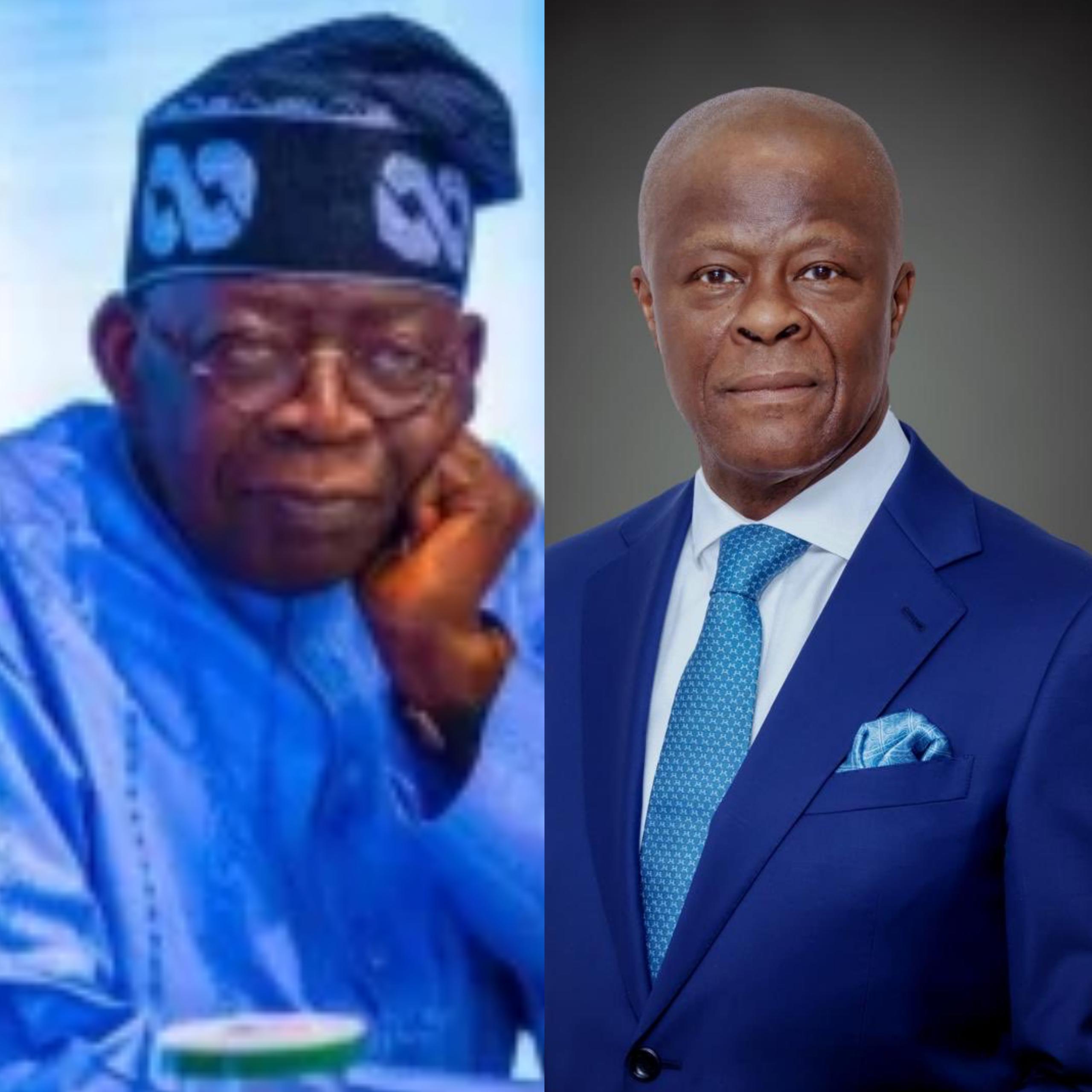
President Bola Ahmed Tinubu has carried out a major reshuffle exercise in his cabinet in which he dropped the Minister of Finance and the Coordinating Minster, Mr Wale Edun.
Taiwo Oyedele, who was recently appointed as the Minister of State for the Ministry, has now replaced the sacked Edun.
Also removed in the reshuffle exercise was the Minister of Housing and Urban Development, Ahmed Dangiwa.
A statement on Tuesday, April 21st, 2026,by the Special Adviser, Media and Publicity to the Secretary to the Government of the Federation, Yomi Odunuga, said the development was contained in a memo signed by the
Secretary to the Government of the Federation, George Akume.According to the memo, Taiwo Oyedele has been appointed as the new Minister of Finance and Coordinating Minister of the Economy.
Also appointed was Dr. Muttaqha Darma as Minister-designate for Housing and Urban Development.

The memo directed the outgoing ministers to complete handover processes to their respective successors or supervising officials.It stated that all handing over and taking over activities must be concluded on or before the close of business on Thursday, 23rd April, 2026.

Explaining the decision, Akume said the changes were aimed at improving coordination and strengthening delivery across key sectors of the economy under the Renewed Hope Agenda.

“These changes are aimed at strengthening cohesion, synergy in governance as well as achieving more impactful delivery on the economy to Nigerians, through the Renewed Hope Agenda,” Akume stated.

He added that President Tinubu acted in line with his constitutional powers as provided under Sections 147 and 148 of the 1999 Constitution (as amended).

The SGF also conveyed the President’s appreciation to the outgoing ministers for their service to the nation and wished them well in their future endeavours, noting that the process of cabinet reinvigoration would remain continuous.

The statement further noted that Taiwo Oyedele was appointed as Minister of State for Finance in March 2026, while Edun was among the ministers appointed on August 16, 2023.

Continue Reading

Economy

Tinubu assents to 2026 Appropriation bill , extends 2025 budget implementation 

Funso OLOJO, Editor
President Bola Ahmed Tinubu has assented to the 2026 Appropriation Bill, which provides for an aggregate expenditure of ₦68.32 trillion.
He has also signed the bill extending the implementation period for the 2025 budget from March 31, 2026, to June 30, 2026.
The N68.32 trillion budget for this year earmarks N4.799 trillion for statutory transfers and N15.8 trillion for debt service.
It allocates N15.4 trillion to recurrent expenditure and N32.2 trillion to the Development Fund for Capital Expenditure.
According to the statement signed by Bayo Onanuga, the Special Adviser to the President on information and Strategy, with capital expenditure accounting for about 50 per cent, the 2026 budget underscores the administration’s continued commitment to economic stability, national security, infrastructure development, and inclusive growth.
The allocations reflect a strategic balance between statutory obligations, debt servicing, recurrent expenditure, and capital investments critical to driving productivity and improving the quality of life for Nigerians.
Additionally, the President has assented to the Appropriation (Repeal and Enactment) (Amendment) Bill, 2026, which extends the implementation period of the capital component of the 2025 Appropriation Act from March 31, 2026, to June 30, 2026.
The extension will ensure the full and effective utilisation of appropriated funds, particularly for critical infrastructure and development projects that are at advanced stages of implementation across the country.
It will enable Ministries, Departments, and Agencies (MDAs) to consolidate ongoing works, enhance project completion rates, and maximise value for public expenditure.
With the 2026 Appropriation Act coming into force on April 1, the Federal Government will commence full implementation in line with the Renewed Hope Agenda.
President Tinubu directed MDAs to ensure disciplined, transparent, and efficient utilisation of allocated resources, with a strong emphasis on value for money and timely project delivery.
He commended the leadership and members of the National Assembly for their diligence, cooperation, and patriotism in expeditiously considering and passing the budget.
The President reaffirmed the importance of sustained collaboration between the Executive and Legislative arms of government in advancing national development objectives.
He further assured Nigerians of his administration’s resolve to deepen fiscal reforms, enhance revenue generation, and prioritise investments that will stimulate economic growth, create jobs, and strengthen social protection mechanisms.
Continue Reading

Economy

NNPC attributes increased crude oil production to enhanced security surveillance of pipelines in Niger- Delta
Funso OLOJO, Editor

The Nigerian National Petroleum Company Limited (NNPC) has confirmed that national crude oil production has grown from a historic low of 960,000 barrels per day in 2022 to an average of 1.71 million barrels per day and a peak production of 1.84 million barrels per day in 2025, owing to the establishment of the integrated energy security for pipelines in the Niger Delta.

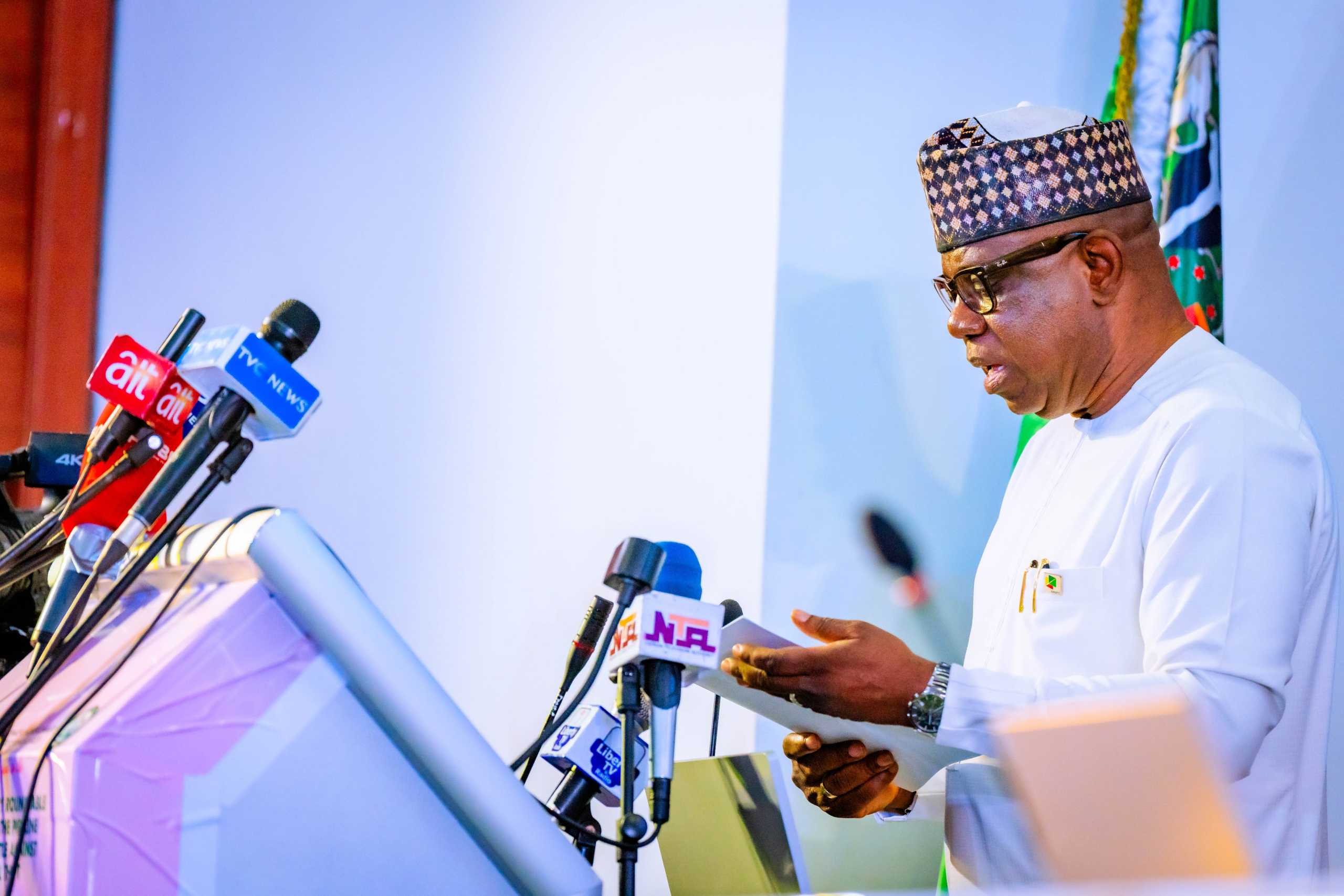
Group Chief Executive Officer of NNPC Ltd, Engr. Bashir Bayo Ojulari, made the disclosure at the Parliamentary Roundtable on the State of Pipelines Security which held at the National Assembly, in Abuja, on Wednesday, April 8th, 2026.

Speaking on the success of the security arrangement, Ojulari explained that it was not accidental, and that it involved an “integrated energy security model that combines legislative and executive policy alignment, actionable intelligence, kinetic deployment capabilities, regulatory oversight, industry cooperation, and community‑embedded surveillance mechanisms”.

He said the resurgence of production due to the effective tackling of the twin menace of oil theft and pervasive pipeline sabotage has led to the restoration of investors’ confidence in the nation’s oil and gas sector.

In his welcome address, the President of the Senate, Sen. Godswill Akpabio, represented by Senator Jimoh Ibrahim, called for collaboration among agencies and stakeholders in resolving all challenges impeding production growth.

On his part, the Speaker of the House of Representatives, who was represented by the Leader of the House, Hon. (Prof.) Julius Ihonvbere, urged the forum to evaluate the progress made so far with a view to ensuring fairness and equity.

The Parliamentary Roundtable on the State of Pipelines Security was convened by the Joint Senate and House of Representatives Committee on Petroleum Resources.

It had in attendance the Senate President, Speaker of the House of Representatives, National Security Adviser, Minister of Defence, and representatives of oil industry regulatory agencies.

The Roundtable also featured presentations by the Chief of Defence Staff, Inspector General of Police, Director General of the Department of State Services, Commandant General of the Nigerian Security and Civil Defense Corps, and private security companies.

Continue Reading

Trending