Over the years, Nigerian shippers have remained in the shackles of economic bondage of the imperialist foreign shipping companies and terminal operators.
These foreign service providers in the maritime industry have mindlessly exploited and extorted the hapless Nigerian shippers with reckless abandon.
At the drop of a hat and with no justification, they slam arbitrary charges on the shippers who are helpless due to proper regulations of the activities of these economic imperialists.
The Nigerian Shippers’Council, the agency of government which is supposed to protect the economic rights and interests of the exploited shippers, is helpless as it lacks legal powers to intervene and halt economic injustice freely being meted out to the Nigerian shippers.
At the dawn of port concession, the government came up with the idea of economic regulation of these service providers but failed to specify which of its agencies in the sector would assume the role.
This lack of policy direction created a space for rivalry between the Nigerian Shippers’Council and Nigerian Ports Authority(NPA)as the two agencies were then contesting for the role of economic regulator.
This further gave the impetus to the mindless exploitation of the shippers in the hands of the service providers who were having a field day while the NPA and NSC were busy slogging it out with themselves over who is the economic regulator.
However, in 2014, the matter was put to rest when the NSC was officially pronounced as the industry’s economic regulator.
However, that still didn’t solve the problem as the status was a mere pronouncement by the Federal Executive Council (FEC) without appropriate legal backing.
The service operators cashed in on this by further subjecting the Nigerian shippers to horrendous economic servitude.
The efforts of the NSC to intervene and bring sanity to the economic activities of these providers were roundly rebuffed and discountenanced.
More often than not, the directives of the economic regulator were observed in the breach and treated with ignominy.
The council was on several occasions dragged to court by the service providers who have become emboldened by the lack of proper legislation to give legal teeth to the status of economic regulator of the NSC.
The agency was often ignored and treated with disrespect by the service providers as the Council was laboriously striving to stamp its authority as the economic regulator with little or no success.
The aggrieved Shippers, who have become disillusioned by the lack of adequate protection from the council, have tagged the agency with demeaning sobriety as “the toothless bulldog”.
However, in 2024, there appeared a ray of hope in the skyline of the industry for the oppressed and harassed Shippers when a bill to give legal teeth to the economic regulator status of the Council was moved on the floor of the House of Representatives.
The sponsor of the bill, Alhaji Tajudeen Abbas, the Speaker of the House, sought to repeal the Nigerian Shippers’Council Act (Cap N133, LGN 2004) and 2010 and replace it with The Nigerian Shipping and Port Economic Regulatory Bill that will empower the Shippers’Council to regulate the services of service providers in the industry.
The bill, when passed, will liberate the Nigerian shippers from the economic shackles of the imperialist foreign service providers such as the terminal operators and shipping companies.
As expected, the bill torched the raw side of its antagonists who mounted opposition to its passage.
Serious efforts were made to frustrate the public hearing on the bill which was eventually held on May 27th, 2024 at the conference room of the Assembly complex.
A few days to the appointed day of the hearing, an emergency group which styled itself Maritime Advocacy Foundation, emerged and called a press conference where it put up a poor attempt to demonise the bill.
His head of Publicity, Dr Eugene Nweke, who is a respected stakeholder in the industry, canvassed opposition to the passage of the bill, saying it was against the interests of Nigerian Shippers.
Similarly and in quick succession, the Committee on Ports and Harbour, in political intrigue and manipulation, tried to stop the hearing when it announced its postponement.
Thank God for the alertness of well-meaning industry stakeholders as well as the members of the Committee on Shipping Services which stood their ground to thwart
the grand plan to detail the legislative process to transmute the council to more effective economic regulator.
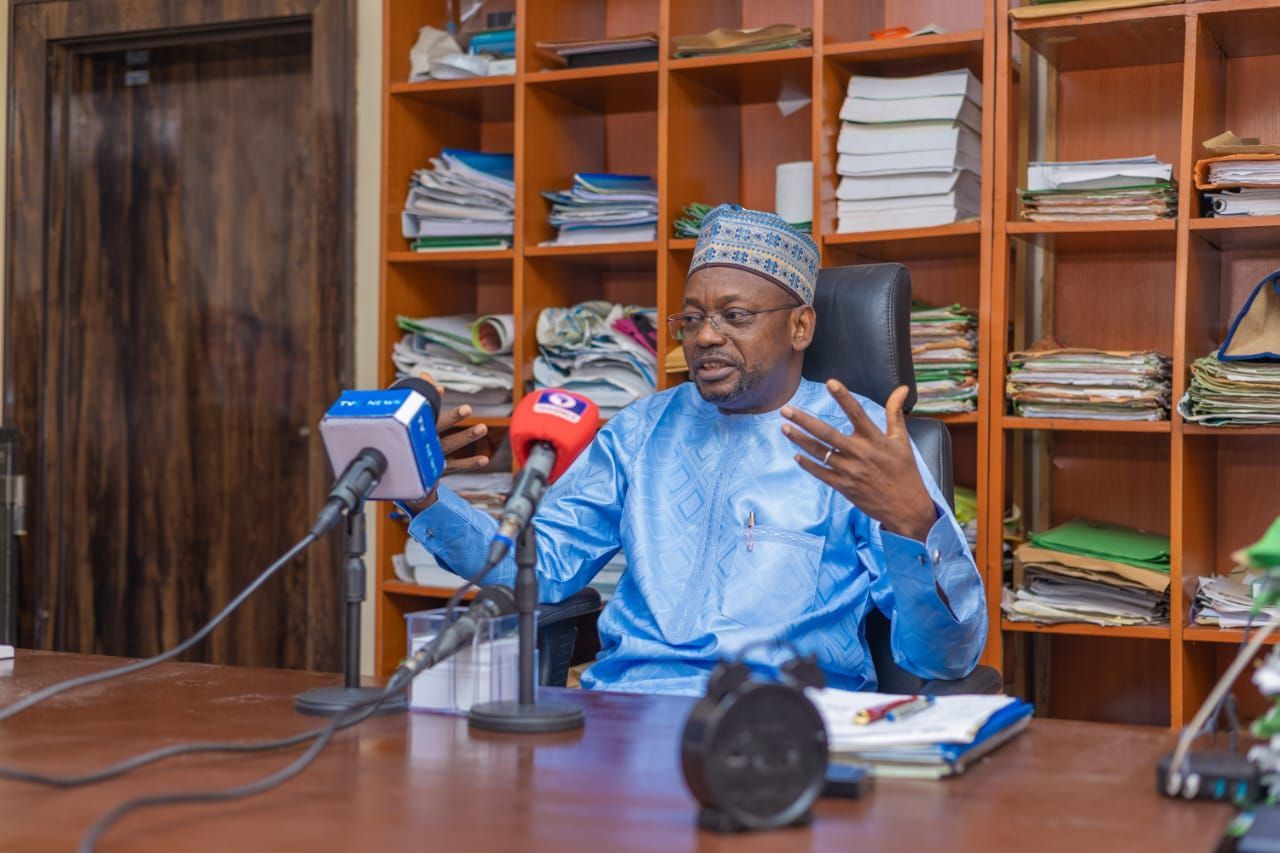
Abdussamad Dasuki, the Chairman of the committee on Shipping Services who superintendent over the bill, allayed the fears of the stakeholders who were eager to end the impunity of the imperialist service providers.
The stakeholders were not fooled by the diversionary tactics of the antagonists of the bill as they thronged the venue of the public hearing, despite the purported postponement, as the event was successfully held on the appointed day.
The attendance was impressive.
The Council’s team was led by its Executive Secretary, Barr. Akutah Ukeyima, who led a powerful lobby group to the event.
Past Executive Secretaries of the agency such as Adebayo Sarumi and Barrister Hassan Bello were all on ground to lend helping hands to the actualisation of the bill.
Maritime stakeholders such as Prince Olayiwola Shittu were also on ground to lend their voices to the passage of the bill.
Curiously, Dr Eugene Nweke, the Publicity Head of the Maritime Advocacy Foundation, which opposed the bill, was also there.
More intriguing was his defence of the bill when speaking with journalists at the sideline of the public hearing.
Hear Dr Nweke, the Publicity head of MAF speak at the event
“This law is overdue for implementation in the Nigerian maritime industry.
“You need to know the number of charges that port users are levied unnecessarily by operators at the ports to know why we need such a law.
”Cargo owners have been at the mercy of port and shipping operators for years, with many losing billions of Naira to arbitrary charges that ought not be levied against them.
“If your cargoes get delayed inside the port for no fault of yours, you pay extra charges because your cargoes are spending extra days inside the ports.
” For example, when the Service provider handling the Customs server has issues, and the network is down, cargoes spend extra days inside the port because, without a network, Customs cannot process your consignment.
“The port terminal operator and the shipping company will slam additional charges on your cargoes because your cargoes stayed extra days inside the port even though they know you don’t have powers over when the Customs server is up and running.
“Another issue that we still battle over is when there are labour strikes nationwide and the ports are shut down.
“During such strikes, cargoes spend extra days inside the ports while vessels get delayed for weeks over such issues.
“After the labour strike is over and the ports are opened, cargo owners are slammed with all sorts of arbitrary charges from the shipping companies and the port terminal operators over the delays caused by the port shut down.
“Most often times, importers end up paying huge sums of money just to clear their cargoes from the ports because there is nobody to fight for them.
“But now, with the Nigerian Shipping and Port Economic Regulatory Agency Bill nearing fruition, there is hope for importers. There is hope for port users. The era of impunity in broad daylight with nobody to cry to looks like it’s coming to an end very soon.”
This statement, when juxtaposed with his press statement as the publicity head of MAF where he poured vituperation on the bill and its sponsors, leaves one wondering why the respected scholar was speaking from both sides of his mouth.
Nonetheless, it was obvious that the antagonists of the bill to emancipate the harangue Nigerian shippers are losing their battle as the bill enjoyed the overwhelming support of the stakeholders as the bill awaits the third reading before it is passed into law.
However, the stakeholders, especially the NSC, must not go to sleep as the vultures which seek to devour the bill before it matures into an Act are still prowling to launch possible last-minute surprise attacks.
The members of the Committee on Ports and Harbour, who tried to play the spoiler role, should be under surveillance while the members of the Committee on Shipping Services, who have acquitted themselves well so far on this legislative process to end the slavery of Nigerian Shippers from long years of subjugation to the imperialist exploitation and extortions, should also be monitored to guide against last-minute capitulation to the political manipulation and manovering of the antagonists.






 Headlines3 months ago
 Headlines4 days ago
 Headlines3 months ago
 Customs3 months ago
 Headlines3 months ago
 Headlines3 months ago