Connect with us

Economy

Dangote group remits N402.3 billion tax to government coffers in 2024

Gloria Odion 
The Pan African Conglomerate, Dangote Industries Limited and its subsidiaries, have disclosed that it paid over N402 billion in taxes in 2024, making it the highest taxpayer in the country.
Dangote’s Chief Branding and Communication Officer, Anthony Chiejina, declared during a meeting with some senior media executives who visited him in his Lagos Office.
He said Dangote Industries Limited (DIL) and its subsidiaries, namely, Dangote Cement, NASCON, Dangote Packaging Limited among others, remitted a total of N402.319billion for the out-gone year as taxes as responsible business enterprises.
Recall that Federal Inland Revenue Service (FIRS) had in late 2024 recognised  Dangote group and its subsidiary, Bluestar Shipping as the most tax compliant organizations in the country during its Special Day at the 2024 Lagos International Trade Fair organised by the Lagos Chamber of Commerce and Industry (LCCI).
The Federal Inland Revenue Service is Nigeria’s agency responsible for assessing, collecting and accounting for tax and other revenues accruing to the Federal Government of Nigeria.
Chiejina told his visitors that as a responsible business organisation, DIL and its subsidiaries have never shieded away from its obligations either to the government in the form of tax payment at all levels or to host communities in the form of Corporate Social Responsibility (CSR).
According to him, the Group’s corporate strategy has evolved just as its businesses have grown, matured and diversified into new sectors and regions over the last four decades.
He noted that Dangote Group has almost single-handedly taken Nigeria to self-sufficiency in cement and refined petroleum products and is expanding rapidly across Africa.
Dangote Group and its subsidiaries were recognised as number one most compliant in tax payment in the country, just as its subsidiary Dangote Cement, the country’s leading cement manufacturer, at another occasion won three awards at the FMDQ Gold Awards in Lagos as the most active business in the Foreign Exchange market.
Dangote Cement Plc was adjudged as the Largest Commercial Paper Quotation on FMDQ and Single Largest Corporate Debt Issue on FMDQ.
 Also, Dangote Industries Ltd also emerged as the “Most active corporate in the foreign exchange market”.
Continue Reading
Click to comment

Leave a Reply

Your email address will not be published. Required fields are marked *

Economy

Nigeria’s Oil exports face threat as US- Israel attack on Iran escalates, Strait of Hormuz blockade imminent
Funso OLOJO, with agency report.
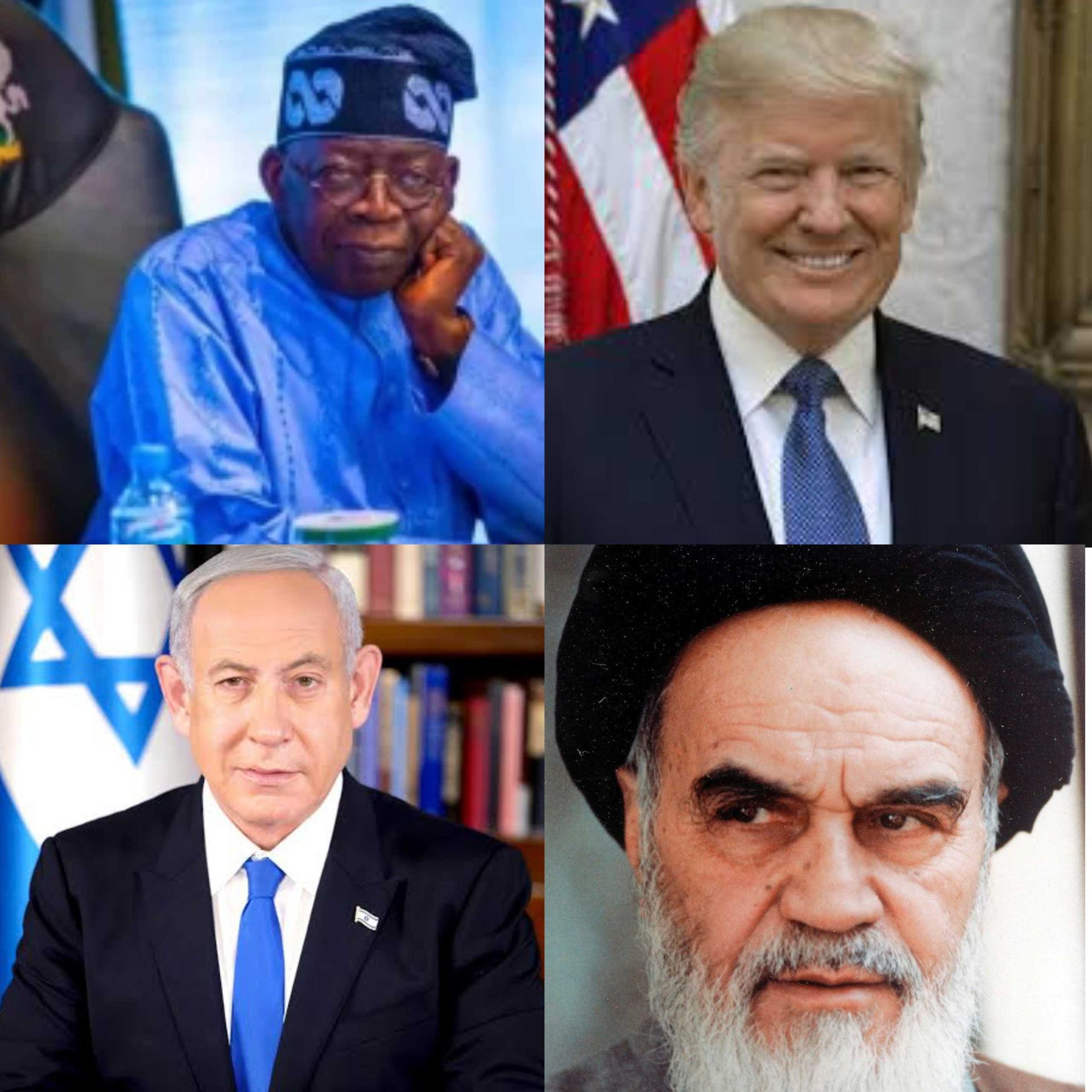
On Saturday, February 28th, 2026, the whole world woke to the shocking news of the death of the the Supreme leader of Iran, Ayatollah Ali Khomenei, in a surprise attack launched by the joint forces of the United States of America(USA) and the State of Israel.
Apart from the killing of Khomenei,  key figures on the Iranian military top hierarchy, were also assassinated, leaving the Iranian military command decapitated.
The attack and the killing of its Supreme leader has been met with swift relatiatory attacks by Iran on Israel and the military bases of the US in the Gulf States of Oman, Saudi- Arabian, United Arab Emirates (UAE), Qatar, Kuwait, Bahrain, Jordan.
However, the attack have begun to have spiral effects on the world economy as the Houthis, a fundamentalist group in the Middle East with sympathy for the Iranian cause, has threatened to attack vessels in the Strait of Hormuz.
About 20-30 percent of global oil and gas supplies are shipped through the Strait of Hormuz.
Where is the Strait of Hormuz?
The Strait of Hormuz is located between Oman and the UAE on one side and Iran on the other.

It links the Arabian/Persian Gulf, or just the Gulf, with the Gulf of Oman and the Arabian Sea beyond.

It is 33km (21 miles) wide at its narrowest point, with the shipping lane just 3km (2 miles) wide in either direction, making it vulnerable to attack.

Despite its narrow width, the channel accommodates the world’s largest crude carriers.

Major oil and gas exporters in the Middle East rely on it to move supplies to international markets, while importing nations depend on its uninterrupted operation.
How much oil and gas pass through the strait?

According to the US Energy Information Administration (EIA), about 20 million barrels of oil, worth about $500bn in annual global energy trade, transited through the Strait of Hormuz each day in 2024.The crude oil passing through the strait originates from Iran, Iraq, Kuwait, Qatar, Saudi Arabia and the UAE.

The strait also plays a critical role in the liquefied natural gas (LNG) trade.

 According to the EIA, in 2024, roughly a fifth of global LNG shipments moved through the corridor, with Qatar accounting for the vast majority of those volumes.
Analysts warned of a spike in global oil prices after Iranian officials hinted at shutting down the Strait of Hormuz, one of the most important maritime routes in the world.

On Saturday, February 28th, 2026, an official from the European Union told the Reuters news agency that vessels crossing the strait have been receiving very high frequency (VHF) transmissions from Iran’s elite Islamic Revolutionary Guard Corps (IRGC), saying “no ship is allowed to pass the Strait of Hormuz”.However, the EU official added, Iran has not officially closed the strait.

Instead, several tanker owners have suspended oil and gas shipments through the strait amid the ongoing conflict in the region.

“Our ships will stay put for several days,” a top executive at a major trading desk told Reuters on condition of anonymity. Countries like Greece have also advised their vessels to avoid transiting through the waterway.

Any instability in this important maritime route could rattle economic stability worldwide.

Implications on Nigeria of disruption of ship movement in the Strait of Hormuz.
Nigeria’s economy is basically dependent on its crude oil. It account for more than 80 percent of its revenue earnings through export sales and the funding of its annual budget is significantly based on the oil sale receipts.
Disruptions in the movement of vessels in the Strait of Hormuz will therefore have a major adverse effect on its economy and this will affect the sales of its crude oil to its customers in Europe, Asia and Middle East.
Also, the development may disrupt the relative stability in the domestic prices of petroleum products as the blockage of the Strait of Hormuz may escalate the prices of crude oil in the international market.
As of 2024–2025, the primary net importers (top destinations) of Nigeria’s crude oil are Spain, the United States, India, France, and the Netherlands.
These countries consistently import large volumes of Nigerian crude, with the US increasing its reliance on Nigerian supplies to over 50% of its African imports in 2025.
Key details regarding Nigeria’s crude oil export destinations:

Top Importers: Spain, India, and the United States are the top consistent importers of Nigerian crude.

European Partners: France and the Netherlands are major European consumers of Nigeria’s oil.

Key Growth Markets: India and Italy have shown significant growth as importers between 2023 and 2024.

Other Importers: Other notable importers include Indonesia, Canada, Ivory Coast, and the United Kingdom.

United States Reliance: The U.S. remains a major partner, with Nigeria supplying 46.618 million barrels of crude in 2025.

In 2024, Nigeria’s crude oil exports totaled roughly $40.5 billion, cementing its status as a top-10 global exporter.
So what is the Strait of Hormuz, and how will its closure impact oil prices?

The strait handles both oil and gas exports and imports.

Kuwait and the UAE import supplies sourced outside the Gulf, including shipments from the United States and West Africa.

The EIA estimated that in 2024, 84 percent of crude oil and condensate shipments transiting the strait headed to Asian markets.

A similar pattern appears in the gas trade, with 83 percent of LNG volumes moving through the Strait of Hormuz destined for Asian destinations.

China, India, Japan and South Korea accounted for a combined 69 percent intake of all crude oil and condensate flows through the strait last year. Their factories, transport networks and power grids depend on uninterrupted Gulf energy.

A spike in oil prices will impact countries such as China, India and several Southeast Asian nations.

How would the Strait’s closure impact oil prices?

According to Iranian state media, the country’s Supreme National Security Council must make the final decision to close the strait, and it has to be ratified by the government.But energy traders have been on high alert in recent weeks amid escalating tensions in the region – home to one of the largest reserves of oil and gas in the world.

Muyu Xu, senior crude oil analyst at Kpler, told reporters that since the war began on Saturday, there has been a sharp drop in vessel traffic through the strait.

“At the same time, the number of vessels idling on either side – in the Gulf of Oman and the Gulf – has surged, as shipowners grow increasingly concerned about maritime security risks following Tehran’s warning of a potential navigation closure,” he said.

“The Strait of Hormuz is critical to the global energy market, as roughly 30 percent of the world’s seaborne crude oil transits the waterway.

” In addition, nearly 20 percent of global jet fuel and about 16 percent of gasoline and naphtha flows also pass through the Strait,” Muyu said.

“On Sunday, March 1st, 2026, an oil tanker was struck off the coast of Oman, signalling a clear escalation of the conflict and a shift in targets from purely military facilities to energy assets.”

Shipping data showed that at least 150 tankers, including crude oil and liquefied natural gas vessels, have dropped anchor in open Gulf waters beyond the Strait of Hormuz.

The tankers were clustered in open waters off the coasts of major Gulf oil producers, including Iraq and Saudi Arabia, as well as LNG giant Qatar, according to the Reuters news agency estimates based on ship-tracking data from the MarineTraffic platform.

Moreover, on Sunday, March 1st, 2026,the United Kingdom Maritime Trade Operations (UKMTO) said it is aware of “significant military activity” in the Strait and said it has ⁠received a report of an ⁠incident two nautical miles north of Oman’s Kumzar, located in the ‌Strait of Hormuz.

Muyu from Kpler said a broad range of energy infrastructure is now under threat. “This is expected to sharply intensify the oil price rally and could keep prices elevated for a sustained period, potentially longer than during last June’s conflict.”

Ali Vaez, director of the Iran project at the International Crisis Group, told Al Jazeera, “Closure of the Strait of Hormuz would disrupt roughly a fifth of globally traded oil overnight – and prices wouldn’t just spike, they would gap violently upward on fear alone.”

“The shock would reverberate far beyond energy markets, tightening financial conditions, fuelling inflation, and pushing fragile economies closer to recession in a matter of weeks,” he added.

When the US and Israel bombed Iran last June, there was no direct disruption to maritime activity in the region.

What does it mean for the global economy?

Any disruption to energy flows through Hormuz will also impact the global economy, driving up fuel and factory costs.Hamad Hussain, a climate and commodities economist at the United Kingdom-based firm Capital Economics, said that for the global economy, a sustained rise in oil prices would add upward pressure to inflation.

“If crude oil prices were to rise to $100 per barrel and remain at those levels for a while, that could add 0.6-0.7 percent to global inflation,” he said, noting that this would also lead to an increase in natural gas prices.

“This could slow the pace of monetary easing by major central banks, particularly in emerging markets, where policymakers tend to be more sensitive to swings in commodity prices,” he added.

Continue Reading

Business

National Single Window goes live in March, 2026 

– as FG launches phase 1 of the project for trade facilitation 
Funso OLOJO
The Federal Government of Nigeria has announced the commencement of Phase 1 of the National Single Window (NSW) Project, scheduled to launch on March 27, 2026.
The launch marks a decisive step toward reforming Nigeria’s trade ecosystem through technology, transparency, and smarter regulation.
The National Single Window is a centralised digital platform designed to simplify and harmonise trade procedures by enabling traders to submit trade-related information once,
through a single interface, while relevant government agencies access, process, and approve the required documentation seamlessly.
 The initiative is expected to significantly reduce delays, eliminate duplication, curb inefficiencies, and lower the cost of doing business at Nigeria’s ports and borders.
Speaking on the transformative potential of the project during the inauguration of the project on the 16th of April 2024, President Bola Ahmed Tinubu described the National Single Window as a cornerstone of Nigeria’s trade and economic reform agenda.
“The National Single Window will change the way trade is done in Nigeria. It will replace fragmentation with coordination, opacity with transparency, and delay with efficiency,” says Presidency.
The President added that the NSW aligns with the administration’s commitment to
economic diversification, non-oil export growth, and improved ease of doing business, noting that efficient trade systems are critical to national development.
Also speaking on the initiative, the Minister of Industry, Trade and Investment, Dr. Jumoke Oduwole, described the National Single Window as a game-changer that will simplify and
democratize trade in Nigeria.
Dr. Oduwole explained that the platform will streamline trade documentation through a unified window, enabling greater transparency, improved transaction tracking, and
increased trade volumes.
 She added that experienced traders, in particular, would benefit from the efficiency gains offered by the system.
Providing insight into the implementation strategy, Mr. Tola Fakolade, Director of National Single Window Project, explained that the Federal Government has deliberately adopted a phased rollout approach, beginning with Phase 1, which will focus primarily on statutory permits and manifests.
“The National Single Window will be rolled out in phases, starting with Phase 1, which concentrates on statutory permits and cargo manifests,” Mr. Fakolade stated.
“This allows us to stabilise the system, build confidence among stakeholders, and deliver immediate value where bottlenecks are most pronounced.”
According to Mr. Fakolade, the decision to phase the launch reflects lessons learned from previous large-scale technology initiatives that adopted a “big bang” approach.
“We have learned from the flaws of past big bang technological rollouts, where attempting to do everything at once created avoidable disruptions,” he noted.
 “Phasing the National
Single Window is a deliberate and strategic choice—one that prioritises sustainability, user adoption, and continuous improvement over speed for speed’s sake.”
He further emphasized that subsequent phases will gradually expand the scope of the platform, onboard additional agencies, and deepen integration across the trade value chain, ensuring a resilient and scalable system.
“This approach ensures that the National Single Window grows with the ecosystem, guided by real data, user feedback, and operational realities,” Mr. Fakolade added.
As Phase 1 goes live, the Federal Government reaffirmed its commitment to working closely with the private sector, development partners, and trade stakeholders to ensure a smooth
transition and shared ownership of the reform.
“By simplifying trade processes and leveraging digital innovation, we are unlocking faster movement of goods, strengthening revenue assurance, and creating a more competitive
environment for Nigerian businesses to thrive locally and globally.” Mr. Fakolade added.
With the launch of the National Single Window, Nigeria takes a bold and pragmatic step towards modern trade governance—one that places efficiency, transparency, and learning at the heart of national progress.
Continue Reading

Economy

We haven’t stopped Customs, FIRS, NUPRC, others from deducting cost of revenue collection at source – FG

Funso OLOJO
The Federal government has debunked the widely- held insinuation that it has stopped the standard practice of revenue – generating agencies such as the Federal Inland Revenue Service (FIRS), the Nigerian Upstream Petroleum Regulatory Commission (NUPRC), and the Nigeria Customs Service (NCS) to deduct their cost of collection at source.
In a statement issued by the Federal Ministry of Finance and signed by Mohammed Manga, Director of  Information and Public Relations in the ministry, at no point did the Minister of Finance and the Coordinating Minister of Economy, Wale Edun, announced the discontinuation of such practice.
“We categorically state that these reports are inaccurate and misleading.
“At no point during his remarks at the Nigeria Development Update (NDU) programme hosted by the World Bank did the Honourable Minister of Finance and Coordinating Minister of the Economy, Mr. Wale Edun, announce or imply any change to the existing policy on the cost of collection deductions.
“For the avoidance of doubt, there has been no policy change regarding the deduction of costs of collection at source by revenue-generating agencies. The current framework remains in effect.
“What is underway are ongoing policy discussions in line with the directives of His Excellency, President Bola Ahmed Tinubu, to review cost of collection structure.
“These discussions are part of broader efforts to enhance transparency, efficiency, and value-for-money in public financial management.
“However, no final decision has been made on this matter.
“The Ministry assures all stakeholders and the public that revenue operations continue uninterrupted and that any future adjustments will be guided by due process, stakeholder engagement, and clear communication.
“We urge media organisations to seek clarification from official sources before publishing information that may cause unnecessary confusion.
“The Ministry appreciates the continued support of Nigerians as we work collectively to build a stronger, more transparent, and sustainable economy” the statement concluded
Continue Reading

Trending