Connect with us

Features

NIMASA’s crusade to end war risk insurance will save Nigeria over $400 billion premium paid annually 

By Osagie Edward.

War risk insurance (WRI) is an additional surcharge imposed by international shipping companies on cargo bound for Nigeria.
 It comprises two key components: war risk liability, which covers people and goods aboard the vessel and is calculated based on the indemnity amount, and war risk hull, which covers the vessel itself and is determined by its value.
This financial burden was initially introduced during the height of Niger Delta militancy and piracy.
Although the Nigerian Bureau of Statistics does not have precise data on the total WRI payments made to international insurers, available figures indicate that Nigeria has paid over $1.5 billion in the past three years alone to Lloyd’s of London, Protection and Indemnity (P&I) insurance, and other foreign insurance firms.
The impact on Nigeria’s economy is staggering: for a Very Large Crude Carrier (VLCC) valued at $130 million, the WRI surcharge per voyage is approximately $445,000.
 For new container vessels valued at $150 million, the cost rises to $525,000 per voyage.
Maersk, one of the world’s largest shipping companies, has also introduced a transit disruption surcharge of up to $450 per container, while other shipping lines impose a war risk surcharge of $40–$50 per 20-foot container.

Recognizing the severe economic implications of this financial burden, the Nigerian Maritime Administration and Safety Agency (NIMASA) under the leadership of Dr. Dayo Mobereola has launched an aggressive campaign to eliminate war risk insurance on Nigeria-bound cargo.

The NIMASA Act and the Merchant Shipping Act mandate the agency to promote shipping development, and removing the WRI premium has become a central focus of its maritime reforms.
 The security concerns that originally justified these premiums no longer exist.
 Nigeria has not recorded a single piracy incident in over three years, and in 2021, the International Maritime Bureau (IMB) officially removed Nigeria from its list of piracy-prone countries.
Over the past five years, NIMASA, in collaboration with the Nigerian Navy, has led an unprecedented crackdown on piracy in the Gulf of Guinea, earning global recognition from the International Maritime Organization (IMO).
Despite these achievements, international shipping companies have continued to impose war risk insurance premiums on Nigeria-bound cargoes.
In 2023, the International Bargaining Forum (IBF) further validated Nigeria’s progress by delisting the country from the list of high-risk maritime nations.
 With piracy no longer a concern, why has the international shipping community continued to impose these excessive premiums?

NIGERIA’S EFFORTS TO MITIGATE WRI PREMIUMS

To address this issue, Nigeria through the Ministry of Marine and Blue Economy and the Ministry of Defense made significant investments in maritime security through initiatives like the Deep Blue Project, which has successfully eliminated piracy in the country’s waters for over 30 consecutive months—a record unmatched anywhere in the world.
 In addition, Nigeria collaborates closely with the IMO and other international bodies to combat maritime threats, further reducing its risk classification.
 IMO Secretary-General, Arsenio Dominguez, has publicly commended Nigeria’s efforts in securing the Gulf of Guinea.
Despite these improvements, shipowners and insurers have refused to acknowledge Nigeria’s new security status, continuing to levy exorbitant premiums on vessels operating in the country.

MOBEREOLA’S INTERNATIONAL DIPLOMACY: BRINGING GLOBAL ATTENTION TO THE ISSUE

Determined to break this cycle of financial exploitation, Dr. Mobereola under the directives of the Minister of Marine and Blue Economy, Adegboyega Oyetola, took Nigeria’s case to international stakeholders, urging them to support the removal of war risk insurance premiums.
In a major diplomatic move, he engaged Chatham House, where he met with Dr. Alex Vines, Director of the Africa Programme, who agreed to escalate the matter to the United Nations.
 NIMASA has also engaged major global shipping organizations, including: • BIMCO (Baltic and International Maritime Council), the world’s largest shipping association. • The International Chamber of Shipping (ICS). • INTERCARGO (International Association of Dry Cargo Shipowners). • INTERTANKO (International Association of Independent Tanker Owners).
In discussions with these organizations, Dr. Mobereola emphasized that Nigeria has invested billions in maritime security, yet continues to be unfairly penalized.
He urged the global shipping community to recognize the country’s improved security status and remove the unjustified WRI premiums.

Stinne Taiger Ivø, Deputy Secretary General of BIMCO, acknowledged Nigeria’s progress and stated that shipowners should take the lead in pushing for lower premiums.

Similarly, Zhou Xianyong of INTERCARGO assured NIMASA of their support in Nigeria’s campaign to be delisted from war risk insurance premium zones.
 Reducing these premiums is critical for Nigeria’s competitiveness in global trade.
 Lower shipping costs will encourage more international trade, attract foreign investment, and strengthen Nigeria’s position as a leading blue economy player.

Recently, NIMASA met with a Danish delegation led by Kristin Skov-Spilling, Chief Technical Advisor from the Danish Ministry of Foreign Affairs, urging Denmark to advocate for a reduction in war risk insurance premiums.

Some critics argue that Denmark cannot intervene in private insurance matters, but this argument is flawed.
Denmark has a significant interest in Maersk Line, which contributes over 15% of the country’s GDP.
If Denmark exerts pressure on Maersk, other shipping companies will likely follow suit.
Dr. Dayo Mobereola and his Management team at NIMASA have successfully brought global attention to Nigeria’s unfair war risk insurance burden.
 Now, it is time for all stakeholders—government, industry, and international bodies—to support the removal of this unjustified premium.
Nigeria has fulfilled its obligations, securing its waters and eliminating piracy.
 Yet, foreign insurance firms continue to profit while Nigerian businesses and consumers bear the costs.
The message is clear: Nigeria cannot continue paying war risk insurance premiums indefinitely.
The time for change is now and lets sustain the momentum.
OSAGIE EDWARD, FNIPR is the Head of Public Relations at the Nigerian Maritime Administration and Safety Agency, (NIMASA)

Continue Reading
Click to comment

Leave a Reply

Your email address will not be published. Required fields are marked *

Economy

Nigeria’s Oil exports face threat as US- Israel attack on Iran escalates, Strait of Hormuz blockade imminent
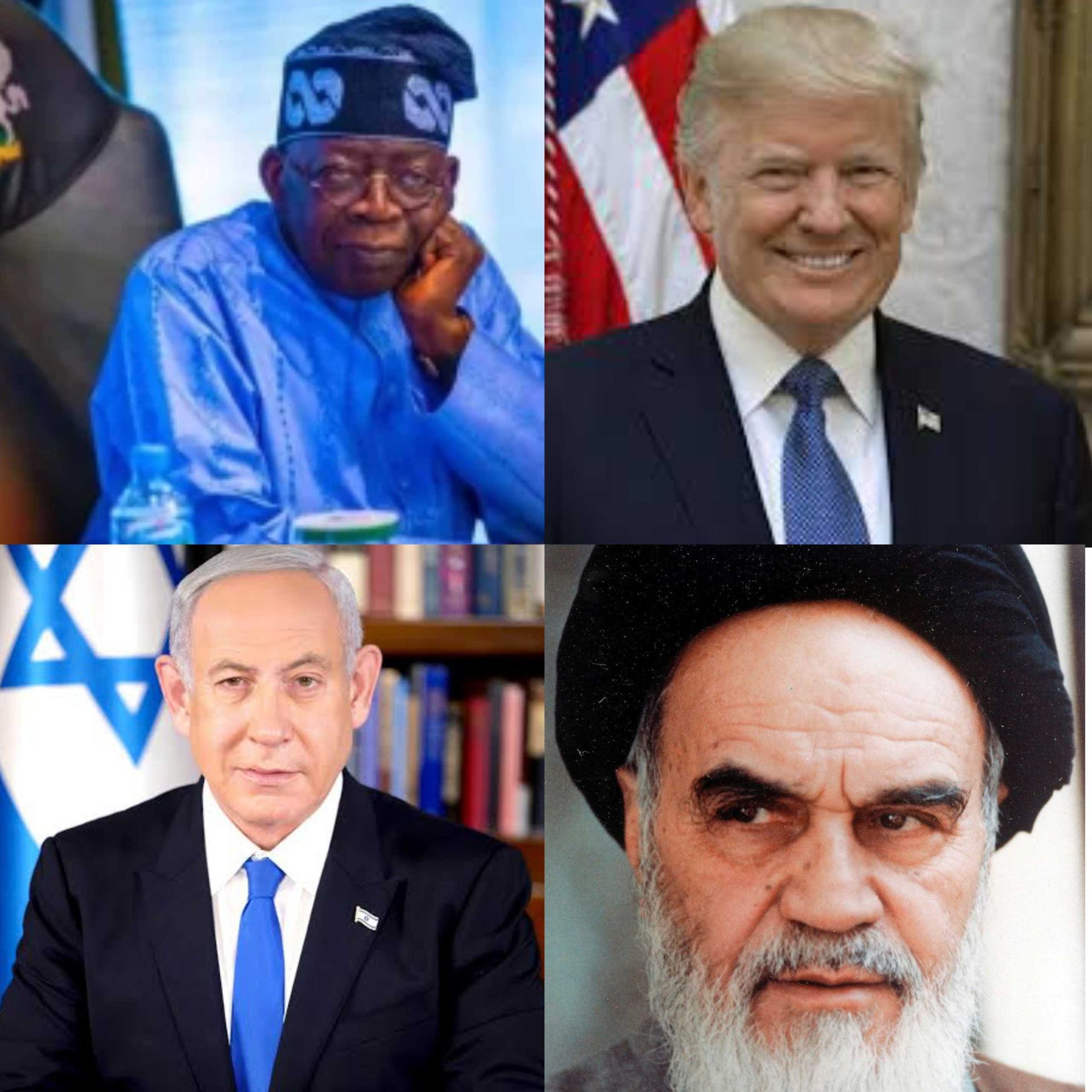
Funso OLOJO, with agency report.
On Saturday, February 28th, 2026, the whole world woke to the shocking news of the death of the the Supreme leader of Iran, Ayatollah Ali Khomenei, in a surprise attack launched by the joint forces of the United States of America(USA) and the State of Israel.
Apart from the killing of Khomenei,  key figures on the Iranian military top hierarchy, were also assassinated, leaving the Iranian military command decapitated.
The attack and the killing of its Supreme leader has been met with swift relatiatory attacks by Iran on Israel and the military bases of the US in the Gulf States of Oman, Saudi- Arabian, United Arab Emirates (UAE), Qatar, Kuwait, Bahrain, Jordan.
However, the attack have begun to have spiral effects on the world economy as the Houthis, a fundamentalist group in the Middle East with sympathy for the Iranian cause, has threatened to attack vessels in the Strait of Hormuz.
About 20-30 percent of global oil and gas supplies are shipped through the Strait of Hormuz.
Where is the Strait of Hormuz?
The Strait of Hormuz is located between Oman and the UAE on one side and Iran on the other.

It links the Arabian/Persian Gulf, or just the Gulf, with the Gulf of Oman and the Arabian Sea beyond.

It is 33km (21 miles) wide at its narrowest point, with the shipping lane just 3km (2 miles) wide in either direction, making it vulnerable to attack.

Despite its narrow width, the channel accommodates the world’s largest crude carriers.

Major oil and gas exporters in the Middle East rely on it to move supplies to international markets, while importing nations depend on its uninterrupted operation.
How much oil and gas pass through the strait?

According to the US Energy Information Administration (EIA), about 20 million barrels of oil, worth about $500bn in annual global energy trade, transited through the Strait of Hormuz each day in 2024.The crude oil passing through the strait originates from Iran, Iraq, Kuwait, Qatar, Saudi Arabia and the UAE.

The strait also plays a critical role in the liquefied natural gas (LNG) trade.

 According to the EIA, in 2024, roughly a fifth of global LNG shipments moved through the corridor, with Qatar accounting for the vast majority of those volumes.
Analysts warned of a spike in global oil prices after Iranian officials hinted at shutting down the Strait of Hormuz, one of the most important maritime routes in the world.

On Saturday, February 28th, 2026, an official from the European Union told the Reuters news agency that vessels crossing the strait have been receiving very high frequency (VHF) transmissions from Iran’s elite Islamic Revolutionary Guard Corps (IRGC), saying “no ship is allowed to pass the Strait of Hormuz”.However, the EU official added, Iran has not officially closed the strait.

Instead, several tanker owners have suspended oil and gas shipments through the strait amid the ongoing conflict in the region.

“Our ships will stay put for several days,” a top executive at a major trading desk told Reuters on condition of anonymity. Countries like Greece have also advised their vessels to avoid transiting through the waterway.

Any instability in this important maritime route could rattle economic stability worldwide.

Implications on Nigeria of disruption of ship movement in the Strait of Hormuz.
Nigeria’s economy is basically dependent on its crude oil. It account for more than 80 percent of its revenue earnings through export sales and the funding of its annual budget is significantly based on the oil sale receipts.
Disruptions in the movement of vessels in the Strait of Hormuz will therefore have a major adverse effect on its economy and this will affect the sales of its crude oil to its customers in Europe, Asia and Middle East.
Also, the development may disrupt the relative stability in the domestic prices of petroleum products as the blockage of the Strait of Hormuz may escalate the prices of crude oil in the international market.
As of 2024–2025, the primary net importers (top destinations) of Nigeria’s crude oil are Spain, the United States, India, France, and the Netherlands.
These countries consistently import large volumes of Nigerian crude, with the US increasing its reliance on Nigerian supplies to over 50% of its African imports in 2025.
Key details regarding Nigeria’s crude oil export destinations:

Top Importers: Spain, India, and the United States are the top consistent importers of Nigerian crude.

European Partners: France and the Netherlands are major European consumers of Nigeria’s oil.

Key Growth Markets: India and Italy have shown significant growth as importers between 2023 and 2024.

Other Importers: Other notable importers include Indonesia, Canada, Ivory Coast, and the United Kingdom.

United States Reliance: The U.S. remains a major partner, with Nigeria supplying 46.618 million barrels of crude in 2025.

In 2024, Nigeria’s crude oil exports totaled roughly $40.5 billion, cementing its status as a top-10 global exporter.
So what is the Strait of Hormuz, and how will its closure impact oil prices?

The strait handles both oil and gas exports and imports.

Kuwait and the UAE import supplies sourced outside the Gulf, including shipments from the United States and West Africa.

The EIA estimated that in 2024, 84 percent of crude oil and condensate shipments transiting the strait headed to Asian markets.

A similar pattern appears in the gas trade, with 83 percent of LNG volumes moving through the Strait of Hormuz destined for Asian destinations.

China, India, Japan and South Korea accounted for a combined 69 percent intake of all crude oil and condensate flows through the strait last year. Their factories, transport networks and power grids depend on uninterrupted Gulf energy.

A spike in oil prices will impact countries such as China, India and several Southeast Asian nations.

How would the Strait’s closure impact oil prices?

According to Iranian state media, the country’s Supreme National Security Council must make the final decision to close the strait, and it has to be ratified by the government.But energy traders have been on high alert in recent weeks amid escalating tensions in the region – home to one of the largest reserves of oil and gas in the world.

Muyu Xu, senior crude oil analyst at Kpler, told reporters that since the war began on Saturday, there has been a sharp drop in vessel traffic through the strait.

“At the same time, the number of vessels idling on either side – in the Gulf of Oman and the Gulf – has surged, as shipowners grow increasingly concerned about maritime security risks following Tehran’s warning of a potential navigation closure,” he said.

“The Strait of Hormuz is critical to the global energy market, as roughly 30 percent of the world’s seaborne crude oil transits the waterway.

” In addition, nearly 20 percent of global jet fuel and about 16 percent of gasoline and naphtha flows also pass through the Strait,” Muyu said.

“On Sunday, March 1st, 2026, an oil tanker was struck off the coast of Oman, signalling a clear escalation of the conflict and a shift in targets from purely military facilities to energy assets.”

Shipping data showed that at least 150 tankers, including crude oil and liquefied natural gas vessels, have dropped anchor in open Gulf waters beyond the Strait of Hormuz.

The tankers were clustered in open waters off the coasts of major Gulf oil producers, including Iraq and Saudi Arabia, as well as LNG giant Qatar, according to the Reuters news agency estimates based on ship-tracking data from the MarineTraffic platform.

Moreover, on Sunday, March 1st, 2026,the United Kingdom Maritime Trade Operations (UKMTO) said it is aware of “significant military activity” in the Strait and said it has ⁠received a report of an ⁠incident two nautical miles north of Oman’s Kumzar, located in the ‌Strait of Hormuz.

Muyu from Kpler said a broad range of energy infrastructure is now under threat. “This is expected to sharply intensify the oil price rally and could keep prices elevated for a sustained period, potentially longer than during last June’s conflict.”

Ali Vaez, director of the Iran project at the International Crisis Group, told Al Jazeera, “Closure of the Strait of Hormuz would disrupt roughly a fifth of globally traded oil overnight – and prices wouldn’t just spike, they would gap violently upward on fear alone.”

“The shock would reverberate far beyond energy markets, tightening financial conditions, fuelling inflation, and pushing fragile economies closer to recession in a matter of weeks,” he added.

When the US and Israel bombed Iran last June, there was no direct disruption to maritime activity in the region.

What does it mean for the global economy?

Any disruption to energy flows through Hormuz will also impact the global economy, driving up fuel and factory costs.Hamad Hussain, a climate and commodities economist at the United Kingdom-based firm Capital Economics, said that for the global economy, a sustained rise in oil prices would add upward pressure to inflation.

“If crude oil prices were to rise to $100 per barrel and remain at those levels for a while, that could add 0.6-0.7 percent to global inflation,” he said, noting that this would also lead to an increase in natural gas prices.

“This could slow the pace of monetary easing by major central banks, particularly in emerging markets, where policymakers tend to be more sensitive to swings in commodity prices,” he added.

Continue Reading

Features

Oxford-trained tech wizkid, Prince Nnamdi Ekeh shines in London with Forbes and EuroKnowledge award


Adebayo Obajemu 
We live in a digital era where the spotlight often flickers over fleeting trends and hollow titles and very little authenticity.
 However, Prince Nnamdi Ekeh, Group Chief Executive Officer of Konga Group, stands tall as a refreshing exception, a beacon of genuine leadership.
He is a young visioner whose quiet brilliance and transformational leadership are rewriting Africa’s digital story.
 At just under 30, this Oxford-trained entrepreneur has accomplished what even seasoned business titans dream of — and now, the world has taken note.
At the iconic House of Lords, London, Prince Ekeh made history as the youngest African ever to receive two global honours in one night — the Forbes Best of Africa E-Commerce Leadership Award 2025 and the Distinguished EuroKnowledge Award for Emerging Leadership in Digital Transformation.
 The prestigious ceremony, attended by an elite audience of global policymakers, innovators, and business leaders, was a defining moment not only for the young Nigerian but for an entire continent watching one of its brightest sons rise to the global stage.
Forbes and EuroKnowledge described his recognition as “a celebration of visionary courage and transformative impact,” honouring a leader who, at a remarkably young age, has built enduring institutions that power Africa’s digital economy.
Prince Ekeh’s journey, as remarkable as it is inspiring, began long before the bright lights of global acclaim.
Born into a family steeped in innovation and enterprise, Nnamdi is the first son of Leo Stan Ekeh, Africa’s foremost disruptive digital entrepreneur and founder of Zinox Group, and Lady Chioma Ekeh, a chartered accountant, and CEO of TD Africa, the continent’s largest tech distribution company.
From an early age, he imbibed the family’s values of discipline, innovation, and social responsibility, qualities that would later define his leadership style.
 His lineage reflects a deep-rooted entrepreneurial heritage: his great-grandfather, Mazi Ihentuge Ekeh, was one of the most prominent merchants in Onitsha, while his grandmother, a British-trained entrepreneur, designed the first galvanized waste bins used in Nigeria under the “Operation Clean and Green” initiative.
But it is Nnamdi’s personal story that truly sets him apart.
At just 19, while studying at the University of Lancaster, he conceived Yudala, Africa’s first composite e-commerce platform.
 It was a bold, technology-driven venture that would employ hundreds of young Nigerians.
 After years of learning the ropes within the Zinox Group, he led the strategic acquisition of Konga from global investors, Naspers and Kinnevik in 2018.
 The merger of Konga and Yudala under his leadership birthed Africa’s first true omnichannel e-commerce powerhouse, combining the convenience of digital retail with the trust of physical stores.
Today, Konga stands as a pillar of innovation, spanning fintech (KongaPay), logistics (Konga Logistics), healthcare (Konga Health), and travel (Konga Travel and Tours).
 The company serves over four million customers and about two million merchants; an ecosystem that reflects Ekeh’s belief in what he calls “commercial scale with social soul.”
It was this belief that echoed through his electrifying keynote speech at the House of Lords.
Speaking before an audience that included international business magnates, ministers, and diplomats, he reflected on Africa’s entrepreneurial journey, urging leaders to build institutions that solve real problems and create lasting social impact.
“When we acquired Konga from Naspers and Kinnevik,” he said, “we chose the harder path, which was to build the rails of digital commerce for Nigeria and, ultimately, for Africa.
” Because entrepreneurship that truly changes lives must solve real problems, not just build pretty apps.”
He continued, “Every package delivered isn’t just commerce; it’s connection. A small business in Enugu selling to a customer in Kano for the first time.
” That’s what scalable social impact looks like; technology turning potential into prosperity.”
The powerful delivery earned him a standing ovation.
His words were eloquent, purposeful, and filled with conviction, and they painted a portrait of a leader not driven by profit alone, but by impact.
 It was a reminder that Africa’s next growth story lies in young innovators who blend intellect with empathy, courage with humility, and technology with humanity.
Among the dignitaries present at the high-profile event were the Minister of Communications and Digital Economy, Bosun Tijani; Nigeria’s Minister of Information and National Orientation, Alhaji Mohammed Idris; NAFDAC Director-General, Professor Mojisola Adeyeye; Professor Olufolake Abdulrazaq, wife of the Kwara State Governor; as well as international icons such as Reebok Co-founder Joe Foster and Dragons’ Den star, Richard Faileigh, both of whom were also honoured.
With this latest global recognition, Prince Nnamdi Ekeh has once again affirmed that Africa’s future is not a faraway dream, it is already unfolding.
A product of legacy, discipline, and vision, he embodies the promise of a continent ready to shape its destiny.
In the grand halls of the House of Lords, history was not just made — it was redefined.
And at its centre stood a young Nigerian whose story proves that greatness is not a matter of age, but of purpose.
Continue Reading

Customs

Much Ado about Adeniyi’s tenure extension 

Funso OLOJO 
A certain ethnic bigot who is hiding under a pseudo name, Jimoh Olusegun, is pushing an ethnic agenda to discredit  President Bola Ahmed Tinubu over his approval of tenure extension for the current CGC Adeniyi.
In his warped narrative, he claimed that the tenure extension of Adeniyi by President Tinubu has robbed DCG Nwafor of the chance to succeed Adeniyi this year as the next in rank.
But the tenure extension of Adeniyi, according to him, has scuttled the chances of Igbo to produce Customs CG.
But the purveyor of this puerile narrative, who is obviously hiding under a borrowed robe of identity theft to act a script written by a larger group of irredentists, was evidently ignorant of the succession procedure in the Customs.
 I will reproduce what Mr Chudi Philipson, a respected Igbo Customs broker, said of the  divisive agenda being bandied about by this faceless group
 “I have seen this post over and over in the past day. The truth is I do not believe that DCG BU Nwafor was hoping to become CG Customs after Adeniyi.
The practice is that the DCGs leave with the CG. There is only two instances I know where a DCG became CG in the last 20 years.
 In 2004, Aliyu Mustapha was succeeded by DCG Ogungbemile briefly before the appointment of Elder Jacob Buba, an Assistant Comptroller General.
When Ahmed Kojoli left in 2008, DCG Nwadialo took over for few months before the appointment of Abdulahi Dikko as CG.
The truth is that the appointment of Customs CG is usually from the rank of Assistant Comptroller General.
DCG BU Nwafor must count herself lucky because with the extension of the term of the CGG, most of the DCGs, BU Nwafor included ,will continue to work with him rather than instant retirement.
I think it will be in the best interest of DCG BU Nwafor to distance herself from this campaign of calumny against the Federal Government.
There are procedures for the appointment of Customs CG and BU Nwafor is aware of that.
The Comptroller General of the Nigeria Immigration Service got same tenure extension and no hell was let loose.
 In the past, President Obasanjo extended the term of IGP Ehindero.”, Philipson has lectured.
With this informed opinion of Mr Philipson, I hope the sponsors of this campaign of calumny will channel their energies into more productive ventures.
This is because the intelligent analysis of Mr Philipson has not only punched holes in their game plan but has exposed their ignorance of the succession procedure in the Customs.
Continue Reading

Trending