
Economy
US tackles OPEC over rising Oil prices

—-rallies allies to saturate global market with excess supply
Eyewitness reporter with agency report
The Joe Biden administration came to this conclusion as the last resort after its appeal to OPEC and its allies, OPEC+, to raise production quota to boost oil supplies failed.
Consequently, governments from some of the world’s biggest economies may have agreed with the US in principle when they said they were looking into releasing oil from their strategic reserves, after a rare US request for a coordinated move to cool global energy prices ahead of a meeting of major oil-producing nations.
The Biden administration has asked a wide range of countries, including China for the first time, to consider releasing stocks of crude.
Other major consumers India, Japan and South Korea were also involved in discussions.
As the world economy rebounds from the pandemic, Washington and other nations have been frustrated that producers in OPEC+, the Organization of the Petroleum Exporting Countries and allies such as Russia, have rebuffed US requests to speed up additional oil supplies.
OPEC nations, for their part, have said that world economies remain too fragile to warrant increasing supplies quickly.
To that end, the market slumped on Friday after Austria announced that it would reimpose a full nationwide lockdown due to soaring coronavirus cases, and Germany, Europe’s largest economy, may soon follow suit.
The market has been weakening for several weeks as investors have started to anticipate an increase in supply worldwide.
With gasoline prices and other costs rising, Democratic US President Joe Biden also faces political pressure ahead of midterm congressional elections next year.
A Reuters poll in October showed 67 percent of US adults agreed that inflation is a very big concern.
Members of Biden’s national security team had discussed the need to meet fuel demand, White House spokesperson Jen Psaki said.
“That is an ongoing conversation and one we are having with a number of partners,” she added.
OPEC+ plans to meet on December 2nd, 2021.
The group has been raising output by 400,000 barrels per day (bpd) per month, gradually unwinding record production cuts made in 2020 when the pandemic dissipated fuel demand.
This week, Secretary-General Mohammad Barkindo said OPEC expects an oil supply surplus to begin building next month.
Other countries have been pressing OPEC for some time, including China and India.
“This is not a case of supplies not being available,” Hardeep Singh Puri, India’s Oil Minister, told a conference in Dubai on Wednesday.
“There are five million barrels a day of supplies available which have not been released for whatever reason.”
While OPEC+ has been raising oil output by 400,000 bpd per month since July, the producer group still has about 3.8 million bpd in supply cuts that it has not yet returned to the market.
Several of the group’s members have been unable to meet production targets due to years of under-investment.
“Half of (OPEC+’s) members can’t meet their quotas given their own under-investment,” Goldman Sachs analysts said.
OPEC+ in April 2020 cut output by more than 10 million barrels a day in response to the swift spread of the coronavirus pandemic.
China’s state reserve bureau told Reuters it was working on a release of crude oil reserves, but declined to comment on the US request.
It would also mark the first time that China, the world’s No. 2 oil consumer and largest importer, would be involved in a coordinated release with the United States.
China held its first-ever public auction of oil reserves in September.
Consultancy Energy Aspects said in a note to clients that Beijing is expected to release another 10 million to 15 million barrels of crude from its reserves in eastern Zhoushan in its next auction round.
“Any oil released from the Chinese SPR needs to be refilled within 90 days,” Energy Aspects said.
“The market should focus on where these countries will find crude to refill these tanks given just how low stocks are.”
The United States has the largest strategic reserve at more than 600 million barrels.
The US SPR was set up in the 1970s after the Arab Oil Embargo to ensure the nation had adequate supply to weather an emergency.
In the last several years, the shale boom has pushed US output to rival that of Saudi Arabia and Russia.
That has enabled the United States to become less dependent on energy imports from other nations, particularly members of OPEC.
The United States and its allies have coordinated strategic petroleum reserve releases before, such as in 2011 when supplies were hit by war in OPEC member Libya.

Economy
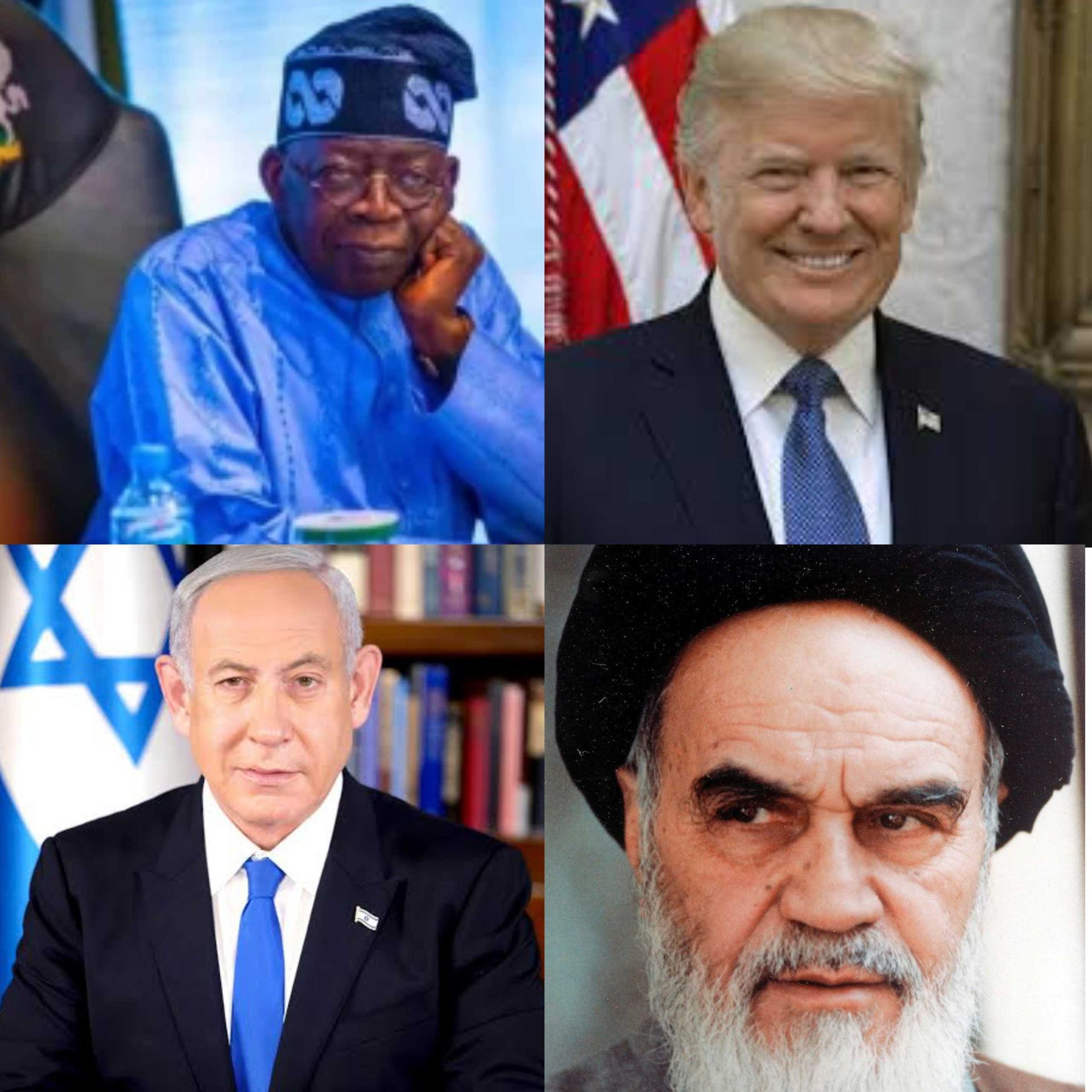
Nigeria’s Oil exports face threat as US- Israel attack on Iran escalates, Strait of Hormuz blockade imminent
It links the Arabian/Persian Gulf, or just the Gulf, with the Gulf of Oman and the Arabian Sea beyond.
It is 33km (21 miles) wide at its narrowest point, with the shipping lane just 3km (2 miles) wide in either direction, making it vulnerable to attack.
Despite its narrow width, the channel accommodates the world’s largest crude carriers.
According to the US Energy Information Administration (EIA), about 20 million barrels of oil, worth about $500bn in annual global energy trade, transited through the Strait of Hormuz each day in 2024.The crude oil passing through the strait originates from Iran, Iraq, Kuwait, Qatar, Saudi Arabia and the UAE.
The strait also plays a critical role in the liquefied natural gas (LNG) trade.
On Saturday, February 28th, 2026, an official from the European Union told the Reuters news agency that vessels crossing the strait have been receiving very high frequency (VHF) transmissions from Iran’s elite Islamic Revolutionary Guard Corps (IRGC), saying “no ship is allowed to pass the Strait of Hormuz”.However, the EU official added, Iran has not officially closed the strait.
“Our ships will stay put for several days,” a top executive at a major trading desk told Reuters on condition of anonymity. Countries like Greece have also advised their vessels to avoid transiting through the waterway.
Any instability in this important maritime route could rattle economic stability worldwide.
The strait handles both oil and gas exports and imports.
Kuwait and the UAE import supplies sourced outside the Gulf, including shipments from the United States and West Africa.
The EIA estimated that in 2024, 84 percent of crude oil and condensate shipments transiting the strait headed to Asian markets.
A similar pattern appears in the gas trade, with 83 percent of LNG volumes moving through the Strait of Hormuz destined for Asian destinations.
China, India, Japan and South Korea accounted for a combined 69 percent intake of all crude oil and condensate flows through the strait last year. Their factories, transport networks and power grids depend on uninterrupted Gulf energy.
A spike in oil prices will impact countries such as China, India and several Southeast Asian nations.
How would the Strait’s closure impact oil prices?
According to Iranian state media, the country’s Supreme National Security Council must make the final decision to close the strait, and it has to be ratified by the government.But energy traders have been on high alert in recent weeks amid escalating tensions in the region – home to one of the largest reserves of oil and gas in the world.
Muyu Xu, senior crude oil analyst at Kpler, told reporters that since the war began on Saturday, there has been a sharp drop in vessel traffic through the strait.
“At the same time, the number of vessels idling on either side – in the Gulf of Oman and the Gulf – has surged, as shipowners grow increasingly concerned about maritime security risks following Tehran’s warning of a potential navigation closure,” he said.
“The Strait of Hormuz is critical to the global energy market, as roughly 30 percent of the world’s seaborne crude oil transits the waterway.
” In addition, nearly 20 percent of global jet fuel and about 16 percent of gasoline and naphtha flows also pass through the Strait,” Muyu said.
“On Sunday, March 1st, 2026, an oil tanker was struck off the coast of Oman, signalling a clear escalation of the conflict and a shift in targets from purely military facilities to energy assets.”
Shipping data showed that at least 150 tankers, including crude oil and liquefied natural gas vessels, have dropped anchor in open Gulf waters beyond the Strait of Hormuz.
The tankers were clustered in open waters off the coasts of major Gulf oil producers, including Iraq and Saudi Arabia, as well as LNG giant Qatar, according to the Reuters news agency estimates based on ship-tracking data from the MarineTraffic platform.
Moreover, on Sunday, March 1st, 2026,the United Kingdom Maritime Trade Operations (UKMTO) said it is aware of “significant military activity” in the Strait and said it has received a report of an incident two nautical miles north of Oman’s Kumzar, located in the Strait of Hormuz.
Muyu from Kpler said a broad range of energy infrastructure is now under threat. “This is expected to sharply intensify the oil price rally and could keep prices elevated for a sustained period, potentially longer than during last June’s conflict.”
Ali Vaez, director of the Iran project at the International Crisis Group, told Al Jazeera, “Closure of the Strait of Hormuz would disrupt roughly a fifth of globally traded oil overnight – and prices wouldn’t just spike, they would gap violently upward on fear alone.”
“The shock would reverberate far beyond energy markets, tightening financial conditions, fuelling inflation, and pushing fragile economies closer to recession in a matter of weeks,” he added.
When the US and Israel bombed Iran last June, there was no direct disruption to maritime activity in the region.
What does it mean for the global economy?
Any disruption to energy flows through Hormuz will also impact the global economy, driving up fuel and factory costs.Hamad Hussain, a climate and commodities economist at the United Kingdom-based firm Capital Economics, said that for the global economy, a sustained rise in oil prices would add upward pressure to inflation.
“If crude oil prices were to rise to $100 per barrel and remain at those levels for a while, that could add 0.6-0.7 percent to global inflation,” he said, noting that this would also lead to an increase in natural gas prices.
“This could slow the pace of monetary easing by major central banks, particularly in emerging markets, where policymakers tend to be more sensitive to swings in commodity prices,” he added.
Business
National Single Window goes live in March, 2026

Economy
We haven’t stopped Customs, FIRS, NUPRC, others from deducting cost of revenue collection at source – FG

-

 Headlines3 weeks ago
FIFA sends Nigeria’s Super Eagles to 2026 World Cup, awards boardroom scoreline of 3 goals to nil against DR Congo
-

 Headlines2 months ago
Ayobo residents protest deplorable road at LCDA, complain of 10- year neglect by successive local council administrations.
-

 Headlines3 months ago
FG approves 50 percent price slash on Yuletide train services
-
 Customs2 months ago
Apapa Customs stretches illicit drug seizures streak with another new year interdiction of 30.1 kg of cocaine on board vessel.
-

 Headlines3 months ago
FG trains 75 boat operators on safe inland waterway navigation
-

 Customs2 months ago
Tinubu pays glowing tribute to Adeniyi, CGC, at 60