Headlines
Jamoh’s two years of revolutionary stewardship in Nigeria’s maritime industry

OPERATIONS/ACTIVITIES OF NIMASA
MARITIME SAFETY
The Agency continues to improve its port and flag state functions which is the core of maritime safety. The performance of the Agency in this regard in the last 4 years is highlighted below:
Port State Inspection (PSI):
| Year | PSI | % Diff |
| 2017 | 525 | |
| 2018 | 659 | 38% (Increase) |
| 2019 | 725 | 10% (Increase) |
| 2020 | 510 | -29.65 (Decrease) |
Total port state inspection in 2019 was 726 vessels of the 5,035 vessels calls which represent a 10% improvement from the preceding year and 14.42% of the total ship call. This is however short of the 15% requirement under IMO by 0.8% of which we are working hard to surpass.
Total port state inspections in 2020 were 510 of 4,728 vessel calls. (COVID-19 lockdown impacted negatively on the Port State Inspections)
| Year | FSI | % Diff |
| 2018 | 1,737 | |
| 2019 | 2,580 | 49% (Increase) |
| 2020 | 2,244 | 13% decrease |
In 2019, the Agency performed a total of 2,580 flag state inspections representing 2,123 renewal inspections, 276 condition surveys and 181 Random Flag State Surveys. This showed a 49% increase from the 1,737 Total Flag State Inspections carried out in 2018 comprising 1,241 Flag State Renewal Inspections, 381 Condition Surveys and 115 Random Flag State Surveys. However, the decrease in 2020 is attributed to the impact of the COVID-19 Pandemic.
Marine incidents/accidents:
Sadly, the Agency recorded 22 marine incidents in 2019 and 21 in 2018. Investigations were carried out while some are still ongoing.
NIMASA has put in tremendous efforts to mitigate the tide of maritime insecurity in Nigeria and the Gulf of Guinea through several maritime domain awareness interventions and collaborative efforts.
NIMASA’S EFFORTS IN ADDRESSING MARITIME INSECURITY IN NIGERIA AND THE GULF OF GUINEA
- Passage of the Suppression of Piracy and other Maritime Offences Bill
- Establishment of integrated national maritime surveillance and security infrastructure
- International Ship and Port Facility Security (Code) Implementation: The implementation of the International Ship and Port Facility Security (ISPS) Code has steadily impacted the level of security in the nation’s port areas and facilities.
- Resuscitation of the Global Maritime Distress and Safety System(GMDSS) Equipment
- The Regional Maritime Awareness Capacity (RMAC) Centre
- International collaboration: NIMASA is currently engaging international stakeholders, including BIMCO, INTERTANKO, INTERCARGO, International Chamber of Shipping (ICS) and Oil Companies International Maritime Forum-OCIMF, under the auspices of NIMASA/Industry Maritime Security Work Group (NIWG) to entrench coordinated response to piracy attacks
- Institutionalization of Collaboration with National Authorities: The Agency has spearheaded the institutionalization of the collaboration between her and other frontline maritime agencies for improved maritime safety and security and efficient port operations.
CAPACITY BUILDING MILESTONES
Human Capacity Development
Statutory financial contribution to Maritime Academy, Oron
Nigerian Seafarers Development Program (NSDP): 40/60 ratio
50/50 ratio 100%
- Currently, the Agency has trained over 2600 Nigerian Seafarers in various credible maritime institutions UK, Egypt, Philippines, Malaysia, etc.
- Recently, the Agency secured the placement of over 400 cadets on board ships for the mandatory SEA-TIME training to make them globally competitive and employable.
- NIMASA also sent some of its staff on long term training abroad to build internal capacities in various aspects of the maritime industry at the prestigious World Maritime University.
INDIGENOUS SHIPPING CAPACITY DEVELOPMENT
Procurement of the 5th largest modular floating dockyard in Africa to reduce the cost of ship repairs and maintenance
This milestone achievement comes under a unique Fund known as the Cabotage Vessel Financing Fund (CVFF), designed to provide financial assistance to Nigerian Operators in domestic coastal shipping to own vessels and enhance their competitiveness.
Fiscal and Monetary Policy Initiatives: We have continued our engagement with the MDAs to entrench appropriate fiscal and monetary policy initiatives to pave way for the competitive participation of indigenous operators in shipping activities in Nigeria. These include but are not limited to:
- A push for the change in terms of trade from FOB to CIF for the affreightment of crude oil (NNPC) • Single-digit interest rate for the maritime sector (CBN/NEXIM BANK/AFRIEXIM) • Concessionalforeignexchangerateforshipacquisition(CBN) • EngagementwithOfficeoftheVicePresident/EconomicManagementTeam
We continued our engagement with state governments to buy into our cargo support initiative aimed at creating a cargo pool for affreightment by indigenous operators.
Ship Tonnage Growth: Aggressive repositioning of the Nigerian Ship Registration Office (NSRO)
- The Nigerian Ship Registration Office recorded 13.8% tonnage growth from 2018 to 2019.
- This trajectory of growth was negatively impacted by the global covid-19 pandemic.
- However, the Nigerian Ship Registry ranks second in tonnage measurement in Africa after Liberia which operates an open and more flexible registry. Remodelling and commissioning of NIMASA Knowledge Centre E-Library The facility is open to staff, students/researchers and external stakeholders/maritime operators to increase the knowledge base of the Nigerian Maritime Sector
SPECIAL INTERVENTION: COVID-19 RESPONSE AND CSR
The Executive Management of NIMASA recognized from the outset the significant impact of the Corona Virus (COVID-19) Pandemic on the Transport Sector in Particular and the Global socio-economic activities in general, hence set up a multi-disciplinary Committee within the Agency to provide an informed risk assessment with appropriate responses.
A major intervention of the Agency in ensuring the continued flow of trade was the declaration of Seafarers as KEY WORKERS to facilitate vital crew changes and excuse duty. Nigeria was among the first maritime nations to declare such and was commended by the IMO.
Corporate Social Responsibility support to Federal and State government by the following donations to Federal & State authorities:
- Cash donations of 30 Million Naira (N30,000,000.00) to the Federal Government Committee on COVID-19 Intervention
20 Million Naira (N20,000,000.00) cash donation to the Lagos State COVID-19 Intervention Task Force B. Provided human capital/personnel support in the following areas:
Medical Personnel Drivers Logistic officers
- Deployment of the Agency’s Fire brigade trucks to fumigate Apapa and its environs.
LOGISTICS SUPPORT IN THE FIGHT AGAINST COVID-19
| State | 36-Seater Coaster Bus | 16-Seater coaster Bus | Ambu-lance | Fast intervention Marine Vessels | Personal protective Equipment (PPEs) |
| Abuja | 1 | 1 | 1 | ||
| Lagos | 1 | 1 | 1 | 2 | |
| Rivers | 1 | 1 | 2 (Onne and Port Harcourt) | ||
| Delta | 1 | 1 | 1 | ||
| Cross River | 2 (PSC to source) | 1 | |||
| Kaduna | 2 |
SPECIAL INTERVENTION: CSR FOR FLOOD VICTIMS AND IDP CAMPS
The Agency presented relief items to victims of flood disasters across the nation. Also, internally displaced persons as a result of the insurgency were not left out of Agency’s Corporate Social Responsibility. Among the 20 states covered across the 6 geo-political zones are:
- Kaduna State
- Kano State
- Cross River State
- Delta State
- Lagos State
- Niger State
VII. Benue State VIII. Ogun State IX. Ondo State
COMMENDATIONS
The IMO in December 2020 applauded our efforts in the fight against piracy in the Gulf of Guinea Region The Specialized Organ of the United Nation had earlier supported our action declaring Seafarers as key workers to facilitate crew changes during the COVID-19 induced international lockdown.
Recently, the IMO gave institutional backing to NIMASA’s Marine Litter Action Plan. These and many more are evidence of our collaboration with the IMO.
The global shipping and economic climate was greatly impacted by the following in 2020 all through 2021:
- COVID-19
- Lockdown
- Disruption in the global supply chain; and
- Slow down the economic activities across the globe.
Maritime Safety:
- Flag State Implementation (FSO) – Vessels inspected/surveyed in accordance with the safety requirements of the MSA 2007
Conduct of Condition survey for Flag Registration
Comparing the number of vessels surveyed for flag registration relative to the previous year, it can be observed that the 2021 figure (489 vessels) is 43.6% higher than the total number of condition surveys carried out in 2020 (276 vessels).
| Para-meter | Jan | Feb | Mar | Apr | May | Jun | Jul | Aug | Sep | Oct | Nov | Dec | Total |
| Total No of Condition Surveys for Flag Registration conducted in 2020 | 32 | 29 | 36 | 14 | 7 | 22 | 24 | 28 | 10 | 31 | 18 | 25 | 276 |
| Total No of Condition Surveys for Flag Registration conducted in 2021 | 26 | 19 | 19 | 24 | 32 | 75 | 74 | 44 | 34 | 50 | 43 | 49 | 489 |
- Port State Control (PCS) 229 foreign vessels boarded to ensure that such vessels maintained safety/pollution standard while in our ports and waters.
Port State Control Implementation
Comparing the number of vessels boarded relative to the previous year, it can be observed that the 2021 figure (673 vessels) is 24.2% higher than the total number of inspections carried out in 2020 (510 vessels).
- Examination and Certification
Total exam conducted for officers at various capacities and certification for years 2020 and 2021
OFFICERS 2021
- The total number of examinations conducted 829
- Total candidate passed and certificated 264, forming a percentage of 32%
- The total candidates failed 565, forming a percentage of 68%
- Total certificate revalidated 2021: 246 certificates.
OFFICERS IN 2020
- Total number of examinations conducted 610
- Total candidates passed and certificated 251, forming a percentage of 41%
- Total candidates failed 359, forming a percentage of 59%
- Total certificate revalidated 2020: 132 certificates.
EXAMINATION RATINGS IN 2020
- The total number of examinations conducted 1,251
- Total candidates passed and certificated 926, forming a percentage of 74%
- Total candidates failed 325, forming a percentage of 26%
EXAMINATION RATINGS IN 2020
- The total number of examinations conducted 1,327
- Total candidate passed and certificated 990, forming a percentage of 74%
- Total candidates failed 337, forming a percentage of 26%
- Online Seafarers Certificate of Competency (CoC) Verification Platform reactivated
The project has drastically reduced the forgery of Nigerian certificates and enhanced the employment of Nigerian Seafarers in the maritime sector.
- Enforcement of Safety Regulations on Barges and Tug Boards (Operation Sting Ray)
- ISO 9001 Quality Assurance Certification for the operation of the Maritime Safety Department Approval of ISO 9001:2015 Quality Management System for the Maritime Safety and Seafarers Standard Department by Bureau Veritas (BV) in April 2020.
- Revival of the Global Maritime Distress and Safety System (GMDSS) equipment – Necessary for sending alerts in an emergency. The GMDSS is to ensure the safety of life at sea.
- Marine Accident Investigation Data/Information
Marine Pollution Prevention and Control
- Marine Environment Management
Nigeria has entered into MoU with Maritime Transport Coordination Centre (MTCC) on Climate Change for Africa to commence activities towards ensuring GHG emission reduction in the maritime sector with emphasis on achieving 0.5% Sulphur Oxide (SO2) in Bunker fuel oil.
- Awareness creation
- Establishment of bunker (fuel oil) supply register
- Accreditation of laboratories for testing bunker oil
- Capacity building on the emission of reduction; and
- Establishment of Compliance monitoring and Enforcement Team (CMET)
- IOPC 92
Produced manual for the admissibility of claims under the fund.
The manual is to contain the price index for determining the quantum of claims for settlement in case of oil pollution.
- Update on the Trinity Spirit FPSO
Maritime Security:
- Deep Blue Project:
The Deep Blue Project was flagged off by His Excellency, President Muhammadu Buhari on Friday, 21st May, 2021.
The Agency has taken delivery of key assets of the Deep Blue Project including:
- Two Special Mission Vessels (SMVs)
- Seventeen Fast Interceptor Boats (FIBs)
- Two Unmanned Air Vehicles (UAVs)
- Sixteen Armoured Vehicles
Some of these assets have been deployed to the Nigerian Navy for its operational use.
- The Regional Maritime Awareness Capacity (RMAC) Centre
Provision of the Regional Maritime Awareness Capacity (RMAC) Centre Kirikiri by the US Navy Upgraded to SEA VISION to allow for monitoring of vessels along the West and Central African region.
- NIMASA/Industry Working Group
International collaboration among major international stakeholders in the maritime/shipping sector.
To entrench coordinated response to piracy and other criminalities on the Nigerian waters and prompt reportage and escalation of marine incidences to where the action is most expected and to provide navigational advisory to mariners.
- The Maritime Security & Intelligence Unit
For intelligence and information gathering and sharing that can help to stop piracy.
- Collaboration with Security Agencies
At the strategic level, the Agency ensures a close liaison with the offices of the NSA , CNS, Chief of Air Staff, Chief of Army Staff and the IGP.
The Agency has played a pivotal role in the institutionalization of the collaboration between her and other government agencies for improved maritime security and safety.
- ISPS
The total number of currently operational onshore facilities in the ISPS unit is Ninety-eight (98) divided into six maritime zones.
For ease of administration because of their locations & accessibility, some zones are further subdivided.
In 2020 VIEs carried out as detailed below for the four (4) quarters
- Lagos subdivisions
- Apapa – 9
- Kirikiri – 12
- Ijora & Ijegun – 8 in first & second quarter & 11 in last quarter
- Tincan – 8
- Port Harcourt – 11
- Calabar – 9
- Onne – 9
- Eket – 4
- Warri – 16
Total 87 (Eighty–Seven)
In 2021 VIEs carried out as detailed below for the four (4) quarters
- Lagos subdivisions
- Apapa – 10
- Kirikiri – 12
- Ijora – 7
- Ijegun – 7
- Tincan – 8
- Port Harcourt – 13
- Calabar – 8
- Onne – 10
- Eket – 3
- Warri – 17
Total 96 (Ninety–Six)
Shipping Promotion and Capacity Development
- Shipping Promotion
- Concessions to boost indigenous ownership
- Strengthen enforcement of Cabotage to boost local participation
- Capactiy Development
- Human – Natural Seafarers Development Programme (NSDP) – Training of over 2,600 Nigerian Seafarers in various maritime institutions worldwide and a good number of them who have completed their programmes are no gainfuully employed onboard vessels.
- Assets – Approval for CVFF disbursement to assist in vessel acquisition by indigenous Nigerian Shipowners – Most Nigerian Operators in domestic coastal shipping now own vessels and enhance their competitiveness.
- Learning Infrastructure Upgrade
- Completion of the renovation and furnishing of the conventional library
- Digitization of the convention library books/other resource materials
- Renewal of e-library management software:
2022 in Focus
- Strengthen our maritime safety and security enforcement mechanisms
- Organise a stakeholders’ engagement towards harnessing the potentials of a blue economy
- Enhance revenue for increased contribution to the consolidated revenue fund
- Movement of the Agency’s Headquarters to its newly acquired building in Victoria Island.
- Operationalization of the floating dock
- Establishment of regional maritime safety and security training centre
- Build regional maritime search and rescue clinic
- Resuscitate Lokoja office
- Construction of NIMASA zonal offices (Central zone and Eastern zone)



Headlines
NIMASA flaunts automation process of Nigerian ship registry at 2- day webinar with stakeholders
Funso OLOJO Editor
The Nigerian Maritime Administration and Safety Agency (NIMASA) will host a two-part stakeholder webinar on October 6 and 8, 2026, to showcase the ongoing automation of the Nigerian Ship Registry as part of efforts to modernise ship registration services and enhance the competitiveness of the Nigerian flag.
The webinars will provide shipowners, operators, maritime professionals, financial institutions, insurers and other stakeholders with insights into the new digital registration platform and its potential to significantly improve the speed, transparency and efficiency of ship registration and related services.
The automated system is designed to enable 24/7 access to registration services, streamline application and approval processes, and facilitate faster issuance of electronic certificates, thereby reducing administrative delays associated with conventional paper-based procedures.
A key feature of the platform is its capacity to provide secure, real-time tracking of ship mortgages and related registry transactions. This will strengthen transparency and provide greater visibility for stakeholders, including financial institutions and other parties involved in vessel financing.
The automation initiative is also expected to make interaction with the Nigerian Ship Registry more seamless for local and international shipowners, while improving the Agency’s ability to deliver efficient, responsive and globally competitive flag-state services.
Speaking on the initiative, the Director-General/Chief Executive Officer of NIMASA, Dr Dayo Mobereola, said the automation of the Ship Registry was part of the Agency’s broader commitment to transforming the Nigerian flag and creating an enabling environment for increased participation in the global shipping industry.
“The automation of the Nigerian Ship Registry represents a significant step in our commitment to providing efficient, transparent and globally competitive services to shipowners and other maritime stakeholders.
“Our objective is to make the Nigerian flag more accessible, responsive and attractive through technology-driven processes that meet international standards,” Mobereola declared.
The ongoing user-testing phase is focused on validating the platform’s functionality, security and user experience ahead of its official deployment.
NIMASA said the webinars would also provide an opportunity for stakeholders to understand the platform, experience its key features and provide feedback as the Agency moves towards full implementation.
The Agency is inviting shipowners, ship managers, maritime professionals, financial institutions, insurers, legal practitioners, classification societies and other interested stakeholders to participate in the webinars.
Headlines
NRC joins global community to celebrate customers’ loyalty
Funso OLOJO, Editor
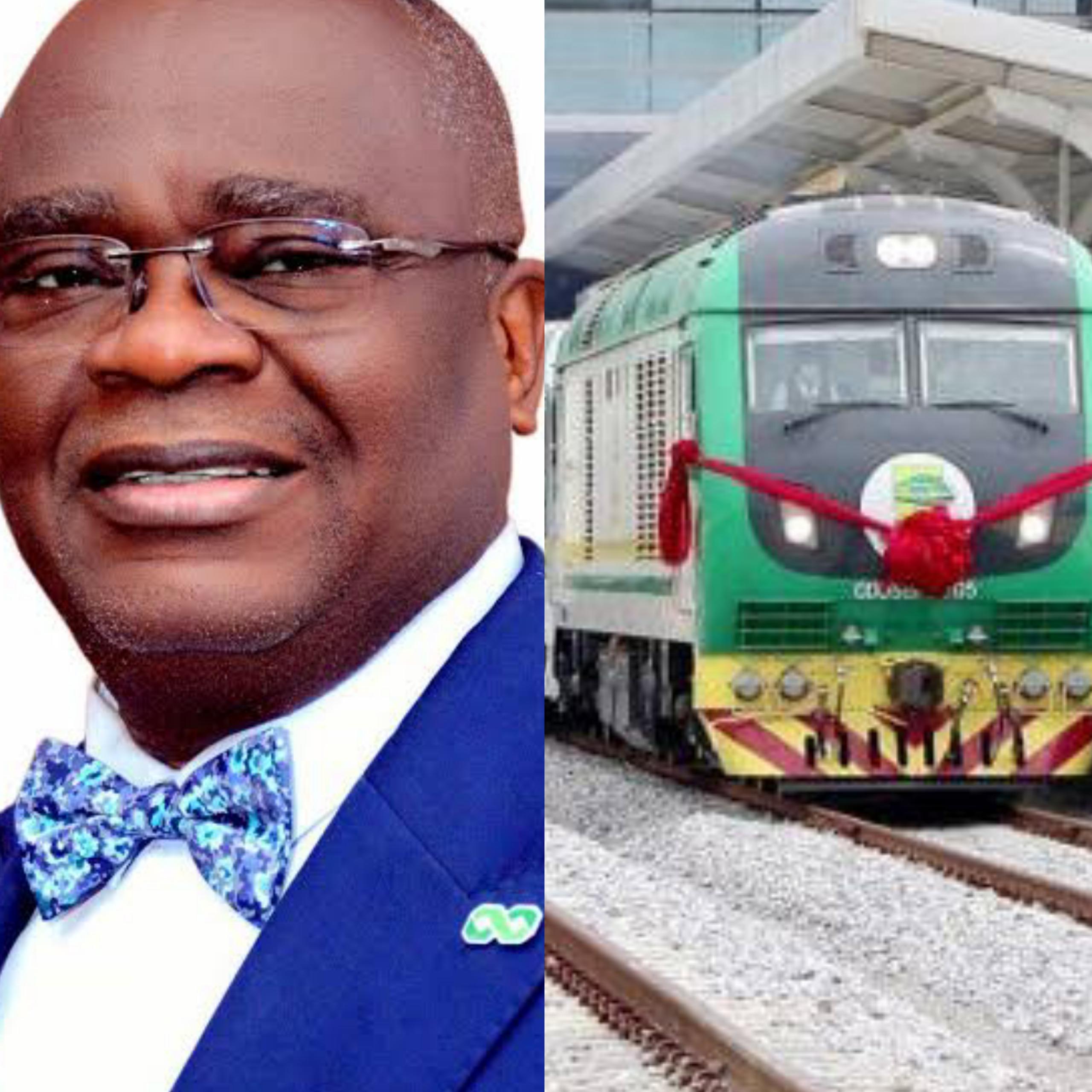
For the first time in its 128 years of existence, the Nigerian Railway Corporation(NRC) joins the global community to commemorate 2026 Customer Service Week from October 5 to 9, with a renewed commitment to putting passengers at the centre of its operations.
The week, being celebrated under the theme, “The Extra Mile,” marks a significant milestone for the 128-year-old Corporation, which is observing Customer Service Week for the first time in its history.
For the NRC, the celebration goes beyond appreciating its passengers. It is also an opportunity to recognise employees who have demonstrated exceptional commitment to service delivery while reinforcing a culture of customer-centricity across the Corporation.
The initiative is in line with the vision of the Managing Director of the NRC, Dr. Kayode Opeifa, who has consistently emphasised the need to place passengers at the heart of the Corporation’s operations and improve their overall travel experience.
Opeifa said the experiences of the Corporation in recent times had further underscored the importance of listening to customers and responding more effectively to their needs.
“Customers are at the heart of everything we do. Their feedback, trust and partnership challenge us to keep improving and delivering value every day.
“Customer Service Week is an opportunity to recognise that relationship and remind ourselves that great service must go beyond expectations,” he said.
According to the NRC, the theme, “The Extra Mile,” reflects the changing expectations of modern train passengers and the need for service providers to go beyond routine obligations.
Going the extra mile, the Corporation noted, could mean listening more attentively to passengers, resolving complaints more quickly, providing clearer and timely information, anticipating customer needs, simplifying processes or demonstrating empathy when it matters most.
The NRC said the commitment would apply across all its operational areas nationwide, with emphasis on providing passengers with a consistent, responsive and dependable experience regardless of where or how they interact with the Corporation.
The Corporation also pledged to strengthen its customer-feedback mechanisms and establish a closer link between passenger insights and continuous improvements in service delivery.
It said its objective was to ensure that exceptional customer service becomes an everyday practice rather than an activity reserved for Customer Service Week.
“Every interaction presents an opportunity to listen better, respond faster, show genuine care and create greater value for our customers,” the Corporation stated.
For the NRC, therefore, “The Extra Mile” is more than a theme for a week-long celebration. It represents a commitment to making every passenger interaction count and ensuring that customers enjoy a safer, more responsive and rewarding experience throughout their journey on Nigerian trains.
Commentaries
Our Oceans, Our Wealth: The real benefits of new fishing port
Monday Discourse with Nasiru Ibrahim
Nigeria has a very long coastline, but we have ignored our oceans for decades. Our major sea gateways, from Apapa to Port Harcourt, are mostly built to handle crude oil exports and heavy manufacturing containers.
Meanwhile, the local fishing industry—which has the capacity to feed the entire nation and create vast wealth—has been left to survive entirely on its own.
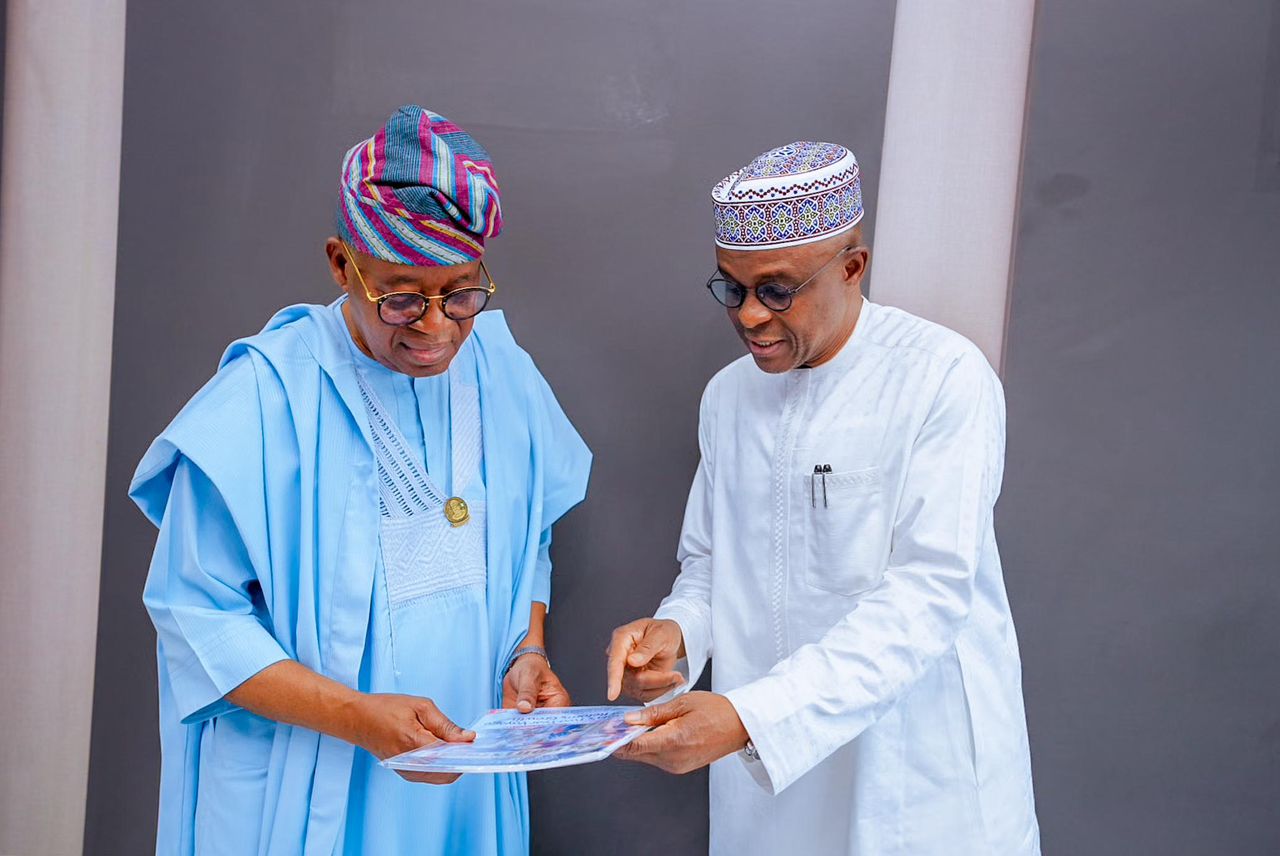
This is why the recent announcement by the Managing Director of the Nigerian Ports Authority (NPA), Dr. Abubakar Dantsoho, makes a lot of sense.
Speaking through a representative at the National Conference on Sustainable Fishing in Lagos, the NPA boss stated that Nigeria plans to build a specialized fishing port to finally harness the true value of our ocean resources.
As the country tries to grow its marine and blue economy, this move is completely long overdue.
For a very long time, Nigeria has suffered from an intense oil blindness, focusing all investments on petroleum while ignoring the massive economic potential floating right on our waters.
Right now, our deep seas are teeming with valuable fish, but because we lack proper docks, specialized marine structures, and secure landing sites for large fishing vessels, foreign ships enter our territory and steal our marine resources every single year.
A dedicated fishing port will change this entirely. It will give our local operators and commercial fishing trawlers a safe, modern, and legally protected base to harvest, dock, and process their catch.
Instead of letting foreign poachers dominate our waters, a specialized port ensures that Nigeria profits directly from its own geographical blessings.
We cannot talk about maritime infrastructure without looking at the kitchen table, especially since the average Nigerian family is facing a massive food crisis.
Severe inflation has turned basic proteins like fish and beef into luxury items that ordinary people can no longer afford.
A specialized fishing port will help fix this supply chain problem. The NPA’s plan involves creating dedicated fish terminals equipped with modern cold-room facilities, meaning local fishermen can preserve their catch immediately without it spoiling on the high seas.
When fish can be safely stored and transported into local markets without rotting, the overall supply goes up. When supply goes up, the price goes down, helping ordinary citizens put affordable protein back on their dining tables.
Furthermore, a modern fishing port is much more than just a place to park boats; it is a full-scale industrial business hub.
Building a specialized facility will spark immediate economic activity along our coastlines, naturally attracting seafood processing factories, boat repair yards, ice-making companies, and specialized transport networks.
This infrastructure will create thousands of genuine jobs for young people, refrigeration technicians, boat mechanics, and market women who dominate the local seafood trade. It bridges the gap between rural, traditional fishing and modern, industrial maritime commerce, bringing life back to struggling coastal communities.
The NPA has presented a great vision, and using a Public-Private Partnership model to fund it is a smart strategy.
But as Nigerians, we know our main problem is never a shortage of good plans—it is making those plans actually happen on the ground.
If this fishing port is going to transform our economy, the government must move quickly from conference papers to physical construction. We need to see real investments start on our coastlines.
Utilizing our ocean resources is one of the smartest ways to build a country that does not rely solely on oil. It is time to stop looking at our waters as just shipping lanes, and start treating them as the goldmines they really are.
Ibrahim Nasiru, a public affairs analyst, writes from Abuja.

 Customs2 months ago
Customs releases final recruitment list for ASC II, ends nearly one-year wait for applicants
- Headlines3 months ago
As NRC recovers ₦200m stolen railway assets, Opeifa vows diligent prosecution of suspects
- Customs3 months ago
Customs launches MIS file tracker at PTML in fresh digitalisation drive
- Customs2 months ago
Apapa Customs sets new record of monthly revenue haul with ₦323bn collection in July
- Customs2 months ago
Apapa Customs sets new single-day revenue record with ₦28.1bn collection
- Headlines1 month ago
Oyetola presents three-year score card as blue economy industry revenue hits ₦1.83trn