Connect with us

Headlines

EU offers support for ECOWAS’ fight against maritime insecurity in West Africa


—donates euro 5.4million worth of equipment to coastal states

Eyewitness reporte

The European Union has offered financial and moral support to the ECOWAS Commission in its figt against maritime insecurity in the sub region.
At the two-day  high-level maritime security seminar held from 4th to 5th April, 2022 at the ECOWAS headquarters, Abuja, Nigeria, the EU announced a donation of 30 Rigid Hull Inflatable Boats (RHIBs) and other security equipment worth  euro 5.4 million to combat maritime crimes in the coast of ECOWAS Countries.
The seminar was organised in the framework of the European Union-funded Support to West Africa Integrated Maritime Security (SWAIMS) project.
The boats and equipment were provided under the EU-funded ECOWAS project tagged the Support to West Africa Integrated Maritime Security (SWAIMS) project, a multi-component, regional initiative implemented in all 15 ECOWAS countries.
Col. Abdourahmane Dieng, the Head of ECOWAS’ Regional Security Division said that Maritime insecurity had long been one of the most persistent and intractable threats to maritime communities and economic prosperity in West Africa.
Dieng, however, said that West African countries require a whole of coordinated response to tackle the scourge of attacks, piracy and armed robberies against the vessels.“For that, we have developed an ECOWAS integrated maritime strategy around five pillars to ensure security in the fifteen member states within ECOWAS maritime domain.
“And also reinforce our capacity in terms of managing our maritime environment and also developing our capacity in terms of blue economy, and also develop our culture in terms of maritime.
“We are receiving support from our partners, the main partner coming in is the European Union and today we are also here together with SWAIMS to try to capacitate the member states.“
By providing them with Rigid Inflatable boats that allow the Member states to fight against illegal fishing through some paroling in the maritime domain.
“Today, all the Member States are represented by their relevant agencies and also representatives to discuss draft an agreement for the sharing of the Rigid Inflatable boats.
“And also try to develop the modalities of the way to capacitate the member states to be able to use them today,” Dieng said.
Dr Axel Klien, SWAIMS Representative said that the Seminar was part of a wider programme to support Maritime security in the ECOWAS region.
Klien said that the Rigid Hull Inflatable Boats would be provided to the Navy and coast guards of all 12 coastal ECOWAS member states and the provision of equipment to the maritime operation centres.
This he explained would help to curb maritime crimes and piracy which had ravaged the coastal lines of ECOWAS Countries.
“There are different types of Maritime crimes, there are piracy and armed robbery, there are also illegal fishing, and there are the trade-in illicit goods.
“So, against all these crimes, the coast guards, the police, the law enforcement agencies, the prosecuting services, they need to be provided with the equipment.
“What we are talking about today here is providing to ECOWAS, with funding from the European Union are thirty digital inflatable boats that can go out into the sea and catch the perpetrators.
“And, also the forensic equipment and communications and other equipment that will help the maritime centres coordinate these operations.“
“If you look at the numbers of piracy incidents in these regions, you will find that all the different efforts by navies and coast guards and international partners have been successful in reducing the numbers.
“So, we need to build on that success by strengthening the security system that is in place at the moment.
“International cooperation is critical and here is why ECOWAS is playing a valuable role for its multinational coordination centres, the exchange of information and the coordination of expenses,” Klien said.
Amb. Joao Almeida, President Camoes Institute, who lauded the programme said, the institution was excited to have been charged by the European Union to implement the project.
Almedia expressed optimism that the boats and equipment when handed over would achieve their purpose of combatting all forms of maritime crimes in the region.
“We have been charged by the European Union to be the implementors of the project that we are going to have here.“We are going to discuss how to go ahead with the MOU among the 12 states of ECOWAS,” Almedia said.
The seminar reviewed and refined modalities for the distribution of essential maritime security equipment across ECOWAS’ littoral countries.
The meeting agreed that turning the tide against maritime insecurity is a collaborative effort that no single country or region can tackle alone.
For this reason, ECOWAS, in conjunction with the Economic Community of Central African States (ECCAS), formulated the Yaoundé Code of Conduct as a foundation for broad-based regional maritime security along the entire Gulf of Guinea.

 But the security partnership goes beyond Africa, embracing the European Union (EU) and other key international players geographically outside the Gulf of Guinea because the Gulf is of global importance as a crucial international maritime route.

“The EU is a committed partner to the Gulf of Guinea region and will continue to provide extensive and targeted assistance to strengthen the critical features of the Yaoundé security architecture, further cementing the long-standing relationship between ECOWAS and the EU,” affirmed Ambassador Nicolas Berlanga Martinez, the EU Senior Coordinator for the Gulf of Guinea, who will attend the event in person.

Among these efforts is the EU-funded ECOWAS project tagged SWAIMS, a collaborative, complex, multi-component, regional initiative implemented by various partners, and covering all 15 ECOWAS countries.SWAIMS is helping organise the high-level maritime security seminar bringing together representatives from the 12 coastal ECOWAS countries: Benin, Cabo Verde, Côte d’Ivoire, The Gambia, Ghana, Guinea-Bissau, Guinea-Conakry, Liberia, Nigeria, Sierra Leone, Senegal and Togo.

In attendance at the strategic seminar are high-level officials from the Ministries of Defence (mostly the Navy), Transport (mostly Maritime Agencies) and Foreign Affairs.
 The boats and forensic equipment will be supplied to coastal ECOWAS countries by Portugal’s Camões, IP.
 Camões, working closely with the Portuguese Navy, will also provide related training and maintenance.
“In financial terms, the delivery of RHIBs and forensic equipment worth more than 5 million euros is the most significant component of the SWAIMS project,” observed Dr Axel Klein, SWAIMS Team Leader.

 The boats and equipment will significantly enhance the capacity of beneficiary countries to enforce the rule of law in their territorial waters and adjoining exclusive economic zones.

SWAIMS adopts a pragmatic and holistic approach to enhancing maritime security.

Equipment supply is not only a crucial extension but also a logical follow-up to the other SWAIMS components that – through the training of personnel, the drafting of standard operating procedures, and the strengthening of the legal framework – have engendered the necessary preconditions for efficient and effective use of the equipment.

Besides Camões, other SWAIMS implementing partners assuring these various preconditions are Institut de sécurité maritime interregional in Côte d’Ivoire, Regional Maritime University in Ghana, ECOWAS’ Inter-Governmental Action Group against Money Laundering in West Africa (GIABA) and the United Nations Office on Drugs and Crime.

Continue Reading
Click to comment

Leave a Reply

Your email address will not be published. Required fields are marked *

Headlines

NIWA partners ICPC to strengthen internal transparency in its operations  
Gloria Odion, Maritime Reporter 
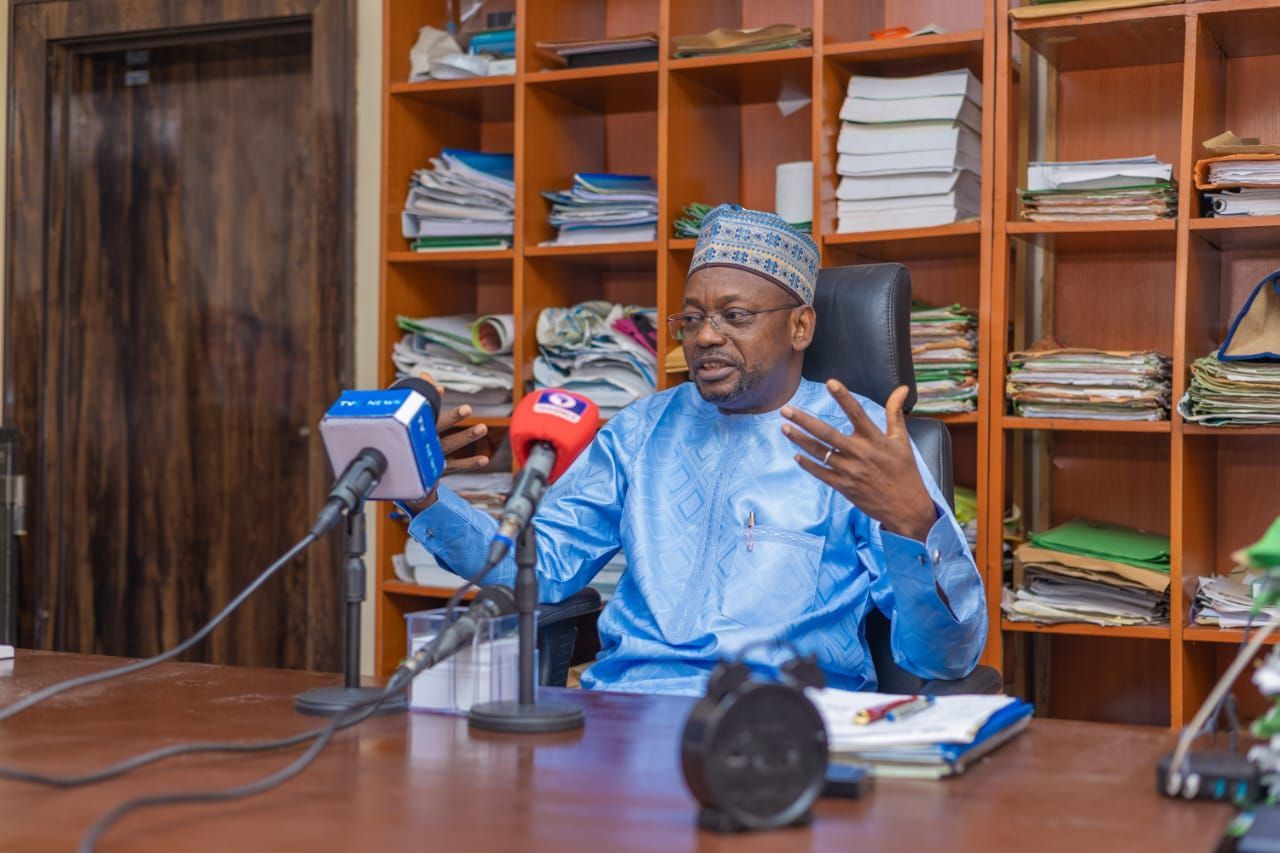
The National Inland Waterways Authority (NIWA) has announced new strategies aimed at improving its operational system and enhancing collaboration with key stakeholders as part of efforts to boost efficiency and accountability.
Speaking at a post event Press Conference at NIWA Headquarters Lokoja, the Acting Managing Director, Umar Yusuf Girei, while answering questions from journalists stated that, the organization convened a two -day Executive and Anti-Corruption training with the theme “Strengthening Integrity and Revenue System in Inland Waterways Management” organized for Board Members, Management and Area Managers and also 2026 NIWA Management Retreat in Abuja.
The Acting MD noted as part of the Renewed Hope Agenda of President Bola Ahmed Tinubu,with the support  Adegboyega Oyetola, Minister of Marine and Blue Economy, the Authority is focused on aligning institutional goals in ensuring better service delivery to Nigerians.
He further said, as part of its anti-corruption drive, the Management held discussions with the Independent Corrupt Practices and Other Related Offences Commission (ICPC) to explore measures for strengthening transparency within its operations.
Girei therefore, assured staff that the ongoing reforms under his watch would translate into improved service and better working conditions.
“NIWA remains committed to continuous improvement and stakeholder engagement and the reforms are expected to enhance both internal performance and public confidence”. he stated.
Continue Reading

Headlines

Navy appoints new Maritime Guard Commander for NIMASA 
Gloria Odion,  Maritime Reporter 

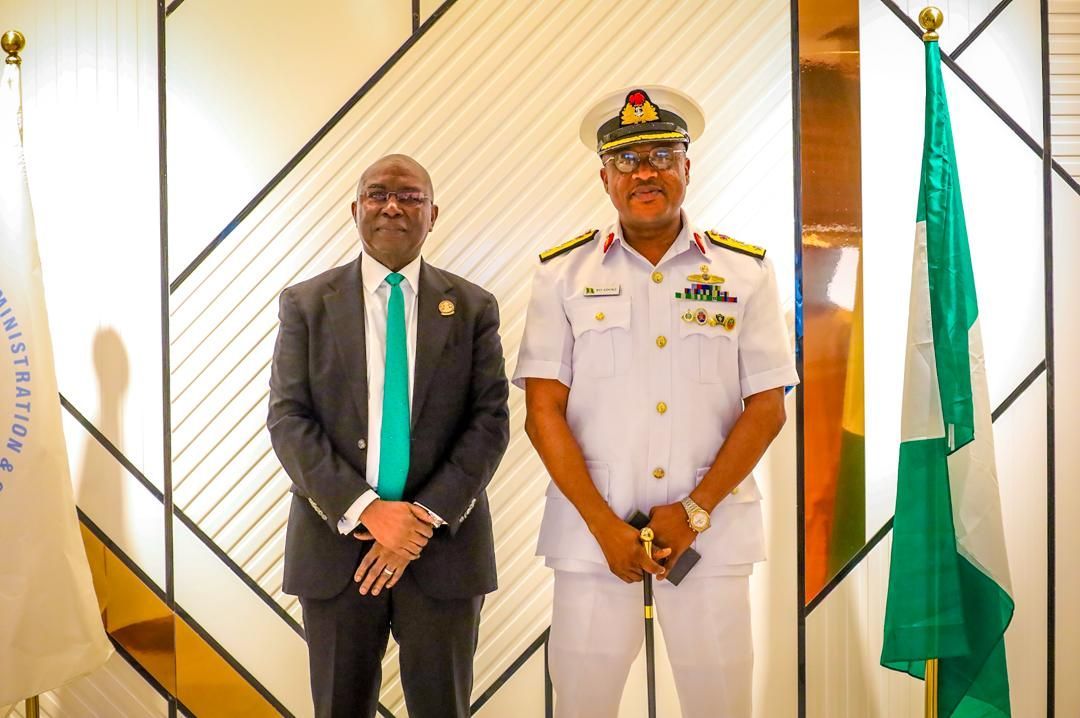
The Chief of the Naval Staff, Vice Admiral Idi Abbas, has approved the appointment of Commodore Reginald Odeodi Adoki as the Commander of the Maritime Guard Command at the Nigerian Maritime Administration and Safety Agency (NIMASA).
Commodore Adoki takes over from Commodore H.C Oriekeze who has been redeployed.

Commodore Adoki, a principal Warfare Officer specializing in communication and intelligence,  brings onboard 25 years experience in the Nigerian Navy covering training, staff and operations.

 As a seaman, he has commanded NNS Andoni, NNS Kyanwa and NNS Kada.
It was under his command that NNS Kada under took her maiden voyage, sailing from the country of build (the United Arab Emirates) into Nigeria.
He was commissioned into the Nigerian Navy in 2000 with a BSc in Mathematics.
 He has since earned a Masters in International Law and Diplomacy from the University of Lagos and an M.Sc in Terrorism, Security and Policing at University of Leicester, England.
He is currently pursuing a Ph.D in Defence and Security Studies at the National Defence Academy (NDA).
He is a highly decorated officer with several medals for distinguished service.

Welcoming the new MGC Commander to the Agency, the Director General, Dr Dayo Mobereola, expressed confidence in Adoki’s addition to the team, emphasising that it will further strengthen the nation’s maritime security architecture given his vast experience in the industry.

The Maritime Guard Command domiciled in NIMASA was established as part of the resolutions of the Memorandum of Understanding (MoU) with the Nigerian Navy to assist NIMASA strengthen operational efficiency in Nigeria’s territorial waters, especially through enforcement of security, safety and other maritime regulations.

Continue Reading

Customs

Customs collects N1.585 trillion from 51 compliant traders under AEO programme 
Funso OLOJO,  Editor 
The Authorized Economic Operator (AEO), one of the trade facilitation tools introduced by the Nigeria Customs Service in 2025, has begun to yield bountiful harvests with the revenue growth of ₦362.79 billion recorded in 2025.
According to the AEO scorecard released by the Service, the facilitation tool grossed the sum of N1.585 trillion after certification, an increase revenue from N1.222 trillion before certification.
This represents the growth of N362.79 billion(29.68 per cent) for 51 AEO – certified entities as at October, 2025.
The Programme, according to the NCS,  also contributed 21.77% to its total revenue collection of ₦7.281 trillion in 2025, while customs duties paid rose by 85.66% due to enhanced compliance and increased volumes of legitimate trade.
According to AEO Monitoring and Evaluation (M&E) Report, the Programme achieved an average compliance rate of 85.45 per cent with the highest at 100 per cent and the lowest at 60 per cent.
“The evaluation applied rigorous methodologies to ensure objectivity, transparency, and alignment with the World Customs Organisation (WCO) SAFE Framework of Standards and the provisions of the Nigeria Customs Service Act, 2023.
“In the area of trade facilitation, AEO participation reduced average cargo clearance time from 168 hours to 41 hours, representing a 75.60% time saving.
“Company operating costs declined by 57.2 per cent while demurrage payments dropped by 90 per cent, limiting capital flight to foreign-owned port service providers and strengthening foreign exchange retention.
” Overall trade efficiency improved by 77.11 per  through digitalisation, simplified procedures, and targeted risk management” the Customs declared in the AEO scorecard.
However, the Service singled out with Eight companies for commendation due to their integrity and compliance under the programme.
The companies include Coleman Technical Industries Limited, WACOT Rice Limited, ROMSON Oil Field Services Ltd, WACOT Limited, Chi Farms Ltd, CORMART Nigeria Ltd, PZ Cussons Nigeria Plc, Nigerian Bottling Company Limited and MTN Nigeria Communications Plc.
The Service lauded them for a cumulative voluntary remittance of over a billion naira into the Federation Account following their self-initiated transaction review and disclosure.
“These actions reflect the strengthening of post-clearance audit mechanisms and a growing culture of voluntary compliance within the trading community.
Nevertheless, the Service suspended a firm under the programme for its non- compliance and display of lack of integrity.
The suspended firm engaged in false declaration of consignments contrary to programme obligations.
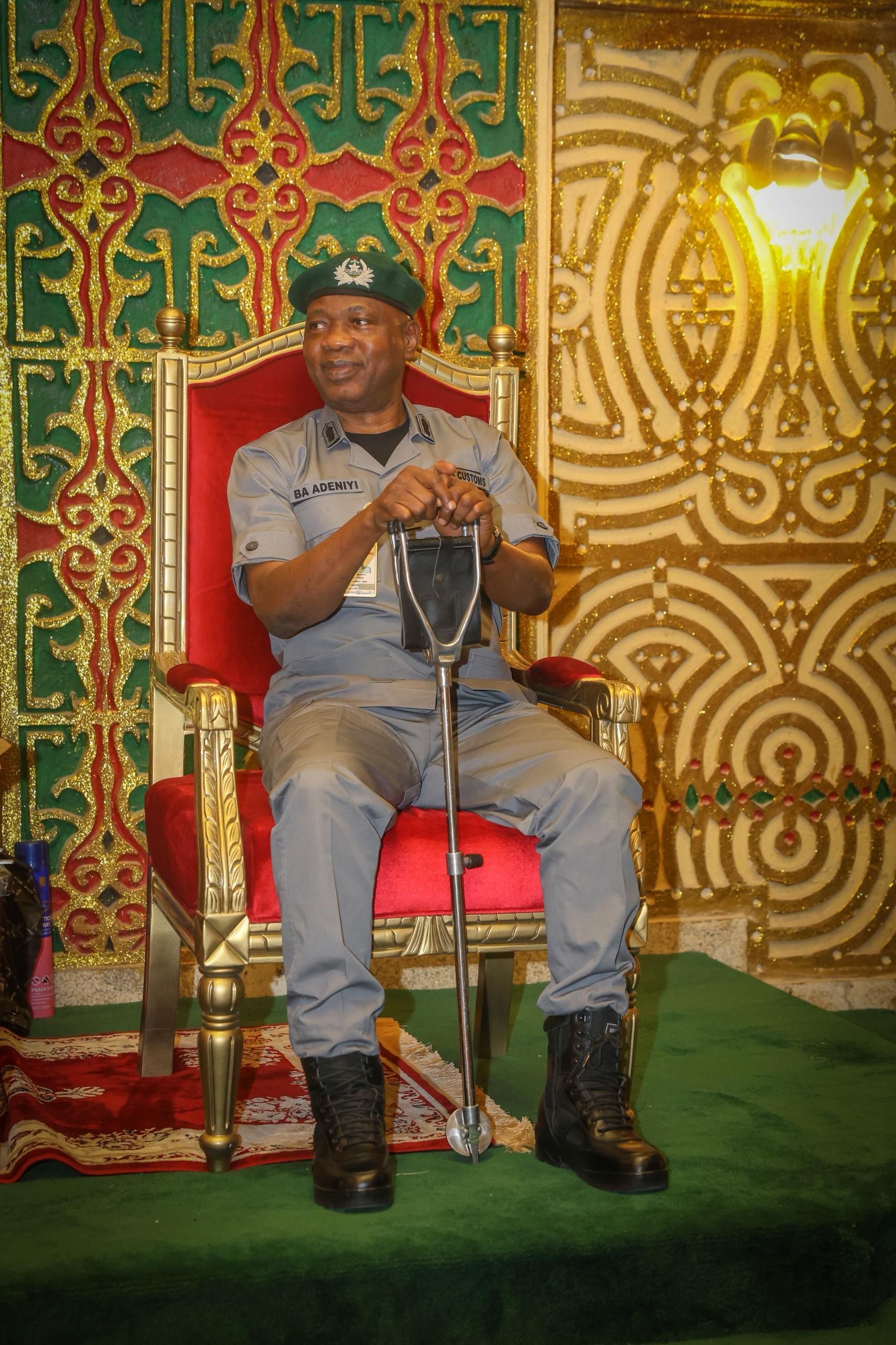
“Consequently, the Comptroller-General of Customs, Bashir Adewale Adeniyi, directed the immediate suspension of the company’s AEO status in accordance with the AEO Guidelines, the WCO SAFE Framework of Standards, and Section 112 of the Nigeria Customs Service Act, 2023.
The NCS reiterated that the AEO Programme is founded on trust, transparency, and continuous compliance.
“While compliant operators will continue to benefit from expedited clearance and reduced inspection, appropriate sanctions will be applied where violations are established.
“The Service remains resolute in safeguarding national revenue, facilitating legitimate trade, and preserving the integrity and global credibility of Nigeria’s AEO framework” the NCS concluded in the report.
Continue Reading

Trending