Connect with us

Customs

Nigeria records N177.2 billion drop in vehicle importation to VIN valuation implementation in 6 months

—- as importation of used cars dropped 
Customs brokers kick
The Eyewitness reporter

The Federal Government may have lost a whopping sum of N 1772.2 billion in revenue in the first half of the year to the implementation of the Vehicles Identification Number (VIN) valuation policy of the Nigeria Customs Service.

It could be recalled that the policy, which seeks to harmonise the tariff system on all imported second-hand vehicles into the country, was first introduced in January 2022.
The VIN valuation system was introduced for the purpose of allocating standard values to all vehicles coming into Nigeria. According to the NCS, the system automatically determines the value of import duty payable on a vehicle immediately the vehicle goes through a dedicated scanning machine.
But due to the outcry and agitation of freight forwarders over some perceived imperfections, the policy was suspended, reviewed and relaunched in May 2022.
However, the implementation of the policy has led to astronomical increases in the tariff of tokunbo vehicles as high as 200 percent.
 This has led to a sharp decrease in the importation of the item arising from the implementation of the policy by the Customs.
According to the data released by the National Bureau of Statistics (NBS), the number of used cars imported into Nigeria dropped in the first half of 2022 by N177.2 billion
The statistics show that N72.3bn and N96.7bn worth of used vehicles were imported in the first and second quarters of 2022.

In comparison, during the same period of 2021, N174.2 billion worth of used cars were imported in Q1 and N172 billion in Q2.

Analysts claimed that the drop might not be unconnected with the introduction of the VIN policy by Customs for proper valuation of imported used vehicles.

Importers had challenged the Nigerian Customs Service over the implementation of the VIN Valuation policy.

They noted that the scheme had increased the cost of clearing vehicles at the various ports of the country.

The costs of used vehicles, popularly known as Tokunbo, imported into Nigeria dropped in the first half of 2022 (January to June) by N177.2 billion, according to data released by the National Bureau of Statistics (NBS).

Data from NBS titled ‘Foreign Trade in Goods Statistics’, showed that N72.3 billion and N96.7 billion worth of used vehicles were imported in the first and second quarter of 2022 respectively, which amounted to N169bn.

In comparison, Nigerians spent N346.2 billion to import used vehicles during the same period of 2021, including N174.2 billion worth of used cars in Q1 and N172 billion in Q2.

Also, in the second half of 2021, N185.4 billion and N85.7 billion were spent on used vehicles in Q3 and Q4 respectively, which amounted to N271.1 billion.

The drop in the cost of used cars imported into the country might be connected with the introduction of the Vehicle Identification Number (VIN) early this year for proper valuation of imported used vehicles.

Customs brokers have claimed that the policy has led to a drop in the importation of second-hand vehicles with the attendant drop in revenue to the federal government.
They urged the government to abide by the auto policy and ensure that used vehicles from 2010 were allowed to pay normal duties, rather than the 2013 duties which were imposed on all imported vehicles.

The National Automotive Industry Development Plan Bill, popularly known as Auto Policy, is central to the development of the automotive industry.

 The NAIDP represents the Federal Government’s boldest step at reviving local car assembly in over three decades, according to experts.
The policy, which was introduced in 2014, seeks to encourage local manufacture of vehicles while phasing out the importation of used vehicles. The policy classifies private vehicles above 15 years as overage vehicles.
The Acting National President of the Association of Nigerian Licensed Customs Agents, Mr. Kayode Farinto, said that VIN was supposed to recognize vehicles from 2010 instead of those from 2013 upwards.
He said that the policy had made a lot of people consider bringing in vehicles through unapproved routes.

“What happens is that they started their valuation from 2013. I remember sending a letter to the CG of Customs about this particular issue.

” I told him it was wrong that the policy was for 12 years. They are supposed to start from 2010 or 2011 and up till now, they have not reversed it, which is very bad.
“The issue of the year is a very big one and that is what is discouraging the importation of used vehicles, with people bringing in these vehicles through unapproved routes like Cotonou.
” If the Comptroller General of the Customs works with the Federal Government on that and brings down the VIN valuation to 2011 or thereabout, it will be fine. The loss is big because since they started the VIN valuation, they have not reversed it.”
The National President of the National Council of Managing Directors of Licensed Customs Agents, Mr Lucky Amiwero described the VIN valuation policy as illegal.
“VIN is not legal; it is not a procedural thing anywhere in the world”. he declared.
” Vehicle Identification Number is chassis number and it is not tied to valuation. What Customs have done is in contravention of the law.
” There is a law, Act 20 0f 2003, passed through the Nigerian Shippers Council. That is the law that is based on value. The Customs do not have any other right to put value.”, Amiwero noted.

He said that the VIN had created more problems, noting that the government needed to intervene, if not there would be more problems.

“What they have done is that they are creating a lot of problems. They call it VIN valuation, but it is wrong. It is the vehicle identification number, which is the chassis number.

” It has nothing to do with valuation. The government will lose more if the government does not intervene. I have written to the government on this issue to tell them that what they are doing is wrong.
“What they are doing is illegal. Customs don’t have the right to implement VIN without passing through the National Assembly. It is not legal, it has no legal bearing, and the sooner the government goes back to what they were doing the better.
“Customs introduced that thing and it has created a lot of revenue setbacks for the government. The government should look at it seriously and reduce it and cancel the VIN. It is illegal and should be canceled.”, Amiwero declared.

Meanwhile, a member of the National Association of Government Approved Freight Forwarders, Nnadi Ugochukwu, accused the government of punishing people unnecessarily with the policy.

He said that the government was forcing people to pay for vehicles of nine years old and above instead of the 15 years the law stipulated.

According to him, “The government policy is 15 years, so, it is supposed to start from 2008 for private vehicles.

“So, the government is punishing people unnecessarily, breaking the laws that they made. Is it not the government that said the policy is 15 years now? When you come, they won’t allow you to pay for the 15 years but will make you pay as if the vehicle is nine years old.”

But the Federal Government, through the Minister of Finance, Budget and National Planning, Zainab Ahmed, stated that the VIN which is under the National Vehicle Registry (VREG) was to increase revenue and curb smuggling and other criminal activities.

Continue Reading
Click to comment

Leave a Reply

Your email address will not be published. Required fields are marked *

Customs

Apapa Customs records major breakthrough in anti- smuggling operations.
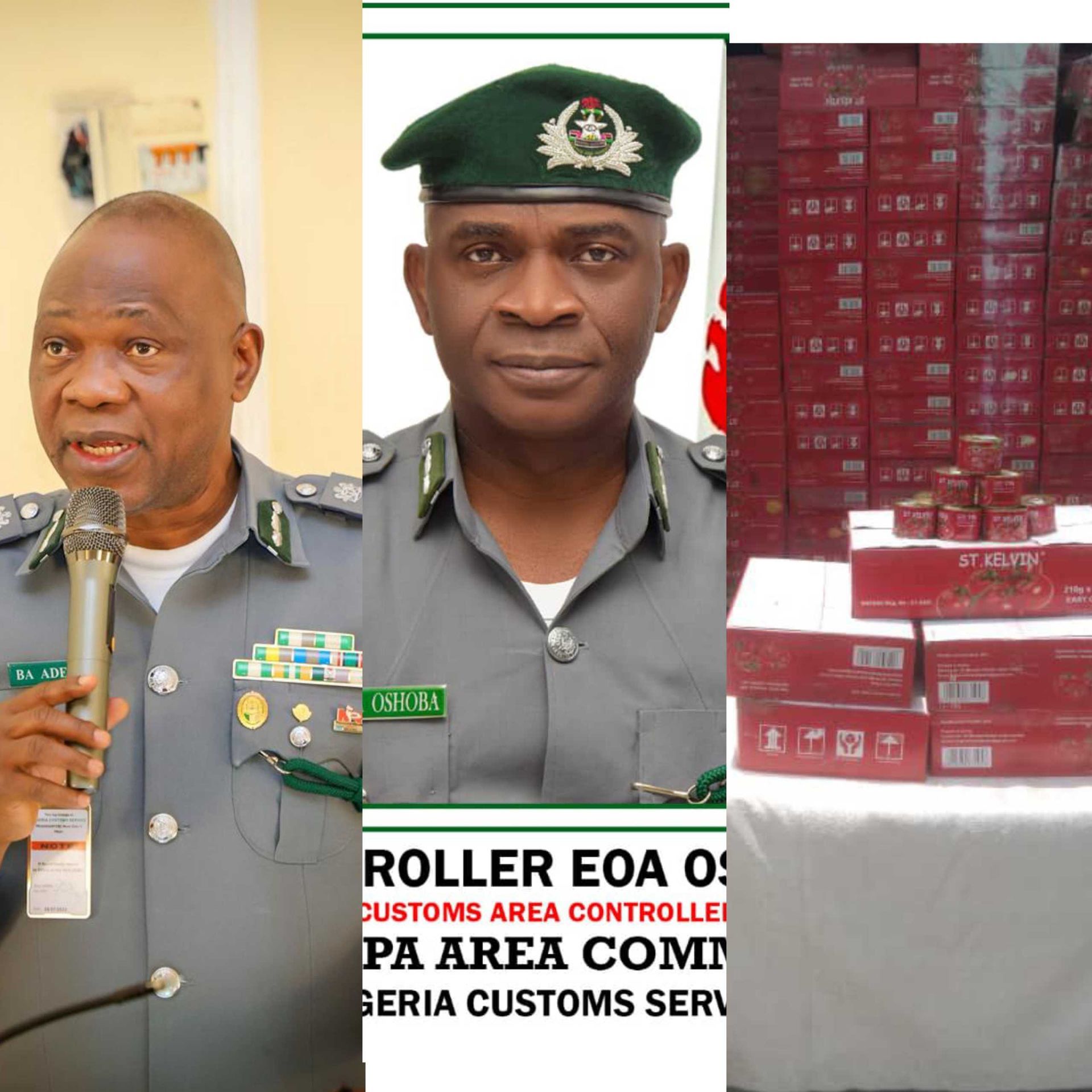
– intercepts 13 containers of harmful pharmaceuticals, other contraband goods worth N6.38billion
Funso OLOJO, Editor 
The Apapa Command of the Nigeria Customs Service has recorded a huge success in its relentless war against traders of illicit products when its officers intercepted 13 containers of harmful pharmaceuticals and other contraband goods.
Unveiling the contraband goods at the APM Terminals,Apapa port on Tuesday, March 10th, 2026, the Comptroller- General of Customs, Adewale Adeniyi, disclosed that the intercepted consignments are worth over N6.38 billion.
Adeniyi, while speaking with Journalists, revealed that the interception and seizures were made possible through intelligence-driven operations supported by cargo scanning technology and targeted physical examination.
He explained that officers detected irregular cargo profiles during routine scanning procedures, prompting detailed physical inspections that uncovered several prohibited and falsely declared consignments.
According to him, among the seizures was a 40-foot container loaded with expired pharmaceutical products, including Mixagrip Cold Caplets, Ladinax tablets, Chloroquine injections and Diclofenac tablets.
Customs officers also intercepted two 40-foot containers filled with unregistered pharmaceutical products, including Hyegra 200 and Sildenafil Citrate.
In another discovery, a 20-foot container carrying 800 cartons of codeine was found carefully concealed inside toilet flushing cisterns and sanitary ware.
Other pharmaceutical seizures included cartons of Artesunate injections, while a separate container was discovered to contain restricted security equipment such as bulletproof vests, helmets, walkie-talkies and tactical torches imported without the required End User Certificates.
The Service also uncovered multiple containers loaded with expired food items, including muffin cookies, 36,000 cans of expired energy drinks, and large quantities of expired tomato paste brands.
In addition, officers seized a 40-foot container containing 1,700 cartons of codeine cough syrup concealed among luxury food flasks.
Another container was found carrying 1,575 cartons of CSMIX with codeine hidden with electric kettles, alongside additional cartons of Co-codamol tablets.
Customs further intercepted 13 jumbo bags of Cannabis Sativa weighing 347.57 kilograms, which were concealed inside a Toyota Sienna vehicle.
Adeniyi described the seizures as a major breakthrough in the Service’s ongoing crackdown on illicit trade and smuggling through Nigeria’s seaports.
He warned that the importation of expired drugs and controlled substances poses serious risks to public health, while the smuggling of codeine-based products contributes to the growing problem of substance abuse.
The Comptroller-General emphasized that under the Nigeria Customs Service Act 2023, the seized goods are liable to outright forfeiture, adding that investigations are ongoing and all persons connected to the shipments will face prosecution.
He also stressed that the Service is expanding the use of Non-Intrusive Inspection (cargo scanning) to improve cargo clearance efficiency while strengthening enforcement against high-risk consignments.
According to him, Apapa Port processes thousands of containers daily, making it one of the most strategic trade gateways in West Africa.
“Apapa Port is no longer a playground for smugglers or criminal syndicates hiding behind legitimate trade documentation,” Adeniyi stated.
He assured compliant traders that Customs enforcement is not aimed at legitimate business but at protecting Nigeria’s economy and citizens from dangerous and illegal imports.
Continue Reading

Customs

Dera Nnadi bows out of Customs in a blaze of glory 
Geraldine Samuel, Reporter 
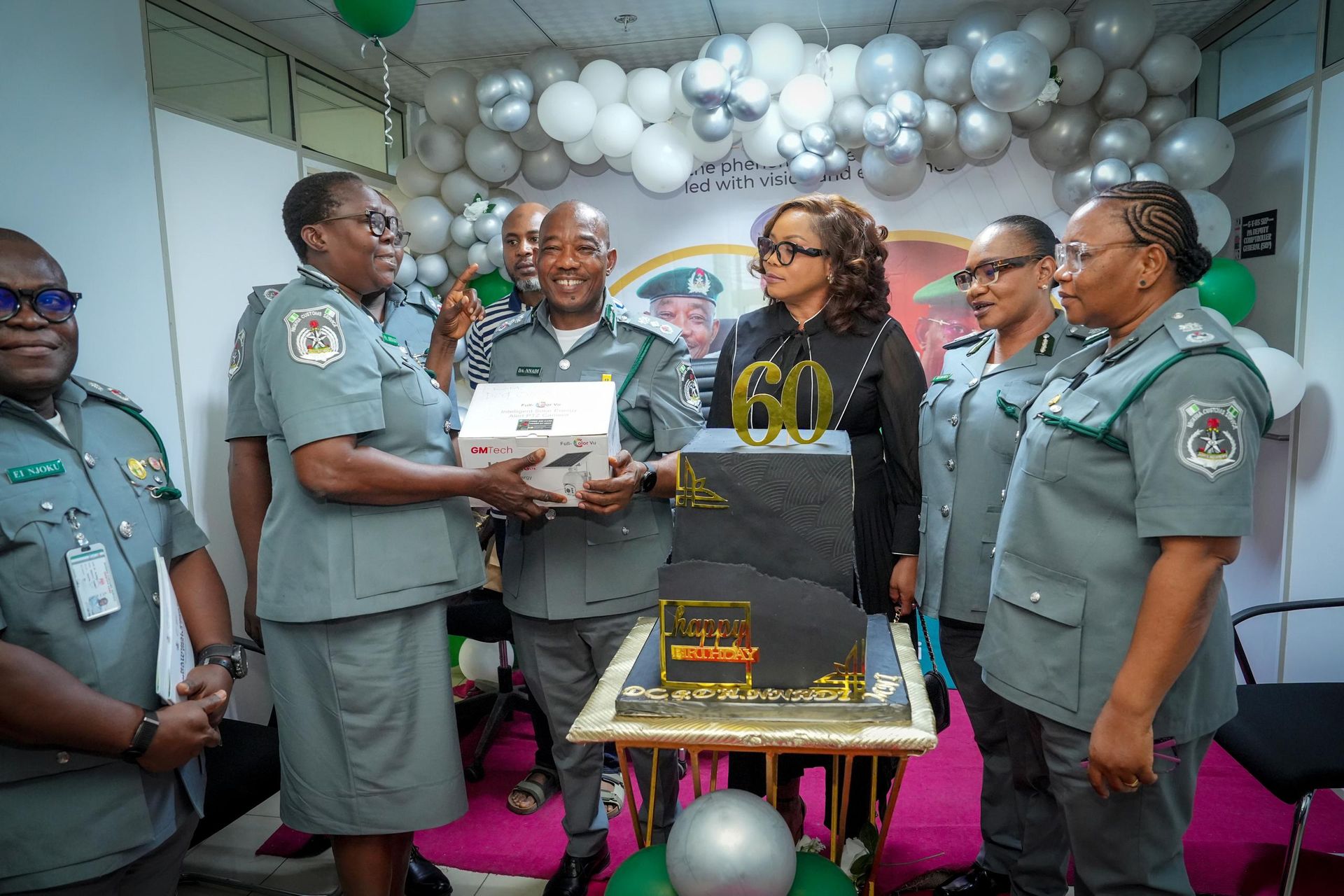
Dera Nnadi, a Deputy Comptroller- General of Customs(rtd), has dropped anchor of service in the Nigeria Customs and graceful bowed out of the agency in a blaze of glory.
In a commemorative retirement ceremony conducted by his appreciative colleagues at the Customs’ Headquarters, Abuja on March 3rd, 2026, Nnadi was pulled out of the Service he has diligently served amidst glowing tributes.
Incidentally, his pull- out ceremony coincided with his 60th birthday.
Leading the management staff, men and officers of the service in paying moving tributes to the retiring Nnadi was the Comptroller- General of Customs, Adewale Adeniyi, who described DCG(rtd) Nnadi as an exemplary officer whose professionalism, discipline, and commitment to duty significantly strengthened the values and operational effectiveness of the NCS.
According to the CGC, the retirement ceremony provided an opportunity not only to celebrate a successful career but also to appreciate the sacrifices and dedication of officers who devote their lives to safeguarding the nation’s economic and border security interests.
 He noted that Nnadi’s career reflects the core ideals of the Nigeria Customs Service, particularly in leadership, revenue generation and trade facilitation.
“Today is a moment of celebration and reflection. It is also an opportunity for us to thank Almighty God for the grace that has sustained our colleague throughout his years of service,” the CGC said.
The CGC also highlighted the personal and professional bond he shares with the retiree, noting that their relationship extends beyond official duties to family ties.
 He expressed confidence that DCG Nnadi still possesses the energy and experience to continue contributing meaningfully to national development through academic and other professional engagements.
Members of the Service’s management team also paid glowing tributes to the retired DCG, commending his leadership qualities, integrity and mentorship.
 Officers who served under him described him as a dependable leader who provided guidance and encouragement to younger personnel while strengthening the Service’s institutional capacity.
Responding to the honour, DCG Dera Nnadi (Rtd) expressed appreciation to the Comptroller-General of Customs, the management team, officers and Men of the Service for their support and cooperation throughout his career.
He described his years in the NCS as a fulfilling journey of growth, learning and service to the nation.
The ceremony featured the presentation of awards, gift items and commemorative photographs in honour of the distinguished officer.
Continue Reading

Customs

Customs takes charge of implementation of National Single Window project 
– rallies stakeholders for successful take-off 
Funso OLOJO, Editor 
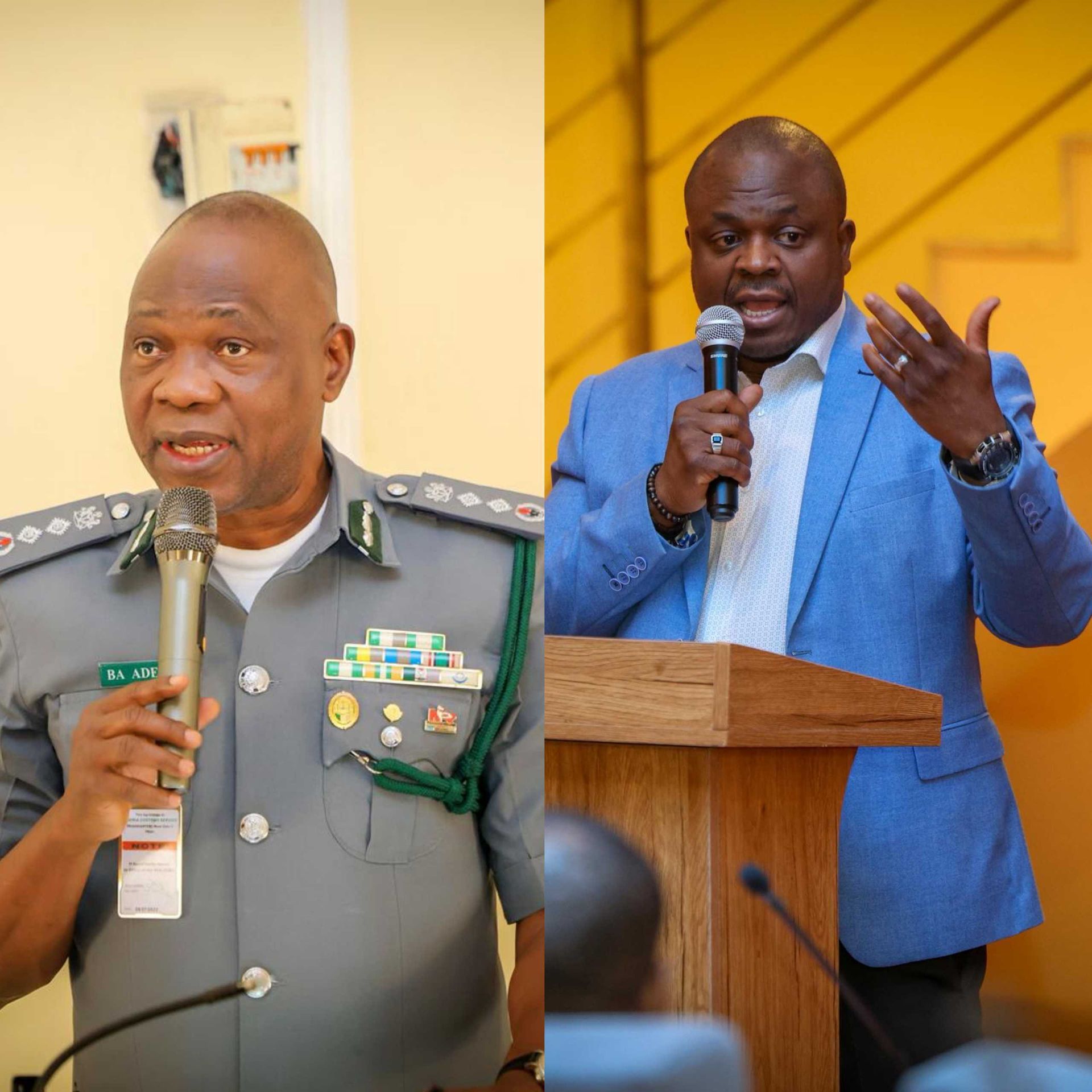
As the preparations for the official launch of National Single Window(NSW) project on March 27th, 2026 gather momentum, the Nigeria Customs service may have been designated as the lead agency to drive the modernisation project.
This much was confirmed by the Director of the Project, Tola Fakolade who  acknowledged the pivotal leadership of the NCS in the implementation process.
At one of the stakeholders sensitisation programmes in Abuja on March 3rd, 2026, Fakolade declared “Our number one stakeholder is the NCS,”
“We have maintained a strong and constructive working relationship.
Customs’ participation and institutional experience are critical to the success of this project.” the project coordinator confirmed.
Confirming the lead role of the NCS, the Deputy Comptroller-General of Customs in charge of ICT and Modernisation, DCG Oluyomi Adebakin, described the NSW as a major milestone in the Service’s ongoing modernisation drive.
She revealed that the NCS has been actively engaged in preparatory work for months to ensure that the framework being developed reflects operational realities and supports seamless implementation.
“This is a national project, but Customs is at the centre of its execution,” DCG Adebakin said.
 “The success of the Single Window depends on collective understanding and cooperation. We must all appreciate its value because we cannot effectively promote what we do not fully understand.”
She reassured officers and stakeholders that the initiative is designed to strengthen institutional capacity rather than replace human resources, explaining that technology will enhance efficiency, transparency, and speed in cargo clearance and trade documentation processes.
Reaffirming the critical role of the service in the implementation of the NSW project, the Comptroller- General of Customs, Adewale Adeniyi, at the Abuja stakeholders engagement with airlines and shipping companies held on March 4th, 2026, emphasised the importance of collaboration in ensuring the successful rollout of the initiative.
He noted that the support of critical stakeholders has played a significant role in the achievements recorded in the Service’s modernisation journey so far.
Adeniyi disclosed that President Bola Ahmed Tinubu has mandated the Service to take a bold step forward towards a successful launch of the National Single Window, a move aimed at positioning Nigeria as a major player in global trade.
 He added that airline and shipping line operators remain vital partners in ensuring a seamless transition to the new system.
He further assured stakeholders that adequate support structures are being put in place to ease the migration process.
“A help desk with well-trained personnel will be available to address any operational challenges that may arise during the rollout”, the Comptroller-General stated.
The NCS described  the National Single Window as a strategic reform that aligns with Customs’ mandate of trade facilitation, revenue generation, and inter-agency coordination.
With the NCS spearheading coordination and stakeholder engagement, the NSW project is expected to transform Nigeria’s trade environment, enhance revenue generation, and strengthen the country’s position in the global trading community.
Continue Reading

Trending