
Headlines
Maritime stakeholders call for State of Emergency on collapsing infrastructure at Nigerian Ports

The Eyewitness Reporter
Worried by the deteriorating state of infrastructure at most of the Nigerian Ports, especially the Tin Can Island Port, concerned stakeholders in the industry have urged the Federal government to declare a state of emergency on the infrastructural decadence at the Port.
This suggestion formed part of the communique at the just concluded strategic breakfast meeting convened by the Maritime Reporters Association of Nigeria (MARAN).
The meeting, which attracted government agencies such as the Nigerian Ports Authority (NPA), Nigerian Shippers’ Council, Barge Operators Association of Nigeria ( BOAN), maritime labour union, Ship Owners and other players in the industry, was meant to discuss the infrastructural decay in the nation’s Ports with a view to proffering solutions.
However, the call for a state of emergency, declared the participants, underlines the alarming level of infrastructural decadence at the Tin can port and the need to call the urgent attention of the government to halt the frightening slide.
“A declaration of the state of emergency at TCIP and other ports will create the sense of urgency required to address the problems at the ports” they declared.
The participants also noted that ports are vital components in the shipping business and should act as the physical interchange or middle ground for the trading community.
They also observed that Tin Can Island Port has become a mess and disaster as a result of huge traffic amid poor port infrastructure affecting the immediate community and the entirety of Lagos.
” Federal Government will be unable to collect the projected revenue from the nation’s seaports when deteriorating port infrastructure leads to dwindling ship calls and cargo traffic.
“Besides NPA, the entire port community is affected one way or the other by the collapsing infrastructure, beginning with the terminal operators, port users and other agencies at the port.
” If Nigeria will be competitive in maritime business and attain hub port status in the West and Central African sub-region, the nation must develop port infrastructure that meets global best standards.
” Maritime Workers Union of Nigeria (MWUN) was on the verge of withdrawing its services from the Tin Can Island Port on account of the deplorable state of infrastructure, especially at Five Star Logistics Terminal.
” The problem of collapsing quay aprons at Tin Can Island Port is top on the NPA Infrastructural Renewal Agenda of the Authority as the port has been operating far above its as-built capacity.
” Empty containers represent a major challenge adding pressure to the already stretched port facilities.
“NPA is exploring funding options to address the collapsing quay aprons at Tin Can Island Port and other ports in the country, with emphasis on Public-Private Partnership (PPP) initiatives.
” The tariff regime of some of the government agencies are cumbersome for barge operators who earn their income in naira but are mandated to pay regulatory charges in dollars besides the N50 million bond.
“Stakeholders also expressed worry that failures of the operators in the maritime industry to adhere to international best practices puts pressure on the regulators.
“Except urgent actions are taken to provide alternative modes of cargo evacuation from the Lekki Deep Seaport, Lekki Port may become a logistics disaster worse than Apapa and Tin Can Island Port environs.
“The persistent appointment of politicians to head maritime agencies further compound the problems in the sector with poor understanding of the technicalities of the sector.
The participants at the breakfast meeting made the following recommendations
They called on the Nigerian President, Bola Ahmed Tinubu, to appoint technocrats to lead strategic agencies in the maritime industry to guide efficient port operations.
They want an effective utilisation of the nation’s waterways for barging and river terminals that could reduce the pressure on Lagos ports leading to economic activities in other parts of the nation.
Training and manpower development according to the stakeholders will ensure skilled manpower in the Maritime sector and fast-track efficiency at the ports.
They urged port operators and other industry stakeholders to be forward-thinking and seek to proffer solutions to NPA on the port infrastructure challenges.
They believed that the issue of security threats at the Eastern ports and waterways is being exaggerated, hence, there is a need to enlighten port users on the profitability and ease of operations utilising the Eastern ports.
They advised the Nigerian Ports Authority (NPA) to reconsider its levies on barge operators collected in dollars instead of naira as the operators collect their earnings in naira.
They recommended that Insurance guarantees and other mechanisms should be explored to replace the N50 million bond requirement for licensing barge operators in the country.
They also urged port stakeholders to avail themselves and patronise the industry port portals created by the Nigeria Shippers Council, serving as value addition mechanisms for port users.
They called for the appointment of technocrats and industry experts to lead maritime agencies to ensure persistent development of the port sector driven by quality leadership.

Continue Reading
Headlines
Anti-Corruption Group Commends FG on National Single Window Initiative

Gloria Odion,Maritime Reporter
The Media Anti-Corruption Initiatives (MACI), a leading non-governmental organization(NGO), has applauded the Federal Government’s forthcoming launch of the National Single Window (NSW), a centralized platform designed to integrate all transactions and interactions with public agencies.
In a joint press release, Captain Adamu Mishela (Chairman) and Funso Olojo (Secretary General) emphasized the significance of the NSW as a groundbreaking reform aimed at streamlining trade procedures, enhancing transparency, and strengthening integrity across the public sector.
Originally introduced nearly two years ago by President Bola Ahmed Tinubu, the NSW represents a major fiscal reform intended to boost Nigeria’s competitiveness on the global stage.
Captain Mishela noted that MACI believes the initiative will minimize opportunities for corrupt practices, accelerate service delivery for citizens and businesses, and restore public confidence in government institutions
MACI reaffirmed its commitment to safeguarding public resources, upholding the rule of law, and promoting transparency.
The organization also expressed readiness to collaborate with government agencies, private sector partners, civil society, and the wider public to ensure the NSW achieves its objectives, mitigates risks, and serves as a strong defense against corruption.
In support of the NSW project, MACI is set to hold a seminar with the theme “Tamper-Proof National Single Window” to ensure that the initiative succeeds where other reforms before it faltered.
This initiative marks a significant step toward building a more open, accountable, and citizen-focused public sector in Nigeria.
Headlines
Alake of Egbaland identifies with NANTA @50 celebration at Ibadan
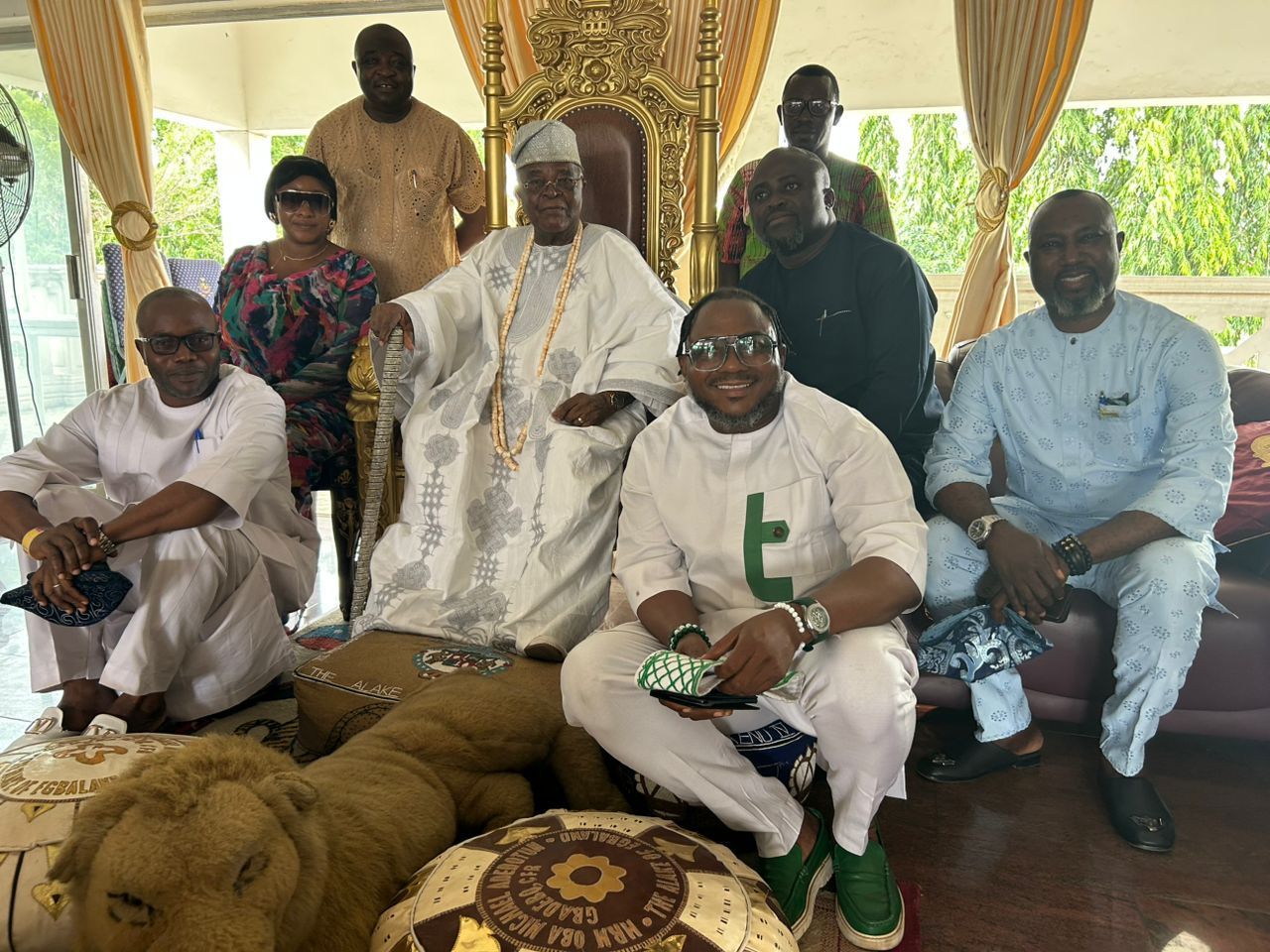
Alake of Egbaland identifies with NANTA @50 celebration at Ibadan
Geraldine Samuel
The Alake and Paramount Ruler of Egbaland, Oba Adedotun Aremu Gbadebo, has assured the National Association of Nigeria Travel Agencies (NANTA) of his royal presence at the association’s Golden Jubilee celebration and Annual General Meeting scheduled to hold in Ibadan, Oyo State, in April.
The revered monarch gave the assurance on Thursday, March14th, 2026 when he received members of the NANTA AGM Planning Committee, led by Mrs. Lola Adewole, at the Ake Palace in Abeokuta.
Oba Gbadebo commended the association for its resilience and unity over the past five decades, noting that sustaining a professional body for 50 years reflects commitment, strong leadership, and shared vision among its members.
He also prayed for the continued growth and impactful contributions of the association to Nigeria’s cultural tourism sector.
According to the monarch, NANTA has consistently promoted Nigerian culture and the travel trade industry, earning an exemplary status that other professional associations and groups should emulate.
The Alake further assured the delegation that he would personally attend and grace the anniversary event, adding that Egbaland and Ibadan share deep historical, cultural, and traditional ties.
Earlier, the leader of the NANTA delegation, Mrs. Lola Adewole, who was accompanied by the association’s Second National Deputy President, Dr. Tokunbo Dagunduro, and Financial Secretary, Mr. Yinka Ladipo, informed the monarch that NANTA has always promoted Nigeria’s cultural tourism offerings as a vital national asset.
She explained that the association views the country’s cultural heritage as a gold mine that must be preserved and harnessed for Nigeria’s economic and social development.
Adewole noted that the theme of the association’s 50th anniversary celebration, “Embracing Our Diverse Cultural Heritage from the City of Firsts: Redefining Our Role as Global Ambassadors,” reflects NANTA’s commitment to supporting and promoting Nigeria’s cultural tourism economy.
As part of activities ahead of the anniversary celebration, the NANTA team also visited the Ogun State Commissioner for Culture and Tourism, Hon. Sesan Fagbayi, to formally invite him to the Ibadan conference.
During the visit, the delegation highlighted the rich cultural heritage of Ogun State and its importance to national tourism development and economic growth.
Meanwhile, the association, through its National President, Dr. Yinka Folami, has congratulated the newly appointed Inspector-General of Police, Mr. Olatunji Rilwan Disu, on his appointment.
In a letter dated March 9, acknowledged by the police authorities, Folami pledged the association’s willingness to collaborate with the Nigeria Police Force in addressing fraudulent activities within the travel trade sector.
The NANTA president also formally invited the Inspector-General to the association’s elective Annual General Meeting in Ibadan in April, noting that the gathering would provide an opportunity for the police chief to interact with travel trade professionals on ways to promote a secure and globally compliant travel industry in Nigeria.
Headlines
NSW will not subsume B’Odogwu Customs trade platform — Fakolade

Gloria Odion
Tola Fakolade, the Director of Nigeria National Single Window Project has stated that the celebrated National Single Window project which first phase is due for official roll out in March,27th, 2026 is not a substitute for the Customs trade platform commonly called B’Odogwu, neither will the presidential initiative subsume the Customs platform.
Fakolade make this clarification against the rising fears that the multi- million dollar indigenous platform created by the Customs to enhance its operations and meant to replace the previous foreign – created portal, will be jettisoned at the berth of NSW.
However, he further clarified that the NSW will operate alongside the B’Odogwu Customs Management System, describing the two platforms as complementary.
“The B’Odogwu system handles core Customs processes such as valuation and risk management, while the National Single Window serves as the single-entry portal for traders to submit documents and applications for approvals,” he said.
Fakolade also declared that NSW will not replace any government agency involved in trade facilitation but will instead integrate their processes to eliminate duplication and improve efficiency.
He explained that the system is designed to ensure that once a release is issued by the Nigeria Customs Service, it would already reflect the risk assessment and compliance requirements of other port-related regulatory agencies.
According to him, key trade agencies were involved from the early stages of the project, with each nominating technical representatives who contributed to the development of the platform.
He noted that the system has already identified and addressed several duplicated processes that previously slowed cargo clearance and added no value to port operations.
Fakolade also disclosed that extensive training has been ongoing for over a month for end-users including importers, exporters, freight forwarders and officials of the Nigerian Ports Authority.
He added that training sessions are being conducted physically at designated centres that accommodate between 30 and 50 participants, while additional learning resources and explanatory videos have been made available online.
Fakolade added that when the platform goes live on March 27, 2026, initial services will include applications for import licences, certificates and permits for agencies such as Standards Organisation of Nigeria, National Agency for Food and Drug Administration and Control, Nigeria Agricultural Quarantine Service and National Environmental Standards and Regulations Enforcement Agency, as well as manifest submissions by shipping lines and airlines.
Meanwhile, Princess Chi Ezeh, Vice President (Seaports) of the National Association of Government Approved Freight Forwarders (NAGAFF), commended the committee driving the NSW Nigeria for recognising freight forwarders as critical stakeholders in the reform initiative aimed at improving trade facilitation in the country.
Ezeh noted that the decision to engage freight forwarders during the awareness and consultation stages of the project demonstrates that the implementation team understands the strategic role operators play in Nigeria’s port and logistics ecosystem.
She added that during the engagement sessions, freight forwarders were able to highlight some operational challenges they face at the ports, which the project team assured would be addressed.
She expressed optimism ahead of the planned launch of the National Single Window, urging the implementation team to ensure that the system is properly structured to enhance trade facilitation rather than create additional delays in cargo clearance processes.
Also speaking, the Chairman of APFFLON Tincan Chapter, Alhaji Akeem Ayobiojo, assured that freight forwarders would play their part in ensuring the success of the initiative by submitting accurate documentation and complying with the required procedures.
He stressed that transparency and professionalism from operators are essential to achieving the project’s goal of reducing cost, saving time and improving efficiency in Nigeria’s port operations.
-

 Headlines4 weeks ago
FIFA sends Nigeria’s Super Eagles to 2026 World Cup, awards boardroom scoreline of 3 goals to nil against DR Congo
-

 Headlines2 months ago
Ayobo residents protest deplorable road at LCDA, complain of 10- year neglect by successive local council administrations.
-
 Headlines3 months ago
FG approves 50 percent price slash on Yuletide train services
-
 Customs2 months ago
Apapa Customs stretches illicit drug seizures streak with another new year interdiction of 30.1 kg of cocaine on board vessel.
-
 Headlines3 months ago
FG trains 75 boat operators on safe inland waterway navigation
-

 Customs2 months ago
Tinubu pays glowing tribute to Adeniyi, CGC, at 60