
Headlines
Nigeria’s tariff system is fraudulent – Prof. Badejo

Funso OLOJO
Professor Bamidele Badejo, the Chairman of the Lagos State Professorial Endowment on Transport and Logistics Studies, School of Transport and Logistics, Lagos State University (LASU), Ojo, has described Nigeria’s tariff system as fraudulent and fraught with corruption.
Badejo, who made this observation in his lecture at the 19th Transquest Anniversary/Transport Development Symposium and Awards ceremony in Lagos, claimed that the Nigerian government has no scientific application to justify the plethora of tariffs imposed on Nigerians, saying the tariff regime is done with a rule of thumb.
” If you don’t understand the concept of trade and don’t look at the intricacies of trade, how do you develop your tariff system?
“Most of the tariffs government generated, most of the tariffs we established are just done by mere by rule of thumb.
” There are no scientific applications to justify how these tariff rates were arrived at.
” Someone will just wake up and say, oh, doing shipping business is more expensive in Nigeria than any of the West African countries.
” There are no scientific analyses to back up such claim” the University don declared.

Badejo, who delivered a paper on the theme of the Symposium titled ” Harnessing Nigeria’s Trade Tariff System for Economic Growth: Curbing Influx of fraudulent imports through the Nigerian Ports” accused officials of revenue-collecting government agencies such as the Nigeria Customs Service, Federal Inland Revenue Service(FIRS) as arrogant and corrupt who like to play God.
The University don decried the chaotic state of Nigeria’s ports which he said are still enmeshed in corruption and lack of transparency in its operations.
He further said the government uses tariffs to achieve economic growth and political goals.
“Tariffs have historically been a tool for government to collect revenue.
” Also, they are a way for the government to try to protect domestic producers. Thereby using the tariff as a protectionist tool.
“Generally, applying tariffs increases the prices of imports. Tariffs are imposed by the government, no individual or organization can determine tariff rates or duties.
” In today’s global economy, many products bought by consumers have parts from other countries as a result, it can also affect products made in the home country.
“There is a huge conflict between economists and other disciplines, they argue that tariffs when imposed create market distortions that can actually harm domestic consumers over time.
“Tariffs could also be used for retaliation between countries because of their political differences.
” Nevertheless, the process of determining tariff rates involves a combination of economic, political, international and strategic considerations.
” Overall, governments impose tariffs based on what is needed to protect domestic industries, address trade imbalances, or respond to unfair trade practices.
“Tariffs, in addition, could be used as political tools to manage relationships.
“Tariff setting therefore involves complex negotiation and considerations of possible retaliation with trading partners.

“In other words, tariffs are used to restrict imports by increasing the price of goods and services purchased from another country by making them less attractive to domestic consumption.
The convener of the annual lecture, Felix Femi Kumuyi, the Publisher and Editor-in-chief of Transquest magazine, said the anniversary Transport Development Symposium and Lecture was the modest contribution of his organization to the economic growth of the country.
He lamented the hypocrisy of government agencies in supporting laudable workshops like the one his organization has packaged, accusing them of seeking to support the ones that will massage the ego of their paymasters
“It’s unfortunate that the level of participation and the seriousness these kinds of workshops should attract, especially from our government agencies/institutions, has not been forthcoming, other than politically motivated, organizational talk shops.
“Going forward, the theme of this year’s TransQuest Lecture/Award programme is Harnessing Nigeria’s Trade Tariff System for Economic Growth, which has been carefully chosen in the face of accusations and counter-accusations relating to tax and over-taxing of imports.
“Can we achieve a harmonious Trade Tariff System or Tax regime that is proportionate and in tandem with the prevailing realities?
”In the last one year, opinions on this matter have been as divided as it has been and seemingly straight jacketed; with government camp notorious for shying away from realistic appraisals and objective stakeholders engagements.
“Knowing that Tariffs are trade barriers that raise prices, reduce available quantities of goods and services for businesses and consumers, and can create an economic burden on foreign exporters, there should be a harmonious mechanism that the government and various industry players should adapt to, irrespective of the excuses of dollar to naira exchange rates which keeps the tariff system in perpetual fluctuation in past years,”
The event was attended by industry players such as the Nigeria Customs Service, NDLEA, freight forwarders, maritime lawyers and government agencies.
The occasion, which was also used to unveil the new edition of Transquest magazine, served as a platform where notable industry players such as the Executive Secretary of the Nigerian Shippers’ Council, Barrister Pius Akutah, Prince Olayiwola Shittu, who was represented as the chairman of the occasion, Mrs Jean Anishere and others, were celebrated with awards of excellence.



Headlines
Realtors seek partnership with Lagos Govt on Omi Eko waterways transportation project.
Funso OLOJO, Editor.
The €410m foreign creditors – backed Omi Eko water transportation project of Lagos state government has received a big boost with the interest shown by the International Real Estate Federation (FIABCI).
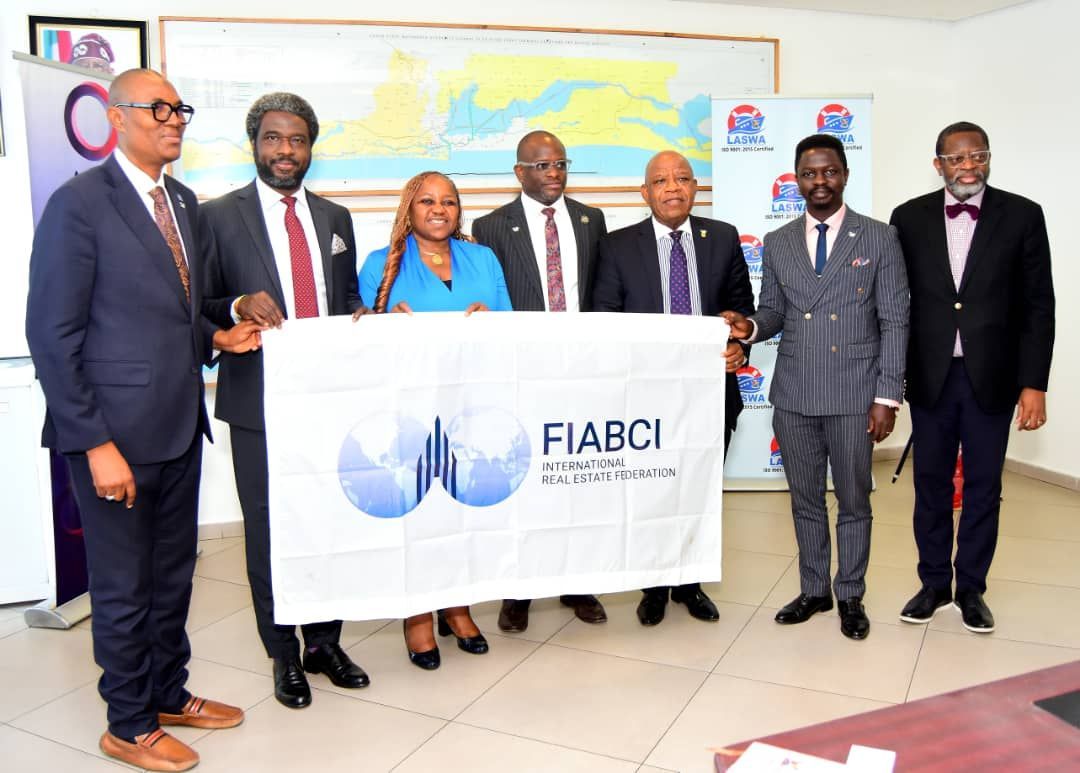
The professional Realtors have approached the Lagos state government through the Lagos State Waterways Authority (LASWA) to explore areas of collaboration around Lagos State’s expanding water transportation system and its broader Blue Economy potential.
The delegation was led by Akin Opatola, President of FIABCI Nigeria and Mr. Adeniji Adele, President of FIABCI Africa and the Near East, as well as senior officials and members of the international real estate federation.
The delegation was received by Mr Emmanuel Oluwadamilola, the General Manager of LASWA who also doubles as Special Adviser on Blue Economy to the Governor of Lagos State.
The two parties discussed the Lagos State’s ambitious efforts to modernize its inland waterways transport system through the OMI EKO Water Transport Project.
The LASWA General Manager outlined the strategic direction of the project and its role in transforming urban mobility across Lagos.
According to him, the initiative is designed to decongest Lagos roads, improve productivity, reduce transportation costs, and lower carbon emissions, while positioning water transportation as a central pillar of Lagos State’s urban mobility strategy.
He further disclosed that the project will introduce modern ferry operations supported by electrified vessels, upgraded terminals, and integrated transport infrastructure, creating a cleaner and more efficient water transport ecosystem.
Mr Oluwadamilola further told FIABCI delegation that OMI EKO project is supported by a strong international financing structure including, Agence Française de Développement (AFD) – €130 million loan, European Investment Bank (EIB) – €170 million loan, European Union – €60 million grant
Lagos State Government – €40 million counterpart funding
Private sector participation in Intelligent Transport Systems (ITS).
Also, the project will deliver 15 ferry routes across Lagos waterways,
Dredging and marking of approximately 140 kilometers of navigable channels,
Development of 25 modern ferry terminals and jetties, Deployment of electric ferries, Integrated ticketing and improved waterway safety infrastructure.
Following the presentation, members of the visiting FIABCI delegation engaged the LASWA leadership in a round of questions and observations, seeking further clarification on the implementation framework of the OMI EKO project.
Members of the delegation sought insights into issues including terminal development opportunities, private sector participation, integration with urban planning, and the long-term investment potential of Lagos’ water transport corridors.
Mr. Oluwadamilola further elaborated on the project’s structure and the strategic vision of Lagos State to position water transportation as a key pillar of the state’s evolving Blue Economy.
Speaking during the meeting, FIABCI Nigeria President, Akin Opatola, noted that the modernization of Lagos waterways presents a strategic opportunity to rethink how cities integrate transport infrastructure with real estate and urban development.
Opatola emphasized that major water transport infrastructure projects such as the OMI EKO initiative create new corridors of economic activity, particularly around ferry terminals and waterfront locations.
He stated that the real estate sector has a critical role to play in supporting such infrastructure through transport-oriented development, waterfront regeneration, and the creation of mixed-use economic hubs that can stimulate sustainable urban growth.
He further noted that FIABCI members, as professionals in the real estate and development ecosystem, are keen to explore ways in which urban planning, investment, and property development can align with Lagos State’s water transportation expansion.
Also speaking, Mr. Adeniji Adele, President of FIABCI Africa and the Near East, observed that Lagos is uniquely positioned to become a leading example in Africa of how coastal cities can leverage their waterways to drive mobility, economic development, and sustainable waterfront investment.
He noted that global cities that successfully integrate their waterways into urban life often unlock significant real estate and tourism value, and expressed optimism that Lagos could replicate similar outcomes as the OMI EKO project unfolds.
Ubong Essien, Founder of the Blue Economy Academy, emphasized the importance of collaboration among government agencies, industry professionals, and investors in delivering large-scale maritime infrastructure initiatives.
Essien noted that Nigeria’s experience in strengthening maritime security in the Gulf of Guinea demonstrated that successful sector transformation often begins when all stakeholders are brought to the table at the earliest stages of major projects.
He also pointed out that the 25 ferry terminals planned under the OMI EKO project represent significant opportunities for transport-oriented waterfront development across Lagos, creating new intersections between mobility infrastructure, urban development, and the Blue Economy.
The visit underscores the growing recognition of Lagos waterways as a strategic mobility and economic infrastructure for Africa’s largest city.
It could be recalled that the Omi Eko project was launched in October, 2025.
Customs
Apapa Customs records major breakthrough in anti- smuggling operations.
– intercepts 13 containers of harmful pharmaceuticals, other contraband goods worth N6.38billion
Funso OLOJO, Editor
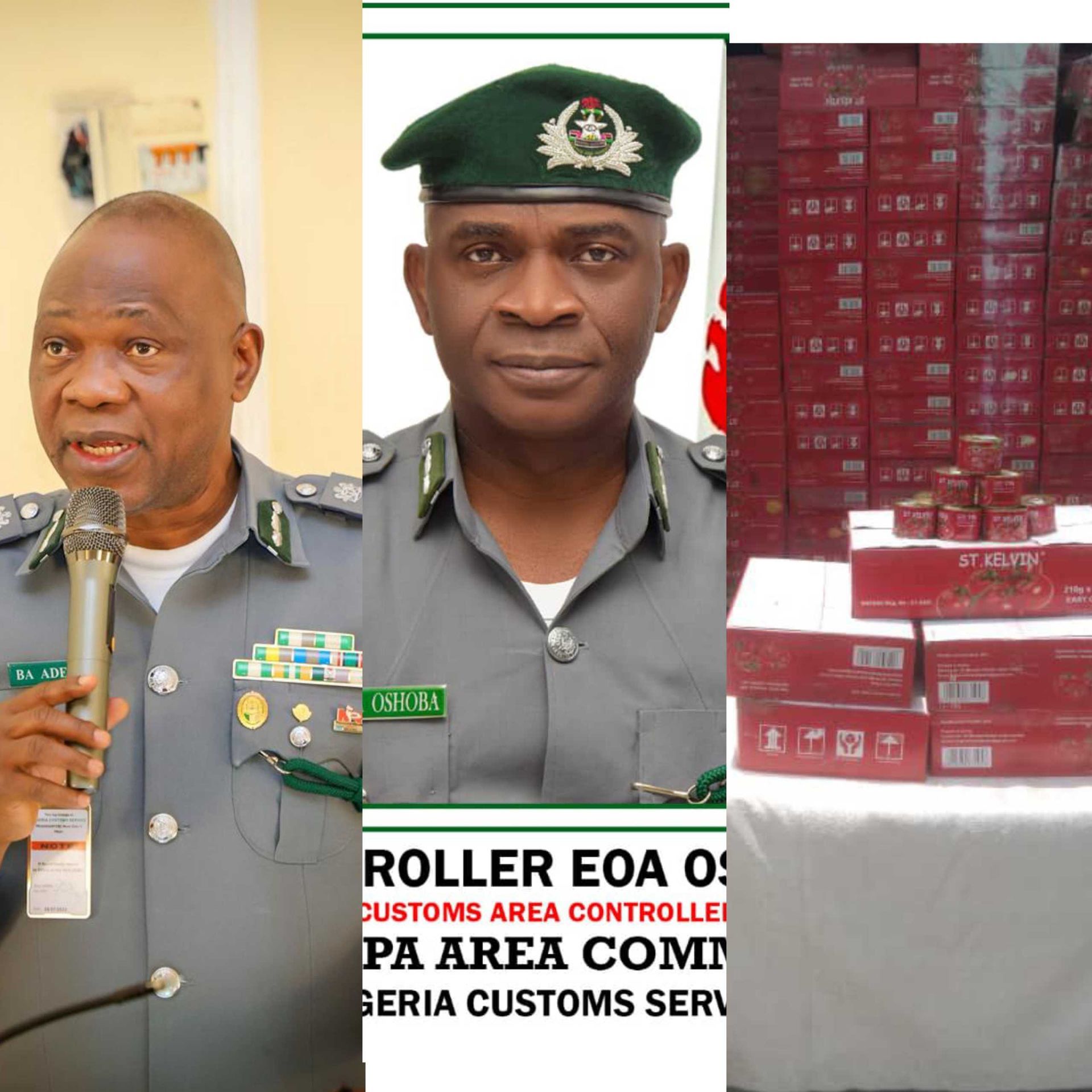
The Apapa Command of the Nigeria Customs Service has recorded a huge success in its relentless war against traders of illicit products when its officers intercepted 13 containers of harmful pharmaceuticals and other contraband goods.
Unveiling the contraband goods at the APM Terminals,Apapa port on Tuesday, March 10th, 2026, the Comptroller- General of Customs, Adewale Adeniyi, disclosed that the intercepted consignments are worth over N6.38 billion.
Adeniyi, while speaking with Journalists, revealed that the interception and seizures were made possible through intelligence-driven operations supported by cargo scanning technology and targeted physical examination.
He explained that officers detected irregular cargo profiles during routine scanning procedures, prompting detailed physical inspections that uncovered several prohibited and falsely declared consignments.
According to him, among the seizures was a 40-foot container loaded with expired pharmaceutical products, including Mixagrip Cold Caplets, Ladinax tablets, Chloroquine injections and Diclofenac tablets.
Customs officers also intercepted two 40-foot containers filled with unregistered pharmaceutical products, including Hyegra 200 and Sildenafil Citrate.
In another discovery, a 20-foot container carrying 800 cartons of codeine was found carefully concealed inside toilet flushing cisterns and sanitary ware.
Other pharmaceutical seizures included cartons of Artesunate injections, while a separate container was discovered to contain restricted security equipment such as bulletproof vests, helmets, walkie-talkies and tactical torches imported without the required End User Certificates.
The Service also uncovered multiple containers loaded with expired food items, including muffin cookies, 36,000 cans of expired energy drinks, and large quantities of expired tomato paste brands.
In addition, officers seized a 40-foot container containing 1,700 cartons of codeine cough syrup concealed among luxury food flasks.
Another container was found carrying 1,575 cartons of CSMIX with codeine hidden with electric kettles, alongside additional cartons of Co-codamol tablets.
Customs further intercepted 13 jumbo bags of Cannabis Sativa weighing 347.57 kilograms, which were concealed inside a Toyota Sienna vehicle.
Adeniyi described the seizures as a major breakthrough in the Service’s ongoing crackdown on illicit trade and smuggling through Nigeria’s seaports.
He warned that the importation of expired drugs and controlled substances poses serious risks to public health, while the smuggling of codeine-based products contributes to the growing problem of substance abuse.
The Comptroller-General emphasized that under the Nigeria Customs Service Act 2023, the seized goods are liable to outright forfeiture, adding that investigations are ongoing and all persons connected to the shipments will face prosecution.
He also stressed that the Service is expanding the use of Non-Intrusive Inspection (cargo scanning) to improve cargo clearance efficiency while strengthening enforcement against high-risk consignments.
According to him, Apapa Port processes thousands of containers daily, making it one of the most strategic trade gateways in West Africa.
“Apapa Port is no longer a playground for smugglers or criminal syndicates hiding behind legitimate trade documentation,” Adeniyi stated.
He assured compliant traders that Customs enforcement is not aimed at legitimate business but at protecting Nigeria’s economy and citizens from dangerous and illegal imports.
Headlines
NIMASA,KAIPTC seek digital empowerment for women to enhance their participation in maritime industry
Funso OLOJO, Editor
In furtherance to the global recognition for women empowerment as encapsulated in the theme of the 2026 International Women’s Day celebration,Give To Gain, the Nigerian Maritime Administration and Safety Agency(NIMASA) has forged an alliance with the Kofi Annan International Peacekeeping Training Centre (KAIPTC), Ghana to drive digital empowerment for women in West Africa maritime domain.
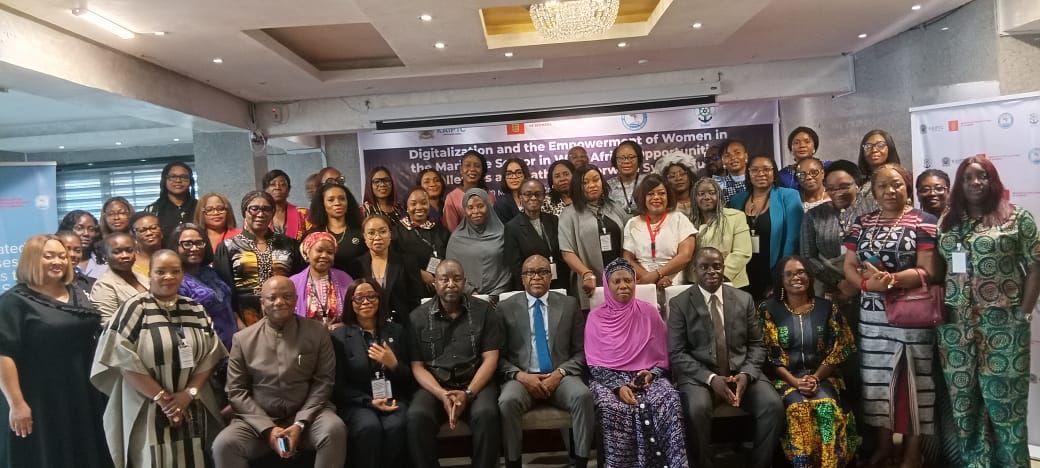
The initiative, which enjoyed the support of the Ministry of Foreign Affairs of Denmark and the Inter-Regional Coordination Centre (ICC), was consummated at the three- day symposium titled “Digitalization and the Empowerment of Women in the Maritime Sector of West Africa: Opportunities, Challenges and Pathways.” held in Lagos on March 10th, 2026.
Speaking at the event, the Director – General of NIMASA, Dr Dayo Mobereola, pledged the commitment of the agency to transforming the nation’s maritime domain and the entire West African sub-region into a global benchmark for gender-inclusive digital excellence.
Represented by the Director of Finance and Administration, Chudi Offordile, Mobereola emphasized that the maritime industry is undergoing a profound transformation driven by automation, smart logistics, and data systems.
He noted that while digitalisation creates new opportunities for efficiency and growth, it also exposes persistent gaps in the participation of women in the maritime sector, making their empowerment a critical priority for the industry.
“Across the world, digitalization is reshaping how ships operate, how ports function, how cargo is tracked, and how maritime administrations regulate and deliver services.
“While Digitalisation creates new opportunities, it also exposes persistent gaps particularly in the participation of women in the maritime sector and that is why empowerment of women in this area is critical.
“Across West Africa, women remain significantly underrepresented in many
areas of maritime operations.
“These disparities are not merely statistics; they
represent untapped talent, unrealized potential, and lost opportunities for
inclusive growth which we must find ways to close-out., ” he said.
The NIMSAS DG described digitalization as the ultimate disruptor of traditional barriers that have historically limited female participation.
“Digitalization acts as the “great equalizer,” shifting the industry’s centre of gravity from physical strength to intellectual agility and technical precision.
“It dismantles traditional barriers through AI-driven simulations and e-learning, which enhance the knowledge economy and promote skill acquisition, thereby creating new pathways for career advancement.
“Today a young woman in rural West Africa town can now access the same training modules as anyone in any part of the more advanced world.
“The transformation we seek is not an endpoint, but a continuous voyage. Digitalization is the wind in our sails, but inclusive policy is the rudder that guides us.” he said.
Describing the Blue Economy as a frontier of limitless potential, Mobereola said the agency is not merely seeking representation for women as a matter of social justice but pursuing sectoral transformation as a matter of economic survival.
He said the symposium resonated with the 2026 International Women’s Day theme, “Give to Gain,” urging stakeholders to move beyond rhetoric toward actionable strategies that will enable women in West Africa lead the next maritime frontier.
In his remarks, the Deputy Commandant of the KAIPTC, Brigadier General Zibrim Bawah Ayorrogo,highlighted the significant role women play in shaping the future of maritime security and governance, especially as digital technologies redefine operational landscapes.
He noted that digital transformation offers a unique chance to enhance maritime domain awareness and coordination.
“The Gulf of Guinea is a maritime domain of immense strategic importance, rich in resources, and a hub for international trade.
“However, it also faces complex security challenges including piracy, illegal fishing, and trafficking.
“Digital transformation presents a unique opportunity to enhance maritime domain awareness, improve coordination, and strengthen response capabilities.
” It is imperative that women are not only included but empowered to lead and innovate within this evolving digital ecosystem, ensuring that technology serves as a tool for inclusive growth and security.
“Women’s participation in maritime affairs has historically been limited by socio-cultural and institutional barriers.
Yet, their involvement brings diverse perspectives and solutions vital for holistic maritime governance.
“Digital transformation can act as a catalyst to break these barriers by providing platforms for education, networking, and leadership development.
” It is encouraging to witness increasing numbers of women engaging in digital skills acquisition, policy formulation, and operational roles within maritime security institutions across the Gulf of Guinea, ” he said.
Ayorrogo said since 2021, the KAIPTC has dedicated a specialized department to women and youth issues in the peace and security domain, recognizing that diverse perspectives are vital for holistic maritime governance.
He, however, noted that despite the progress made, challenges such as access to technology and digital infrastructure and gender gaps still persist in STEM ( Science, Technology, Engineering, and Mathematics) education and professional training.
He added that digital threats such as cyber-attacks and misinformation campaigns also pose new risks that require specialized knowledge and vigilance.
To address these challenges, the KAIPTC deputy Commandant called for concerted efforts from governments, industry, academia, and civil society to create enabling environments where women can thrive as digital leaders and innovators in maritime security.
He expressed the commitment of KAIPTC to supporting the transformation through research and capacity-building initiatives that integrate gender perspectives and digital competencies.
“Our training programs increasingly emphasize the intersection of technology, security, and gender inclusion, equipping women with the skills necessary to navigate and influence the digital maritime domain. Collaboration with regional and international partners is central to expanding these opportunities and fostering networks that amplify women’s voices and contributions.
“Governments in the Gulf of Guinea must prioritize regulatory reforms that facilitate women’s access to digital tools, protect against cyber vulnerabilities, and encourage their participation in decision-making processes. Such policies will not only enhance maritime security but also contribute to broader socio-economic development and peacebuilding efforts in the region.
“Private sector engagement is equally crucial. Technology companies, maritime operators, and financial institutions have a responsibility to invest in women-led digital innovations and entrepreneurship.
“Public-private partnerships can accelerate the deployment of cutting-edge technologies while ensuring they are accessible and relevant to women’s needs and aspirations within the maritime sector, ” he said.
The event drew a diverse range of women stakeholders, including senior officials from Ministries, Departments, and Agencies (MDAs), educational institutions, maritime journalists, and women leaders within the sector.
-

 Headlines3 weeks ago
FIFA sends Nigeria’s Super Eagles to 2026 World Cup, awards boardroom scoreline of 3 goals to nil against DR Congo
-
 Headlines2 months ago
Ayobo residents protest deplorable road at LCDA, complain of 10- year neglect by successive local council administrations.
-
 Headlines3 months ago
FG approves 50 percent price slash on Yuletide train services
-
 Customs2 months ago
Apapa Customs stretches illicit drug seizures streak with another new year interdiction of 30.1 kg of cocaine on board vessel.
-
 Headlines3 months ago
FG trains 75 boat operators on safe inland waterway navigation
-

 Customs2 months ago
Tinubu pays glowing tribute to Adeniyi, CGC, at 60