
Customs
Cargo diversion: Customs automates transire system, integrates it into Odogwu platform as it engages officers,stakeholders.

Funso OLOJO and Gloria Odion
In a bid to reduce corruption and diversion of cargo in transit, the Nigeria Customs Service has decided to automate and integrate the transire system into the new Odogwu Cargo clearance platform.
Towards this, the Service has commenced the training of officers and stakeholders on the use and functionality of the automated transire system on Odogwu.
The training, which was held at the Apapa Command, was in two sessions for the Customs officers, terminal operators, bonded terminal operators, freight forwarders and barge operators.
The training sessions were attended by the Assistant Comptroller General (ACG) and Zonal Coordinator of Zone A, Charles Orbih, who represented Comptroller- General of Customs, Adewale Adeniyi, Assistant Comptroller General of ICT, Zanna Gaji, who represented the Deputy Comptroller General of Modernization, Kikelomo Adeola, the Area Controllers of Apapa, Tin Can Island and PTML.
ACG Orbih described the automated transit process as more than just a technological upgrade, saying it a strategic shift designed to place Nigeria at the forefront of global trade efficiency.
According to him, the system will revolutionize customs operations by reducing the time and complexity involved in cargo clearance, minimizing the risk of cargo diversion, and improving overall supply chain efficiency.
Orbih highlighted key objectives of the initiative, noting that automation would significantly speed up customs clearance by reducing bottlenecks, shortening clearance times, and providing faster access to goods.
He pointed out that with the introduction of real-time tracking, the risk of cargo diversion or loss would be minimized, thereby boosting confidence among stakeholders.
“The system would bring greater transparency and accountability by eliminating manual processes and ensuring that every shipment is monitored from departure to arrival.
“This, in turn, would limit opportunities for corruption and errors while fostering trust between Customs and its trade partners”
The ACG further noted that aligning with international best practices through automation would enhance Nigeria’s attractiveness as a global trade destination.
“Beyond efficiency, the system is expected to reduce operational costs, improve revenue collection, enhance border security, and combat smuggling by providing customs officers with real-time insights into cargo movements.
” By removing manual processes and introducing automated checks,the system would strengthen accountability and transparency while allowing importers and logistics companies to track their shipments in real time.” Orbih declared.
He further disclosed the importance of collaboration in ensuring a smooth transition to the new system while calling on stakeholders to actively participate in the implementation process, provide feedback, and contribute their expertise to refine and optimize the system.
The Zonal Co- Ordinator further reiterated that the success of the Automated Transire System Process will depend on collective efforts and cooperation between Customs officers, logistics operators, and other stakeholders in the trade ecosystem.
Assistant Comptroller General of ICT, Z. M. Gaji, described the automation of transire processes as a game-changer for customs operations in Nigeria.
He noted that the training was structured into two sessions: one for desk officers who would be directly managing the system and another for stakeholders to familiarize them with the new process.
According to Gaji, the new system was developed in-house by Customs ICT officers, rather than external service providers, ensuring that it is tailored to Nigeria’s specific trade environment.
Gaji emphasized the major benefits of automation, including a significant reduction in clearance times, enhanced transparency in customs procedures, improved revenue collection through better monitoring, and minimized opportunities for corruption.
He further explained that the system would provide a robust tracking and monitoring mechanism for improved trade management, thereby fostering a more predictable and efficient trade environment.
Before full deployment, Gaji explained that the NCS would adopt a phased approach, including extensive stakeholder engagement, a user acceptance test (UAT), and a pilot rollout at selected locations.
He stressed the importance of these steps in refining the system and ensuring that it meets operational realities and industry needs.
The ICT guru encouraged stakeholders to actively engage in the process, provide insights, and contribute to discussions that would help optimize the system before its nationwide implementation.
Feedbacks were received from the participants by the facilitators of the training sessions who promised to relay their suggestions, fears and observations on the automated transire system to the Customs management.

Continue Reading
Customs
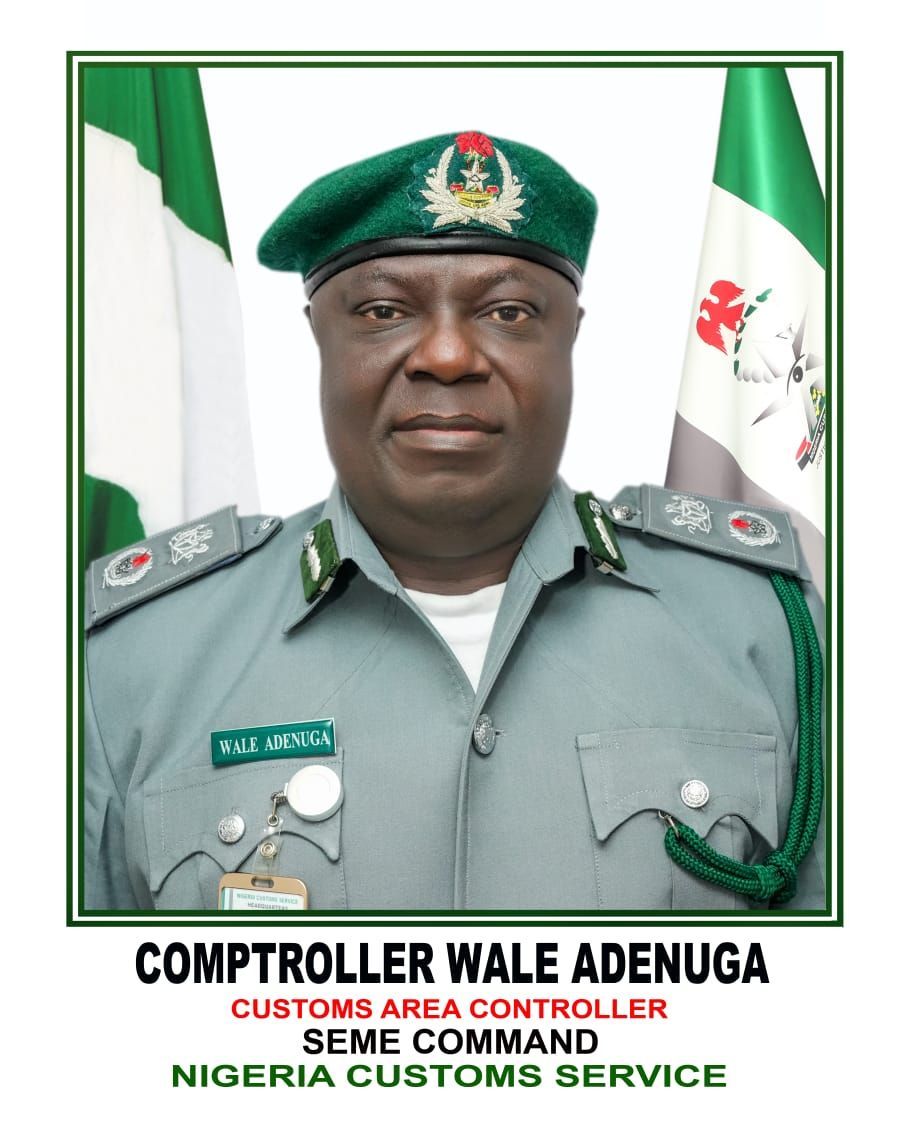
Seme Customs in revenue windfall as it collects N3.5 billion in February.
Funso OLOJO,Editor
The Seme command of the Nigeria Customs Service has continued to sustain its revenue momentious
trajectory under the leadership of its Area Controller, Comptroller Wale Adenuga.
According to revenue statistics made available to our reporter by the command, it has garnered a princely sum of N3,480,970,924.67 in revenue for the month of February 2026, with the month still ongoing.
Comptroller Adenuga made this disclosure during an interactive session at a stakeholders’ engagement meeting with cross-border traders ,farmers and stakeholders organised by the Nigerian Shippers’ Council in collaboration with the ECOWAS Commission, ECOWAS Agricultural Trade Programme and GIZ International.
The event, held in Badagry on Wednesday, February 25th, 2026, was themed “Empowering Cross-Border Traders through Trade Information Desk for Agricultural Traders”.
Comptroller Adenuga noted the revenue figure represents a remarkable improvement over the N743,698,652.16 recorded in February 2025 which he attributed to the seamless trade facilitation process adopted at the Command.
“For this February that has not yet ended, we have already generated N3,480,970,924.67 as against N743,698,652.16 revenue generated in February 2025″ Adenuga told the stakeholders.
He said the feat was a reflection of
the flow of trade which he believed was getting better as people are building greater confidence in the Seme–Krake corridor.
Comptroller Adenuga assured traders and stakeholders that the significant reduction in checkpoints along the Seme–Gbaji axis is the direct result of strong collaborative efforts with other security agencies operating within the corridor.
He disclosed that only Agbara and Gbaji remain the officially Customs approved and sanctioned checkpoints along this Lagos-Abidjan corridor.
The Customs Chief further attributed the noticeable decline in crime rates along the Seme-Gbaji axis to the positive outcomes of monthly joint border security meetings involving all agencies at the border post.
These regular inter-agency engagements, according to him, have strengthened better cooperation, improved intelligence sharing and more effective responses to security challenges, thereby creating a safer and more enabling environment for cross-border trade.
Adenuga declared that while revenue generation and trade facilitation remain key priorities, the Command’s mandate extends firmly to combating illicit activities.
The CAC highlighted recent enforcement successes, including the interception of a Toyota Highlander vehicle conveying 22 packages of cocaine with an estimated street value exceeding N1 billion, a feat he claimed was made possible based on very credible information shared by the CGC.
In addition, during February 2026 alone, the Command has seized 1,000 bags of 50kg parboiled rice, underscoring its unwavering commitment to suppressing smuggling and protecting Nigeria’s economic borders.
Comptroller Adenuga reiterated the vigilance and commitment of the operatives of the Command in working closely with stakeholders, traders, farmers, sister security agencies and regional partners to improve the momentum of trade and security along the Lagos-Abidjan corridor.
Customs
Apapa Customs, Navy deepen partnership for seamless cargo movement along Apapa port corridor
Gloria Odion, Maritime Reporter
The Customs Area Controller (CAC),
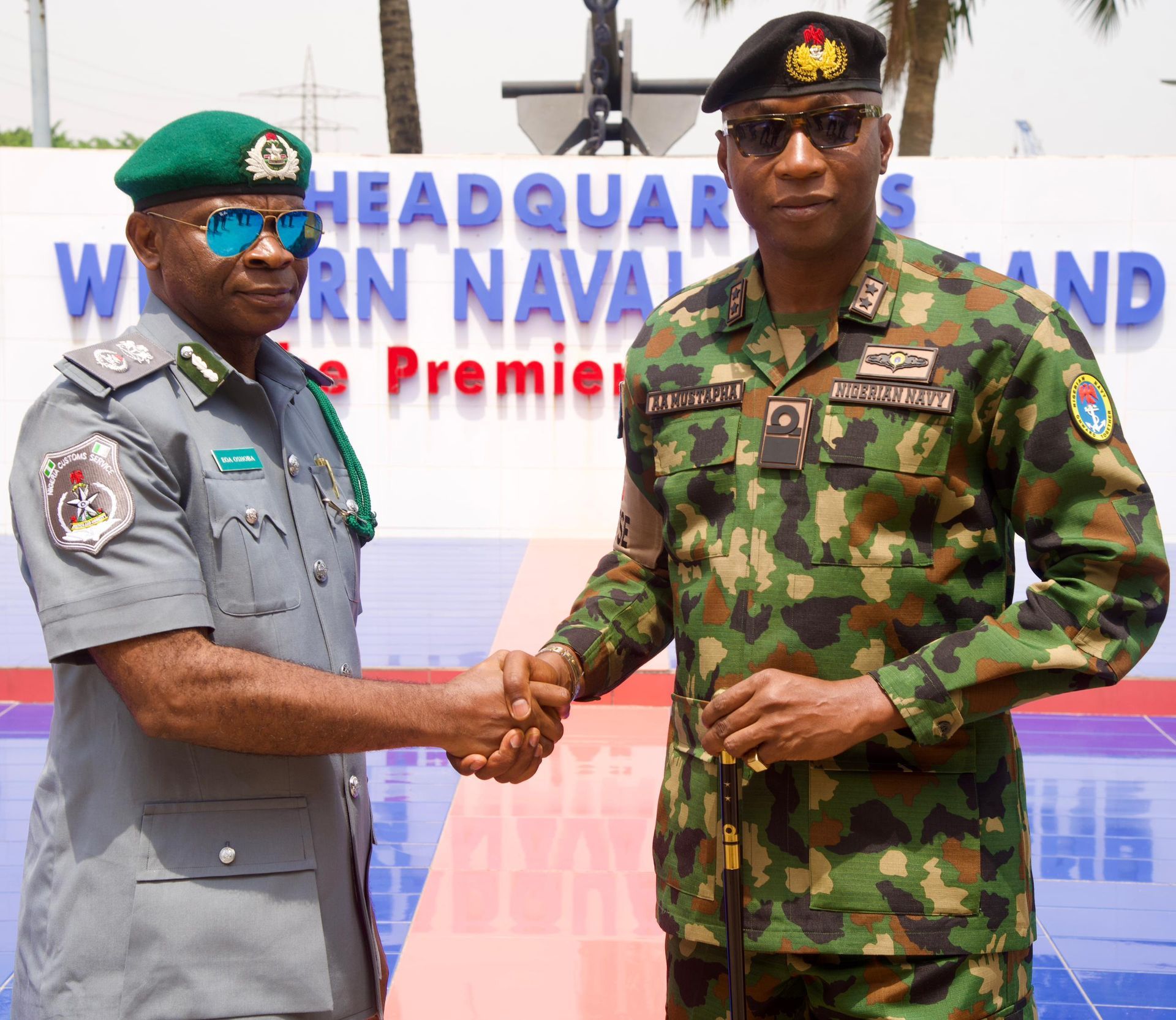
Apapa Area Command, Comptroller Emmanuel Oshoba, has solicited sustained support of the Western Naval Command to ensure seamless cargo movement along the Apapa port corridor.
Comptroller Oshoba made the call on Wednesday, February 25th, 2026, while on a courtesy visit to Rear Admiral Abubakar Abdullahi Mustapha, the Flag Officer Commanding (FOC), Western Naval Command.
The visit was meant to deepen operational collaboration in line with the three policy thrusts of Consolidation, Collaboration and Innovation of the Comptroller-General of Customs, Bashir Adewale Adeniyi.
Speaking during the visit, the CAC stated: “The CGC has three key policy thrusts.
” The first is consolidation. On assuming duty, I resolved to consolidate on the gains already achieved and improve the existing relationship between Apapa Command and the Nigerian Navy within this axis.”
On collaboration, he noted that modern border management requires agencies to work in tandem, adding: “While Customs is known for trade facilitation and revenue generation, we also perform critical security functions.
“To achieve this mandate, we must collaborate with the military, the mother of security.”
On innovation, he added: “Innovation is doing things differently to achieve better results and strengthening inter-agency cooperation is part of that approach.”
He appreciated the Navy for securing Nigeria’s waters, stating: “No vessel can come into the country without safe waters.
” We commend you for keeping the maritime environment secure.”
In his response, Rear Admiral Mustapha acknowledged the longstanding partnership between both agencies, emphasizing: “Port security is about inter-agency and coordination. Without security, there is no development.”
He commended the Service under CGC Bashir Adewale Adeniyi for its performance, noting: “The Customs has done exceptionally well in blocking revenue leakages and surpassing national revenue targets.
“Continue what you are doing; with more revenue, there will be more infrastructure and social safety network for the country.”
The FOC assured the Command of improved and seamless cooperation in securing the maritime domain and supporting national economic growth.
Customs
Customs automates acquisition, renewal of licenses, permits to enhance efficiency, revenue boost.
Funso OLOJO, Editor
In order to consolidate the automation of its operations, the Nigeria Customs Service, has concluded preparations to automate the process of Licenses, Permits acquisition and renewal.
To achieve this landmark initiative, the Service has trained its bond officers of various area commands who will drive the process.
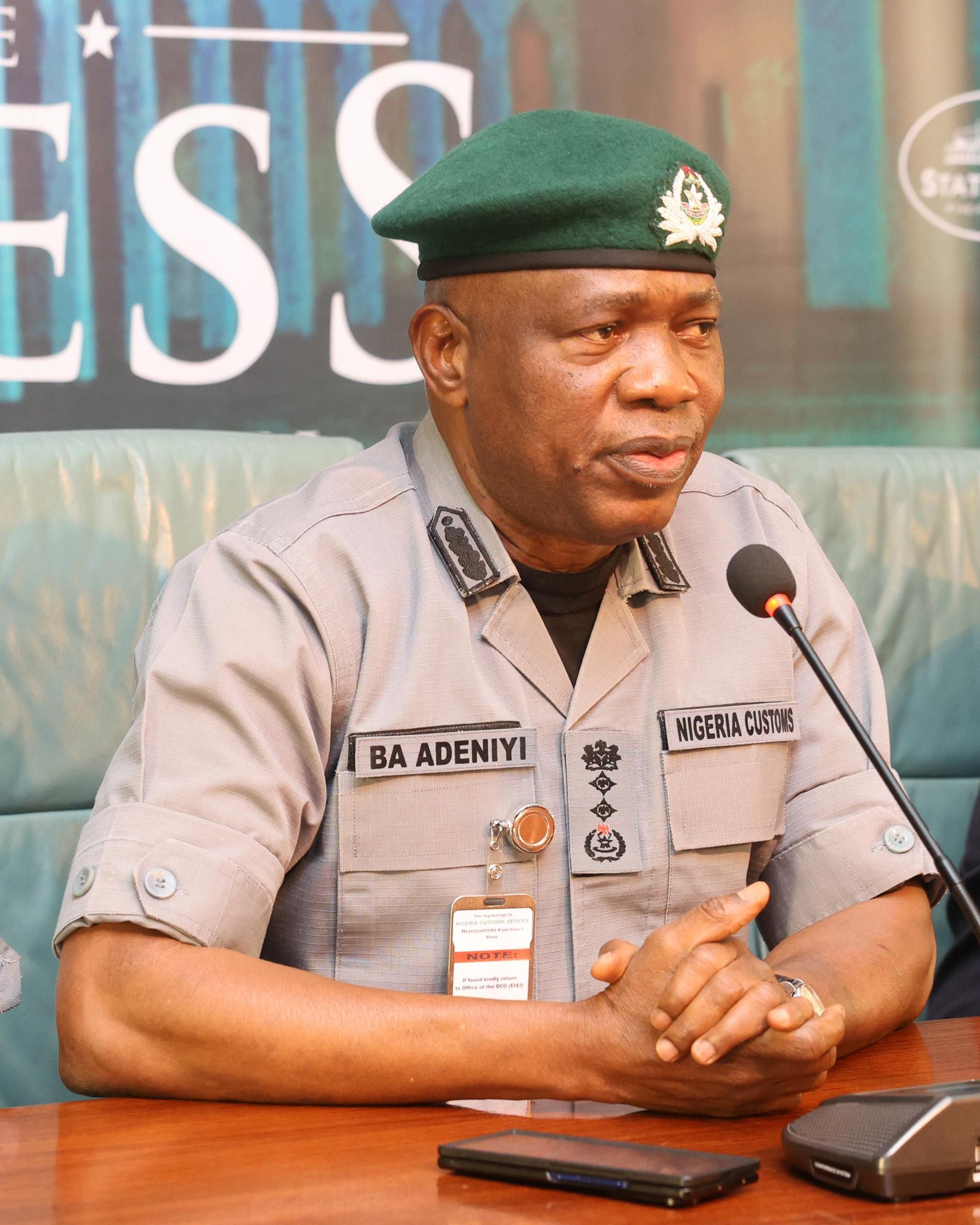
While unveiling the automation process to stakeholders in Lagos on Monday, February 23rd, 2026, the Comptroller – General of Customs, Adewale Adeniyi said the initiative was driven by the desire of the Customs management to make licenses and permits acquisition and renewal less cumbersome, promote ease of doing business and boost revenue generation.
CGC Adeniyi, who was represented by Comptroller NJ Anozie, further expanded the benefits of the automation process.
“Automation will save importers, clearing and forwarding agents the stress of acquiring or renewing their Licenses and Permits as they would be sitting in the comfort of their offices/homes to initiate and complete the process.
“Officers and men of License and Permit Unit, the bond seat unit of various Commands will also be saved some stress, as all their responsibilities would just be ‘clicks’ on the systems in front of their desks, as opposed to carrying loads of files from one table to another and from one office to the other.
“Automation will cut the cost of doing business and minimize movement risks for our stakeholders.
“They would no longer be jumping on buses or flights to and fro Customs Headquarters-Abuja, paying hotel bills plus feeding for days, to obtain or renew their licenses and permits.
“Automation will minimize, if not eradicate fraudulent practices in the system, as every single document that is uploaded in the course of this process will be automatically rejected by default, if it is fake and accepted if it is genuine.
“L&P can now view assessments through the B’Odogwu to be sure that any company applying for fresh or renewal of licences or permits is not having unpaid assessments hanging on it”
The Customs boss said he was poised to sanitize the system and urged the Licences and Permits unit of the Service to be passionate in driving this initiative.
He further disclosed that the automation process will save the importers and their agents time and money which they normally expended in manual process.
Adeniyi urged the stakeholders to take advantage of this new initiative, assuring them that they would adequately be guided on how to key into the system by the bond officers who have already been trained.
-

 Headlines2 weeks ago
FIFA sends Nigeria’s Super Eagles to 2026 World Cup, awards boardroom scoreline of 3 goals to nil against DR Congo
-

 Headlines3 months ago
MARAN pulls industry’s stakeholders to unveil its iconic book on Maritime industry.
-

 Headlines1 month ago
Ayobo residents protest deplorable road at LCDA, complain of 10- year neglect by successive local council administrations.
-
 Headlines2 months ago
FG approves 50 percent price slash on Yuletide train services
-
 Customs3 months ago
Relief as Customs grants January 31st, 2026 extension for fast track operators to migrate to AEO
-
 Customs2 months ago
Apapa Customs stretches illicit drug seizures streak with another new year interdiction of 30.1 kg of cocaine on board vessel.