Connect with us

Headlines

Oyetola laments surge in waterways accidents.

–calls on operators, state governments to invest in modern boats 
Funso OLOJO 
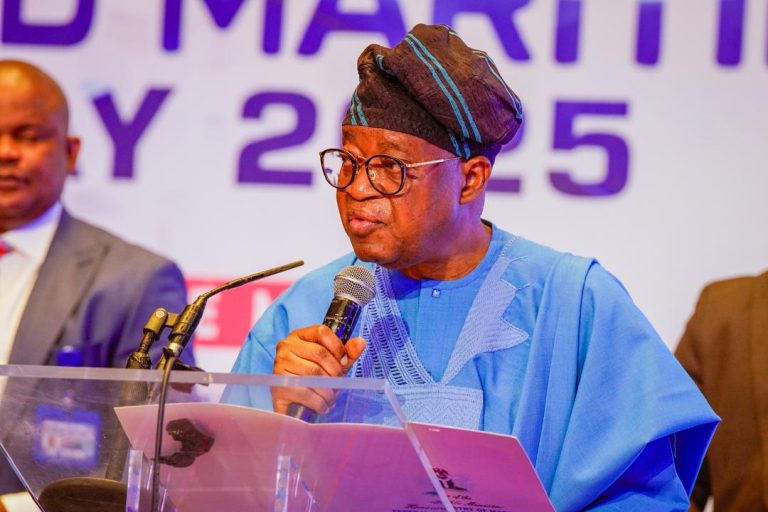
The Minister of Marine and Blue Economy, Adegboyega Oyetola, has condemned the flagrant disregard for safety measures by operators of waterways transport which he lamented has continued to lead to loss of lives on the Nigerian waterways.
Oyetola expressed his sadness over the upsurge in accidents on Nigeria’ s waterways despite the efforts of the Federal government to curb the menace.
While speaking against the backdrop of
recent tragic boat accidents which claimed several lives and left many families in mourning, the Minister reiterated his call for the ban on wooden boats and urged the operators and state governments to invest in fiber and aluminium water crafts that will minimize accidents on waterways.
He expressed deep sympathy with the victims of the recent mishaps and extended heartfelt condolences to the families of the deceased.
Oyetola however charged waterways users to take personal responsibility for their safety by adhering strictly to basic safety measures.
He warned against night travel, which he said often comes with poor visibility and higher risks and urged passengers to insist on wearing approved life jackets at all times.
“Waterway users must refuse to board rickety or overloaded boats,” he cautioned. “No journey is worth risking your life. Avoid night travels, wear life jackets and prioritise safety above all else.”
“Our thoughts and prayers are with the families who lost their loved ones. These recurring tragedies are painful and unacceptable, and they underscore the urgent need to address the root causes of waterway accidents in the country,” he said.
According to the Minister, the continued reliance on rickety boats in many riverine states and non-adherence to safety standards remain the major contributors to accidents on Nigeria’s inland waterways.
 He noted that many of these boats are poorly constructed, inadequately maintained and prone to structural failure, especially when overloaded or exposed to harsh weather conditions.
“Wooden boats deteriorate quickly due to constant exposure to water, leading to cracks, leakages and eventual collapse,” he explained.
“They lack stability, are easily capsized and often have no safety features. In many cases, they are operated without proper regulation or adherence to safety standards, putting passengers’ lives at serious risk.”
The Minister stressed that phasing out wooden boats in favour of fibre-reinforced plastic and aluminium boats would significantly improve safety on the waterways.
He highlighted that fibre and aluminium boats are more durable, stable and resistant to corrosion, making them better suited for commercial operations.
“These modern boats are stronger, more reliable and easier to maintain,” he said. “They offer better balance and buoyancy, reduce the risk of sudden breakage, and can be fitted with essential safety equipment.”
Reaffirming the Federal Government’s commitment to waterway safety, Dr. Oyetola disclosed that the Ministry of Marine and Blue Economy has continued to roll out interventions aimed at reducing accidents. He cited the distribution of 35,000 life jackets by the Ministry to riverine states in 2025 as part of efforts to enhance safety consciousness and preparedness.
“Despite these interventions, we are still witnessing boat mishaps, largely because of the persistent use of unsafe wooden boats,” the Minister noted.
“This is why we are appealing to state governments to urgently complement federal efforts by investing in modern, non-wooden boats for commercial operations in their states and provide standard life jackets for all water transport passengers in their domains.”
He emphasised that ensuring safety on Nigeria’s waterways requires collective action and political will at all levels of government.
“Water transportation is a critical component of our blue economy,” Oyetola said. “But it must be safe, regulated and sustainable. Together, we can put an end to these avoidable tragedies and protect the lives of our citizens.” Oyetola submitted.

Continue Reading
Click to comment

Leave a Reply

Your email address will not be published. Required fields are marked *

Headlines

Tinubu swears in new IGP, Tunde Disu on Wednesday as Police council endorses his appointment

Funso OLOJO,  Editor
President Bola Ahmed Tinubu will on Wednesday, March 4th, 2026 swear- in the new Inspector – General of Police (IGP), Olatunji Rilwan Disu following the endorsement of his appointment by the Nigeria Police Council.
According to the Presidential spokesman, Bayo Onanuga, the  ceremony will take place during the Federal Executive Council meeting, scheduled for the same day.
The Council’s meeting, which took place at the State House, was presided over by President Bola Ahmed Tinubu and had in attendance Vice President Kashim Shettima, state governors and the Chairman of the Police Service Commission, retired DIG Hashimu Argungu, in accordance with the constitution.
Others in attendance were the Secretary to the Government of the Federation, Senator George Akume; the National Security Adviser, Nuhu Ribadu; the Chief of Staff, Femi Gbajabiamila; the Minister of Police Affairs, Senator Ibrahim Gaidam; the FCT Minister, Nyesom Wike; and the head of service, Mrs Esther Didi Walson-Jack.
The President appointed Disu as the new police chief, following the resignation of the former Inspector-General of Police, Kayode Egbetokun.
Governor of Lagos State, Babajide Sanwo-Olu, who spoke glowingly about the Acting Inspector-General of Police, commended Disu for his exemplary services as a policeman, especially when he served as the Commander of the Rapid Response Squad in Lagos State between 2015 and 2021, where his tenure earned him and the RRS recognition for excellence in crime control.
Governor of Nasarawa State, Abdullahi Sule, commended the President’s appointment of Disu, noting that it was based on his excellent career record.
Minister of the Federal Capital Territory and former Governor of Rivers State, Nyesom Wike, also lauded Disu for his professionalism.
Disu served in Wike’s home state of Rivers as Assistant Commissioner, Criminal Investigation Department, and Officer-in-charge, anti-kidnapping unit, between 2014 and 2015.
He later served as Commissioner of Police in the FCT Command when Wike became the minister.
Wike commended him for his efficiency as a crime fighter and for ensuring the command’s strategic impact in addressing security concerns within the territory.
Governor Peter Mbah of Enugu State seconded the motion endorsing Disu’s appointment.
Disu was born on April 13, 1966, in Lagos State and joined the Nigeria Police Force on May 18, 1992, as a Cadet Assistant Superintendent.
He rose through the ranks with multiple qualifications in public administration, forensic investigation, criminology, security, legal psychology, and entrepreneurship-credentials that reflect his commitment to knowledge-driven, modern policing.
The Acting Inspector-General has held critical operational, investigative, and strategic command positions nationwide.
His last position was as Assistant Inspector-General of Police in charge of the Special Protection Unit and the Force CID Annex, Lagos.
Continue Reading

Headlines

Maersk’s suspension of shipping operations through Strait of Hormuz raises anxiety among Nigerian importers 

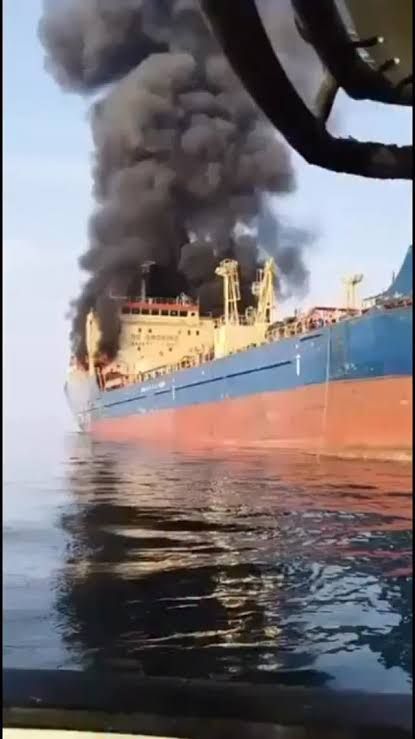
Attack on vessel in the Strait of Hormuz
Funso OLOJO, with agency report
The on- going hostilies in the Middle East have continued to stifle international trade as most of the shipping companies have suspended voyage through the troubled Strait of Hormuz.
The joint attacks by the military forces of the United States of America (USA) and Israel on the Islamic Republic of Iran, which resulted in the assassination of its Supreme leader, Ayatollah Ali Khomenei and over 40 top military officers of the Islamic country,have put a strain on shipping operations along the busy vessel route of Strait of Hormuz as the Houthis militias, who are sympathetic to Iran, have threatened to attack vessels on the route.
Strait of Hormuz accounts for one third of the world shipping passage while the route accommodates the world largest crude tankers , despite its narrow width.
As a result of the threats, which have raised safety concerns on the vessels, cargos and crews, major shipping lines have halted their operations along the route.
Maersk, the world’s largest container shipping company, has halted passage of cargo vessels through the Strait of Hormuz for “safety” reasons.

“We are suspending all vessel crossings in the Strait of Hormuz until further notice,” the Danish group said in an online advisory.“The safety of our crews, vessels and customers’ cargo remains our key priority,” it said.

Iran’s Revolutionary Guard had earlier announced the Strait’s closure.

Major Middle Eastern oil and gas exporters rely on it to move supplies to international markets while importing nations depend on its uninterrupted operation.
China, one of the biggest destinations of Nigerian importers, make use of the route for import of the crude oil from the Middle East, especially Iran and export of its manufactured goods to the developing countries, especially Nigeria.
This development has raised anxiety among Nigerian importers who expressed concerns over the implications of the disruption on the route one the cost of imports, especially from China.
Continue Reading

Headlines

NRC hosts Rotary Club on mobile train

Gloria Odion, Reporter 
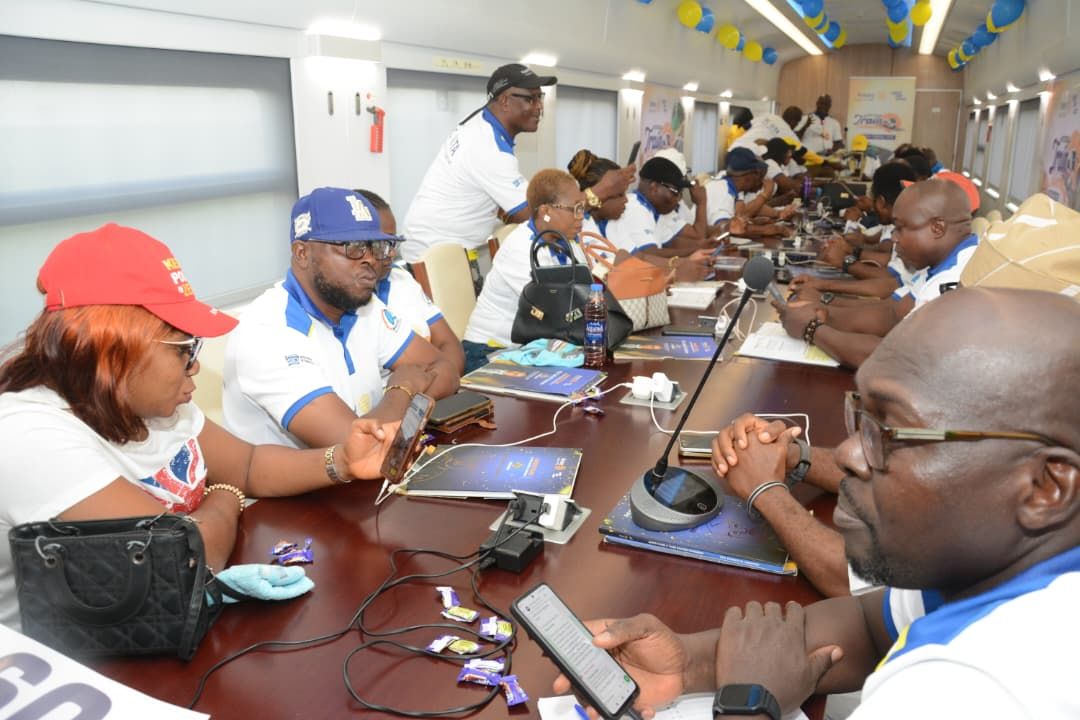
The Nigerian Railway Corporation (NRC) has played host to the Rotary Club of Ota by hosting Nigeria’s first-ever Rotary fellowship on a moving train, setting a remarkable benchmark for innovation in civic and humanitarian engagement.
The groundbreaking event brought together members of the club aboard a moving train for fellowship, leadership interaction, and strategic discussion centered on service to humanity, climate action, and sustainable community development.
The fellowship was led by the President of the Rotary Club of Ota, Mr. Charles Umukoro, alongside members of the club’s executive and general membership.
A major highlight of the occasion was the visit of the Railway District Manager, Engr. Rasheed Adedeji, who warmly welcomed the Rotarians on board.
His presence underscored the significance of the event and further strengthened the cordial relationship between the railway management and the Rotary Club.
In a symbolic moment reflecting shared values of service and partnership, Engr. Rasheed Adedeji was formally inducted as a member of the Rotary Club of Ota following his welcome address, adding prestige and deeper institutional collaboration to the landmark fellowship.
The moving-train fellowship was widely described as symbolic of progress, innovation, and forward movement—values that align closely with the transformation agenda of the Nigerian Railway Corporation.
The Nigerian Railway Corporation said it was committed to supporting initiatives that promote national development, environmental sustainability, and community advancement, while showcasing the railway as a safe, modern, and strategic platform for engagement.
Continue Reading

Trending