
Headlines
Amiwero raises concerns over duplication of Single Window application in Customs, Tax administration Acts

–warns implementation will lead to high cost of doing business at ports
Funso OLOJO, Editor
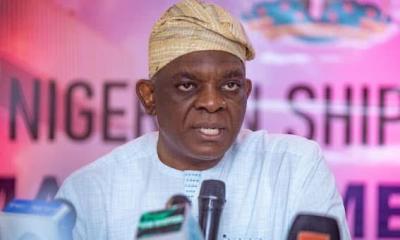
A trade procedure expert and the factional President of the National Council of Managing Directors of Licensed Customs Agents,(NCMDLCA), Lucky Eyis Amiwero, has identified flaws in the much- celebrated National Single Window project of the Federal government.
He claimed that the NSW, unveiled to the public on Tuesday, March, 24th, 2026 and billed to go live on Friday, March 27th, 2026, is a duplication of the provisions in the Nigeria Customs Act 35 of 2023 and the Tax Administration Act 5 of 2025.
Amiwero, in his petition to President Bola Ahmed Tinubu and dated March 20th, 2026, warned that the implementation of the NSW will ultimately lead to the high cost of doing business at the port.
Citing the duplicating functions in both the NSW and the Customs Act 35, Amiwero stated that the National single window portal contravenes the International Convention on Agreement on Trade Facilitation (TFA) which established the Single Window under Articles 4-(1)-(5) and also domesticated under section 4-(d) of the Nigeria Customs Service Act, which clearly states, Promote Trade Facilitation in Line with international convention and agreement as it relates to Customs administration.
He noted that the Presidential Task force on Customs Reform introduced Single Window system/One Stop Shop trade Facilitation tool which he said was part of the Interim report of implementation priorities as contain in paragraph 2-(e) of the interim report.
“The Nigeria Customs Service Act Section 28-(1) (a)(b)(c)(d) 2-4 Clearly states:
The Service, in collaboration with other agencies and traders, shall develop.
” Maintain and employ and electronic system while the Service shall be the Lead Agency for the exchange of information between the service, agencies of the Government, and Traders, for the exchange of information and for the common registration and maintenance of records relating in particular, but not limited to-
All persons directly or indirectly involved in the accomplishment of Customs formalities.
Application and authorizations concerning the Service procedure or the status of specific importers, exporters, Customs representatives and others involved directly or indirectly with trade transaction,Revenue collection, protection and accounting; and
Risk management”
” The Service may establish and operate a National Single Window portal to enhance revenue assurance, streamline import and export processes, facilitate international transit operation for the purpose of ensuring efficiency and transparency in trade and revenue administration”
” The window shall serve as a single-entry point and platform for any person involved in import, export, trade and transit processes to a
(a)Digitalization of economies in trade, lodge documents electronically, including import or export documentation for licensing, processing and approval
(b)Make payment of fees and levies dues on goods imported or exported, and for other transaction, submitted through the window; or
(c ) provide relevant data or information in respect of Import, Export Trade or Transit.
(a)Digitalization of economies in trade, lodge documents electronically, including import or export documentation for licensing, processing and approval
(b)Make payment of fees and levies dues on goods imported or exported, and for other transaction, submitted through the window; or
(c ) provide relevant data or information in respect of Import, Export Trade or Transit.
” The Nigeria Customs Service is designated as the lead agency under the provision of Section 28 of the Customs Act and the Section (1A)&(1B) of the Port Related offence(Amendment) Act 61 of 1999 Not the revenue service by Law”
Amiwero therefore urged the federal government to suspend the implementation of the NSW because it usurps the functions of the Nigeria customs service.
“There is the urgent need to suspend the Implementation of the National single window, which contravenes Trade Facilitation Agreement(TFA), the duplication and outright usurping the Function of Nigeria Customs Service, with serious multiplicity of charges that is not specified, with the overburden of clearing cost imposed by various agencies on Importers/Licensed Customs Agents making our port the Most expensive in the world.
“The contradiction and limitation of the provision, which will create obstacles to trade and serious diversion of goods to our neighboring Countries, which will affect Foreign Direct Investment (FDI).






Customs
AfCFTA adopts Nigeria as pilot country for STR, engages Customs on modalities for simplified trade
Gloria Odion, Maritime Reporter
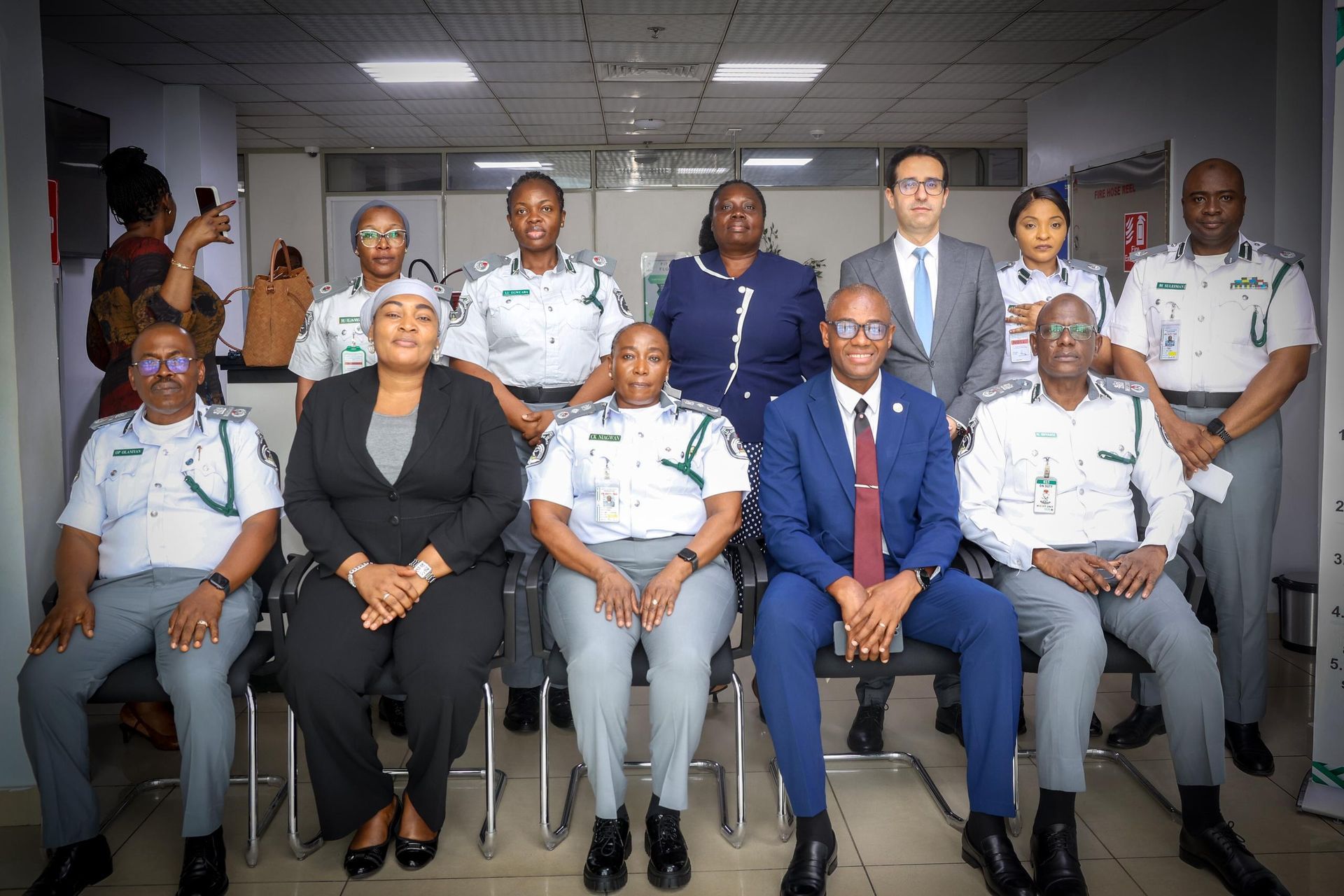
The Nigeria Customs Service (NCS) on March 23rd, 2026 held a strategic meeting with a delegation from the African Continental Free Trade Area (AfCFTA) Secretariat at its Headquarters in Maitama, Abuja.
The engagement focused on advancing the implementation of the Simplified Trade Regime (STR) to support small-scale cross-border trade.
The Comptroller-General of Customs was represented by the Deputy Comptroller-General in charge of Tariff and Trade, Caroline Niagwan.
She reaffirmed the Service’s commitment to making trade easier and more transparent,particularly for Micro, Small, and Medium Enterprises (MSMEs), through simplified customs procedures.
She noted that the Service aims to promote inclusive trade while ensuring compliance with both national and regional regulations.
Speaking during the meeting, the leader of the AfCFTA delegation, Pedro Estevao, highlighted Nigeria’s role as the pilot country for the Simplified Trade Regime in West Africa.
He added that Nigeria’s large market position places it in a strong position to drive regional trade and economic growth.
During the session, the NCS presented its draft Standard Operating Procedure (SOP) for implementing the STR.
The draft outlines simplified processes for informal cross-border trade, passenger baggage, and low-value e-commerce transactions.
These processes are supported by digital declaration systems and risk-based controls.
A consultant to the AfCFTA Secretariat, Nabil Zibani, also presented the proposed continental STR framework.
He stressed the need for simple and accessible systems that will enable MSMEs to comply with customs procedures and participate more actively in regional trade.
Discussions identified key areas of alignment between the NCS draft SOP and the AfCFTA framework.
These include simplified documentation, use of digital platforms for declarations, adoption of thresholds for low-value goods, and promotion of inclusive trade, especially for women and small businesses.
Both parties agreed to continue technical engagements to refine implementation strategies, address possible challenges, and ensure proper alignment between national and continental frameworks.
The meeting marks an important step in positioning Nigeria as a pilot country for the Simplified Trade Regime under AfCFTA, while reinforcing the Nigeria Customs Service’s commitment to facilitating trade, strengthening regional integration, and supporting inclusive economic growth.
Headlines
FG reiterates commitment to efficient trade facilitation at ports as it unveils National single window platform
Funso OLOJO, Editor
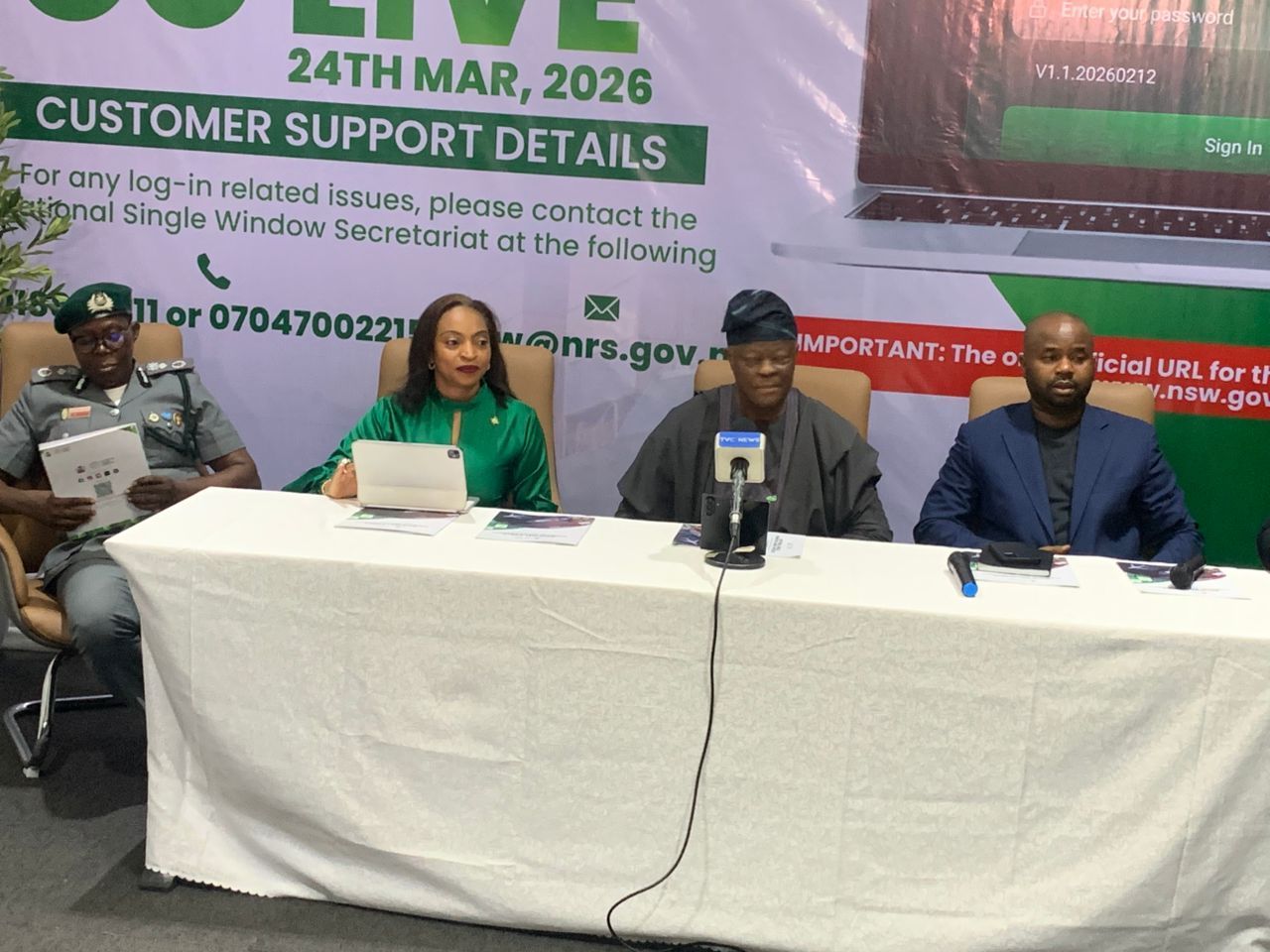
The Federal Government on Tuesday, March 24th, 2026, has expressed its commitment to fast, efficient and seamless cargo clearance process at the ports with the unveiling the National single window platform.
Speaking at a media briefing, the Minister of Finance and Coordinating Minister of the Economy, Wale Edun, described the launch as a major milestone under the economic reform agenda of President Bola Ahmed Tinubu, noting that previous attempts at implementing a single window system had not succeeded.
He said the initiative represents a shift from fragmented and inefficient trade processes to a more coordinated and technology-driven system.
According to him, the platform is designed to reduce the time and cost associated with import and export transactions, while improving transparency and overall efficiency in the system.
“This is a defining moment,” Edun said. “We are moving from complexity to clarity, from fragmentation to coordination, and from delay to efficiency.”
Also speaking, the Minister of Industry, Trade and Investment, Jumoke Oduwole, said the National Single Window would allow traders to submit all required documentation through a single portal, eliminating the need to deal with multiple government agencies.
She noted that the new system would simplify trade procedures, reduce duplication of documentation, and enhance investor confidence.
“In simple terms, it is one portal, one submission, one coordinated process,” she said, adding that the reform would position Nigeria more competitively in regional and global trade.
Providing details on implementation, the National Single Window Coordinator, Tola Fakolade, said the platform would go live on March 27, 2026.
He explained that the first phase of the rollout would cover the processing of import licences, permits, and certificates for key regulatory agencies, including NAFDAC and SON, through the single platform.
Fakolade added that a pilot phase for cargo manifest submissions would commence with selected shipping lines and air cargo operators, with full integration expected by May 1, 2026.
He further disclosed that the system incorporates a risk management framework that enables regulatory agencies to assess importers based on compliance history, a move expected to reduce physical inspections and speed up cargo clearance for compliant traders.
In addition, all payments related to import processes under the platform would be handled digitally, further enhancing transparency and efficiency.
Edun, however, stressed that the success of the initiative would depend not only on the digital platform but also on improvements in physical infrastructure, particularly at the nation’s ports.
He noted that ongoing efforts to modernise major ports were critical to addressing congestion and ensuring that the benefits of the reform are fully realised.
“A digital platform alone does not move goods,” he said, warning that inefficiencies in port operations could undermine expected gains.
The government said the National Single Window forms part of a broader strategy to achieve sustainable economic growth, with a medium-term target of seven per cent annually, driven in part by improved trade facilitation.
Chairman of the National Revenue Service, Zacch Adedeji, commended the collaboration among government agencies and private sector stakeholders that made the project possible.
Stakeholders at the briefing were urged to adopt the platform and work collectively to ensure its success, as officials disclosed plans to expand the system to cover export processes and integrate more agencies in subsequent phases.
The National Single Window is expected to significantly reduce trade delays, lower transaction costs, and enhance Nigeria’s competitiveness in the global market.
Headlines
Shipping coys comply with directive of Shippers’ Council on controversial tariff hike, revert to status quo

Funso OLOJO, Editor
Despite the intransigence of the irate freight forwarders to shealth their swords over the tariff hike after the intervention of the Nigerian Shippers’ Council, the Shipping companies operating in Nigeria may have commenced the process of compliance with the order of the regulatory agency to stop the implementation of the disputed tariff increase.
It would be recalled that the NSC has approved an upward review in shipping charges based on what it said was predicated on the exigency of time.
However, the tariff hike was resisted by the freight forwarders who shut down the operations of the shipping companies by picketing their offices.
The Nigerian Shippers’ Council later waded into the crisis by directing the shipping companies, especially the MSC, to immediately suspend the implementation of the tariff hike.
In its terse statement on March 20th, 2026, the regulatory agency said the suspension of the controversial tariff increase became necessary in order to conclude engagement with relevant stakeholders and in response to substantive concerns raised regarding the timing, structure, and potential impact of the said tariffs on port users and the wider logistics value chain.
In deference to the order of the Council, the MSC, one of the shipping companies in the country, has said it has complied with the directive, saying it has reverted to the old tariff structure.
In the memo which the management of the shipping company sent to all its customers, it said the decision to maintain the status quo was in line with the directive of the NSC.
“We wish to inform our esteemed customers that the recently implemented tariff adjustment has been temporarily suspended, following a directive from the Nigerian Shippers council NSC.
“This suspension is pending the conclusion of ongoing engagements and resolution with the regulator.
“Accordingly,the tariff regime applicable prior to the recent increase will remain in force until further notice, as mandated.
“We remain fully committed to regulatory compliance,transparency, and protecting the interests of our customers.
“Further updates will be communicated promptly once a definitive position is issued by the Nigerian Shippers council.
“We appreciate your understanding and continued cooperation” the MSC management declared in a terse statement.
However, concerned industry stakeholders have expressed dismay over what they described as the intransigence of the irate freight forwarders who were said to have persisted in what was regarded as their disruptive activities of shipping operations despite the intervention of the NSC and the compliance of the shipping companies to the directive of the regulatory agency.
-

 Headlines2 months ago
Ayobo residents protest deplorable road at LCDA, complain of 10- year neglect by successive local council administrations.
-

 Headlines1 month ago
FIFA sends Nigeria’s Super Eagles to 2026 World Cup, awards boardroom scoreline of 3 goals to nil against DR Congo
-
 Customs3 months ago
Apapa Customs stretches illicit drug seizures streak with another new year interdiction of 30.1 kg of cocaine on board vessel.
-

 Customs2 months ago
Tinubu pays glowing tribute to Adeniyi, CGC, at 60
-

 Headlines3 months ago
Efforts to Revive the Abuja–Kaduna Train Service: Progress, Promises, and Struggles
-

 Headlines3 months ago
Tantita intercepts stolen crude on escort of Delta Marine Police, arrests four suspects