Connect with us

Transport

Nigeria may reintroduce Cargo Tracking Note to stem rising insecurity.

John Johnson
Worried by the rising incidents of insecurity in the country, Nigerian Government may reintroduce the controvesial Cargo Tracking Note (CTN) at the Nigerian sea ports.
The move is to profile all imports through the sea ports into the country with a view to identifying and curtailling the importation of arms and ammunitions.
To this end, President Mohammadu Buhari has directed the Minister of Transportation, Rt. Hon. Rotimi Amaechi to  put the  relevant government agency on notice to kick start the programme.
Buhari, who is shopping for ideas to beef up security in the country, has been convinced that CTN could play a crucial role in enabling the nation address the growing spate of banditry, kidnappings and restiveness fueled by easy access to guns.

Amaechi has therefore directed the Nigerian Shippers’ Council(NSC), the implementing agency, to commence preparation to undertake the responsibility of administering CTN as it takes off.

The Cargo Tracking Note (CTN) or the ECTN (Electronic Cargo Tracking Note), is a system for collecting documents and processing information, when exporting by sea in order to obtain prior information, to participate in security measures, statistics, and generally in order to participate in the World Trade Organization (WTO) and the World Customs Organization (WCO) recommendations on trade facilitation and security.

Shippers’ Council has been encouraged to introduce the system in a way that shouldn’t add to the cost of doing business at the ports, but enable the nation to track imports from ports of origin to drastically reduce import of arms.

Recall that in 2017 alone, 2671 pump-action rifles were intercepted at Nigerian seaports. The guns were legally registered for export in Turkey as pump-action rifles for hunting but the manifests were changed in Morocco to become steel doors to enable the container gain entry into Nigeria.

With CTN, however, Nigeria would have been able to see the original manifests from Turkey and intercept the guns before the consignments arrived in Nigeria.

Twenty-four African countries presently use CTN and these nations include; Angola, Benin Republic, Burkina Faso, Burundi, Cameroon, Central African Republic, Chad, Congo, Democratic Republic Congo, Equatorial Guinea, Gabon, Ghana and Guinea.

Others include; Guinea-Bissau, Ivory Coast, Liberia, Libya, Madagascar, Mali, Niger, Senegal, Sierra Leone, South Sudan and Togo.

Although CTN has had two stints at Nigerian ports previously, under the administration of Nigerian Ports Authority (NPA) and later NSC, Nigeria would have to prequalify the possible companies via a bidding process.

Speaking on the reintroduction of CTN, a maritime lawyer, technocrat and Director of Education and Research in the Council for the Regulation of Freight Forwarding in Nigeria (CRFFN), Dr. Alban Igwe said CTN remains the best answer to issues of anomalies and security challenges in the country.

Igwe explained that this was because CTN will improve the security and safety of the supply chain as it will profile cargoes being imported into the country.

“The objective is to improve the security and safety of the supply chain and help us see the profile of products we are bringing in. It will help us know the origin and destination of cargoes and help us know our enemies,” he said.

Besides insecurity, CTN has also been described as the best platform in checking revenue leakages in   imports as well as obtaining information about the content of the cargoes.

CTN will address situations in which importers under-invoice their goods from the suppliers at the point of purchases to pay less duties. The platform will check the trend to ensure manifests are not tampered with by ships for the purpose of cheating on GT.

The Executive Secretary, NSC, Barrister Hassan Bello, whose Council is to handle CTN describes it as “another instrument that will add tremendously in shipping development”.

According to Bello, “It will boost the revenue of the government in customs revenue collection in the sense that it will abate under – declaration and concealment. It will boost the revenue of NPA because there will be no more alteration of the manifests. It will boost the revenue of NIMASA because under – declaration on the weight of ships will not be there any longer.

CTN is also a veritable source of data and some economic experts describe this as the best quality of the electronic based platform.

“You will know everything that is coming into your country. We have had many African countries having this because it is the initiation of the Union of African Shippers Council (UASC),” the NSC boss said about CTN last year

Continue Reading
Click to comment

Leave a Reply

Your email address will not be published. Required fields are marked *

Headlines

NRC plans electric rail operations across the country- Opeifa
Geraldine Samuel, Reporter 
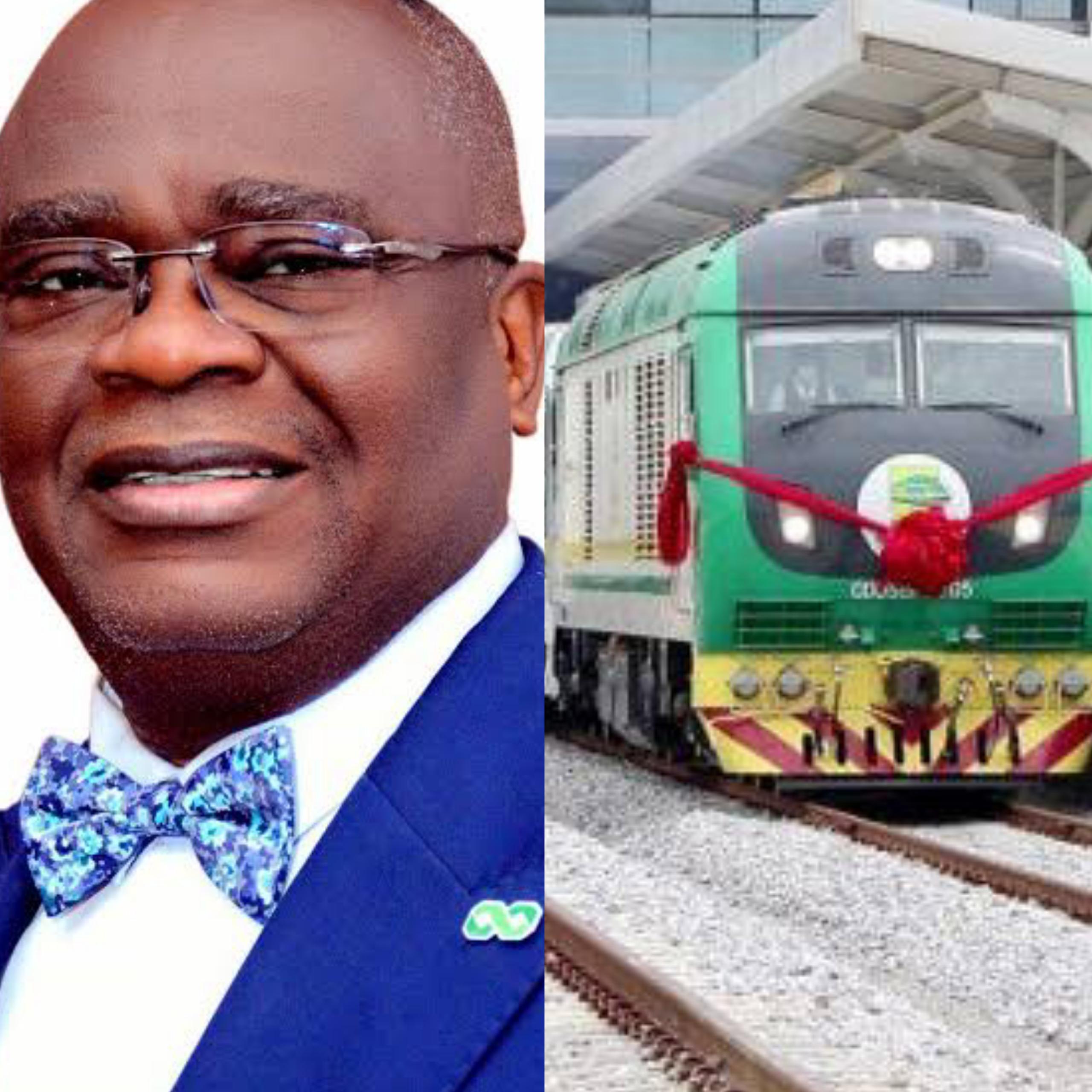
All things being equal, the Nigerian Railway Corporation(NRC) may soon commence electric rail operations for smoother and faster rail services across the country.
Making this disclosure in a recent interview on a national television, Dr Kayode Opeifa, the Managing Director of NRC, said the corporation is planning  to electrify major rail corridors within the next five years.
He further disclosed that Warri and Lagos will be used a pilot scheme of the ambitious project.
However, Opeifa said this is largely dependent on the availability of gas to support power generation for electric rail operations.
Meanwhile, the NRC boss has called for stronger collaboration between state governments and the Railway Police to enhance the protection of rail infrastructure across the country.
 Opeifa noted that the Railway Police currently operates across 26 states, stressing that state governments should see the unit as part of their security architecture and support it accordingly.
According to him, the security of railway infrastructure is closely tied to the security of mobility corridors across the country, describing the railway as a critical national asset that passes through many states and plays an important role in national development.
Drawing from his experience as a former Commissioner in Lagos State, Opeifa recalled how the Railway Police supported the Lagos State Government during the cleanup of the Oshodi area, demonstrating the importance of inter-agency cooperation in protecting public assets.
“The history of the Nigerian Railway Corporation is the history of Nigeria itself,” he said, adding that the issues confronting the railway system are reflective of broader national challenges.
The NRC Managing Director also traced the evolution of Nigeria’s modern rail development, noting that the real overhaul of the system began in 2015 with the introduction of the standard gauge rail lines.
He credited the administration of former President Muhammadu Buhari with commissioning key projects such as the Abuja–Kaduna Railway, Warri–Itakpe Railway, Abuja Rail Mass Transit, and the Lagos–Ibadan Railway, while also initiating the Port Harcourt–Maiduguri rail corridor.
 Opeifa further highlighted the constitutional amendment that moved railway from the Exclusive List to the Concurrent List, explaining that the development has opened the door for state governments such as Lagos, Kano, Ogun and Plateau to participate more actively in railway development.
He stated that his priority as Managing Director is to ensure that the NRC functions as a key driver of national integration and economic development, while operating in line with international best practices.
According to him, many developed countries treat railway infrastructure primarily as social infrastructure, noting that Nigeria’s rail system currently plays a similar role by enabling mobility and economic activities across regions.
“Railway is an enabler of growth,” he said, adding that the Federal Government’s investment in rail projects across states such as Lagos, Kano and Kaduna is largely due to their strategic economic importance.
 Opeifa also revealed that the NRC has developed a national rail map that clearly shows how state rail systems can connect to the national rail network to enhance connectivity.
Highlighting developments along the Eastern corridor, he described the Enugu main railway station as a massive and well-designed facility with underground structures, recalling that the corridor once contributed significantly to national revenue.
On concerns about ticket racketeering, Opeifa acknowledged that the problem exists largely due to high passenger demand, but explained that the corporation has introduced additional verification procedures to curb the practice.
Passengers, he said, are now subjected to double checks—first at the waiting area and again during boarding, a system that has significantly reduced illegal ticket sales.
He also reassured passengers of the high level of security along the Abuja–Kaduna rail corridor, noting that train movements and station activities are monitored from a central control room.
 According to him, the corporation plans to replicate similar security and monitoring arrangements on other rail lines across the country.
Opeifa announced that the number of daily trips on the Abuja–Kaduna Train Service has now been increased to three, in response to growing passenger demand.
He added that the NRC is also working to promote the tourism and entertainment potentials of railway services, promising that the corporation will continue to expand its services and improve operations until it achieves its development targets.
Continue Reading

Headlines

NRC hosts Rotary Club on mobile train
Gloria Odion, Reporter 
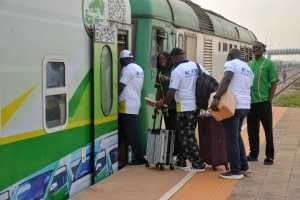
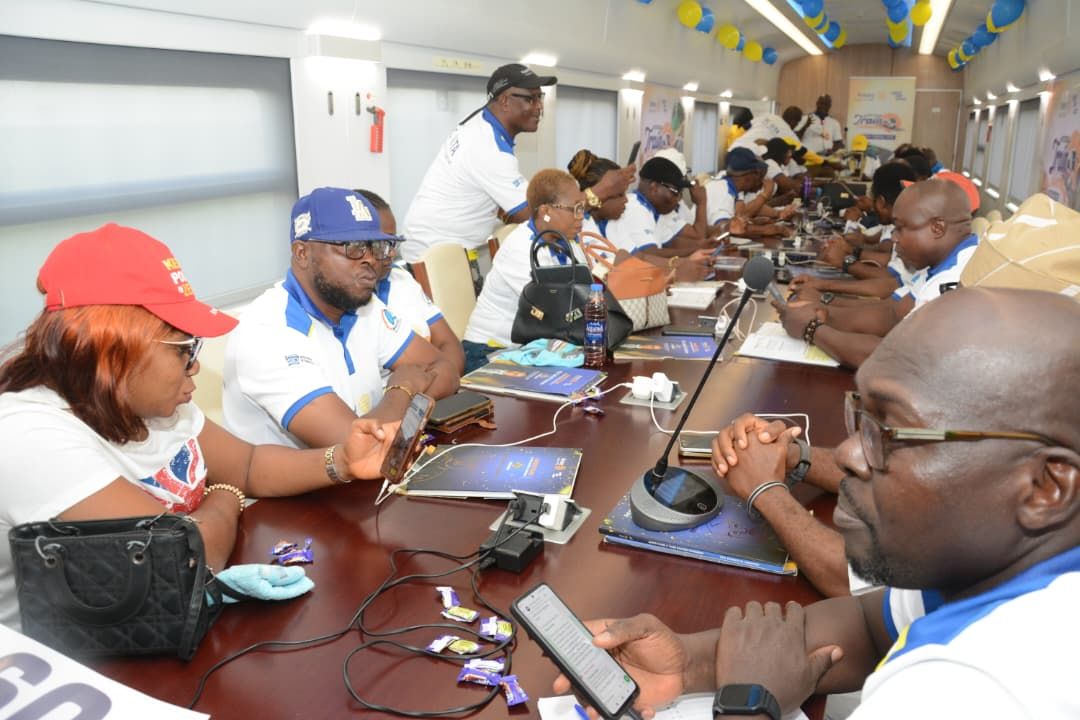
The Nigerian Railway Corporation (NRC) has played host to the Rotary Club of Ota by hosting Nigeria’s first-ever Rotary fellowship on a moving train, setting a remarkable benchmark for innovation in civic and humanitarian engagement.
The groundbreaking event brought together members of the club aboard a moving train for fellowship, leadership interaction, and strategic discussion centered on service to humanity, climate action, and sustainable community development.
The fellowship was led by the President of the Rotary Club of Ota, Mr. Charles Umukoro, alongside members of the club’s executive and general membership.
A major highlight of the occasion was the visit of the Railway District Manager, Engr. Rasheed Adedeji, who warmly welcomed the Rotarians on board.
His presence underscored the significance of the event and further strengthened the cordial relationship between the railway management and the Rotary Club.
In a symbolic moment reflecting shared values of service and partnership, Engr. Rasheed Adedeji was formally inducted as a member of the Rotary Club of Ota following his welcome address, adding prestige and deeper institutional collaboration to the landmark fellowship.
The moving-train fellowship was widely described as symbolic of progress, innovation, and forward movement—values that align closely with the transformation agenda of the Nigerian Railway Corporation.
The Nigerian Railway Corporation said it was committed to supporting initiatives that promote national development, environmental sustainability, and community advancement, while showcasing the railway as a safe, modern, and strategic platform for engagement.
Continue Reading

Headlines

NRC plans to adopt use of natural gas for train operations .
— listed among 10 revenue earners for federal government.
Gloria Odion
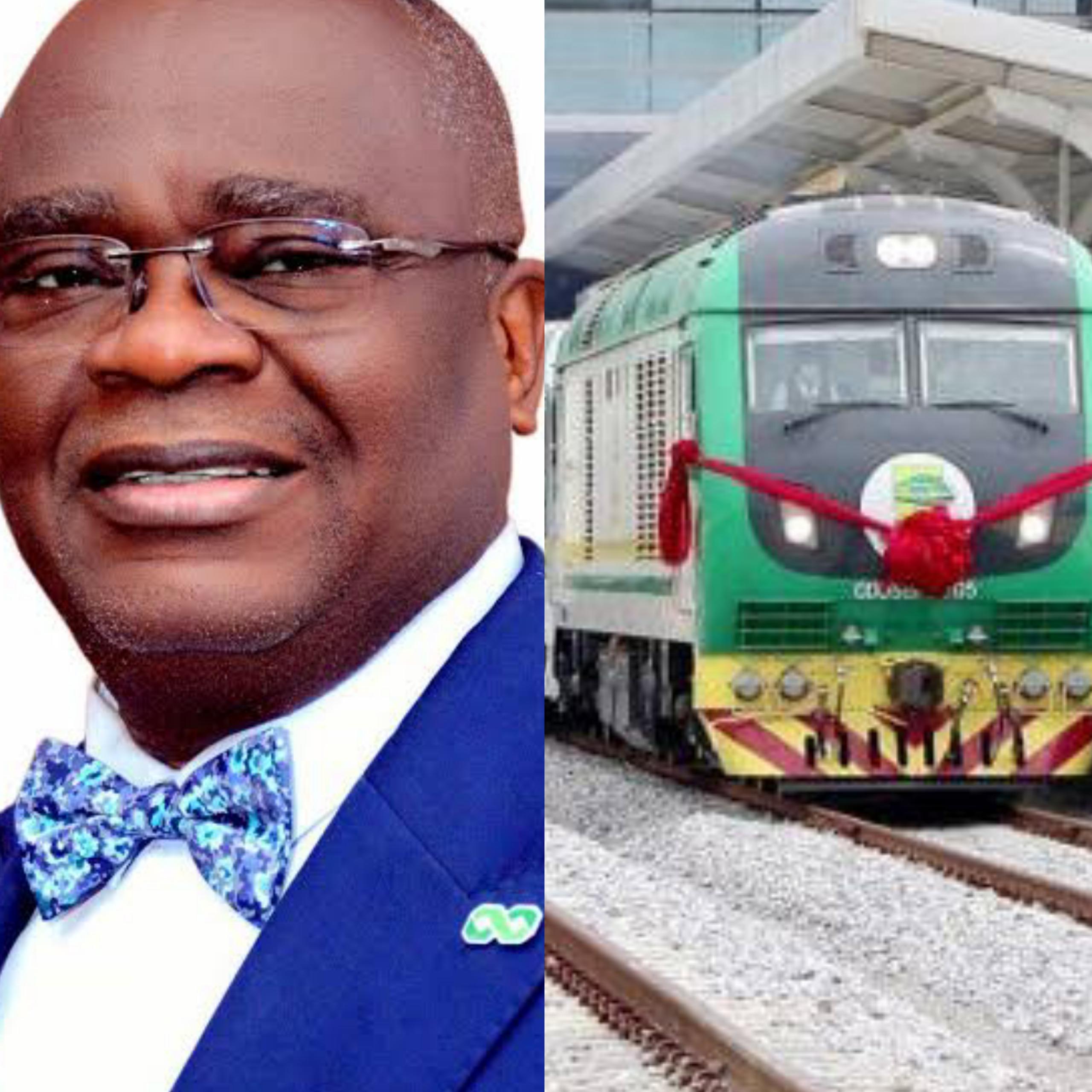
The management of the Nigerian Railway Corporation (NRC) has concluded plans to adopt the use of Liquidfied Natural Gas(LNG) to power its locomotives.
The plan, according to the NRC, expected to cut costs of operations and enhance clean environment.
Dr Kayode Opeifa, the Managing Director of NRC who disclosed this in an interview, revealed that the Corporation has successfully demonstrated this technology for one month , signalling a major step toward cleaner, more efficient rail operations.
He disclosed that Lagos–Ibadan and Warri–Itakpe  will be used as the pilot routes for the new technology.
“We have completed the LNG prove of concept and demonstrated it for one month.
“As soon as we get gas systems to the Lagos–Ibadan and Warri–Itakpe corridors, where gas is readily available, and resolve all regulatory issues, we will use gas to generate electricity to power the trains,” Opeifa declared.
Opeifa noted that adopting LNG aligns with Nigeria’s gas expansion agenda and will significantly cut operating costs while improving energy security for the rail sector.
Meanwhile, the NRC boss claimed that the Corporation has been listed amongst the top 10 contributors to Nigeria’s Gross Domestic Product (GDP) in the year 2025.
Quoting the National Bureau of Statistics (NBS) latest report for 2025, Dr Opeifa said the corporation came tops among revenue generating Federal MDAs that is contributing to the growth of the nation’s GDP.
Opeifa however listed vandalism, washouts and poor funding as the biggest challenge of the corporation in the outgone year, insisting that though the Federal Government has been very magnanimous in giving the NRC more than it generates, yet, more funding, he said ,is needed to enable the corporation operate optimally.
The NRC MD,who disclosed that both the narrow and standard gauge are working in Nigeria, said plans are on to embark on aggressive recovery of locomotives, wagons and other rolling stocks in order to improve on rail efficiency.
Opeifa also outlined an ambitious expansion plan for the national rail network.
 He noted that the corporation would soon unveil its national rail roadmap to expand the national rail network from about 4,000 to 10,000 kilometres over the next five years.
According to him, Nigeria currently has about 4,000 kilometres of rail tracks, but the target is to reach 10,000 kilometres within the next five years and about 20,000 kilometres in the next 20 years.
“In the next five years, we hope to double the length of tracks to about 10,000 kilometres. By another 10 years after that, we want to move Nigeria to about 20,000 kilometres of rail lines,” he said.
He stressed that achieving these targets will require substantial private-sector participation, adding that government budgets alone cannot fund the scale of investment required for the rail sector.
“Our doors are open to the private sector for concessioning and other partnerships.
” The government is willing to provide sovereign guarantees for railway investments as is done globally. The rail system is open because our budget alone cannot fund it,” he said.
He revealed that despite security concerns, the rail has continued to move, lauding the team of railway engineers and other artisans whose expertise have continued to sustain railway operations across the country.
 He urged for community ownership of railway assets as the only deterrence to vandalization adding that while the corporation, assisted by the security operatives would continue to fine tune the security architecture, there is need for community ownership, especially along the Warri-Itakpe axis, where he lamented that the corporation have had to replace every inch of the kilometer of train tracks due to the activities of vandals on the route.
Looking ahead, Opeifa said the NRC is introducing digital systems and planning major network expansions, including the completion of the Lagos–Kano line, the Port Harcourt–Maiduguri corridor, and the linking of Ajaokuta to Abuja to enable seamless travel from the Southern part of Nigeria to the North.
The NRC, he added, is collaborating with several state governments, including Lagos, Zamfara, Plateau, Niger and Ogun, to boost the use of rail assets adding that the corporation would be willing to work with partners, including state and the private sector.
Already, some private operators are already taking advantage of new opportunities in the sector, he said.
“We now have private sector operators getting licences to run on our tracks.
” About 28 logistics companies including the CCEC Nigeria Limited, are already licensed to move goods from Apapa Port either to Oyingbo, or Papalanto, Kajola, Omi Adio and Moniya, and Osogbo.
“If you have the resources to bring in locomotives and rolling stock, we will give you access to our tracks at no extra charge because we know that once the tracks are in use, the economy benefits,” Opeifa said.
Opeifa, who described what he met a year ago as a railway that was under the Intensive Care Unit (ICU), added that with the cooperation of the workers, the railway has moved out of the ICU and is now ready to fly.
He added that the corporation has revived investor’s confidence and interest in the rail sector, noting that several licences have already been taken up in recent weeks, a development he described as a vote of confidence in Nigeria’s evolving rail future.
Continue Reading

Trending