Connect with us

Headlines

The Fear of Malta

 Pius Mordi 
In the heat of the allegation by Aliko Dangote that international oil companies and NNPCL were denying his refinery access to Nigerian crude oil to buy, some commentators wondered why Dangote did not do his homework and secure a guaranteed regular supply of crude oil from NNPCL and the IOCs before investing almost $20 billion into building what is reputed as the biggest refinery in the world.
 It’s an unusual assumption to make for a project the Nigerian government had repeatedly touted as the final solution to the spectre of importation of refined products that orchestrated the bleeding of the economy through a nebulous oil subsidy regime.
Apart from banking on it, the federal government had also invested public funds into the project.
 Initially put at 20 percent of the stakeholding, Godwin Emefiele, former governor of the Central Bank of Nigeria (CBN) had claimed on May 22, 2023, when then President Muhammadu Buhari initially commissioned the refinery before its completion that the Dangote Group had paid back 70 percent of the loans it took to construct an oil refinery.
But earlier this July, Dangote himself announced that NNPCL’s shareholding has been whittled down over failure to pay the balance of the value of its stake in June.
 “Now, they only own a 7.2% stake in the refinery,” he declared.
On July 29, 2024, Dangote Refinery’s nightmare was summarily resolved.
President Tinubu unilaterally ordered NNPCL to sell crude oil and in naira to the refinery.
 In addition to committing to supply four of the 15 cargoes of crude oil required yearly at a cost of $13.5 billion, the Federal Executive Council (FEC) approved that the 450,000 barrels allocated for domestic consumption be offered in Naira to Nigerian refineries, using the Dangote refinery as a pivot.
The reprieve for Dangote came after curious but intriguing layers of false claims were put up by oil industry chiefs from NNPCL to undermine and justify their refusal sell crude oil to the refinery.
After the claim that Dangote’s products were inferior to imported ones fell like a pack of cards with the revelation that the refinery’s laboratory had certified that its own products have superior quality to the ones NNPCL imports, a false narrative was invented.
According to the story promoted by the state oil company, due to operational and technical problems, the refinery was reselling crude oil from the United States and Nigeria.
Stating that it is not authorised for it to resell crude acquired in Nigeria, Anthony Chiejine, Dangote Industries Limited spokesman, urged the public to disregard what he termed as false narratives intended to discredit the refinery.
 Not one to shy away from this sort of war being waged against his conglomerate, Aliko Dangote himself fought back.
He pointedly accused those running Nigeria’s oil industry of mischief for personal interests.
 He alleged some personnel of NNPCL, oil traders and terminals have opened a blending plant in Malta, affirming that the areas of the blending plants are known.
 Pointedly, he said “Some of the terminals, some of the NNPC people and some traders have opened a blending plant somewhere off Malta,” he said.
“We all know these areas. We know what they are doing.”
More than the support Nigerians gave to Dangote in the face of the illogical attempts by NNPCL bigwigs to cripple the refinery, his allegation ruffled feathers.
 Although no names were mentioned, top state operatives queued to exonerate themselves.
 Mele Kyari, Group Managing Director of NNPCL, went a step further to dare Dangote to name the culprits.
The billionaire didn’t have to go that far for the impact was instantaneous.
Even Oando plc which Dangote never mentioned got involved.
 In a tweet amplified by Bayo Onanuga, President Tinubu’s spokesman amplified, he said Oando, “Nigeria’s leading indigenous oil firm” debunked rumours that its directors are the owners of an oil blending plant in Malta.
The oil business is denominated in dollars with the chain so complex that Nigeria could have earned incomes across various frontiers.
 The National Shipping Policy enunciated by Ibrahim Babangida’s administration had stipulated that Nigerian-owned ships should be involved in the affreightment of crude oil export.
The policy stipulated that they should be allowed to lift at least 50 percent of crude oil exports.
 Indigenous shipping companies have noted that more than $600 million is spent annually for the transportation of crude oil across the oceans.
Enabling them to be part of it could potentially plough $300 million of that back into the economy.
And given that oil is lifted under Cost, Insurance and Freight (CIF) terms, more income could have been earned by Nigeria if local insurance companies were involved in the provision of marine insurance cover.
NNPCL rebuffed every move to involve Nigerian companies in the lucrative, but oily business.
 Tinubu’s intervention is timely and appropriate. The only issue is why it took this long for him to call NNPCL top guns to order.
But having started, he should go the whole hog.
Officials in the behemoth’s reputation for their infamous inclination to shield their operations from critical prying eyes of the public, including lawmakers is legendary.
 They definitely misfired in their latest venture to cripple an organisation Nigerians had pinned their hope on getting refined products at a cheaper rate.
 The cartel is powerful, very powerful. They are richer than Nigeria and the government and can go all the way to maintain the status quo.
President Tinubu should sustain the tempo of his intervention and complete the job.
He should get rid of the present crop of managers of the subsidiaries of NNPCL as well as the behemoth itself and open up the company to public scrutiny.
 Will he, can he?
Mr Pius Mordi is a maritime journalist and an Aide to the Delta State governor
Continue Reading
Click to comment

Leave a Reply

Your email address will not be published. Required fields are marked *

Headlines

NIMASA,KAIPTC seek digital empowerment for women to enhance their participation in maritime industry 

Funso OLOJO, Editor 
In furtherance to the global recognition for women empowerment as encapsulated in the  theme of the 2026 International Women’s Day celebration,Give To Gain,  the Nigerian Maritime Administration and Safety Agency(NIMASA) has forged an alliance with the Kofi Annan International Peacekeeping Training Centre (KAIPTC), Ghana to drive digital empowerment for women in West Africa maritime domain.
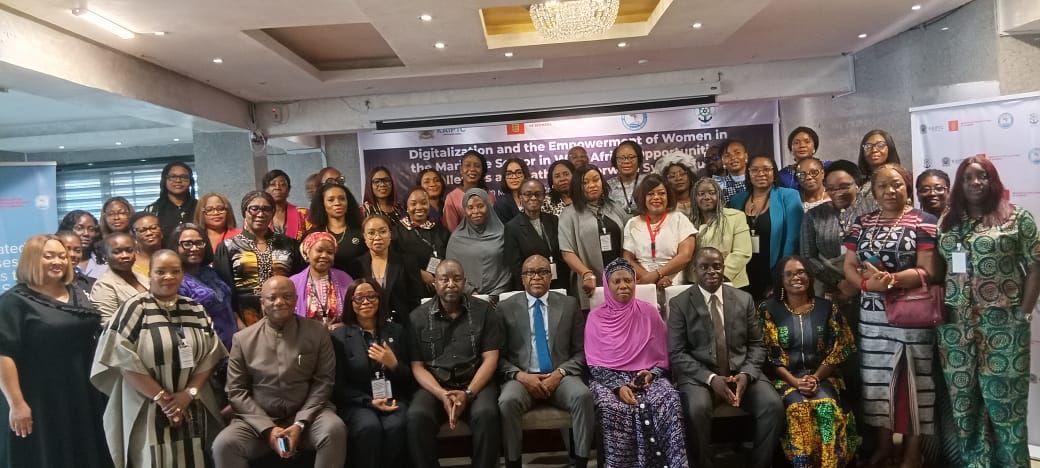
The initiative, which enjoyed the support of the Ministry of Foreign Affairs of Denmark and the Inter-Regional Coordination Centre (ICC), was consummated at the three- day  symposium titled “Digitalization and the Empowerment of Women in the Maritime Sector of West Africa: Opportunities, Challenges and Pathways.” held in Lagos on March 10th, 2026.
Speaking at the event, the Director – General of NIMASA, Dr Dayo Mobereola, pledged the commitment of the agency  to transforming the nation’s maritime domain and the entire West African sub-region into a global benchmark for gender-inclusive digital excellence.
Represented by the Director of Finance and Administration, Chudi Offordile, Mobereola emphasized that the maritime industry is undergoing a profound transformation driven by automation, smart logistics, and data systems.
He noted that while digitalisation creates new opportunities for efficiency and growth, it also exposes persistent gaps in the participation of women in the maritime sector, making their empowerment a critical priority for the industry.
“Across the world, digitalization is reshaping how ships operate, how ports function, how cargo is tracked, and how maritime administrations regulate and deliver services.
“While Digitalisation creates new opportunities, it also exposes persistent gaps particularly in the participation of women in the maritime sector and that is why empowerment of women in this area is critical.
“Across West Africa, women remain significantly underrepresented in many
areas of maritime operations.
“These disparities are not merely statistics; they
represent untapped talent, unrealized potential, and lost opportunities for
inclusive growth which we must find ways to close-out., ” he said.
The NIMSAS DG described digitalization as the ultimate disruptor of traditional barriers that have historically limited female participation.
“Digitalization acts as the “great equalizer,” shifting the industry’s centre of gravity from physical strength to intellectual agility and technical precision.
“It dismantles traditional barriers through AI-driven simulations and e-learning, which enhance the knowledge economy and promote skill acquisition, thereby creating new pathways for career advancement.
“Today a young woman in rural West Africa town can now access the same training modules as anyone in any part of the more advanced world.
“The transformation we seek is not an endpoint, but a continuous voyage. Digitalization is the wind in our sails, but inclusive policy is the rudder that guides us.” he said.
Describing the Blue Economy as a frontier of limitless potential, Mobereola said the agency is not merely seeking representation for women as a matter of social justice but pursuing sectoral transformation as a matter of economic survival.
He said the symposium resonated with the 2026 International Women’s Day theme, “Give to Gain,” urging stakeholders to move beyond rhetoric toward actionable strategies that will enable women in West Africa lead the next maritime frontier.
In his remarks, the Deputy Commandant of the KAIPTC, Brigadier General Zibrim Bawah Ayorrogo,highlighted  the significant role women play in shaping the future of maritime security and governance, especially as digital technologies redefine operational landscapes.
He noted that digital transformation offers a unique chance to enhance maritime domain awareness and coordination.
“The Gulf of Guinea is a maritime domain of immense strategic importance, rich in resources, and a hub for international trade.
“However, it also faces complex security challenges including piracy, illegal fishing, and trafficking.
“Digital transformation presents a unique opportunity to enhance maritime domain awareness, improve coordination, and strengthen response capabilities.
” It is imperative that women are not only included but empowered to lead and innovate within this evolving digital ecosystem, ensuring that technology serves as a tool for inclusive growth and security.
“Women’s participation in maritime affairs has historically been limited by socio-cultural and institutional barriers.
Yet, their involvement brings diverse perspectives and solutions vital for holistic maritime governance.
“Digital transformation can act as a catalyst to break these barriers by providing platforms for education, networking, and leadership development.
” It is encouraging to witness increasing numbers of women engaging in digital skills acquisition, policy formulation, and operational roles within maritime security institutions across the Gulf of Guinea, ” he said.
Ayorrogo said since 2021, the KAIPTC has dedicated a specialized department to women and youth issues in the peace and security domain, recognizing that diverse perspectives are vital for holistic maritime governance.
He, however, noted that despite the progress made, challenges such as access to technology and digital infrastructure and gender gaps still persist in STEM ( Science, Technology, Engineering, and Mathematics) education and professional training.
He added that digital threats such as cyber-attacks and misinformation campaigns also pose new risks that require specialized knowledge and vigilance.
To address these challenges, the KAIPTC deputy Commandant called for concerted efforts from governments, industry, academia, and civil society to create enabling environments where women can thrive as digital leaders and innovators in maritime security.
He expressed the commitment of KAIPTC  to supporting the transformation through research and capacity-building initiatives that integrate gender perspectives and digital competencies.
“Our training programs increasingly emphasize the intersection of technology, security, and gender inclusion, equipping women with the skills necessary to navigate and influence the digital maritime domain. Collaboration with regional and international partners is central to expanding these opportunities and fostering networks that amplify women’s voices and contributions.
“Governments in the Gulf of Guinea must prioritize regulatory reforms that facilitate women’s access to digital tools, protect against cyber vulnerabilities, and encourage their participation in decision-making processes. Such policies will not only enhance maritime security but also contribute to broader socio-economic development and peacebuilding efforts in the region.
“Private sector engagement is equally crucial. Technology companies, maritime operators, and financial institutions have a responsibility to invest in women-led digital innovations and entrepreneurship.
“Public-private partnerships can accelerate the deployment of cutting-edge technologies while ensuring they are accessible and relevant to women’s needs and aspirations within the maritime sector, ” he said.
The event drew a diverse range of women stakeholders, including senior officials from Ministries, Departments, and Agencies (MDAs), educational institutions, maritime journalists, and women leaders within the sector.

Continue Reading

Headlines

IWD: SIFAX distributes 500 food packs to Ijora community, empowers staff 

Geraldine Samuel, Senior Correspondent 
In a series of impactful activities spanning a school outreach, an employee empowerment webinar and a community food donation drive, SIFAX Group has marked the 2026 International Women’s Day with a multi-pronged initiative that touched the lives of hundreds of girls, women employees and vulnerable residents in Lagos.
One of the highlights of the celebration was an outreach programme to United Christian Secondary School, Apapa, Lagos, where over 500 girls received mentorship from senior female employees of the company.
 The session covered topics such as leadership, education, personal development and menstrual health awareness.
There was also a donation of textbooks to the school, menstrual pads, as well as perfumes to the students.
The speakers drew from personal career experiences to motivate the students, urging them to remain focused on their education and resist distractions.
 They emphasised that determination and discipline could open doors across any field — from business and law to medicine, technology and the creative industries.
Jesuyemisi Odeyemi, Company Secretary and Legal Head of SIFAX Group, charged the students to strive for excellence without reservation.
 “You are strong. You can do it, and you will. You will not only do it, but you will also do it well, you will do it better,” she told the girls.
Vanessa Uansohia, Head of Corporate Communications at Skyway Aviation Handling Company (SAHCO), SIFAX Group’s aviation arm, also challenged the students to confront self-limiting beliefs.
 “The only person that is stopping you is yourself,” she said, encouraging the girls to pursue their ambitions with bold confidence.
As part of internal activities to mark the day, the company also organised an interactive webinar for female employees focused on strengthening communication and leadership capacity in the workplace.
Speaking on the topic, “Speaking: A Tool for Growth, Multiplication, and Career Progression,” Public Speaking Strategist, Joyce Daniels, urged participants to embrace public speaking as a catalyst for professional advancement, noting that confidence and conviction are the cornerstones of effective communication.
“If you will grow, multiply and have progression in your career, you will speak from a place of conviction,” she said, adding that impactful leaders distinguish themselves by their willingness to boldly articulate their ideas.
Wunmi Eniola-Jegede, Group Coordinating Director, SIFAX Group, described International Women’s Day as a moment to celebrate the social, economic and cultural achievements of women while renewing the call for gender equality.
“This year’s theme, Give to Gain, resonates deeply with our mission of inclusivity and empowerment.
” Every woman is a leader in her own right, and giving back creates growth opportunities for individuals, organisations and communities,” she said.
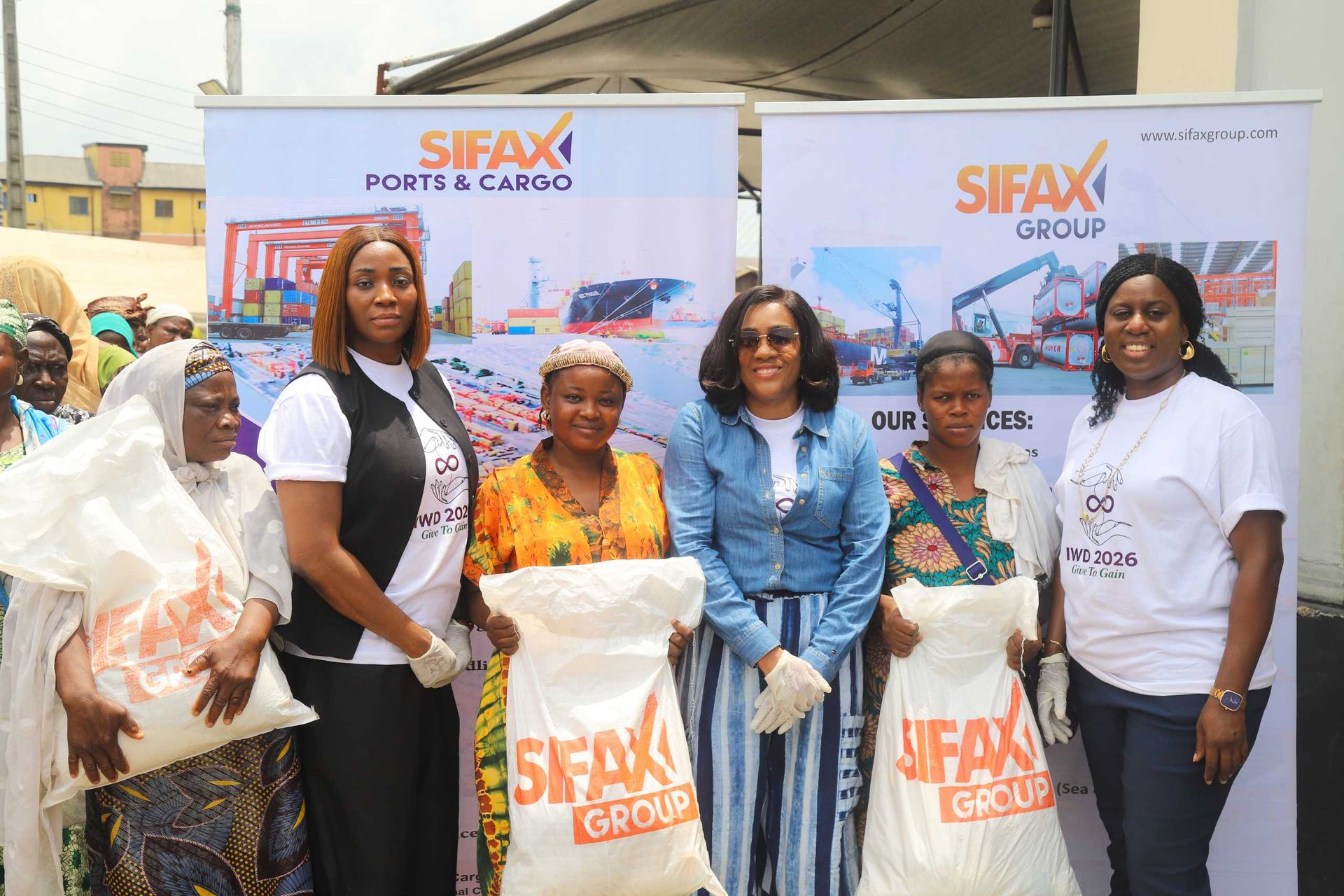
Extending its impact beyond the workplace, SIFAX Group also carried out a community outreach to Ijora where 500 bags of assorted food items were distributed to vulnerable households.
Each pack was assembled with essential household staples — rice, beans, vegetable oil, garri and salt, carefully curated to provide tangible relief to families within the community.
The distribution was conducted in collaboration with community leaders to ensure a transparent and orderly process.
Eniola-Jegede, who coordinated the outreach, noted that the initiative reflects the organisation’s culture of compassion and its determination to give back to the communities in which it operates.
She added that the exercise was also designed to amplify the message of International Women’s Day by encouraging women within the organisation to lead community interventions that uplift vulnerable groups.
Continue Reading

Headlines

IWD: Mobereola, NIMASA DG, celebrates women for their contributions to maritime industry 

Gloria Odion, Maritime Reporter 

The Director General of the Nigerian Maritime Administration and Safety Agency (NIMASA) , Dr Dayo Mobereola, has applauded the contributions of women to the development of the Nigerian Maritime industry.

In a goodwill message to mark the 2026 International Women’s Day with the theme “Give to Gain”, Dr Mobereola celebrated the strength, expertise and invaluable contributions of women to the sector, emphasising that the industry has gained progress, innovation and sustainable growth through their efforts.

According to him “I celebrate your strength, expertise, and invaluable contributions to our maritime industry.

“The theme #GiveToGain reflects your daily impact. Through your professionalism, leadership, and resilience across sea-going, regulatory, technical, and administrative roles, you give excellence and our sector gains progress, innovation, and sustainable growth.”

Mobereola further commended the dedication of women in the industry and reaffirmed his commitment to “a maritime industry where every woman is empowered to lead and thrive”.

International Women’s Day is a global observance that seeks to draw attention to challenges faced by women and the need to ensure gender equity.

This year’s theme “Give to Gain”, focuses on investing in women through resources, education, and mentorship to create a stronger, more equitable society, highlighting the fact that empowering women brings collective benefits; economies, communities, and workplaces all grow when women thrive.

Continue Reading

Trending