Connect with us

Headlines

Freight Forwarders call out NPA over duplication, illegal imposition of payment of ETO Call- up system fee on importers


Funso OLOJO
Freight Forwarders, under the egies of the Council of Managing Director of Licensed Customs Agents(CMDLCA) has accused the Nigerian Ports Authority(NPA) of illegally imposing the payment of fees for the ETO Call- up system on importers and their agents.
The National President of the Association, Mr Lucky Ayis Amiwero, make this allegations in his petition to the Managing Director of the NPA, Dr Abdulahi Datsotho.
In the petition dated January 25th, 2025 and a copy each sent to the Secretary of the Government of the Federation, Minister of Finance, Presidential Enabling Business Environment committee(PEBEC) and the Nigerian Shippers’ Council, Amiwero claimed that the payment of ETO Call- up system fees was not backed by any law.
He further submitted that the payment was a duplication as the importers and their agents have already paid for the service under the Port lease/ concession agreement as vehicle entry permit (VEP) and tenure parking rate(TPR) under maximum tariff for cargo due.
According to him ” ETO CALL-UP SYSTEM is not tied to any service on Import or Export for the processing of goods.
“it has no service that directly involves service to Importer/Licensed Customs Agents(LCA) but is an  infrastructure developed for the access of Transport in to the Port, as a result of faulty Port Lease/ Concession Agreement that exclude Trailer Park and Holding Bay  which clearly contravenes  Trade Facilitation Agreement(TFA)”
Amiwero said that it was the responsibility of the NPA to free flow of traffic in and out of the Port to facilitate trade and not that of the importers and their agents.
He said the agency has to do this with passing its financial implications to the importers and their agents.
” It is strictly Nigerian Ports Authority(NPA)  responsibility  to regulate Traffic, within the Limit of a Port or the approach to a Port  under Section  32-(a) .
“it is the legal responsibility of the authority(NPA) to provide for ease of access to the port , it is part of Nigerian Port infrastructure which is to facilitate trucks in to the Port.
“It is the responsibility of the Nigerian Ports Authority (NPA) to regulate the Traffic and not that of the Licensed Customs Agents/Importer.
” The ETO CALL_UP system is an infrastructure that is owned and operated by NPA contractor to perform NPA function,   due to faulty lease agreement  which, initially excludes Trailer Parks and Holding bay from the Lease / Concession, Agreement ,creating the bottleneck and gridlock to Access the Port.
“The Lack  of legal framework to regulate the Economic interest in the Port, has given the Concerned Agencies in the Port, room to impose all  kind of illegal fees on the cargo interest without concern for Service tied to charges and who is responsible for  payment.
“This imposition makes our Ports one of the most expensive and unattractive within the sub-region with multiple charges, levies, fees which are not approved or  cargo related, just like the ETO- Call System introduced by NPA, that has no cargo  service tied to it, is clearly the responsibility of Nigerian Ports Authority(NPA) in line with Section 32-(a) Regulating Traffic, within the limit of the port or approach to the Port”
Amiwero further claimed that ETO Call- up system is part of the development of the Port which falls under the functions of the NPA which is part of the infrastructural development for the movement of vehicles.
Consequent on this, the freight forwarder wanted the NPA to utilise part of the 7 per cent Port development levy collected from importers and their agents on import for the execution and sustenance of ETO Call- up system.
“7% surcharge is paid by Nigerian Importers through the Licensed Customs Agents (LCA) on every import collected since 1978 till date.
“Nigerian Ports Authority(NPA) should utilize part of their 7% to provide for truck access to the  Port going to the Terminals, which is covered statutorily  under section 32-(a)”
He blamed the PBE and the NPA for leasing the existing holding bays for truck which has now resulted to traffic gridlock due to lack of space for trucks.
“The holding bay for trucks, that existed before  port concession agreement within and around the ports, was ceded out to Terminal Operators as well as Land space, without providing alternative.
“All such spaces were ceded to Terminal Operators, forcing the trucks owners to use the available Port access roads to hold empty containers and wait as holding bay awaiting access to the Port to load client consignment”
“Before the ceding of Port operation to Terminal Operator  in 2005, there was no such thing as Gridlock, each Port operated their Holding bay, where tucks wait to load their respective consignments in and out of the Ports.
“The Ports operated their holding bay and trailer parks as follows:
APAPA PORT: Holding bay are in the Port
TIN CAN ISLAND PORT: Its holding bay was at the front of the port
LILYPOND TERMINAL: Its holding bay was under the bridge in front of the Port
BRAWAL/PAN-ATLANTIC JETTY: its holding bay was in front of the Jetty and
TRAILER PARKS: was at Beger by Kirikiri Junction”
Continue Reading
Click to comment

Leave a Reply

Your email address will not be published. Required fields are marked *

Headlines

Blue Economy: Why Nigeria must awaken the sleeping giant for economic prosperity

Chika Chukwudi

At a time when Nigeria is urgently seeking sustainable pathways to economic stability, poverty reduction, and mass job creation, it has become increasingly clear that the nation must rethink its development priorities.

While agriculture, oil and gas, technology, and manufacturing all hold value, none offers the scale of untapped opportunity that lies within Nigeria’s blue economy and maritime sector.

It is time for the Federal Government to invest more aggressively in the blue economy than any other sector; not as an experiment, but as a strategic national imperative.

A sector with vast untapped potential,Nigeria is geographically positioned as a maritime powerhouse.

With over 850 kilometers of Atlantic coastline and access to the Gulf of Guinea, the country sits on one of the busiest maritime routes in Africa.

Additionally, Nigeria is blessed with extensive inland waterways, including the River Niger and River Benue systems, as well as numerous lakes and dams.

Yet, despite these natural advantages, the maritime sector contributes far below its potential to national GDP.

Ports remain under-optimized, inland waterways underutilized, fisheries underdeveloped, and coastal tourism largely unexplored.

A nation surrounded by water should not be surrounded by economic stagnation.

Job Creation at Unmatched Scale

No other sector has the capacity to generate employment across such a wide spectrum of skill levels as the blue economy.

From artisanal fisheries to industrial aquaculture, from shipbuilding and repairs to maritime logistics, from port management to marine biotechnology, the opportunities span both formal and informal sectors.

Unlike capital-intensive industries that absorb limited skilled labor, the maritime sector can employ millions—fishermen, boat builders, marine engineers, dockworkers, environmental scientists, processors, exporters, and entrepreneurs.

Investing in fisheries and aquaculture alone could significantly reduce Nigeria’s dependence on fish importation while creating rural jobs.

Developing shipbuilding and maintenance hubs would stimulate industrial growth. Expanding coastal tourism would empower local communities.

If properly harnessed, the blue economy can become Nigeria’s largest employer of labor.

A Powerful Tool for Poverty Alleviation

Poverty in Nigeria is most severe in rural and coastal communities. Ironically, these communities sit closest to abundant aquatic resources.

By investing in modern fishing techniques, cold chain logistics, processing facilities, and export frameworks, the government can raise incomes at the grassroots level.

The blue economy directly connects natural resources to livelihoods. It allows small-scale operators to participate in global value chains.

 It empowers women in fish processing and marketing. It supports youth entrepreneurship in aquaculture and marine services.

Few sectors distribute wealth as inclusively as the maritime ecosystem.

Economic Diversification Beyond Oil

For decades, Nigeria’s economic health has fluctuated with global oil prices. The volatility of crude markets has repeatedly exposed the risks of mono-product dependence.

Meanwhile, countries that invested heavily in maritime trade and ocean-based industries have built resilient economies.

The global shipping industry drives over 80 percent of world trade by volume.

 Nigeria, as Africa’s most populous nation, should be a dominant maritime hub; not merely a participant.

Strategic investment in port modernization, maritime security, indigenous shipping lines, and marine renewable energy can generate foreign exchange earnings, attract international investors, and reduce capital flight.

Diversification is no longer optional; it is survival. And the blue economy offers the strongest foundation for that transition.

Strengthening National Security and Regional Influence

Beyond economics, maritime investment strengthens national sovereignty.

Improved naval capacity, port efficiency, and maritime surveillance reduce piracy, illegal fishing, and resource theft in the Gulf of Guinea.

A strong maritime economy enhances Nigeria’s leadership role in West Africa and positions the country as a gateway for regional trade under the African Continental Free Trade Area framework.

Catalyzing Industrial Growth and Infrastructure Development

Heavy investment in the maritime sector triggers multiplier effects across the economy.

 Shipyards require steel, engineering services, and technical expertise. Ports demand road and rail connectivity. Fisheries require cold storage, packaging, and logistics systems.

Every naira invested in maritime infrastructure stimulates broader economic activity.

Unlike sectors that operate in isolation, the blue economy integrates transportation, manufacturing, trade, energy, tourism, and environmental management into one interconnected growth engine.

A Long-Term, Sustainable Growth Model

When managed responsibly, marine and aquatic resources are renewable. Sustainable fisheries, offshore wind energy, eco-tourism, and marine biotechnology offer growth without exhausting natural capital.

With proper regulation and environmental safeguards, Nigeria can build a blue economy that generates prosperity today without compromising future generations.

A Call for Bold Policy Action

The question is not whether Nigeria should invest in the blue economy. The question is whether Nigeria can afford not to.

Prioritizing maritime education, strengthening maritime institutions, expanding coastal infrastructure, supporting indigenous shipping, and financing aquaculture enterprises should form the core of national economic planning.

The blue economy is not just another sector, it is a sleeping giant. And if awakened through deliberate policy and sustained investment, it can alleviate poverty, generate millions of jobs, stabilize foreign exchange earnings, and secure Nigeria’s economic future.

Nigeria’s prosperity lies not only beneath its soil, but upon its waters.

The time to act is now.

Chika Chukwudi,the  Author of Blue Economy: Gateway to a Sustainable Future, is a Staff of  NIMASA and writes from Lagos 
Continue Reading

Headlines

Tantita empowers NSCDC with modern tools for enhanced performance, operational efficiency 
Funso OLOJO, Editor 
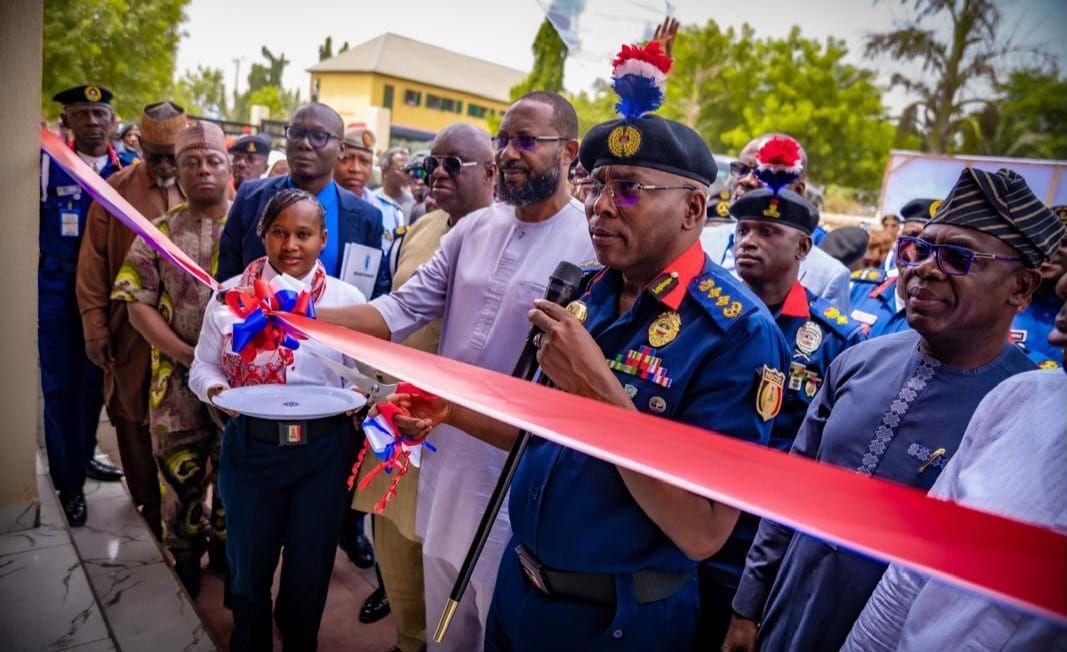
The Tantita security company has empowered the Nigeria Security and Civil Defence Corps (NSCDC) with modern equipment and operational vehicles to enhance its performance.
This follows the donation of a modern command control centre and Hilux vehicles to the security outfit which were unveiled in Abuja on Thursday, February 26th, 2026.
Speaking at the handing over ceremony, the  Managing Director, Tantita, Kestin Ebimorbowei, said the partnership aligns with the Federal Government’s reform agenda aimed at strengthening economic performance and national stability.
He described the initiative as a demonstration of the company’s commitment to national development.
Ebimorbowei, who was represented by the company’s  Executive Director, Operations and Technical, Capt. Warredi Enisuoh,said although the centre is located in Abuja, its operational reach will cover the entire country.
Enisuoh noted that the facility is equipped with advanced monitoring systems to enhance air, land, and real-time incident surveillance.
He described the 24-hour centre as a major step toward deeper technological integration within the corps, adding that it would support the NSCDC and other security agencies in fulfilling their constitutional mandates.
Capt. Enisuoh commended NSCDC personnel for protecting Tantita operatives, noting that private security guards are not legally permitted to bear arms.
He also revealed that 15 Officers lost their lives while working with the company and pledged continued support for the families of fallen personnel.
“We rate this partnership ten over ten,” he said, citing the sacrifices of uniformed Officers.
In his remarks, NSCDC Commandant General, Professor Ahmed Audi, thanked Tantita for the fully furnished facility and two Hilux operational vehicles.
He announced that the structure has been named the “Nuhu Ribadu Hydrocarbon and Maritime Security Command and Control Centre.”
Audi said the centre would be integrated with the Office of the National Security Adviser to strengthen coordination among security agencies.
 According to him, it will enhance intelligence gathering, information sharing, and inter-agency collaboration, particularly in hydrocarbon and maritime security.
He stressed that structured data management and credible intelligence dissemination are critical to national development and expressed confidence that the new facility would significantly boost the corps’ operational capacity.
Also speaking, the Executive Chairman of Zuma Energy Power Ltd, Dr. Innocent Ezuma, announced the donation of an additional building for VIP protection services.
Represented by Nwoko Alex, he said the facility would improve standards in safeguarding high-profile individuals while contributing to national security.
He described the initiative as a global-standard addition to Nigeria’s security architecture and expressed confidence that it would strengthen investor confidence and economic growth.
Continue Reading

Headlines

Lagos retirees kick over delay in pension increase, mull protest action
Gloria Odion, Reporter 
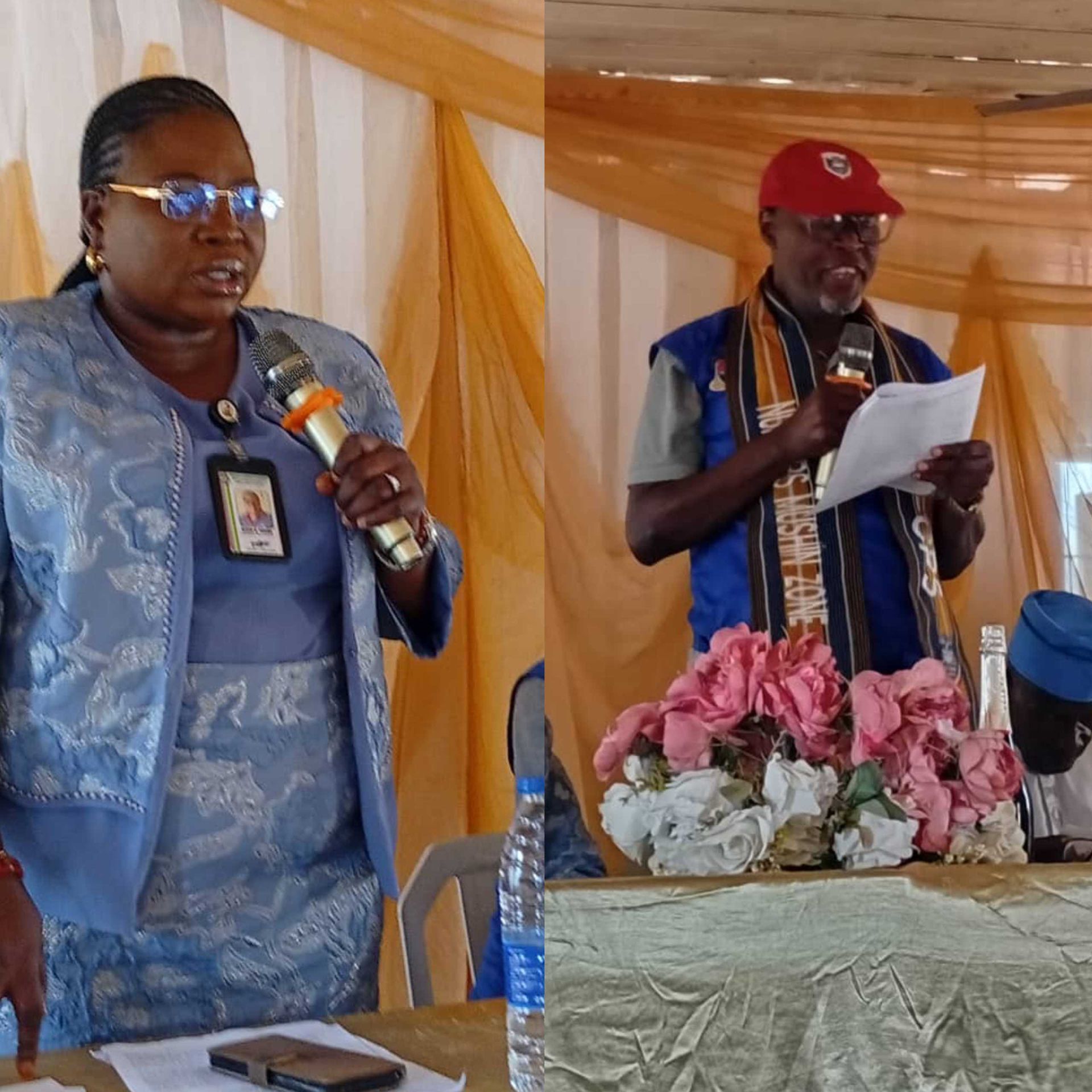
The chairman, Nigeria Union of Pensioners, contributory Pension scheme, (NUPCPS) Lagos State Council, Comrade Michael Omisande has appealed to the Director General, Lagos State Pension Commission, (LASPEC), Babalola Obilana, to be proactive on the issue of Pension increases for CPS Pensioners in Lagos State.
He said it is over two months the template for pension increases had been submitted and hinted of a looming protest by Retirees in Lagos State, If LASPEC keeps foot dragging on the pension increases.
He made this submission on Friday, February 27th, 2026 while addressing the Pensioners at the Open Congress day celebration in Oshodi, Lagos.
Comrade Omisande said Governor Sanwoolu and DG LASPEC had promised at different fora to adopt the Federal Governments template to pay pension increases for Lagos State Retirees, adding that Federal Retirees had been enjoying the pension increases since November, 2025.
Meanwhile, the chairman, Nigeria Labour Congress, (NLC) Lagos State, Comrade Agnes Sessie, has vowed to take up the battle for the implementation of Pension increases for Retirees under the contributory Pension scheme (CPS) in the State.
While speaking at Oshodi Open Congress Day, Comrade Sessi said the CPS Pensioners deserve to get the pension increases like their federal counterparts, adding that a political solution would also be adopted.
She said the Labour Movement would use the election year to renegotiate for another minimum wage for Lagos State Workers and also canvass for pension increase implementation for CPS Pensioners.
Comrade Sessie commended the efforts of Governor Babajide Sanwo-olu in the running of affairs of the State.
The open congress day is in commemoration of the birth of Nigeria Union of Pensioners, contributory Pension scheme, NUPCPS, in Nigeria on 27 February, 2017.
The theme of this year’s celebration is Freedom of Association, a fundamental human right in Nigeria.
Continue Reading

Trending