Connect with us

Headlines

APM Terminals reaffirms commitment to sustained investments in physical, infrastructural development of Nigeria ports

Funso OLOJO 
The APM Terminals, Apapa has renewed its commitment to long and sustained investments in infrastructural development of Nigerian ports.
Making the pledge in Lagos during the company’s partners’ engagement forum,
the Chief Executive Officer of the Danish Terminals, Frederik Klinke, disclosed that the company will deploy strategic partnerships and  advanced digital tools to deliver faster, more transparent, and more customer-focused services.
The terminal operator further reiterated commitment to strengthening collaboration across the maritime sector to improve operational efficiency, accelerate cargo clearance, and boost Nigeria’s trade competitiveness.
 The Forum in Lagos, which is an annual event, brought together key players in the supply chain, including port operators, government agencies, shipping lines, importers, exporters, and freight forwarders.
Klinke expressed  gratitude to customers for their trust and continued business despite the challenges affecting the global supply chain.
 He noted that many of these difficulties, such as congestion, delays, and fluctuating freight costs, are not unique to Nigeria but require a concerted, localised response to ensure the country’s ports remain competitive.
Terminal Manager, Steen Knudsen, echoed these sentiments, underlining the role of stakeholder collaboration in achieving a more seamless port ecosystem.
He encouraged customers to continue sharing feedback and suggestions, describing such engagement as essential to identifying bottlenecks and implementing solutions.
Knudsen pointed to recent achievements, such as the launch of regular rail freight services between Apapa and Moniya three times a week, which have significantly reduced road congestion and improved cargo turnaround times.
 Other improvements include the expansion of the terminal’s examination yard, upgrades to container scanning and inspection processes, greater investment in barge operations to move cargo by water, and the creation of bespoke export packages to speed up clearance for Nigerian exporters.
 He stressed that progress in these areas could only be sustained if all parties in the logistics chain worked in close alignment.
Knudsen also highlighted how APM Terminals Apapa has expanded its online customer portal to allow clients to initiate transactions, track cargo movements, and receive real-time updates from the comfort of their offices or homes.
Speaking earlier, APM Terminals Apapa Commercial Manager, Kayode Daniel, spoke passionately about the central role of customers in shaping the company’s trajectory.
He said APM Terminals views its clients not merely as service users but as active partners in growth and innovation, remarking that each milestone reached is proof of what can be achieved when there is mutual trust and shared vision.
Daniel assured stakeholders that the company would continue to invest in cutting-edge solutions, streamline processes, and deliver service improvements that make doing business easier and more rewarding in an evolving trade environment.
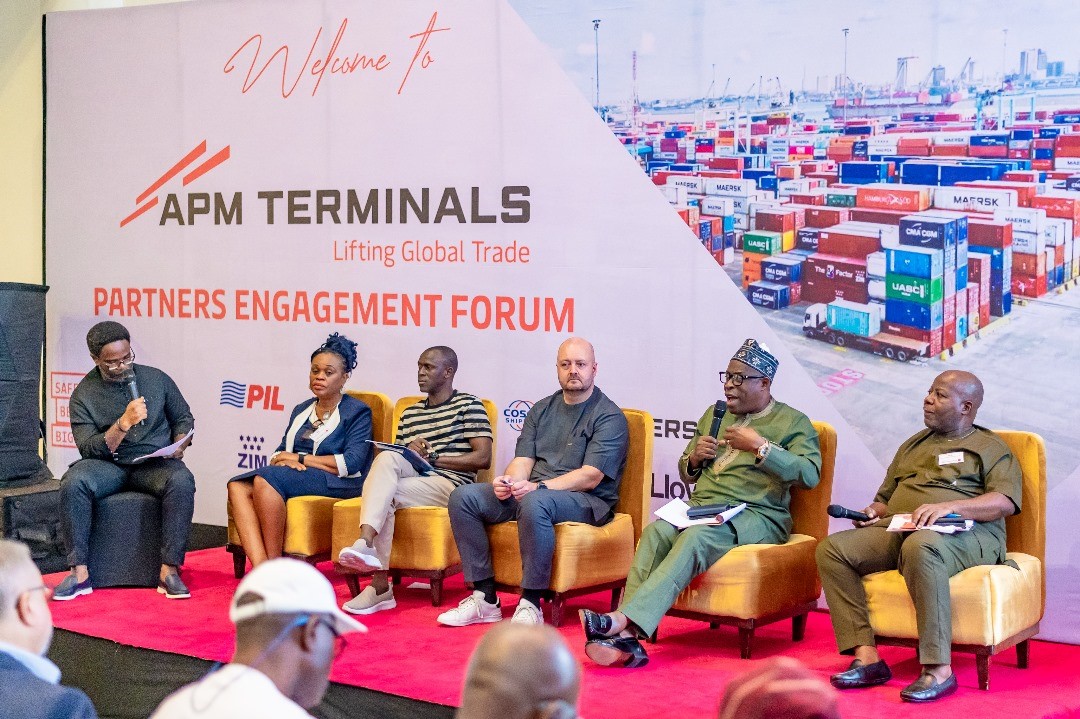
A panel discussion titled “Terminal Progress and Future Outlook” provided an opportunity for in-depth dialogue on the use of technology to drive efficiency.
 Moderated by the Chief Finance Officer of APM Terminals Nigeria, Courage Obadagbonyi, the session explored how digital platforms, automation, and data-sharing can cut delays and simplify transactions.
Government agencies operating at the port also outlined measures they are implementing to support faster cargo clearance.
 Port Manager of Lagos Port Complex Apapa, Lawal Adebowale, revealed that the Nigerian Ports Authority is deepening channels to accommodate larger vessels, upgrading berth infrastructure, and enhancing pilot training to meet the demands of modern shipping.
Director of Port Inspection at the National Agency for Food and Drug Administration and Control (NAFDAC), Olaniran Olakunle, explained that the agency’s automated product administration and monitoring system now provides an end-to-end online process for the registration and clearance of drugs, food products, and medical devices, significantly reducing manual delays.
Comptroller of the Apapa Area Command of the Nigeria Customs Service, Babatunde Olomu, represented by Assistant Comptroller Abubakar Usman, emphasised that faster clearance can only be achieved when importers and clearing agents comply fully with documentation and regulatory requirements.
Director of Regulatory Services at the Nigerian Shippers’ Council, Margaret Ogbonna, stressed the need for frequent inter-agency meetings to harmonise procedures and avoid working in silos, noting that coordinated action is essential to aligning port processes with broader national trade strategies.
The event concluded with the presentation of awards to outstanding customers in recognition of their role in driving trade facilitation and operational excellence.
 Many participants described the gathering as timely, noting that the momentum generated by such collaborative forums could help Nigeria unlock greater economic potential by making its ports more competitive in the West African region.
Continue Reading
Click to comment

Leave a Reply

Your email address will not be published. Required fields are marked *

Headlines

Maersk’s suspension of shipping operations through Strait of Hormuz raises anxiety among Nigerian importers 
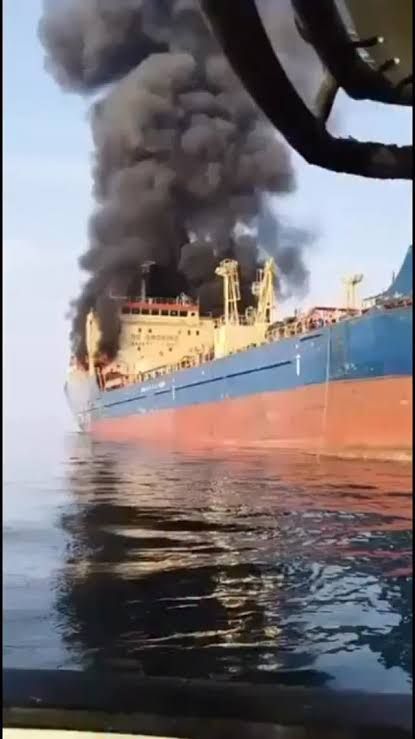
Attack on vessel in the Strait of Hormuz
Funso OLOJO, with agency report
The on- going hostilies in the Middle East have continued to stifle international trade as most of the shipping companies have suspended voyage through the troubled Strait of Hormuz.
The joint attacks by the military forces of the United States of America (USA) and Israel on the Islamic Republic of Iran, which resulted in the assassination of its Supreme leader, Ayatollah Ali Khomenei and over 40 top military officers of the Islamic country,have put a strain on shipping operations along the busy vessel route of Strait of Hormuz as the Houthis militias, who are sympathetic to Iran, have threatened to attack vessels on the route.
Strait of Hormuz accounts for one third of the world shipping passage while the route accommodates the world largest crude tankers , despite its narrow width.
As a result of the threats, which have raised safety concerns on the vessels, cargos and crews, major shipping lines have halted their operations along the route.
Maersk, the world’s largest container shipping company, has halted passage of cargo vessels through the Strait of Hormuz for “safety” reasons.

“We are suspending all vessel crossings in the Strait of Hormuz until further notice,” the Danish group said in an online advisory.“The safety of our crews, vessels and customers’ cargo remains our key priority,” it said.

Iran’s Revolutionary Guard had earlier announced the Strait’s closure.

Major Middle Eastern oil and gas exporters rely on it to move supplies to international markets while importing nations depend on its uninterrupted operation.
China, one of the biggest destinations of Nigerian importers, make use of the route for import of the crude oil from the Middle East, especially Iran and export of its manufactured goods to the developing countries, especially Nigeria.
This development has raised anxiety among Nigerian importers who expressed concerns over the implications of the disruption on the route one the cost of imports, especially from China.
Continue Reading

Headlines

NRC hosts Rotary Club on mobile train
Gloria Odion, Reporter 
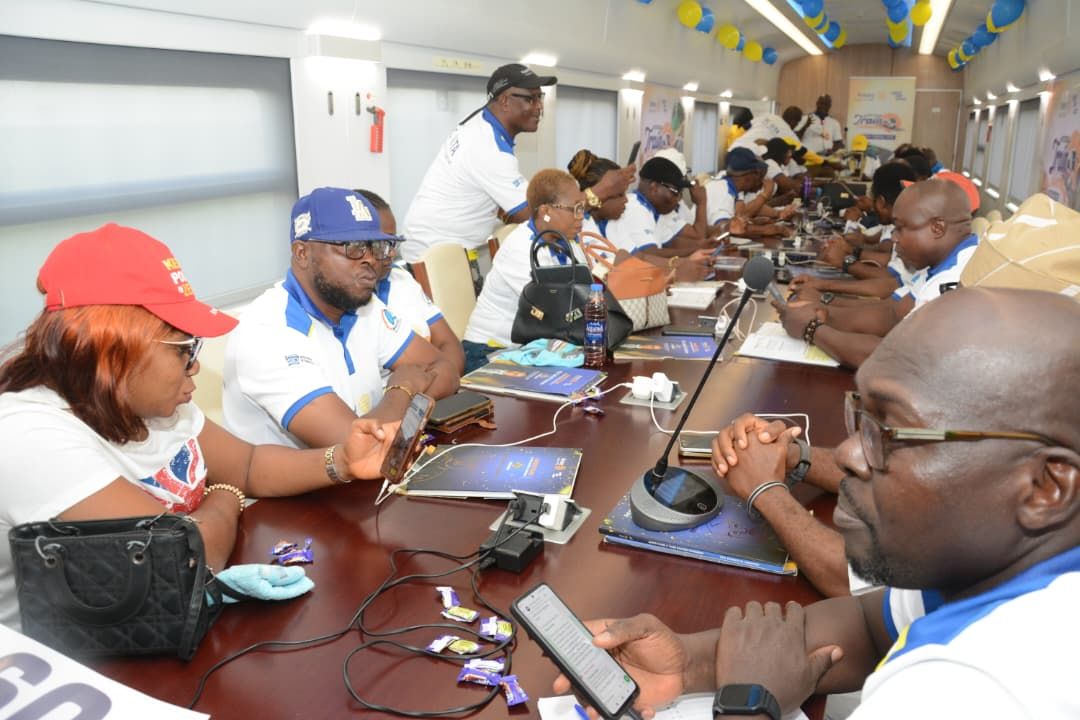
The Nigerian Railway Corporation (NRC) has played host to the Rotary Club of Ota by hosting Nigeria’s first-ever Rotary fellowship on a moving train, setting a remarkable benchmark for innovation in civic and humanitarian engagement.
The groundbreaking event brought together members of the club aboard a moving train for fellowship, leadership interaction, and strategic discussion centered on service to humanity, climate action, and sustainable community development.
The fellowship was led by the President of the Rotary Club of Ota, Mr. Charles Umukoro, alongside members of the club’s executive and general membership.
A major highlight of the occasion was the visit of the Railway District Manager, Engr. Rasheed Adedeji, who warmly welcomed the Rotarians on board.
His presence underscored the significance of the event and further strengthened the cordial relationship between the railway management and the Rotary Club.
In a symbolic moment reflecting shared values of service and partnership, Engr. Rasheed Adedeji was formally inducted as a member of the Rotary Club of Ota following his welcome address, adding prestige and deeper institutional collaboration to the landmark fellowship.
The moving-train fellowship was widely described as symbolic of progress, innovation, and forward movement—values that align closely with the transformation agenda of the Nigerian Railway Corporation.
The Nigerian Railway Corporation said it was committed to supporting initiatives that promote national development, environmental sustainability, and community advancement, while showcasing the railway as a safe, modern, and strategic platform for engagement.
Continue Reading

Headlines

In Malmo, Sweden, NIMASA renews capacity development partnership with WMU
Gloria Odion, Maritime Reporter 

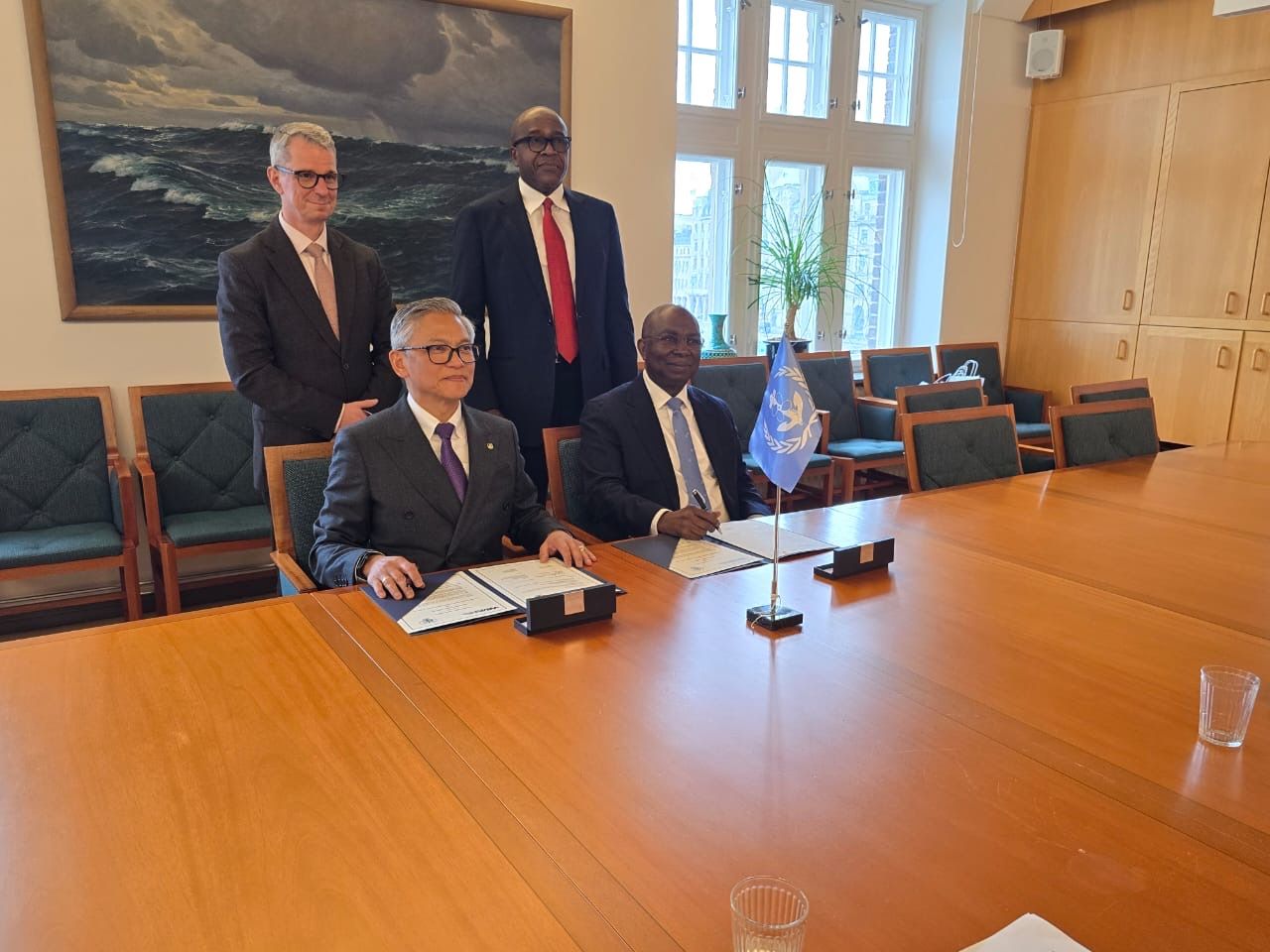
The Nigerian Maritime Administration and Safety Agency (NIMASA), has renewed its strategic capacity development partnership with the World Maritime University (WMU), Malmö, Sweden, through the signing of a four-year Memorandum of Understanding (MoU) aimed at strengthening Nigeria’s maritime human capital and institutional capacity.

Speaking at the MoU signing ceremony, the Director General of NIMASA, Dr. Dayo Mobereola, described the partnership as a critical pillar in NIMASA’s human capital development framework and a strategic investment in Nigeria’s maritime future.
“This collaboration has significantly strengthened our technical and regulatory capabilities over the years.

“Officers trained at WMU have enhanced our effectiveness in maritime safety administration, environmental compliance, maritime law, and shipping management.

“Their expertise has also reinforced Nigeria’s participation at the International Maritime Organization and other international maritime platforms,” he stated.

Under the renewed MoU, which was first signed in 2022, NIMASA will sponsor at least ten officers annually for the 14-month Master of Science programme at WMU in Malmö for the 2026–2029 intakes, as well as at least one officer for the Master of Philosophy (MPhil) programme jointly delivered by WMU and the International Maritime Law Institute (IMLI), Malta.

The MoU also provides for distance learning, executive professional development courses, research collaboration and technical assistance to strengthen NIMASA’s capacity in maritime safety, environmental management, seafarer certification and implementation of international maritime instruments.

WMU will further seek additional fellowships from international donors for qualified NIMASA candidates.

Dr. Mobereola endorsed the MoU on behalf of NIMASA with the President of WMU, Professor Maximo Q. Mejia Jr signing on behalf of the University while Executive Director Finance and Administration, NIMASA ,Chudi Offodile and the Registrar of WMU, Mr. Peter Marriott both signed as witnesses.

Established in 1983 by the International Maritime Organization, WMU was mandated to strengthen global maritime capacity, particularly in developing countries.

The University has since become a leading centre of excellence, and Nigeria has benefited significantly through the training of NIMASA officers who continue to enhance national maritime governance and international engagement.

Continue Reading

Trending