Customs
Dismissed Customs officers, importer of 661 pump- action rifles bag 16 years jail term

Eyewitness reporter
Mahmud Hassan, Oscar Okafor, and other dismissed Customs officers who were arrested in 2017 in connection with the importation of 661 pump rifles have been sentenced to a cumulative 16 years jail term by the Federal High Court in Lagos on Friday, December 3rd, 2021.
The suspects were convicted for unlawful importation of prohibited firearms, forgery, uttering of forged documents, and bribery.
It was gathered that Hassan conspired with his accomplices to unlawfully import 661 pump-action rifles into the country.
Others convicted by the trial judge, Justice Ayokunle Faji, were Oskar Okafor, Donatus Achinulo, and Mahmud’s company, Hassan Trades Limited.
Justice Faji, who delivered the verdict after reading the judgment for five hours, however, acquitted and discharged Abdulahi Danjuma of all the charges.
Julius Ajakaye, and one of the defence counsels, Adamu Ibrahim, passed on while the trial lasted for about four years.
The court judge was convinced of the charges against the suspects and sentenced them to eight years imprisonment each on the said count.
On count one (conspiracy), Justice Faji found the first, second, and third defendants guilty and also sentenced them to eight years’ imprisonment each.
The judge also ordered the forfeiture of the properties of the convicts to the Federal Government of Nigeria as provided for by the law under which they were charged, while also ordering that the company, Hassan Trading Limited, used as a vehicle to smuggle, be closed and its assets forfeited to the Federal Government.
Justice Faji, however, discharged and acquitted the fifth defendant.
According to him, the offence committed by the convicts touched on the security of the country, adding that though the relevant provisions of the law for the offence which they were charged and convicted prescribed life imprisonment, but said the court, however, had discretion.
The trial judge said he would refrain from giving a maximum punishment but added that the convicts must be made an example to serve as a deterrent to other would-be criminals.
He listed the convicts again as Mahmud Hassan, Oscar Okafor, Donatus Achinulo, and Salihu Danjuma, nothing that the fifth defendant, Matthew Okoye, was at large.
According to the prosecution, they also forged a bill of lading issued in Istanbul on January 9, 2017, falsely claiming that it was issued in Shanghai, China.
They were said to have attempted to evade the payment of customs duty by filling “steel door” as the content of the container instead of rifles.
The prosecution also alleged that the first convict, Hassan, corruptly gave N1m to government officials at the Apapa Port to prevent the search by Customs officials.
But the accused had pleaded not guilty when the charges were read to them. The judge, however, maintained that the sentence shall run concurrently.
The Comptroller General, Colonel Hameed Ali, (rtd) had in January 2017, told newsmen at Ikeja, that despite the Federal Government’s ban on pump-action rifles and other firearms, 661 pieces of the rifle were found in 49 boxes.
According to him, they were concealed in steel doors and other merchandise goods in a 40-feet container conveyed in a Mack truck with registration number BDG 265 XG.
Colonel Ali, at that time, said that three suspects were arrested in connection with the illegal importation.
The container according to the Customs Service was arrested around the Apapa- Mile 2 expressway where it was discreetly packed.
Sources say the goods were manufactured in China and taken through Turkey into Lagos, Nigeria.
The Customs boss revealed that preliminary investigation showed that the consignment went through clearance at the Lagos port but that all the officers behind the deal were undergoing interrogation while other suspects were in custody and thereafter charged to court.
Also, The Nigeria Customs Service (NCS), in 2017, declared two of its officers wanted over the infamous importation of 661 pump-action rifles into the country.
The officers declared wanted were Abdulahi, I, an assistant superintendent of customs (ASC), with service number 44483 and ACIC Odiba Inah, with service number 133386.
Consequently, however, the Federal government in August 2017, arraigned five men for allegedly importing 661 pump-action rifles into the country without lawful authority.
The accused were arraigned before Justice Ayokunle Faji at the Federal High Court in Lagos.
They are Mahmud Hassan, Oscar Okafor, Donatus Achinulo, Matthew Okoye, said be at large, and Salihu Danjuma.
In the charge, the Attorney General of the Federation and Minister of Justice said the accused brought the rifles into the country from Turkey through the Apapa Port in Lagos, using a 40-feet container, which they falsely claimed contained steel doors.
To facilitate the illegal importation, the accused allegedly forged a number of documents including a bill of lading, a Form M and a Pre-Arrival Assessment Report.
According to the prosecution, in order to evade payment of Customs duty, the accused allegedly forged a bill of lading issued in Istanbul on January 9, 2017, falsely claiming that it was issued in Shanghai, China.
In the forged bill of lading, they allegedly filled “steel door” as the content of the container instead of rifles.
They were also said to have allegedly offered a bribe of N400,000 to an official of the Nigeria Customs Service attached to the Federal Operative Unit to influence the said officer not to conduct a “hundred percent search on the 40-feet container with number PONU 825914/3.”
The prosecution also alleged that the first accused, Hassan, corruptly gave N1m to Customs officials at the Apapa Port in order to prevent the search of the container.
In the last count, the Federal Government alleged that the defendants had between 2012 and 2016 illegally imported several double-barreled shotguns, pump-action rifles, and single-barreled shotguns into the country through Lagos.
The eight counts pressed against them border on conspiracy, importation of prohibited firearms, forgery, uttering of forged documents, and bribery.
The offences were said to be contrary to sections 1(2)(c), 1(14) (a)(I), and 3(6) of the Miscellaneous Offences Act Cap M17, Laws of the Federation of Nigeria, 2014.



Customs
MACI hails Customs’ anti-corruption framework, demands full implementation
Funso OLOJO, Editor
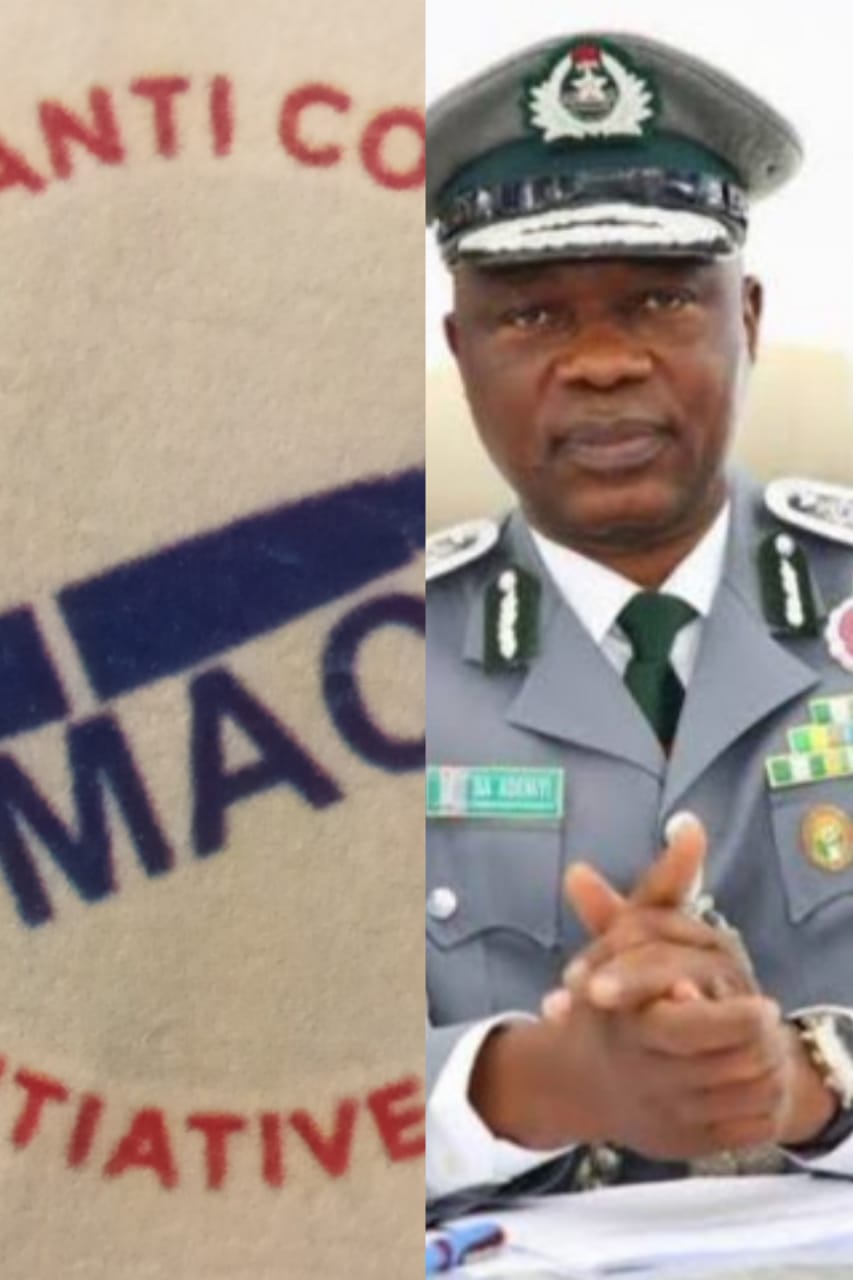
The Media Anti-Corruption Initiative (MACI) has applauded the Comptroller-General of Customs, Adewale Adeniyi, for introducing a comprehensive anti-corruption framework aimed at identifying institutional vulnerabilities, strengthening internal controls and promoting integrity across the operations of the Nigeria Customs Service (NCS).
The initiative, which MACI described as a significant milestone in the fight against corruption within the Service, is anchored on three key documents signed by the Customs chief: the Standard Operating Procedure (SOP) for Internal Corruption Risk Analysis and Mapping (ICRAM), the ICRAM Handbook and the Integrity Action Plan (IAP).
In a statement jointly signed by MACI President, Funso Olojo, and Project Coordinator, Lod Onyeji, the organisation described the development as a “pivotal moment in the fight against corruption within the Nigeria Customs Service.”
Mr Olojo, who commended the initiative of the Customs, noted that the stance of the agency on corruption is in alignment with the aims and objectives of MACI which is an advocate for corruption- free society.
The signing ceremony, held on October 6th, 2026, at the NCS Headquarters in Abuja, also witnessed the inauguration of the ICRAM Steering Committee, which is responsible for identifying, assessing and mapping corruption risks across the Service’s operations.
According to the statement, the framework represents a proactive institutional approach to tackling corruption by identifying vulnerabilities in Customs processes and establishing measures to prevent abuse of office, improve accountability and strengthen public confidence in the Service.
The Comptroller-General, Adeniyi, disclosed that the framework was developed in collaboration with the World Customs Organisation (WCO) and partner administrations, including His Majesty’s Revenue and Customs (HMRC) of the United Kingdom.
He explained that the documents provide practical guidance for Customs officers operating at seaports, land borders and airports, equipping them with procedures and controls designed to promote integrity, transparency and accountability in the discharge of their responsibilities.
MACI noted that the introduction of the framework followed a pilot programme conducted across seven Customs Commands and Units, covering 66 processes spanning regulatory activities, core Customs operations and support functions.
The exercise culminated in the development of a comprehensive Integrity Action Plan containing 101 action items and 295 sub-actions designed to address identified corruption risks and strengthen institutional safeguards.
Key measures outlined in the plan include increased automation and improved audit trails, stronger supervisory mechanisms, clearer accountability structures, effective segregation of duties, regular staff rotations and targeted training programmes.
The framework also seeks to strengthen controls governing interactions between Customs officers and stakeholders, an area considered critical to reducing opportunities for corrupt practices and improving compliance with established procedures.
MACI commended the Customs leadership for adopting a risk-based approach to corruption prevention, noting that identifying and addressing institutional weaknesses before they are exploited is essential to building a transparent and accountable public institution.
The organisation, however, stressed that the effectiveness of the initiative would ultimately depend on the consistent implementation of the prescribed measures across all commands and operational units of the Service.
It therefore urged Customs management, officers, stakeholders and relevant partner institutions to support the full implementation of the framework to ensure that the initiative delivers measurable improvements in institutional integrity.
MACI expressed confidence that effective implementation of the ICRAM framework and Integrity Action Plan would strengthen internal controls, reduce corruption risks, promote ethical conduct and enhance public trust in the Nigeria Customs Service.
The organisation emphasised that the new framework should not merely remain a collection of policy documents but should translate into tangible changes in operational practices, staff conduct and the overall culture of accountability within the Service.
Customs
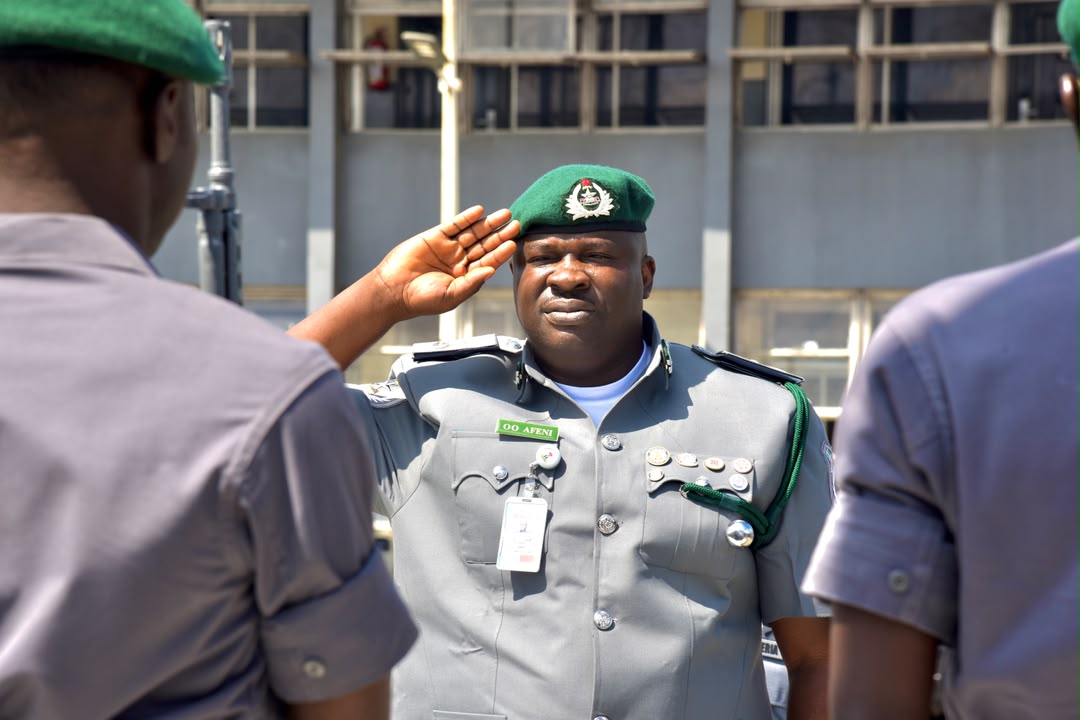
FOU Zone ‘A’: Aliyu retires after ₦3.19bn revenue recovery, Afeni takes over
Gloria Odion, Maritme reporter
The Nigeria Customs Service (NCS), Federal Operations Unit (FOU) Zone ‘A’, Ikeja-Lagos, on Wednesday, 30th September 2026, welcomed Deputy Comptroller Oladapo Olukayode Afeni as the unit’s 30th Acting Comptroller, following the retirement of Comptroller Gambo Aliyu after a distinguished career in the Service.
The formal handing-over ceremony, held at the unit’s conference hall, was attended by colleagues, friends, well-wishers, senior Customs officers and other stakeholders.
Among those present were the Acting Customs Area Controllers of the Port and Terminal Multipurpose Limited (PTML), Ogun 1 Area Command, and the Enugu/Ebonyi/Anambra Area Command.
Addressing officers and stakeholders for the first time as Acting Comptroller, DC Afeni pledged to provide purposeful, professional and accountable leadership in advancing the mandate of the Nigeria Customs Service.
He expressed appreciation to the Comptroller-General of Customs, Bashir Adewale Adeniyi and the management of the Service for the confidence reposed in him.
The new Acting Comptroller said his administration would strengthen intelligence- led enforcement,tackle revenue leakages and safeguard Nigeria’s economic and security interests.
He said that enforcement operations under his leadership would remain firm, lawful and respectful of human dignity, while legitimate trade would be facilitated through constructive engagement with traders, manufacturers, importers, exporters, customs brokers and other stakeholders.
DC Afeni also called for stronger collaboration with sister security and law enforcement agencies to combat trans -border crimes, particularly the illicit movement of drugs, arms, currencies, counterfeit goods and other prohibited items across the Nigeria border.
He also pledged to prioritise officers’ welfare and professional development, strengthen institutional discipline and encourage regular sporting activities to promote physical fitness, teamwork and work-life balance among personnel.
In his handing-over address, the immediate past Comptroller, retired Comptroller Gambo Aliyu, expressed gratitude to God and the Service, describing the ceremony as an important transition in leadership and an opportunity to reflect on the responsibilities and challenges of commanding the unit.
Comptroller Aliyu said his administration persevered on combating smuggling, revenue fraud, concealment, under-declaration, false declaration and the illicit movement of prohibited goods.
The report,according to him includes, recorded 779 seizures during his tenure, involving various prohibited and illegally imported items, including:
- More than 20,900 bags of foreign parboiled rice;
- 61 used vehicles;
- Thousands of used compressors and clothing items;
- Foreign poultry products;
- 4,418 jerrycans of vegetable oil;
- 12,606 parcels of cannabis weighing 6,194.3kg;
- 2.30kg of cocaine;
- More than 3,000 jerrycans of Premium Motor Spirit (PMS), equivalent to 76,505 litres; and
- 22 elephant tusks weighing 130.84kg.
According to him, the seizures had a combined duty-paid value of ₦13,075,056,616.00.
On revenue recovery, Comptroller Aliyu disclosed that the unit recovered ₦3,192,511,547.52 between 10 December 2025 and 24 September 2026.
He said the figure represented 798 per cent of the unit’s ₦400 million annual revenue recovery target for 2026, while also recording a 776 per cent increase over the ₦411,451,901.18 recovered during the corresponding period in 2025.
Aliyu attributed the performance to strengthen risk profiling, stricter compliance checks, targeted examination of suspicious declarations, teamwork,and collaboration with sister agencies and stakeholders.
He stressed that effective enforcement required collective efforts, noting that “no enforcement agency can succeed in isolation.”
Concluding his address, the retired Comptroller congratulated his successor and expressed confidence that the new administration would build on the operational foundation already established.
He urged DC Afeni to lead with fairness, firmness, courage and sound judgment, while assuring him of the cooperation and support necessary to sustain the unit’s mandate.
Comptroller Aliyu also commended officers of the unit for their loyalty, discipline and resilience throughout his tenure.
He prayed for the success of the new leadership, the continued growth of the Nigeria Customs Service and the security and prosperity of Nigeria.
Customs
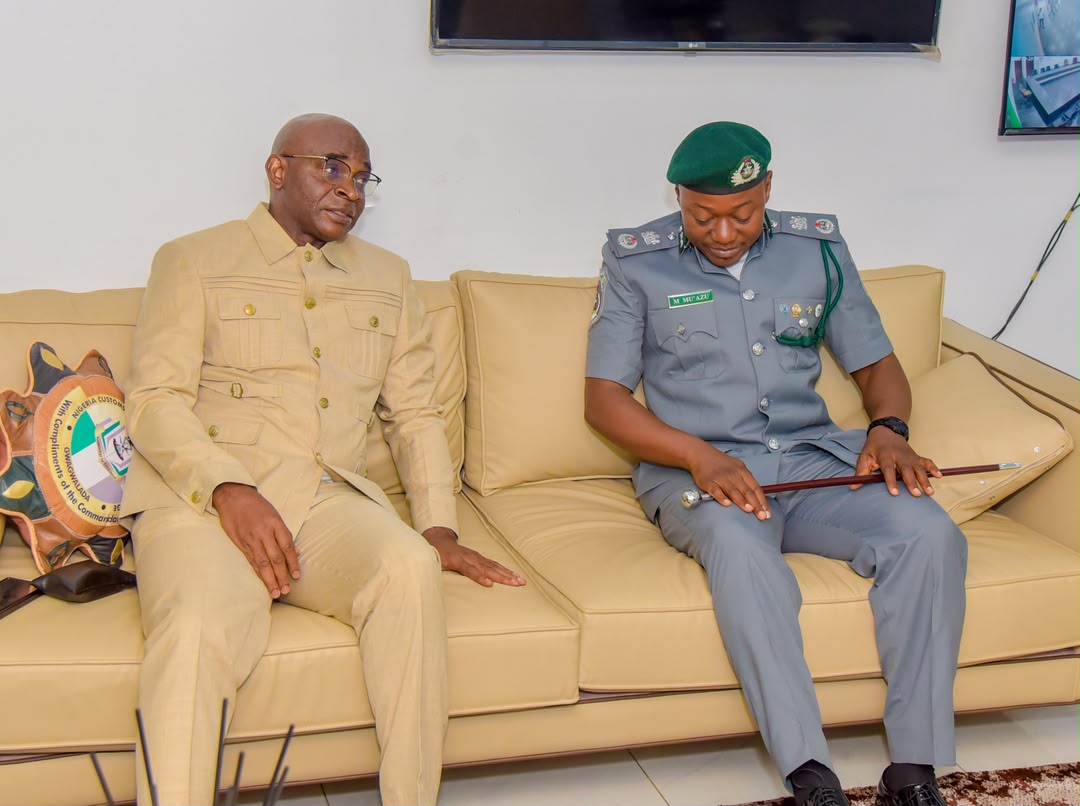
Mu’azu steps in as 33rd CAC at Apapa port as Oshoba bows out
— Vows to sustain ₦323bn monthly revenue record, end cargo delays
Funso OLOJO, Editor
Comptroller Murtala Mu’azu has assumed duty as the 33rd Customs Area Controller (CAC) of the Apapa Area Command, pledging to sustain the Command’s revenue momentum while eliminating avoidable delays in cargo clearance and strengthening trade facilitation at Nigeria’s busiest port.
Mu’azu formally took over from Comptroller Emmanuel Oshoba (rd) on Tuesday, September 29th, 2026, at a ceremony held at the Auditorium of the Apapa Area Command, Lagos, attended by senior security and regulatory officials, government agencies, terminal operators, shipping companies, customs brokers, importers, exporters and other port stakeholders.
The new Controller inherits a Command that recently posted some of the most impressive revenue figures in its history, including a record ₦323 billion monthly collection in July 2026 and a single-day collection of ₦28.102 billion on August 18, 2026.
Acknowledging the weight of the responsibility before him, Mu’azu described his appointment as “a great honour and privilege,” thanking the Comptroller-General of Customs, Bashir Adewale Adeniyi, for the confidence reposed in him.
He pledged to discharge the responsibility with “a deep sense of duty” and in line with the economic interests of the country, promising to build on the Command’s achievements in revenue generation, enforcement, trade facilitation and institutional discipline.
The new CAC said his administration would be anchored on the three strategic pillars of the Comptroller-General — consolidation, collaboration and innovation — with particular attention to revenue integrity, efficient trade facilitation, professionalism and meaningful engagement with stakeholders.
On revenue collection, Mu’azu was unequivocal, declaring that every revenue due to government must be properly assessed and collected.
“Every revenue due to government must be properly assessed and collected, and every decision taken by our officers must be capable of standing the test of scrutiny over time,” he said.
But beyond revenue, the new Controller signalled that reducing bottlenecks in cargo clearance would be a major priority of his administration.
He declared that avoidable human delays in cargo processing, which he described as “Non-Tariff Barriers”, would no longer be tolerated.
“Unnecessary human delays in cargo processing otherwise known as Non-Tariff Barriers shall not be tolerated henceforth,” Mu’azu said.
According to him, once all statutory requirements have been met, legitimate cargo should be allowed to move without unnecessary obstruction.
He consequently charged Customs officers to maintain discipline, professionalism, courtesy and decorum in their dealings with importers, exporters, customs brokers and other members of the trading public.
Mu’azu also promised to deepen collaboration with importers, exporters, licensed customs agents, shipping companies, terminal operators, the Nigerian Ports Authority and other government agencies operating within the port environment.
He said such collaboration was essential to making Apapa Port more efficient, predictable and responsive to legitimate trade.
The new CAC openly acknowledged the scale of the revenue challenge left by his predecessor, Oshoba, particularly the unprecedented figures recorded under the outgoing Controller.
“This is indeed a record to reckon with and strive towards matching same. It is therefore a Herculean task upon myself and my team to match and surpass such a record,” Mu’azu said.
He also commended Oshoba for his contributions to enforcement, trade facilitation and the implementation of key modernisation initiatives of the Nigeria Customs Service.
Among the initiatives highlighted were B’Odogwu, Advance Ruling, the Authorised Economic Operator Programme, the One-Stop Shop and Non-Intrusive Inspection technology.
The Advance Ruling programme, in particular, has been positioned as a mechanism for providing greater predictability to legitimate traders by enabling them to obtain clarity on Customs treatment before importation.
Oshoba had, in his farewell address, described Advance Ruling as an initiative that provides legitimate traders with greater predictability and clarity on Customs treatment before importation, thereby reducing uncertainty and strengthening confidence in the trading environment.
In his farewell remarks, Oshoba attributed the achievements recorded during his tenure to the collective efforts of officers, stakeholders and partners of the Command.
“The achievements recorded during my tenure do not belong to one individual. They belong to all of us,” he said.
He charged officers to sustain the standards established during his tenure, stressing that discipline, professionalism and excellence must remain central to the Command’s operations.
“Discipline must remain our foundation, professionalism our standard and excellence our aspiration,” Oshoba said.
He also appealed to officers and stakeholders to extend the same cooperation and support to his successor.
Mu’azu, in turn, called for collective ownership of the Command’s mandate, stressing that the responsibility for sustaining Apapa’s performance could not rest on the CAC alone.
“The success we seek cannot be achieved by the CAC alone. It requires our collective efforts, operational integrity and willingness to uphold the standards of the Service,” he said.
He assured stakeholders that his administration would operate an open and constructive engagement framework based on fairness, mutual respect and the national interest.
With the transition now completed, the new Apapa Customs administration faces the dual task of protecting the Command’s record-breaking revenue performance while making cargo clearance faster, more predictable and less burdened by avoidable administrative delays.
Mu’azu expressed confidence that, with the support of officers and stakeholders, Apapa Area Command would continue to serve as a model of efficient revenue administration, legitimate trade facilitation and professional Customs conduct.

 Customs3 months ago
Customs releases final recruitment list for ASC II, ends nearly one-year wait for applicants
- Headlines3 months ago
As NRC recovers ₦200m stolen railway assets, Opeifa vows diligent prosecution of suspects
- Customs3 months ago
Customs launches MIS file tracker at PTML in fresh digitalisation drive
- Customs2 months ago
Apapa Customs sets new record of monthly revenue haul with ₦323bn collection in July
- Customs2 months ago
Apapa Customs sets new single-day revenue record with ₦28.1bn collection
- Headlines1 month ago
Oyetola presents three-year score card as blue economy industry revenue hits ₦1.83trn