
Customs
Freight expert tasks customs on eliminating human contacts in its operations to curb corruption

—commends CGC Adeniyi for improved customs operations
Funso OLOJO
Dr. Segun Musa, the Deputy National President of the National Association of Government Approved Freight Forwarders(NAGAFF), has urged the management of the Nigeria Customs Service to eliminate human contacts in its operations to minimize corruption in the cargo delivery system at the ports.
Musa, who was a guest at the roundtable conference organized by the Maritime Reporters Association of Nigeria(MARAN), claimed that 50 percent of Nigeria’s corruption emanates from the ports.
The NAGAFF chieftain believed that if the customs adopts full automation of its operations, it will not only facilitate legitimate trade but reduces corruption in the clearance system to a minimum.
The freight forwarder cum politician who once contested for the governorship election in Lagos State, however, commended the Comptroller General of Customs, Adewale Adeniyi, for his transformational leadership which he confessed has greatly improved the operations of the agency.
” There is an improvement in the operations of the customs under the present leadership of Wale Adeniyi but there is still room for more improvement” he declared.
He believed the agency has greatly improved in the area of technology.
” Before now, when Customs officers wanted to access their system, they used their passwords.
” But now, they do that through their thumbprints
” This will make it difficult for any other person to gain access to their system or steal their passwords, even passwords alone cannot gain access to the system except through their thumbprints” he noted.
The NAGAFF chief however appealed to the customs management to grant clearing agents similar privilege that will allow them to use their thumbprints to enter their entries into their system.
He said he made this call to reduce the high incidence of sending innocent customs brokers to jail for offences they did not commit.
“A lot of agents have gone to jail for offences they did not commit but which somebody who fraudulently used their licenses to perpetrate the illicit acts.
“If we are made to be using our thumbprints to access customs portal to lodge our entries just like customs officers do access their NICSII platform, fraudulent people will not be able to use our license to do illegal business” he noted.
He urged the customs authority to fully automate its operations unlike what he described as semi-automation that presently obtains.
According to him, with full automation, there would be no need for agents to physically interact with officers as it is presently done.
” Customs operations should be fully automated to eliminate human contacts.
“We, as customs agents, do not want to interface with customs officers again.
” Yes, Customs say we are corrupt. We have accepted that we are corrupt.
“But we do not want to be corrupt again.
” We want to be as saint as the customs officers so we do not want to interface with them again.
“Let us be relating with them virtually, online” Musa insisted.
To further eliminate corruption and human contacts with customs officers, the freight forwarder cum politician wanted the customs to assign codes to their documents so that officers processing such documents will not have access to the owners.
” Also, the name of the company must not be on the license. It should be a code.
” Let every company have a code. This will make it impossible for the officer treating a particular job to interface with the owner.
” Let’s make it difficult for such an officer to identify the owner of the document”
” This will eliminate interaction and familiarity between the customs officers and owners of the license which often leads to compromise and extortion.
He claimed that through such an unholy alliance between the customs officers and importers, clearing agents have often lost the services of their clients who abandoned them after such interactions with the officers.
The NAGAFF chief also advised the customs management to always give a timeline for a document to spend with an officer.
” When the entry gets to the table of an officer, it must be timed and be given a timeline which an entry must spend with the officer with the caveat that if he doesn’t process the document or query it, as the case may be, say in five minutes, such an officer will be queried. This is how to facilitate trade.
” As an importer or clearing agent, I don’t need to go to the customs or terminal operators or shipping companies to get my job out”
” Gone were the days. The world has moved beyond that stage and we cannot continue to be living in the past.
” Our counterparts in other African countries have gone far ahead of Nigeria in terms of trade facilitation.
” We do not want to know customs officers and they too should not know us as freight forwarders to do our job.
” My job must not be treated because I know the CGC or the CAC. My document must be treated on merit, with no preferential treatment.
” Let everyone be treated equally, after all, we the agents charge our clients agency fees” he asserted.
Musa said that the only way legitimate trade could be facilitated is when the customs, shipping companies and terminal operators fully automate their operations and reduce human contact.
” If corruption in the ports, which accounts for about 50 percent of corruption in the country, is reduced to a bearest minimum, the prices of goods in the market will be cheaper.
” People have often claimed that the cost of doing business at the Nigerian Ports is very expensive. Why is this so?
” Because we are still operating an analogy system in a highly automated world.
” By the time we migrate into full automated system, prices of commodities in the markets will be cheaper .”
” This is because I don’t have to bribe customs officers to treat my document, I don’t have to pay higher storage or demurrage charges to exit my goods from the port.
” My shipment will not get to its expiry date before I get it out. That is what we call trade facilitation”
” If the customs officer queries your job, get about 6 months bond and argue the matter.
” If the customs has a superior argument for the query, you as the importer or his agent will pay the DN and the accumulated charges.
” But if you, as an agent, have a superior argument and win the case and they did not allow you to provide a bond and your shipment gets stuck at the port, accumulating demurrage, the officer who issued the query should be queried and made to pay any accumulated charges, including paying the inconveniences of the agent.
” This will serve as a deterrent to other officers who deliberately delay the processing of documents to frustrate agents who are forced to compromise” the NAGAFF chieftain observed.





Customs
Apapa Customs records major breakthrough in anti- smuggling operations.
– intercepts 13 containers of harmful pharmaceuticals, other contraband goods worth N6.38billion
Funso OLOJO, Editor
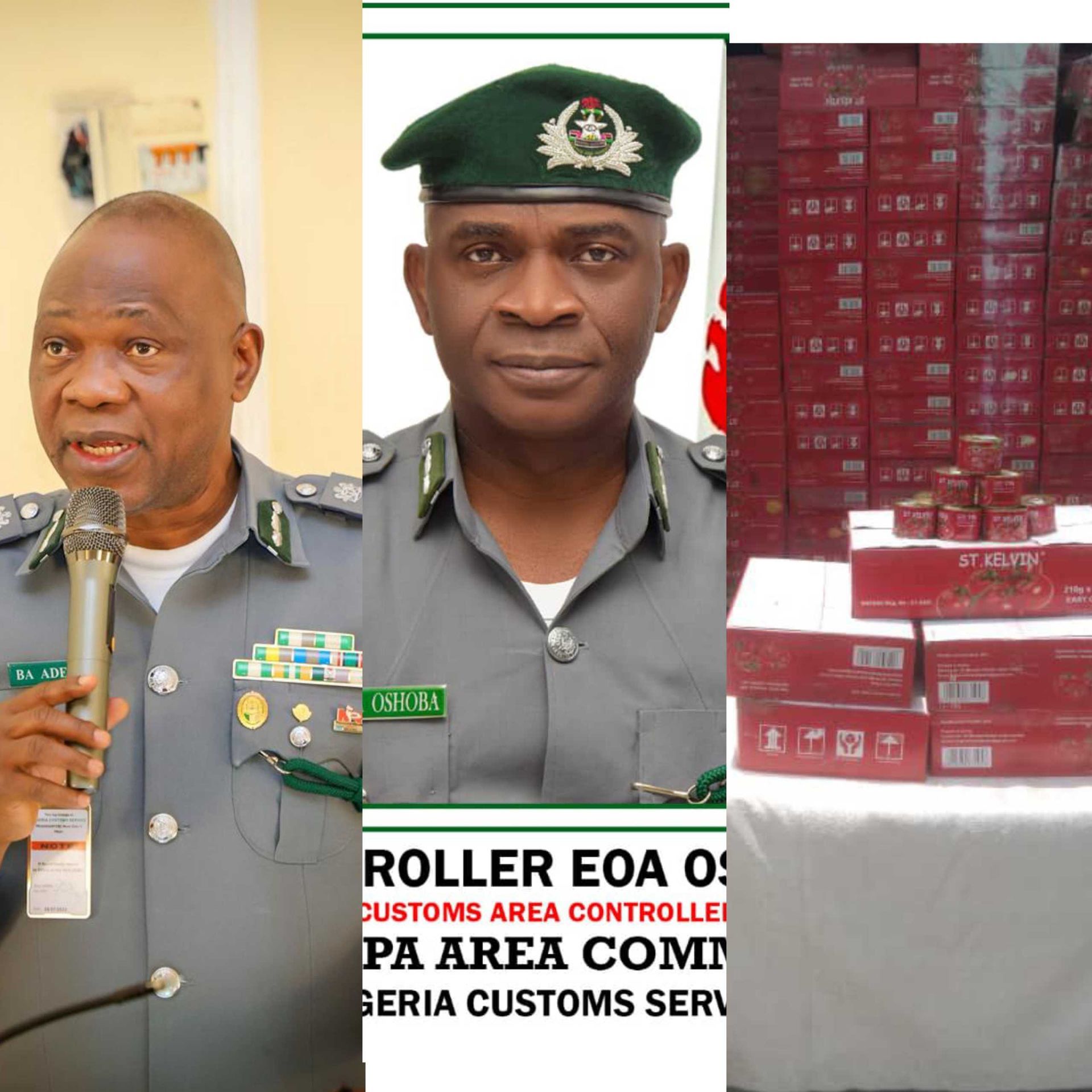
The Apapa Command of the Nigeria Customs Service has recorded a huge success in its relentless war against traders of illicit products when its officers intercepted 13 containers of harmful pharmaceuticals and other contraband goods.
Unveiling the contraband goods at the APM Terminals,Apapa port on Tuesday, March 10th, 2026, the Comptroller- General of Customs, Adewale Adeniyi, disclosed that the intercepted consignments are worth over N6.38 billion.
Adeniyi, while speaking with Journalists, revealed that the interception and seizures were made possible through intelligence-driven operations supported by cargo scanning technology and targeted physical examination.
He explained that officers detected irregular cargo profiles during routine scanning procedures, prompting detailed physical inspections that uncovered several prohibited and falsely declared consignments.
According to him, among the seizures was a 40-foot container loaded with expired pharmaceutical products, including Mixagrip Cold Caplets, Ladinax tablets, Chloroquine injections and Diclofenac tablets.
Customs officers also intercepted two 40-foot containers filled with unregistered pharmaceutical products, including Hyegra 200 and Sildenafil Citrate.
In another discovery, a 20-foot container carrying 800 cartons of codeine was found carefully concealed inside toilet flushing cisterns and sanitary ware.
Other pharmaceutical seizures included cartons of Artesunate injections, while a separate container was discovered to contain restricted security equipment such as bulletproof vests, helmets, walkie-talkies and tactical torches imported without the required End User Certificates.
The Service also uncovered multiple containers loaded with expired food items, including muffin cookies, 36,000 cans of expired energy drinks, and large quantities of expired tomato paste brands.
In addition, officers seized a 40-foot container containing 1,700 cartons of codeine cough syrup concealed among luxury food flasks.
Another container was found carrying 1,575 cartons of CSMIX with codeine hidden with electric kettles, alongside additional cartons of Co-codamol tablets.
Customs further intercepted 13 jumbo bags of Cannabis Sativa weighing 347.57 kilograms, which were concealed inside a Toyota Sienna vehicle.
Adeniyi described the seizures as a major breakthrough in the Service’s ongoing crackdown on illicit trade and smuggling through Nigeria’s seaports.
He warned that the importation of expired drugs and controlled substances poses serious risks to public health, while the smuggling of codeine-based products contributes to the growing problem of substance abuse.
The Comptroller-General emphasized that under the Nigeria Customs Service Act 2023, the seized goods are liable to outright forfeiture, adding that investigations are ongoing and all persons connected to the shipments will face prosecution.
He also stressed that the Service is expanding the use of Non-Intrusive Inspection (cargo scanning) to improve cargo clearance efficiency while strengthening enforcement against high-risk consignments.
According to him, Apapa Port processes thousands of containers daily, making it one of the most strategic trade gateways in West Africa.
“Apapa Port is no longer a playground for smugglers or criminal syndicates hiding behind legitimate trade documentation,” Adeniyi stated.
He assured compliant traders that Customs enforcement is not aimed at legitimate business but at protecting Nigeria’s economy and citizens from dangerous and illegal imports.
Customs
Dera Nnadi bows out of Customs in a blaze of glory
Geraldine Samuel, Reporter
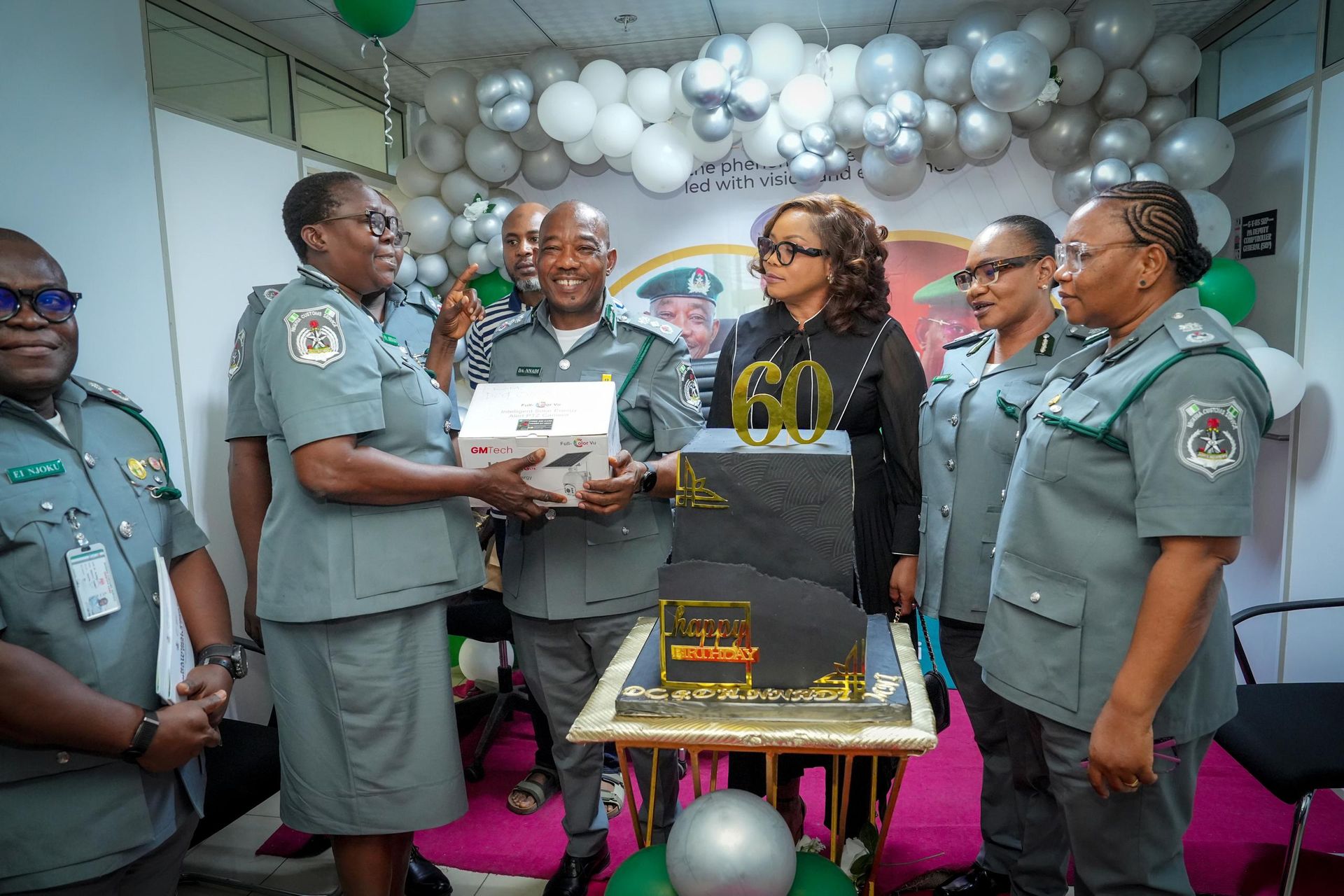
Dera Nnadi, a Deputy Comptroller- General of Customs(rtd), has dropped anchor of service in the Nigeria Customs and graceful bowed out of the agency in a blaze of glory.
In a commemorative retirement ceremony conducted by his appreciative colleagues at the Customs’ Headquarters, Abuja on March 3rd, 2026, Nnadi was pulled out of the Service he has diligently served amidst glowing tributes.
Incidentally, his pull- out ceremony coincided with his 60th birthday.
Leading the management staff, men and officers of the service in paying moving tributes to the retiring Nnadi was the Comptroller- General of Customs, Adewale Adeniyi, who described DCG(rtd) Nnadi as an exemplary officer whose professionalism, discipline, and commitment to duty significantly strengthened the values and operational effectiveness of the NCS.
According to the CGC, the retirement ceremony provided an opportunity not only to celebrate a successful career but also to appreciate the sacrifices and dedication of officers who devote their lives to safeguarding the nation’s economic and border security interests.
He noted that Nnadi’s career reflects the core ideals of the Nigeria Customs Service, particularly in leadership, revenue generation and trade facilitation.
“Today is a moment of celebration and reflection. It is also an opportunity for us to thank Almighty God for the grace that has sustained our colleague throughout his years of service,” the CGC said.
The CGC also highlighted the personal and professional bond he shares with the retiree, noting that their relationship extends beyond official duties to family ties.
He expressed confidence that DCG Nnadi still possesses the energy and experience to continue contributing meaningfully to national development through academic and other professional engagements.
Members of the Service’s management team also paid glowing tributes to the retired DCG, commending his leadership qualities, integrity and mentorship.
Officers who served under him described him as a dependable leader who provided guidance and encouragement to younger personnel while strengthening the Service’s institutional capacity.
Responding to the honour, DCG Dera Nnadi (Rtd) expressed appreciation to the Comptroller-General of Customs, the management team, officers and Men of the Service for their support and cooperation throughout his career.
He described his years in the NCS as a fulfilling journey of growth, learning and service to the nation.
The ceremony featured the presentation of awards, gift items and commemorative photographs in honour of the distinguished officer.
Customs
Customs takes charge of implementation of National Single Window project
– rallies stakeholders for successful take-off
Funso OLOJO, Editor
As the preparations for the official launch of National Single Window(NSW) project on March 27th, 2026 gather momentum, the Nigeria Customs service may have been designated as the lead agency to drive the modernisation project.
This much was confirmed by the Director of the Project, Tola Fakolade who acknowledged the pivotal leadership of the NCS in the implementation process.
At one of the stakeholders sensitisation programmes in Abuja on March 3rd, 2026, Fakolade declared “Our number one stakeholder is the NCS,”
“We have maintained a strong and constructive working relationship.
Customs’ participation and institutional experience are critical to the success of this project.” the project coordinator confirmed.
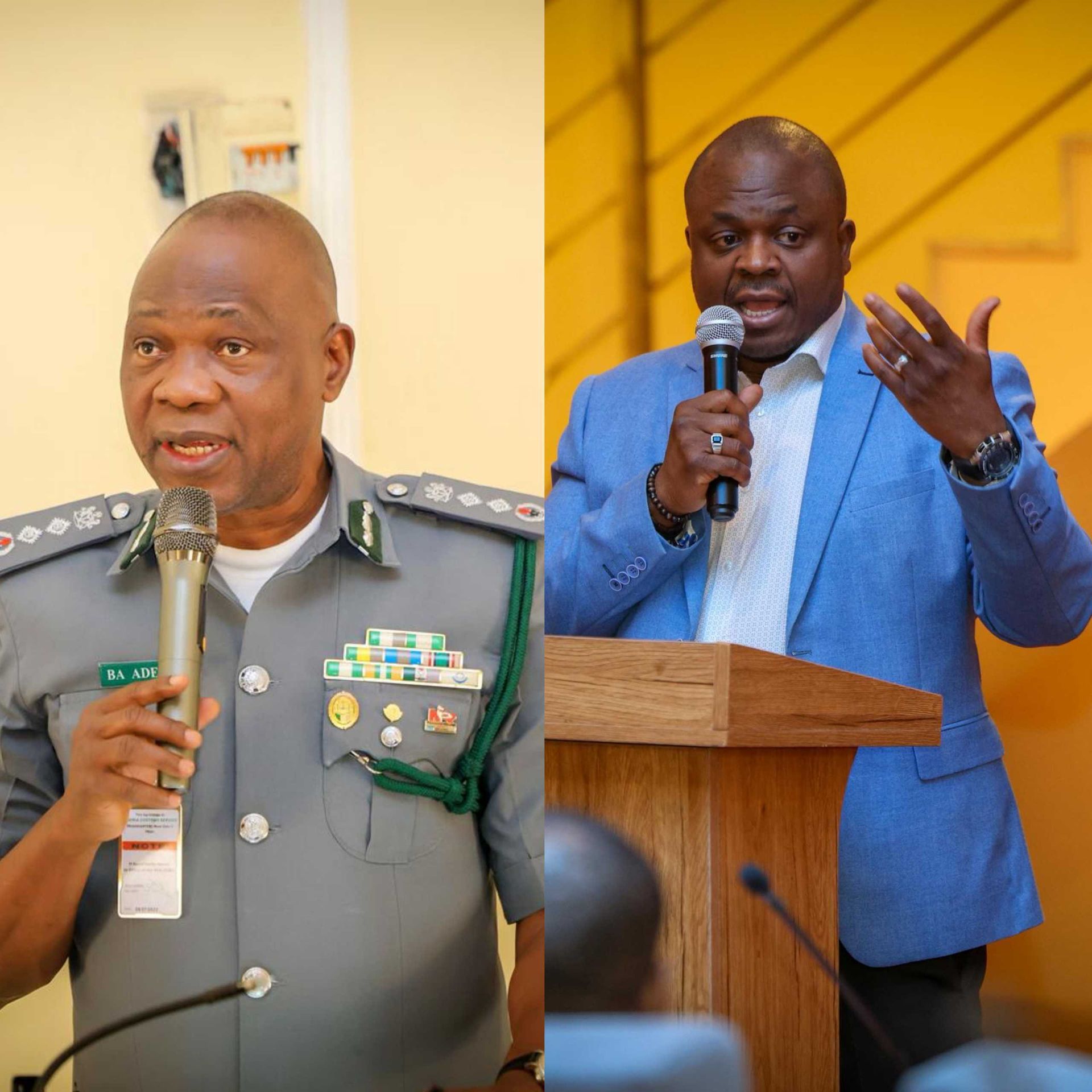
Confirming the lead role of the NCS, the Deputy Comptroller-General of Customs in charge of ICT and Modernisation, DCG Oluyomi Adebakin, described the NSW as a major milestone in the Service’s ongoing modernisation drive.
She revealed that the NCS has been actively engaged in preparatory work for months to ensure that the framework being developed reflects operational realities and supports seamless implementation.
“This is a national project, but Customs is at the centre of its execution,” DCG Adebakin said.
“The success of the Single Window depends on collective understanding and cooperation. We must all appreciate its value because we cannot effectively promote what we do not fully understand.”
She reassured officers and stakeholders that the initiative is designed to strengthen institutional capacity rather than replace human resources, explaining that technology will enhance efficiency, transparency, and speed in cargo clearance and trade documentation processes.
Reaffirming the critical role of the service in the implementation of the NSW project, the Comptroller- General of Customs, Adewale Adeniyi, at the Abuja stakeholders engagement with airlines and shipping companies held on March 4th, 2026, emphasised the importance of collaboration in ensuring the successful rollout of the initiative.
He noted that the support of critical stakeholders has played a significant role in the achievements recorded in the Service’s modernisation journey so far.
Adeniyi disclosed that President Bola Ahmed Tinubu has mandated the Service to take a bold step forward towards a successful launch of the National Single Window, a move aimed at positioning Nigeria as a major player in global trade.
He added that airline and shipping line operators remain vital partners in ensuring a seamless transition to the new system.
He further assured stakeholders that adequate support structures are being put in place to ease the migration process.
“A help desk with well-trained personnel will be available to address any operational challenges that may arise during the rollout”, the Comptroller-General stated.
The NCS described the National Single Window as a strategic reform that aligns with Customs’ mandate of trade facilitation, revenue generation, and inter-agency coordination.
With the NCS spearheading coordination and stakeholder engagement, the NSW project is expected to transform Nigeria’s trade environment, enhance revenue generation, and strengthen the country’s position in the global trading community.
-

 Headlines3 weeks ago
FIFA sends Nigeria’s Super Eagles to 2026 World Cup, awards boardroom scoreline of 3 goals to nil against DR Congo
-

 Headlines2 months ago
Ayobo residents protest deplorable road at LCDA, complain of 10- year neglect by successive local council administrations.
-
 Headlines3 months ago
FG approves 50 percent price slash on Yuletide train services
-
 Customs2 months ago
Apapa Customs stretches illicit drug seizures streak with another new year interdiction of 30.1 kg of cocaine on board vessel.
-
 Headlines3 months ago
FG trains 75 boat operators on safe inland waterway navigation
-

 Customs2 months ago
Tinubu pays glowing tribute to Adeniyi, CGC, at 60