Connect with us

Headlines

Why we are taking time to deploy N50 billion NIMASA floating dock —Jamoh


”We want to learn from past experiences”

The eyewitness reporter

The N50 billion modular floating dock acquired by the Nigerian Maritime Administration and Safety Agency (NIMASA) is still homeless and yet to be deployed four years after the gigantic national asset was procured and brought back to the country.

Built by one of the world’s largest ship building firms, Damen Shipyards, and its partner, NIRDA, in Amsterdam, The Netherlands, at a cost of N50b, the NIMASA floating dock is 125 metres by 35metres, with three in-built cranes, transformers, and a number of ancillary facilities.

However, the Director General of the Nigerian Maritime Administration and Safety Agency (NIMASA), Dr. Bashir Jamoh, has explained that the delay in the deployment of the treasured national asset was to avoid the mistakes of the past where similar facility by the Nigerian Ports Authority (NPA) was mismanaged.
While speaking in his office last week Thursday, Dr. Jamoh declared that the long and winding due process that the deployment of the dock has to follow as a government property was another reason why the multi-billion dollar asset has not been deployed.

“The position we want to put the modular floating dock, the same position about four years ago, NPA removed their own dead floating dock,  we came, we saw the modular floating dock working everybody knew the NPA modular floating dock was there standing, but today it’s no more due to the mismanagement of government resources.

“We came here, we had a meeting with the former NPA MD Hadiza Bala Usman, and we were contemplating whether the management that managed the NPA own can manage ours, I told her black and white, they killed your own, they can’t kill our own.

“They destroyed the NPA floating dock and we said that this cannot be killed also, we learnt from that and we said let’s go the Public Private Partnership (PPP) arrangement, that we will get a managing partner who has the experience and the technical know-how and the wherewithal to bring customers.

“It’s one thing to have a floating dock, it’s another thing to have the confidence of the people to bring their ships there,” he said.

Jamoh said he learnt from the experience of how the NPA’s own modular floating dock was mismanaged and the NIMASA management now decided to adopt Public- Private partnership (PPP) model where the dock will be handed over to experienced private individuals to manage.
According to him, this process further engendered delay in the deployment of the dock due to the procurement procedure which is long and winding.
He also explained that some installations in the floating dock were missing which necessitated NIMASA having to bring in the manufacturers as no one has the technical know-how to embark on the installation.
This, he said, was coupled with the non-availability of the requisite parts for the installation locally which had to be imported.
He explained that the dock was first considered to be taken to the Niger Delta, but due to the shallow draught of the channel and due to the commercial aspect of the floating dock, it was considered that the floating dock remains in Lagos.

He further explained that ship-owners may not have the confidence to go to the Niger Delta if the floating dock was there.

The NIMASA boss stated that it took the agency eight months to convince the authority to give the approval to commence the operation of the floating dock in Lagos, but said the agency is yet to get a location in Lagos where the floating dock can reside.

Jamoh revealed that since he assumed office, the agency has been working on how to put the floating dock to use, debunking reports that the floating dock is no longer working.

“From the time I assume office till date, we have been working on the floating dock, the floating dock was built and there is installation, so when they built and brought it here, they ought to have installed it.

“That installation part has not been done, it’s not that we are sleeping, we are doing so many things simultaneously, there are processes and procedures in putting the floating dock to use.

“If the cranes are not working, you cannot work with the floating dock, so the first thing we did, was to call Damien the manufacturers of the floating dock and tell them that you delivered this floating dock and you did not install it, we have to know the workability of the cranes, the engine because everything must be in place, and then above all, the floating dock is not a ship that is moving, you have to clip it”.

The NIMASA boss stated that the  agency had to temporarily import equipment from the Netherlands to come only to clip the floating dock

“As we are talking now, the dolphins that we are going to put for the clipping cannot be found in the country, in the whole Nigeria,you cannot get the equipment that can put that dolphin into our own sea for you to clip the floating dock, so we have to do temporary importation of the equipment from the Netherlands to come only purposely to put the dolphin and take it back to Netherland

“The second issue is the issue of location, the first thing that came was the issue of taking the floating dock to Niger Delta but we discovered that we don’t have the draft.

“Secondly, the issue of commercialization, people don’t have the confidence to go there and so many other things on this alone, we spent eight months to convince the authorities to give us the approval to commence the operation of this floating dock in Lagos.

“As we are talking, I just came back from Abuja to get the consent and agreement of the people that they will give us a location where we can place the floating dock, till now we don’t have a location.

“And remember this floating dock has been there since 2018, nobody works it, nobody starts it, nobody knows how it works, so we have to bring the Damien engineers, they came here several times from Netherland.

“We have to bring the Israelis to come here and work with it, so it’s not that we are sleeping or delaying, above all, the modular floating dock is not something you can utilize and give anybody to kill.

“So what we have is a floating dock that can repair ships, if you don’t have the integrity and the technical know-how, nobody will bring their ship there.

“So having done all that, we have to go to the ICRC because it’s a procurement process, first they have to check whether the PPP arrangement you are coming into is doable, bankable, or not.

“So we got the go ahead and they gave us certificate after that we have to go and develop a business case on that, and you have to advertise, people must bid and then you select the best after selecting,  then you develop a business case,  everybody must know its shares and responsibility.

“After that, we will now take it to the mother ministry, evaluate everything and take it to the Federal Executive Council (FEC) because it’s now public property and not NIMASA floating dock again.

“The procurement cycle sometimes in this country, you have to spend one year, everybody knows that there is a problem with the procurement cycle, so we are looking for the best for the country.

“At the same time, we are working to see the modular floating dock works, working to see the appropriate place for where to put the floating dock, working hard to make sure that we have people who can handle it like a private entity, we get our profit and send to the government.

“We shouldn’t take it to our own friends and cronies. Everybody that has investment should come and invest at a later date, we will put it in the stock Exchange and it becomes public property and everybody owns shares and manages it well” he stated.

These long and winding processes and procedures have therefore stalled the timely deployment of the floating dock since 2018.
.For several months when it newly came to the country, it was left idle, floating lazily at the Marina waterfront.
Later, the Nigerian Navy came to its rescue when it tugged it into its dockyard,  still idle but gulping national resources in maintenance.

Soon after, during the current tenure of the incumbent Director General of NIMASA, Dr Bashir Jamoh, the Nigerian Ports Authority (NPA), under the former leadership of Ms. Hadiza Bala Usman, offered to house the idle floating dock in its derelict shipyard at the request of the NIMASA management.

That arrangement with the NPA seems hazy in view of the current position of the management of NIMASA.

Continue Reading
Click to comment

Leave a Reply

Your email address will not be published. Required fields are marked *

Headlines

NSW will not subsume B’Odogwu Customs trade platform — Fakolade

Gloria Odion 
Tola Fakolade, the Director of Nigeria National Single Window Project has stated that the celebrated National Single Window project which first phase is due for official roll out in March,27th, 2026 is not a substitute for the Customs trade platform commonly called B’Odogwu, neither will the presidential initiative subsume the Customs platform.
Fakolade make this clarification against the rising fears that the multi- million dollar indigenous platform created by the Customs to enhance its operations and meant to replace the previous foreign – created portal, will be jettisoned at the berth of NSW.
However, he further clarified that the NSW will operate alongside the B’Odogwu Customs Management System, describing the two platforms as complementary.
“The B’Odogwu system handles core Customs processes such as valuation and risk management, while the National Single Window serves as the single-entry portal for traders to submit documents and applications for approvals,” he said.
Fakolade also declared that NSW will not replace any government agency involved in trade facilitation but will instead integrate their processes to eliminate duplication and improve efficiency.
He explained that the system is designed to ensure that once a release is issued by the Nigeria Customs Service, it would already reflect the risk assessment and compliance requirements of other port-related regulatory agencies.
According to him, key trade agencies were involved from the early stages of the project, with each nominating technical representatives who contributed to the development of the platform.
He noted that the system has already identified and addressed several duplicated processes that previously slowed cargo clearance and added no value to port operations.
Fakolade also disclosed that extensive training has been ongoing for over a month for end-users including importers, exporters, freight forwarders and officials of the Nigerian Ports Authority.
 He added that training sessions are being conducted physically at designated centres that accommodate between 30 and 50 participants, while additional learning resources and explanatory videos have been made available online.
Fakolade added that when the platform goes live on March 27, 2026, initial services will include applications for import licences, certificates and permits for agencies such as Standards Organisation of Nigeria, National Agency for Food and Drug Administration and Control, Nigeria Agricultural Quarantine Service and National Environmental Standards and Regulations Enforcement Agency, as well as manifest submissions by shipping lines and airlines.
Meanwhile, Princess Chi Ezeh, Vice President (Seaports) of the National Association of Government Approved Freight Forwarders (NAGAFF), commended the committee driving the NSW Nigeria for recognising freight forwarders as critical stakeholders in the reform initiative aimed at improving trade facilitation in the country.
Ezeh noted that the decision to engage freight forwarders during the awareness and consultation stages of the project demonstrates that the implementation team understands the strategic role operators play in Nigeria’s port and logistics ecosystem.
She added that during the engagement sessions, freight forwarders were able to highlight some operational challenges they face at the ports, which the project team assured would be addressed.
She expressed optimism ahead of the planned launch of the National Single Window, urging the implementation team to ensure that the system is properly structured to enhance trade facilitation rather than create additional delays in cargo clearance processes.
Also speaking, the Chairman of APFFLON Tincan Chapter, Alhaji Akeem Ayobiojo, assured that freight forwarders would play their part in ensuring the success of the initiative by submitting accurate documentation and complying with the required procedures.
He stressed that transparency and professionalism from operators are essential to achieving the project’s goal of reducing cost, saving time and improving efficiency in Nigeria’s port operations.
Continue Reading

Headlines

Port modernisation, NSW:  the dual trade facilitation tools deployed by NPA to enhance efficiency for economic growth 

Funso OLOJO, Editor 
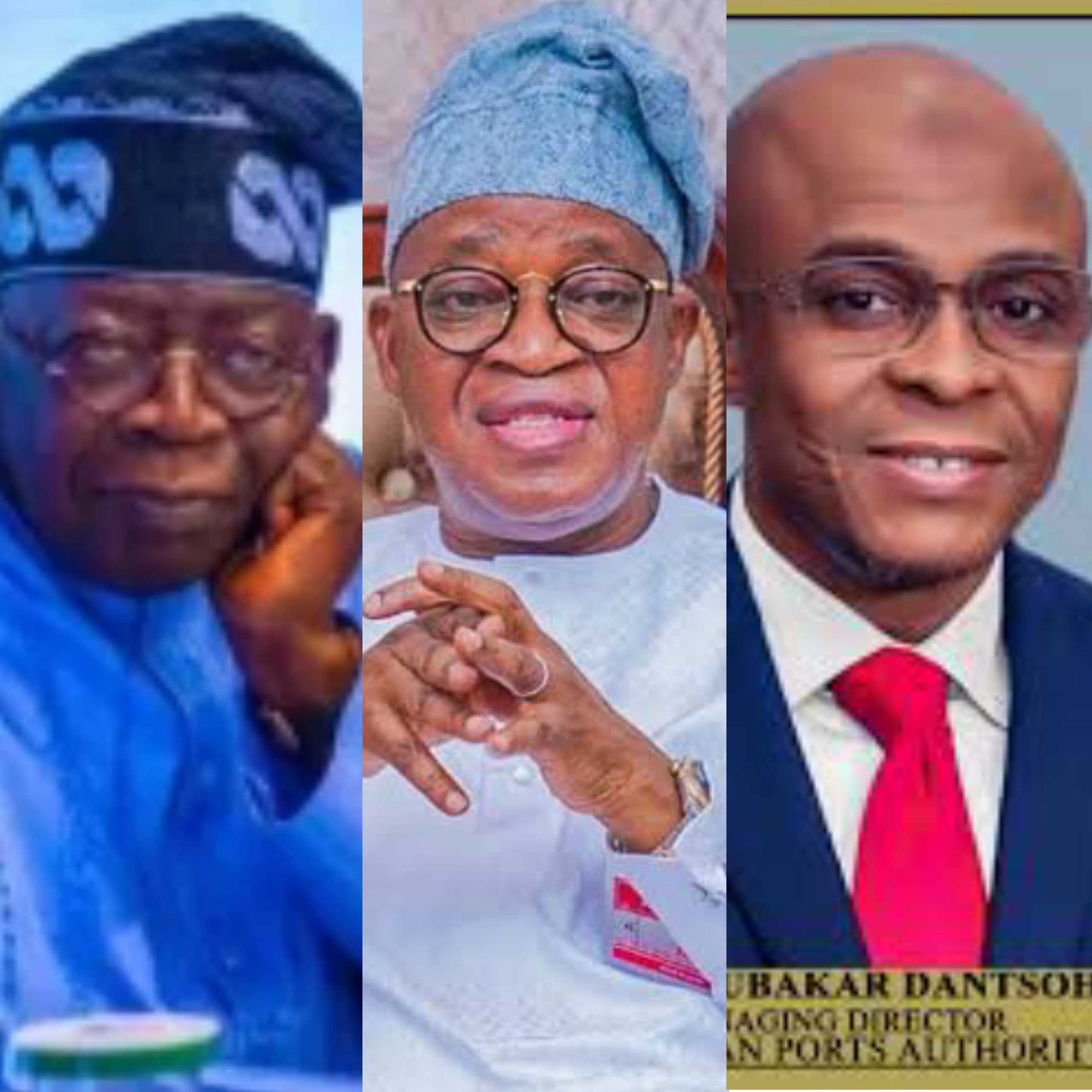
Nigeria’s maritime sector, the gateway through which over 80 per cent of the nation’s international trade flows, is undergoing a sweeping transformation, which is being midwifed by the Managing Director of the Nigerian Ports Authority, Dr. Abubakar Dantsoho.
Anchored on port modernisation, digital trade facilitation and institutional reform, the new maritime policy direction is designed to reposition Nigeria’s seaports as competitive hubs within the global shipping ecosystem.
Last week, the Nigerian Ports Authority (NPA) released its 2025 report showing that the nation’s maritime sector recorded a historic surge in activity, driven by increased cargo throughput, rising container traffic, and a growing export footprint — a development that underscores the federal government’s commitment to economic diversification.
The 2025 Operational Performance Report released by the NPA revealed that total cargo throughput surged by 24.8 per cent rising from approximately 103.6 million metric tons in 2024 to over 129.3 million metric tons in 2025.
The Managing Director of the Nigerian Ports Authority (NPA), Dr. Abubakar Dantsoho, described the growth as one of the most significant annual increases in Nigeria’s maritime history, noting that the milestone strengthens the country’s position as a more competitive and strategic player in regional and global trade.
The outstanding performance did not just happen overnight, it is a result of the transformative reforms of the federal government.
 For decades, the nation’s ports struggled with a lot of constraints.
However, President Bola Tinubu is reversing the trend through an ambitious reform programme driven by the Ministry of Marine and Blue Economy under Adegboyega Oyetola and implemented largely by the Nigerian Ports Authority under the leadership of its Managing Director and Chief Executive Officer, Dr Abubakar Dantsoho.
At the centre of the reform strategy are two interconnected initiatives: the comprehensive modernisation of Nigeria’s port infrastructure and the deployment of the National Single Window (NSW), a digital platform designed to streamline trade documentation and eliminate bureaucratic delays.
Ahead of the flag off of NSW, the NPA put the structures in place and is fully ready. The NPA being a critical stakeholder in the NSW initiative has fully aligned its operational processes with the NSW platform.
In furtherance of this, NPA has been part of the NSW Committee, which has been working with the NSW Project Team, KPMG, and Crimson-Logic.
 These engagements have focused on ensuring seamless integration of the Authority’s Revenue Invoice Management System (RIMS 2.0) with the NSW architecture.
Several strategic, operational and technical decisions have been taken to align current processes with the national framework.
In line with Phase 1 of the NSW go-live, NPA has participated in a series of technical and strategic engagements with the NSW Project Team and implementation partners, complete initial User Acceptance Testing (UAT), inauguration of Transition Committee of the NSW and the development and delivery of all requested system endpoints (integration codes) to enable process alignment between NPA and NSW platforms.
Together, these initiatives represent one of the most far-reaching attempts to unlock the economic potential of Nigeria’s maritime sector and position it as a critical engine of national growth.
Nigeria’s ports have long been central to the country’s economic architecture. Yet for many years, they have been constrained by infrastructural decay and operational inefficiencies.
Experts estimate that Nigeria loses more than N1 trillion annually due to the lack of port automation and modern infrastructure, as congestion, delays and administrative duplication increase logistics costs for businesses and discourage shipping lines.
In addition to these financial losses, inefficient port operations have undermined Nigeria’s regional competitiveness.
West African ports in countries such as Ghana, Togo and Benin Republic, equipped with modern facilities and digital trade systems, have captured significant volumes of cargo originally destined for Nigeria.
The result has been a paradox: Africa’s largest economy operating with ports that have struggled to match the capacity and efficiency of smaller neighbouring economies.
Addressing this gap has therefore become central to the maritime reform agenda of the Tinubu administration.
Ports Reconstruction and Modernisation
A cornerstone of the reform programme is the large-scale reconstruction and modernisation of Nigeria’s major seaports.
The federal government has initiated an ambitious infrastructure renewal plan targeting key facilities including Apapa, Tin Can Island, Port Harcourt, Warri and Calabar ports.
The objective is to upgrade quay walls, deepen channels, modernise cargo-handling equipment and expand terminal capacity to accommodate larger vessels and increased trade volumes.
The strategy reflects a recognition that efficient ports are indispensable to economic growth.
 Modern ports reduce vessel turnaround time, lower freight costs and enhance supply chain efficiency, factors that directly influence a country’s competitiveness in international trade.
Early indicators suggest that these reforms are already beginning to produce measurable results.
 Nigeria’s cargo throughput recorded a significant surge in recent years, rising by 45.1 per cent to 103.3 million tonnes, while ship calls increased to more than 4,000 vessels across Nigerian ports. Container traffic also climbed to 1.74 million TEUs, reflecting growing trade activity and increased export shipments.
 These improvements highlight the economic potential that could be unlocked when infrastructure upgrades are combined with operational reforms.
One of the most immediate advantages of port modernisation is the improvement in operational efficiency.
 Many of Nigeria’s major ports were constructed several decades ago and have struggled to cope with the demands of modern shipping and cargo handling.
Ageing quay walls, shallow drafts, obsolete equipment and limited cargo-handling capacity have often resulted in congestion and long vessel waiting times.
Modernisation programmes that involve infrastructure upgrades, channel deepening and the deployment of modern cargo-handling equipment will significantly reduce vessel turnaround time and cargo dwell time.
Faster port operations mean ships spend less time waiting to berth, while cargo is cleared more quickly, improving the overall efficiency of the logistics chain.
Inefficient ports often translate to higher logistics costs for importers, exporters and shipping companies.
Delays in cargo clearance lead to additional charges such as demurrage, storage and handling fees, which are ultimately passed on to consumers in the form of higher prices.
By improving infrastructure and operational processes, port modernisation will lower these costs and make Nigerian ports more attractive to shipping lines and international investors.
This could also reverse the long-standing trend of Nigerian cargo being diverted to neighbouring ports in countries such as Benin Republic, Togo and Ghana.
Digital Transformation Via NSW
Infrastructure alone, however, cannot deliver a competitive port system without complementary digital reforms.
 This is where the National Single Window (NSW) initiative becomes critical.
Last week, the Chief of Staff to the President, Femi Gbajabiamila, announced that Nigeria will launch the National Single Trade Window platform on March 27.
He described the initiative as a monumental reform aimed at transforming the country’s trade ecosystem by simplifying procedures, improving efficiency and enhancing Nigeria’s competitiveness in global trade.
According to him, the initiative, which was first introduced by President Bola Tinubu nearly two years ago, represents a far-reaching fiscal reform designed to modernise Nigeria’s trade processes.
“We are about to launch yet another reform, fiscal reform by this administration, which in its nature will be very transformational,” he said.
The NSW is designed as an integrated digital platform that enables traders to submit all import, export and transit documentation through a single electronic interface rather than interacting with multiple government agencies.
The NSW seeks to eliminate these inefficiencies by creating a unified digital ecosystem that integrates all trade-related processes.
The implementation of the National Single Window adds a critical digital dimension to these reforms.
The NSW is an integrated electronic platform that allows traders to submit all import and export documentation through a single portal rather than dealing separately with multiple government agencies.
In the traditional system, importers and exporters are required to process documentation with several regulatory bodies, including customs, port authorities and inspection agencies.
This fragmented process often leads to duplication, delays and bureaucratic bottlenecks.
 The National Single Window eliminates these inefficiencies by integrating all trade-related processes into one digital ecosystem.
The result is faster cargo clearance, improved transparency and greater accountability in port operations.
Digital platforms reduce human intervention in administrative processes, thereby minimising opportunities for corruption and revenue leakages.
 In addition, real-time information sharing among stakeholders enhances coordination and improves decision-making across the maritime value chain.
From a macro economic perspective, these reforms have the potential to significantly boost government revenue and stimulate economic growth.
Efficient ports facilitate increased trade volumes, which in turn lead to higher customs duties, port charges and related maritime revenues.
Improved logistics infrastructure also supports export-oriented industries by ensuring that Nigerian products can reach international markets more efficiently.
Furthermore, modern ports and digital trade systems can attract foreign direct investment into sectors such as shipping, logistics, manufacturing and maritime services.
Investors are typically drawn to economies with reliable infrastructure and efficient trade systems, and the ongoing reforms are expected to strengthen Nigeria’s competitiveness in the global trading environment.
Ultimately, the combined impact of port modernisation and the National Single Window will extend beyond the maritime sector.
By improving trade facilitation, lowering logistics costs and enhancing revenue generation, these reforms will contribute to broader economic diversification and position Nigeria as a leading maritime hub in West and Central Africa.
Analysts project that a fully operational National Single Window could boost customs revenue by 10 to 20 per cent annually, translating into an additional N600 billion to N1.2 trillion in government earnings.
Beyond revenue generation, the system could reduce cargo dwell time by 35 to 45 per cent and cut overall trade transaction costs by up to 25 per cent.
Such improvements would significantly enhance Nigeria’s logistics performance and ease of doing business.
NPA’s Operational Leadership
The successful implementation of these reforms depends heavily on the institutional leadership of the Nigerian Ports Authority.
Under the leadership of Abubakar Dantsoho, the NPA has intensified efforts to modernise infrastructure, strengthen digital systems and improve operational efficiency across the nation’s port network.
The authority’s reform agenda includes the deployment of advanced automation tools such as the Port Community System, the Vessel Traffic Management System and digital cargo tracking platforms.
These initiatives are designed to enhance real-time coordination among port stakeholders and create the technological backbone required for the National Single Window to function effectively.
 The impact of these reforms is also reflected in the financial performance of the NPA.
The authority generated N894.86 billion in revenue in 2024 and is projecting N1.28 trillion in revenue for 2025, driven largely by increased cargo traffic, digital automation and infrastructure upgrades.
 Additionally, the NPA remitted a record N400.8 billion to the Consolidated Revenue Fund (CRF) in 2024, nearly double the amount remitted the previous year.
These figures underscore the growing economic significance of Nigeria’s maritime sector when supported by effective institutional leadership.
Oyetola’s Policy Coordination
While the NPA handles operational execution, the broader policy direction guiding the reforms comes from the Ministry of Marine and Blue Economy led by Adegboyega Oyetola.
The establishment of the ministry itself marked a strategic shift in Nigeria’s economic planning by recognising the maritime domain as a critical driver of national development.
The blue economy encompasses a wide range of activities including shipping, fisheries, marine transport, offshore energy and coastal tourism.
For Nigeria — with over 850 kilometres of coastline and vast maritime resources — these sectors represent enormous untapped economic potential.
Oyetola’s policy framework focuses on strengthening maritime governance, enhancing regulatory coordination and attracting investment into port infrastructure and maritime services.
By aligning policy reforms with infrastructure upgrades and digital transformation, the ministry aims to build a maritime ecosystem capable of supporting Nigeria’s long-term economic diversification.
Expanding Maritime Trade
Another key objective of the reform programme is to position Nigeria as a major maritime logistics hub in West and Central Africa.
Nigeria’s geographic location already places it along some of the busiest shipping routes connecting Europe, Asia and the Americas with Africa.
However, inefficiencies in port operations historically prevented the country from fully capitalising on this advantage.
With modern infrastructure, improved digital systems and streamlined regulatory processes, Nigeria’s ports could become the preferred destination for cargo serving the West African sub-region.
Evidence of this emerging potential can already be seen in the growing role of ports such as Lekki Deep Sea Port, which has significantly increased container traffic and trans-shipment volumes.
The development of modern ports alongside improved inland logistics networks could transform Nigeria into a regional redistribution centre for maritime trade.

Economic Multipliers

The broader economic implications of these reforms extend far beyond the port terminals themselves.

Efficient ports stimulate economic activity across multiple sectors, including manufacturing, agriculture, logistics and international trade.
Faster cargo clearance reduces production delays for industries that rely on imported raw materials, while improved export logistics enhance the competitiveness of Nigerian products in global markets.
Digital trade systems also improve transparency and reduce revenue leakages, strengthening government finances.
In addition, maritime infrastructure investments create employment opportunities across engineering, logistics, information technology and port operations.
Analysts estimate that a fully operational digital maritime ecosystem could generate over 100,000 direct and indirect jobs across the logistics and ICT sectors.
Such economic multipliers highlight why the maritime sector is increasingly viewed as a strategic pillar of Nigeria’s economic diversification strategy.
Charting Nigeria’s Maritime Future
The reforms being implemented in Nigeria’s maritime sector represent one of the most significant structural transformations of the country’s trade infrastructure in decades.
By combining port modernisation with digital trade facilitation, the administration of Bola Ahmed Tinubu is laying the groundwork for a more efficient and globally competitive port system.
With strong policy coordination from Adegboyega Oyetola and operational leadership from Abubakar Dantsoho at the Nigerian Ports Authority, the maritime sector is gradually being repositioned as a major driver of national economic growth.
If sustained and fully implemented, these reforms could transform Nigeria’s ports into modern logistics gateways capable of supporting industrial expansion, regional trade integration and long-term economic prosperity.
In many ways, the success of this maritime transformation will not only redefine the efficiency of Nigeria’s port system but also shape the country’s role in the future architecture of global trade.

Continue Reading

Headlines

Realtors seek partnership with Lagos Govt on Omi Eko waterways  transportation project.

Funso OLOJO, Editor.
The €410m foreign creditors  – backed Omi Eko water transportation project of Lagos state government has received a big boost with the interest shown by the  International Real Estate Federation (FIABCI).
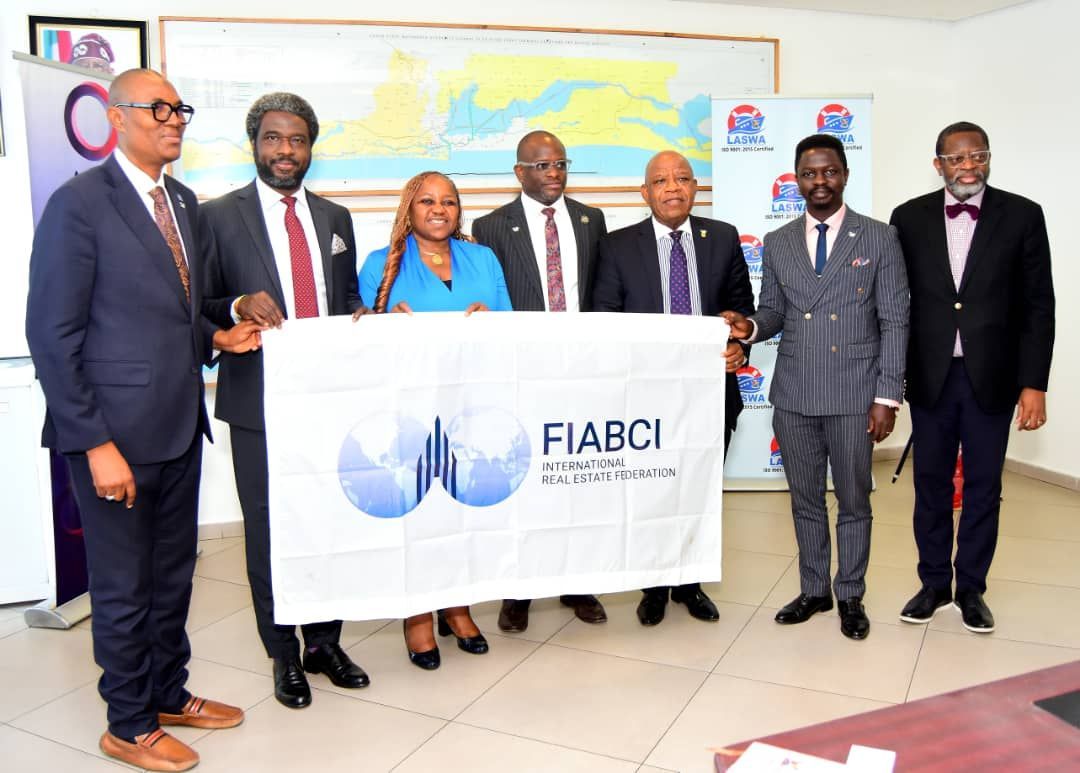
The professional Realtors have approached the Lagos state government through the Lagos State Waterways Authority (LASWA) to explore areas of collaboration around Lagos State’s expanding water transportation system and its broader Blue Economy potential.
The delegation was led by Akin Opatola,  President of FIABCI Nigeria and  Mr. Adeniji Adele, President of FIABCI Africa and the Near East, as well as senior officials and members of the international real estate federation.
The delegation was received by Mr Emmanuel Oluwadamilola, the General Manager of LASWA who also doubles as Special Adviser on Blue Economy to the Governor of Lagos State.
The two parties discussed the Lagos State’s ambitious efforts to modernize its inland waterways transport system through the OMI EKO Water Transport Project.
The LASWA General Manager outlined the strategic direction of the project and its role in transforming urban mobility across Lagos.
According to  him, the initiative is designed to decongest Lagos roads, improve productivity, reduce transportation costs, and lower carbon emissions, while positioning water transportation as a central pillar of Lagos State’s urban mobility strategy.
He further disclosed that the project will introduce modern ferry operations supported by electrified vessels, upgraded terminals, and integrated transport infrastructure, creating a cleaner and more efficient water transport ecosystem.
Mr Oluwadamilola further told FIABCI delegation that OMI EKO project is supported by a strong international financing structure including, Agence Française de Développement (AFD) – €130 million loan, European Investment Bank (EIB) – €170 million loan, European Union – €60 million grant
Lagos State Government – €40 million counterpart funding
Private sector participation in Intelligent Transport Systems (ITS).
Also, the project will deliver 15 ferry routes across Lagos waterways,
Dredging and marking of approximately 140 kilometers of navigable channels,
Development of 25 modern ferry terminals and jetties, Deployment of electric ferries, Integrated ticketing and improved waterway safety infrastructure.
Following the presentation, members of the visiting FIABCI delegation engaged the LASWA leadership in a round of questions and observations, seeking further clarification on the implementation framework of the OMI EKO project.
Members of the delegation sought insights into issues including terminal development opportunities, private sector participation, integration with urban planning, and the long-term investment potential of Lagos’ water transport corridors.
Mr. Oluwadamilola further elaborated  on the project’s structure and the strategic vision of Lagos State to position water transportation as a key pillar of the state’s evolving Blue Economy.
Speaking during the meeting, FIABCI Nigeria President, Akin Opatola, noted that the modernization of Lagos waterways presents a strategic opportunity to rethink how cities integrate transport infrastructure with real estate and urban development.
Opatola emphasized that major water transport infrastructure projects such as the OMI EKO initiative create new corridors of economic activity, particularly around ferry terminals and waterfront locations.
He stated that the real estate sector has a critical role to play in supporting such infrastructure through transport-oriented development, waterfront regeneration, and the creation of mixed-use economic hubs that can stimulate sustainable urban growth.
He further noted that FIABCI members, as professionals in the real estate and development ecosystem, are keen to explore ways in which urban planning, investment, and property development can align with Lagos State’s water transportation expansion.
Also speaking, Mr. Adeniji Adele, President of FIABCI Africa and the Near East, observed that Lagos is uniquely positioned to become a leading example in Africa of how coastal cities can leverage their waterways to drive mobility, economic development, and sustainable waterfront investment.
He noted that global cities that successfully integrate their waterways into urban life often unlock significant real estate and tourism value, and expressed optimism that Lagos could replicate similar outcomes as the OMI EKO project unfolds.
 Ubong Essien, Founder of the Blue Economy Academy, emphasized the importance of collaboration among government agencies, industry professionals, and investors in delivering large-scale maritime infrastructure initiatives.
Essien noted that Nigeria’s experience in strengthening maritime security in the Gulf of Guinea demonstrated that successful sector transformation often begins when all stakeholders are brought to the table at the earliest stages of major projects.
He also pointed out that the 25 ferry terminals planned under the OMI EKO project represent significant opportunities for transport-oriented waterfront development across Lagos, creating new intersections between mobility infrastructure, urban development, and the Blue Economy.
The visit underscores the growing recognition of Lagos waterways as a strategic mobility and economic infrastructure for Africa’s largest city.
It could be recalled that the Omi Eko project was launched in October, 2025.
Continue Reading

Trending